634 kr
Skickas inom 7-10 vardagar
634 kr
Skickas inom 7-10 vardagar
1 940 kr
Skickas inom 7-10 vardagar
440 kr
Läs direkt efter köp
682 kr
Skickas inom 7-10 vardagar
2 288 kr
Skickas inom 7-10 vardagar
618 kr
Skickas inom 10-15 vardagar
399 kr
Läs direkt efter köp
386 kr
Skickas
399 kr
Läs direkt efter köp
1 309 kr
Skickas inom 7-10 vardagar
762 kr
Läs direkt efter köp
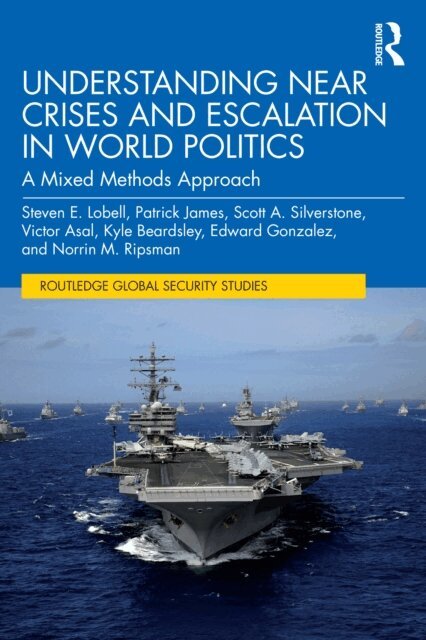
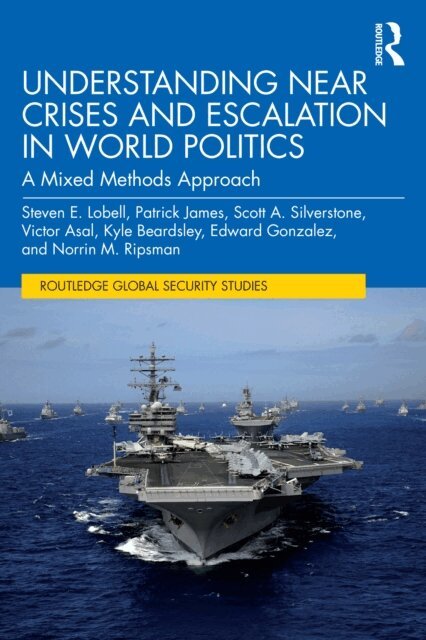
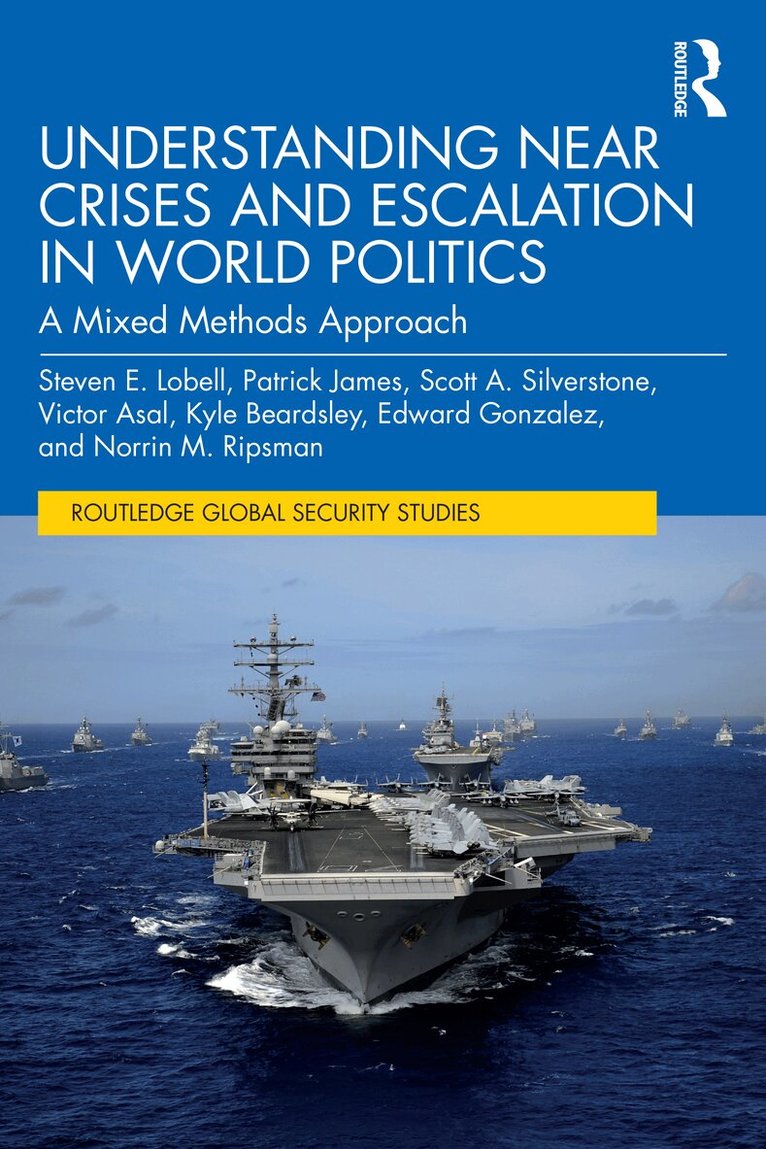
This book introduces the near crisis phase of conflict and escalation.
These time-sensitive disputes between states, and even with violent non-state actors, do not involve significant risk of military escalation, at least in the moment. Investigating how and why some near crises escalate, while others do not, requires an explanation of the different dynamics of international disputes and the policy tools that states and international institutions can employ. We ask an expanded set of questions about specific cases and general patterns of conflict behavior, such as: why did Israeli leaders respond to Hezbollah’s 2006 cross-border raid with escalation, resulting in the Second Lebanon War, while in previous instances the Israelis limited their retaliation? Why didn’t the 2015 Iranian Ballistic Missile Test or the 1995 Norwegian Black Brant Missile Launch escalate, while the 2009 North Korea Missile Movement and the 1995 Taiwan Straits dispute tipped into a full-blown crisis, and why did the 2008 Russia-Georgia conflict escalate from near crisis to war? We use primary sources and newly created data on near crises to answer these questions and others. The overall conclusion is that an ounce of prevention at the near crisis phase is worth a pound of cure in averting a full-blown crisis or war.
This book will be of great interest to students of security studies, conflict studies, foreign policy, and international relations.
757 kr
Läs direkt efter köp
This book introduces the near crisis phase of conflict and escalation.
These time-sensitive disputes between states, and even with violent non-state actors, do not involve significant risk of military escalation, at least in the moment. Investigating how and why some near crises escalate, while others do not, requires an explanation of the different dynamics of international disputes and the policy tools that states and international institutions can employ. We ask an expanded set of questions about specific cases and general patterns of conflict behavior, such as: why did Israeli leaders respond to Hezbollah’s 2006 cross-border raid with escalation, resulting in the Second Lebanon War, while in previous instances the Israelis limited their retaliation? Why didn’t the 2015 Iranian Ballistic Missile Test or the 1995 Norwegian Black Brant Missile Launch escalate, while the 2009 North Korea Missile Movement and the 1995 Taiwan Straits dispute tipped into a full-blown crisis, and why did the 2008 Russia-Georgia conflict escalate from near crisis to war? We use primary sources and newly created data on near crises to answer these questions and others. The overall conclusion is that an ounce of prevention at the near crisis phase is worth a pound of cure in averting a full-blown crisis or war.
This book will be of great interest to students of security studies, conflict studies, foreign policy, and international relations.
721 kr
Skickas inom 10-15 vardagar
2 515 kr
Skickas inom 10-15 vardagar
3 956 kr
Skickas inom 7-10 vardagar
820 kr
Läs direkt efter köp
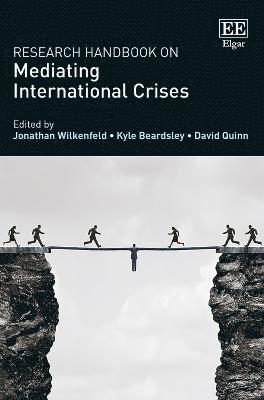
Chapters consider the challenges facing the international community when aiming to achieve lasting resolutions in intrastate and interstate conflicts during acute periods of crisis and potential or actual violence escalation. The authors also provide much-needed context for ''gray zone conflict'', the actions of non-state actors, gender dynamics and biases that hinder mediation. The ever-expanding role of mediation means authors also cover human security, climate diplomacy and cyber disputes. Using extensive analysis of salient cases as well as quantitative studies of aggregate trends, this Research Handbook is the vital reference work for mediation in contemporary international politics. The concluding chapter explores the overarching themes and key policy recommendations from the leading voices in mediation.
An essential reference for postgraduate researchers of international politics, this Research Handbook provides both quantitative and qualitative analysis to further case knowledge for research. In addition, the case studies and concluding chapter will be a much-needed resource for policymakers and practitioners in defence policy and peace advocacy due to their emphasis on lessons learned and best practice.
Contributors include: P. Aall, Z. Bakaki, J.A. Bangerter, M. Barrett, K. Beardsley, D. Belo, T. Böhmelt, A. Boutellis, M. Brecher, D. Carment, A.B. Çelik, K. Christie, C.A. Crocker, D.E. Cunningham, K. DeRouen Jr., P.F. Diehl, Y. Duman, S.S. Gartner, M. Gelfand, S. Gent, Z. Goncz, J.M. Greig, F.O. Hampson, E. Hoffman, P.T. Hopmann, L. Hultman, L. Kemp, R.C. Maness, M.M. Melin, E.J. Menninga, M. Nikolko, P. Olander, A.P. Owsiak, D. Quinn, L. Reid, M. Sarver, N. Schreffler, J.A. Stevenson, I. Svensson, B. Valeriano, S. Vukovic, P.B. White, J. Wilkenfeld, M.-J. Zahar, I.W. Zartman
851 kr
Skickas inom 7-10 vardagar