569 kr
Läs direkt efter köp
569 kr
Läs direkt efter köp
2 609 kr
Skickas inom 7-10 vardagar
569 kr
Läs direkt efter köp
834 kr
Skickas inom 7-10 vardagar
564 kr
Läs direkt efter köp
380 kr
Skickas inom 7-10 vardagar
622 kr
Skickas inom 7-10 vardagar
871 kr
Läs direkt efter köp
The chapters that follow are grouped in three sections, corresponding to the three stages of peacemaking: reduction or management of regional conflict; peacemaking or progress toward a peace treaty; and maintenance of bilateral peace and the regionalization of the peace settlement. In each chapter, the contributors consider the five key questions from a variety of methodological, historical, cultural, and empirical perspectives, drawing data from the Pacific, the Middle East, Europe, Asia, and Latin America. The conclusion expands on several themes found in the chapters and proposes an agenda for future research.
1 400 kr
Skickas inom 7-10 vardagar
569 kr
Skickas inom 7-10 vardagar
1 365 kr
Skickas inom 10-15 vardagar
329 kr
Skickas inom 10-15 vardagar
399 kr
Läs direkt efter köp
762 kr
Läs direkt efter köp
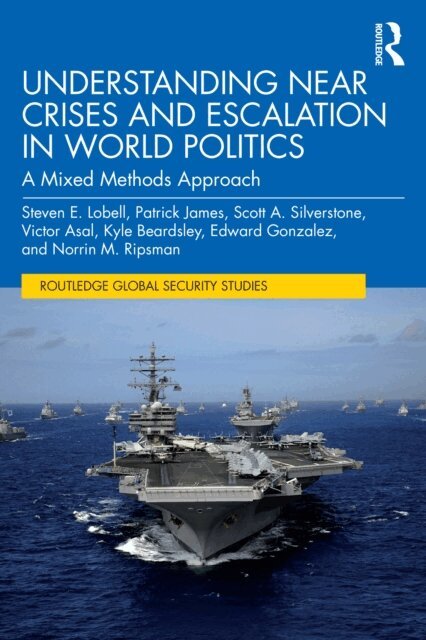
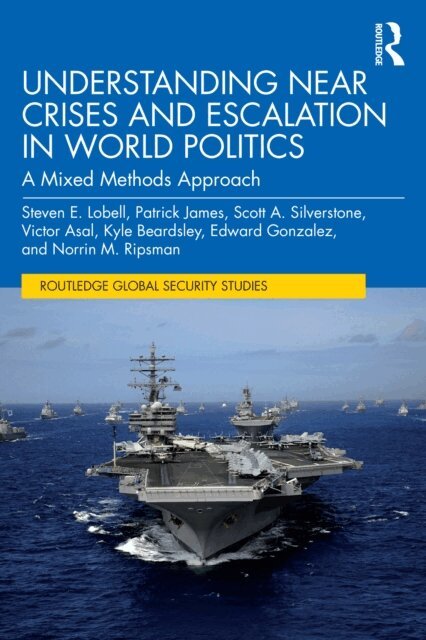
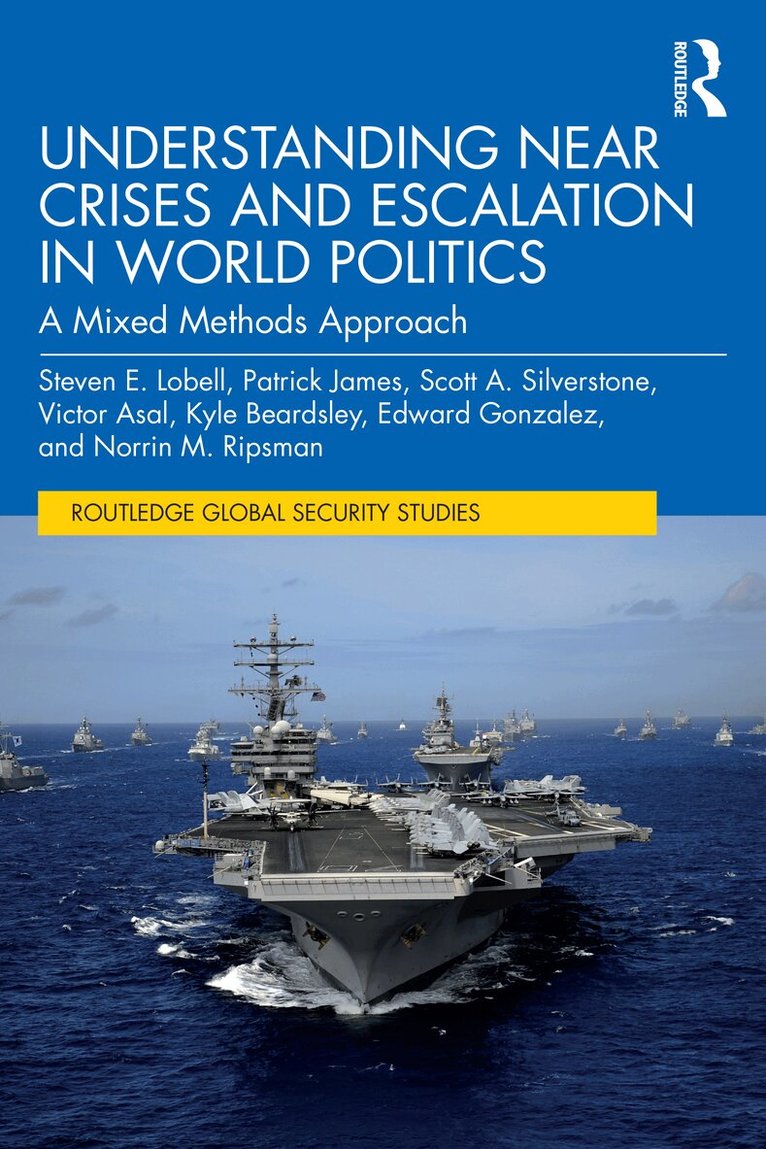
This book introduces the near crisis phase of conflict and escalation.
These time-sensitive disputes between states, and even with violent non-state actors, do not involve significant risk of military escalation, at least in the moment. Investigating how and why some near crises escalate, while others do not, requires an explanation of the different dynamics of international disputes and the policy tools that states and international institutions can employ. We ask an expanded set of questions about specific cases and general patterns of conflict behavior, such as: why did Israeli leaders respond to Hezbollah’s 2006 cross-border raid with escalation, resulting in the Second Lebanon War, while in previous instances the Israelis limited their retaliation? Why didn’t the 2015 Iranian Ballistic Missile Test or the 1995 Norwegian Black Brant Missile Launch escalate, while the 2009 North Korea Missile Movement and the 1995 Taiwan Straits dispute tipped into a full-blown crisis, and why did the 2008 Russia-Georgia conflict escalate from near crisis to war? We use primary sources and newly created data on near crises to answer these questions and others. The overall conclusion is that an ounce of prevention at the near crisis phase is worth a pound of cure in averting a full-blown crisis or war.
This book will be of great interest to students of security studies, conflict studies, foreign policy, and international relations.
757 kr
Läs direkt efter köp
This book introduces the near crisis phase of conflict and escalation.
These time-sensitive disputes between states, and even with violent non-state actors, do not involve significant risk of military escalation, at least in the moment. Investigating how and why some near crises escalate, while others do not, requires an explanation of the different dynamics of international disputes and the policy tools that states and international institutions can employ. We ask an expanded set of questions about specific cases and general patterns of conflict behavior, such as: why did Israeli leaders respond to Hezbollah’s 2006 cross-border raid with escalation, resulting in the Second Lebanon War, while in previous instances the Israelis limited their retaliation? Why didn’t the 2015 Iranian Ballistic Missile Test or the 1995 Norwegian Black Brant Missile Launch escalate, while the 2009 North Korea Missile Movement and the 1995 Taiwan Straits dispute tipped into a full-blown crisis, and why did the 2008 Russia-Georgia conflict escalate from near crisis to war? We use primary sources and newly created data on near crises to answer these questions and others. The overall conclusion is that an ounce of prevention at the near crisis phase is worth a pound of cure in averting a full-blown crisis or war.
This book will be of great interest to students of security studies, conflict studies, foreign policy, and international relations.
721 kr
Skickas inom 10-15 vardagar
2 515 kr
Skickas inom 10-15 vardagar
1 274 kr
Skickas inom 7-10 vardagar
662 kr
Skickas inom 7-10 vardagar
565 kr
Skickas inom 10-15 vardagar
565 kr
Skickas inom 10-15 vardagar
1 843 kr
Skickas inom 7-10 vardagar
622 kr
Skickas inom 7-10 vardagar
573 kr
Läs direkt efter köp
A new framework for analyzing global power dynamics and the neglected role of small states
In the decades since the Cold War, international relations scholarship has predominantly examined global power dynamics through the lens of great powers—namely, the United States—and rising powers such as China. This narrow focus overlooks small states, which are a critical component of the international system. As global power structures rapidly evolve and traditional alliances become increasingly fluid, understanding how small states strategically position themselves is crucial.
Small States in a Shifting International Order provides a fresh examination of how these states navigate complex geopolitical landscapes. Drawing on case studies of diverse small countries—the Baltic states, Costa Rica, Denmark, Ghana, Jordan, Nepal, and Sweden—the book''s international group of contributors reveals the sophisticated foreign policy strategies that enable these states to pursue their security interests amid significant power asymmetries and the shifting international order. By demonstrating how these small states are not merely passive actors but also active architects of their strategic environments, this volume provides a groundbreaking framework for analyzing international relations in an era of unprecedented complexity and interconnectedness.
Scholars and advanced students of international relations will find this book to be an invaluable resource that transforms our understanding of global politics.
1 465 kr
Tillfälligt slut
1 121 kr
Tillfälligt slut