843 kr
Skickas inom 10-15 vardagar
843 kr
Skickas inom 10-15 vardagar
348 kr
Skickas inom 7-10 vardagar
2 497 kr
Skickas inom 10-15 vardagar
708 kr
Skickas inom 10-15 vardagar
695 kr
Skickas inom 10-15 vardagar
768 kr
Skickas inom 10-15 vardagar
2 526 kr
Skickas inom 10-15 vardagar
369 kr
Skickas inom 10-15 vardagar
2 571 kr
Skickas inom 10-15 vardagar
904 kr
Skickas inom 10-15 vardagar
776 kr
Skickas inom 10-15 vardagar
796 kr
Läs direkt efter köp
This book makes a major contribution to understanding European politics and identity. It examines how politicians, cultural elites, and other actors fight over Europe’s future with words and stories, telling narratives about European integration in different political, social, and cultural contexts. The chapters explore how actors formulate stories to make sense of Europe’s past and contemporary challenges and to legitimise their own positions and preferences. The contributors explore themes ranging from divisive stories about the European Union (EU), mobilised in institutional reform referendums, to the top-down deployment of legitimising narratives by EU institutions, religiously inspired apocalyptic narratives of European unity, and stories about nations and Europe told by museums and academics. Combined, the chapters of this book are essential reading for everyone interested in Europe’s common past and contemporary challenges, and the EU’s highly contested nature in times of apparently increasing disintegration.
808 kr
Läs direkt efter köp
This book makes a major contribution to understanding European politics and identity. It examines how politicians, cultural elites, and other actors fight over Europe’s future with words and stories, telling narratives about European integration in different political, social, and cultural contexts. The chapters explore how actors formulate stories to make sense of Europe’s past and contemporary challenges and to legitimise their own positions and preferences. The contributors explore themes ranging from divisive stories about the European Union (EU), mobilised in institutional reform referendums, to the top-down deployment of legitimising narratives by EU institutions, religiously inspired apocalyptic narratives of European unity, and stories about nations and Europe told by museums and academics. Combined, the chapters of this book are essential reading for everyone interested in Europe’s common past and contemporary challenges, and the EU’s highly contested nature in times of apparently increasing disintegration.
838 kr
Skickas inom 7-10 vardagar
754 kr
Skickas inom 7-10 vardagar
1 915 kr
Skickas inom 7-10 vardagar
1 726 kr
Skickas inom 7-10 vardagar
2 526 kr
Skickas inom 10-15 vardagar
2 526 kr
Skickas inom 10-15 vardagar
518 kr
Skickas inom 10-15 vardagar
827 kr
Skickas inom 10-15 vardagar
1 017 kr
Skickas inom 10-15 vardagar
903 kr
Läs direkt efter köp
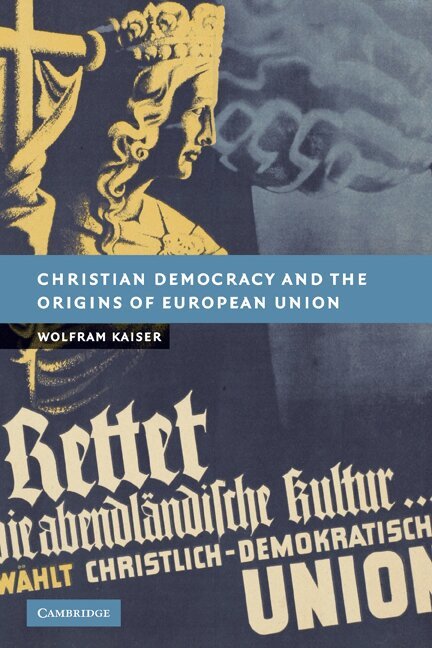
This book radically re-conceptualises the origins of the European Union as a trans- and supranational polity as it emerged between the Schuman Plan of May 1950 and the first enlargement of the European Communities at the start of 1973.
Drawing upon social science theories and debates as well as recent historical research, Wolfram Kaiser and Morten Rasmussen in their introductory chapters discuss innovative ways of narrating the history of the EU as the emergence of a transnational political society and supranational political system. Building on these insights, eight chapters based on multilateral and multi-archival research follow each with case studies of transnational networks, public sphere and institutional cultures and policy-making which illustrate systematically related aspects of the early history of the EU. In the concluding chapter, leading political scientist Alex Warleigh-Lack demonstrates how greater interdisciplinary cooperation, especially between contemporary history and political studies, can significantly advance our knowledge of the EU as a complex polity.
This book will be of interest to students and scholars of Politics, European Studies and History.

890 kr
Läs direkt efter köp
This book radically re-conceptualises the origins of the European Union as a trans- and supranational polity as it emerged between the Schuman Plan of May 1950 and the first enlargement of the European Communities at the start of 1973.
Drawing upon social science theories and debates as well as recent historical research, Wolfram Kaiser and Morten Rasmussen in their introductory chapters discuss innovative ways of narrating the history of the EU as the emergence of a transnational political society and supranational political system. Building on these insights, eight chapters based on multilateral and multi-archival research follow each with case studies of transnational networks, public sphere and institutional cultures and policy-making which illustrate systematically related aspects of the early history of the EU. In the concluding chapter, leading political scientist Alex Warleigh-Lack demonstrates how greater interdisciplinary cooperation, especially between contemporary history and political studies, can significantly advance our knowledge of the EU as a complex polity.
This book will be of interest to students and scholars of Politics, European Studies and History.
1 066 kr
Läs direkt efter köp
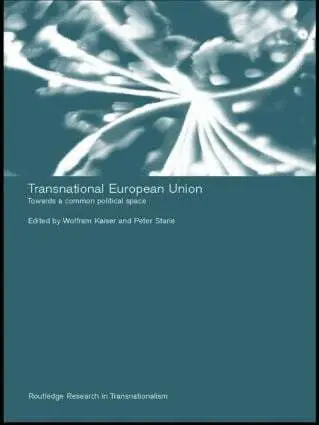
At the beginning of the twenty-first century, the European Union is an increasingly dense transnational social and political space. More and more non-governmental organisations develop transnational links, which are usually more intensive within the EU, even if they often extend beyond its borders to the wider world. This multi-disciplinary volume explores the importance of these structures, actors and relations for EU and European governance in the context of the theoretical debate about European integration in the social sciences. This book delivers:
theoretical chapters examining and discussing the main conceptual perspectives to studying the transnational EU to provide a current overview empirical case studies of transnationalism in practice on transnational party, trade union and police cooperation to transnational education policy-making and transnational consensus-building in EMU governance.This volume will be of great interest to students in social sciences, contemporary history and law.
424 kr
Läs direkt efter köp
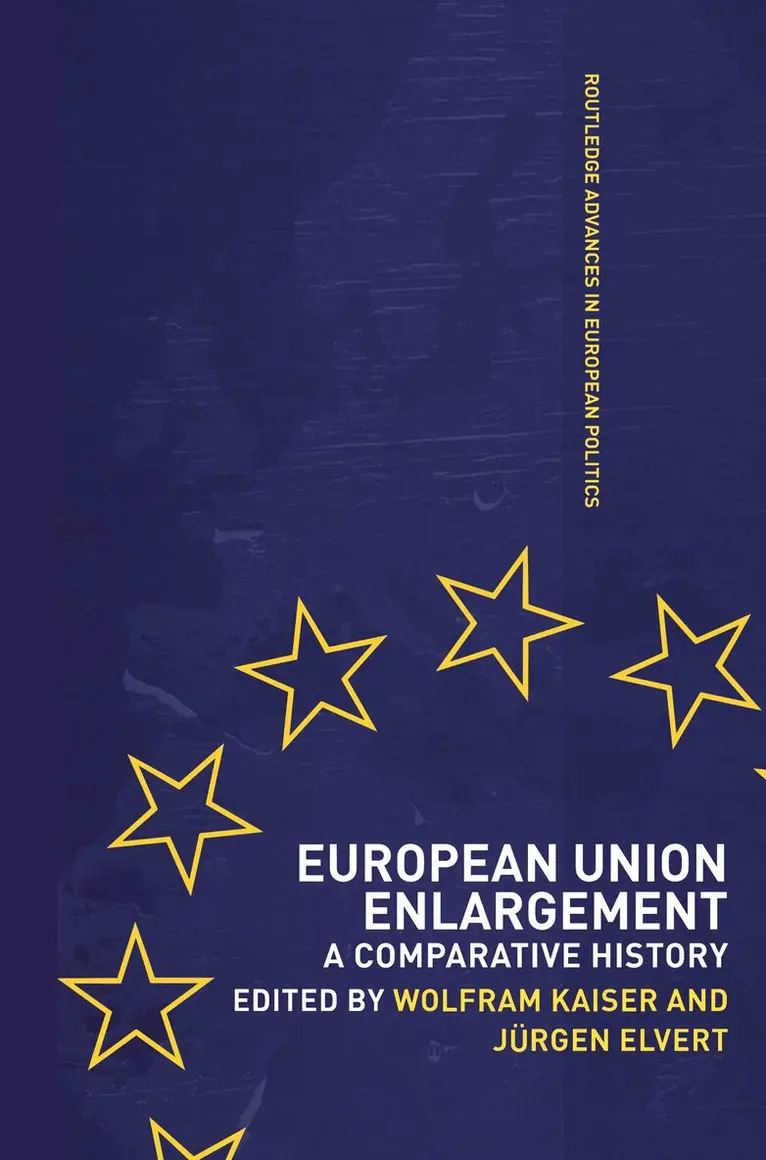
European Union Enlargement provides a comparative analysis of the post-war European policies of those states that joined the European Union between 1973 and 1995.The volume draws upon new empirical research in order to investigate the policies that these ''newcomer'' states have had towards Europe since 1945, with an emphasis on their experience of membership and its possible Europeanising effect. A final comparative chapter draws the national European policies of the ''newcomers'' together and outlines what they have brought to the EU. The book also tests integration theories against the available evidence, demonstrating their limited explanatory value and the economic, political and cultural specificity of different national paths towards EU integration.
430 kr
Läs direkt efter köp
European Union Enlargement provides a comparative analysis of the post-war European policies of those states that joined the European Union between 1973 and 1995.The volume draws upon new empirical research in order to investigate the policies that these ''newcomer'' states have had towards Europe since 1945, with an emphasis on their experience of membership and its possible Europeanising effect. A final comparative chapter draws the national European policies of the ''newcomers'' together and outlines what they have brought to the EU. The book also tests integration theories against the available evidence, demonstrating their limited explanatory value and the economic, political and cultural specificity of different national paths towards EU integration.
678 kr
Läs direkt efter köp
678 kr
Läs direkt efter köp