1 348 kr
Skickas inom 7-10 vardagar
1 348 kr
Skickas inom 7-10 vardagar
374 kr
Skickas
1 552 kr
Läs direkt efter köp
1 113 kr
Läs direkt efter köp
2 417 kr
Skickas inom 7-10 vardagar
708 kr
Skickas inom 10-15 vardagar
2 497 kr
Skickas inom 10-15 vardagar
572 kr
Skickas inom 3-6 vardagar
782 kr
Skickas inom 7-10 vardagar
719 kr
Skickas inom 7-10 vardagar
1 017 kr
Skickas inom 7-10 vardagar
461 kr
Skickas inom 7-10 vardagar
330 kr
Skickas inom 7-10 vardagar
779 kr
Läs direkt efter köp
This book is a collection of case studies that provides fresh insights into the history of political activism in Europe’s long 1970s. It covers the full spectrum of such groups, from the far left to the neofascist right, and from the various parts of Europe, including East and West. The chapters in this book push the boundaries of our knowledge with regard to transnational spaces. For many political activists at the time, identifying with a ‘transnational’ or ‘global’ protest movement provided both legitimacy for their claims and stood for the promise of sweeping change. Existing research has often reproduced such perceptions. This book goes beyond such an approach by distinguishing between different forms of transnational spaces. More specifically, it recognizes important differences between imagined spaces of solidarity and belonging, spaces of knowledge circulation and spaces of social experience and political action. Each chapter uses this new framework and analyses the interrelationship and significance of each of these three spaces.
Beyond Transnationalism will be of particular interest to historians, political scientists and educators. The chapters in this book were originally published as a special issue of European Review of History.
768 kr
Läs direkt efter köp
This book is a collection of case studies that provides fresh insights into the history of political activism in Europe’s long 1970s. It covers the full spectrum of such groups, from the far left to the neofascist right, and from the various parts of Europe, including East and West. The chapters in this book push the boundaries of our knowledge with regard to transnational spaces. For many political activists at the time, identifying with a ‘transnational’ or ‘global’ protest movement provided both legitimacy for their claims and stood for the promise of sweeping change. Existing research has often reproduced such perceptions. This book goes beyond such an approach by distinguishing between different forms of transnational spaces. More specifically, it recognizes important differences between imagined spaces of solidarity and belonging, spaces of knowledge circulation and spaces of social experience and political action. Each chapter uses this new framework and analyses the interrelationship and significance of each of these three spaces.
Beyond Transnationalism will be of particular interest to historians, political scientists and educators. The chapters in this book were originally published as a special issue of European Review of History.
417 kr
Läs direkt efter köp
420 kr
Läs direkt efter köp
2 515 kr
Skickas inom 10-15 vardagar
642 kr
Skickas inom 10-15 vardagar
874 kr
Läs direkt efter köp
This book comprises a collection of essays that delves into the economic history of Europe since the 1970s, offering a fresh perspective on the period by examining the interplay between universalist and particularist claims to validity. By exploring how these claims were constructed, justified, and contested, this book sheds new light on the ways they shaped political and social change in contemporary European history. Through a critical analysis of the economy as a dynamic field, the essays uncover the complexities of universalist and particularist concepts, their interactions, and the tensions they generate, providing a nuanced understanding of their role in shaping modern Europe.
Focusing on the intersection of economic history, political theory, and social change, this book will appeal to students, scholars, and readers interested in European history, economic thought, and the evolution of contemporary political ideologies. It is particularly relevant for those studying the historical roots of current debates on globalization, identity, and the challenges to universalist ideals in an increasingly fragmented world.
The chapters in this book were originally published as a special issue of the European Review of History.
855 kr
Läs direkt efter köp
This book comprises a collection of essays that delves into the economic history of Europe since the 1970s, offering a fresh perspective on the period by examining the interplay between universalist and particularist claims to validity. By exploring how these claims were constructed, justified, and contested, this book sheds new light on the ways they shaped political and social change in contemporary European history. Through a critical analysis of the economy as a dynamic field, the essays uncover the complexities of universalist and particularist concepts, their interactions, and the tensions they generate, providing a nuanced understanding of their role in shaping modern Europe.
Focusing on the intersection of economic history, political theory, and social change, this book will appeal to students, scholars, and readers interested in European history, economic thought, and the evolution of contemporary political ideologies. It is particularly relevant for those studying the historical roots of current debates on globalization, identity, and the challenges to universalist ideals in an increasingly fragmented world.
The chapters in this book were originally published as a special issue of the European Review of History.
2 618 kr
Skickas inom 10-15 vardagar
1 744 kr
Skickas inom 7-10 vardagar
448 kr
Skickas inom 7-10 vardagar
374 kr
Kommande
454 kr
Läs direkt efter köp
450 kr
Läs direkt efter köp
973 kr
Läs direkt efter köp
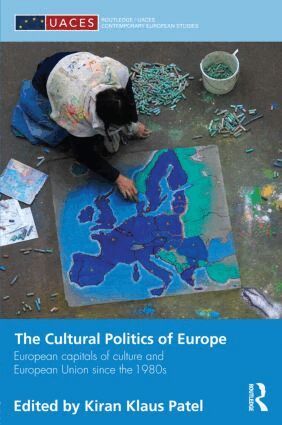
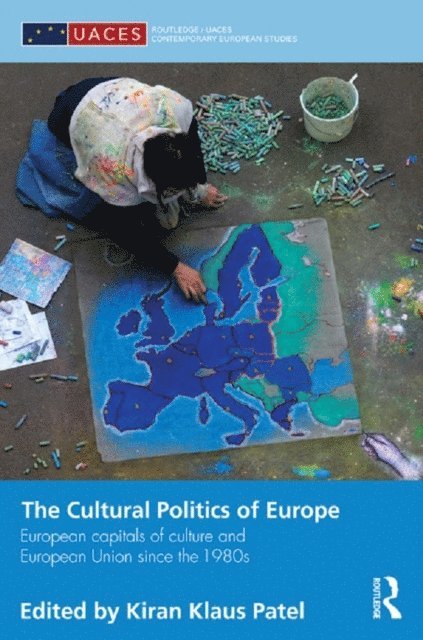
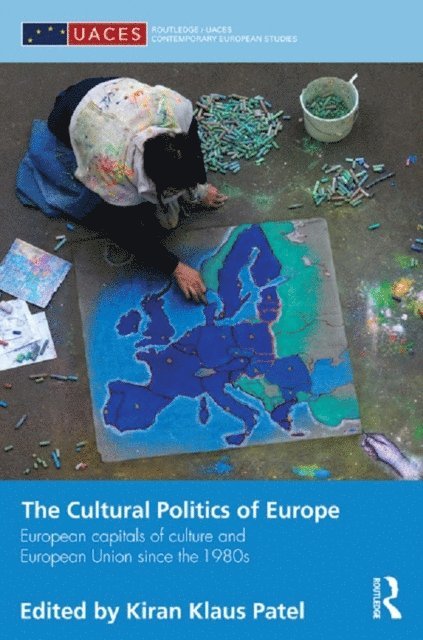
Culture is one of the most complex and contested fields of European integration. This book analyzes EU cultural politics since their emergence in the 1980s with a particular focus on the European Capital of Culture program, the flagship of EU cultural policy. It discusses both the central as well as local levels and contextualizes EU policies with programmes of other European organisations, such as the Council of Europe.
By asking what "Europe" actually means for European cultural policy, the book goes beyond the confines of official organizations and the political sphere, to discuss the contribution, impact and appropriation among a more diverse group of actors and participants, such as transnational experts, local bureaucrats, cultural managers, urban dwellers and the visitors. Its principal aim is to debunk the myth of Brussels as the centre of cultural Europeanization. Instead, it argues that European cultural policy has to be seen as a relational, multi-directional movement, involving a wide variety of stakeholders and leading to conflicts and collaborations at various levels. This book combines the perspectives of political scientists, sociologists, anthropologists and historians, at the intersection between EU, urban, and cultural studies, and changes our understanding of ‘Europeanization’ by opening up new empirical and conceptual avenues.
Challenging the dominant interpretation of European cultural policies, The Cultural Politics of Europe will be of interest to students and scholars of European studies, political scientists, sociologists, anthropologists, geographers, historians and cultural studies.
997 kr
Läs direkt efter köp
Culture is one of the most complex and contested fields of European integration. This book analyzes EU cultural politics since their emergence in the 1980s with a particular focus on the European Capital of Culture program, the flagship of EU cultural policy. It discusses both the central as well as local levels and contextualizes EU policies with programmes of other European organisations, such as the Council of Europe.
By asking what "Europe" actually means for European cultural policy, the book goes beyond the confines of official organizations and the political sphere, to discuss the contribution, impact and appropriation among a more diverse group of actors and participants, such as transnational experts, local bureaucrats, cultural managers, urban dwellers and the visitors. Its principal aim is to debunk the myth of Brussels as the centre of cultural Europeanization. Instead, it argues that European cultural policy has to be seen as a relational, multi-directional movement, involving a wide variety of stakeholders and leading to conflicts and collaborations at various levels. This book combines the perspectives of political scientists, sociologists, anthropologists and historians, at the intersection between EU, urban, and cultural studies, and changes our understanding of ‘Europeanization’ by opening up new empirical and conceptual avenues.
Challenging the dominant interpretation of European cultural policies, The Cultural Politics of Europe will be of interest to students and scholars of European studies, political scientists, sociologists, anthropologists, geographers, historians and cultural studies.
2 601 kr
Skickas inom 10-15 vardagar