2 311 kr
Skickas inom 10-15 vardagar
2 311 kr
Skickas inom 10-15 vardagar
286 kr
Skickas
422 kr
Läs direkt efter köp
1 162 kr
Skickas inom 7-10 vardagar
581 kr
Skickas inom 7-10 vardagar
316 kr
Skickas inom 5-8 vardagar
310 kr
Läs direkt efter köp
308 kr
Läs direkt efter köp
394 kr
Skickas inom 3-6 vardagar
208 kr
Läs direkt efter köp
208 kr
Läs direkt efter köp
419 kr
Läs direkt efter köp
667 kr
Skickas inom 10-15 vardagar
701 kr
Läs direkt efter köp
696 kr
Läs direkt efter köp
1 070 kr
Läs direkt efter köp
889 kr
Skickas inom 7-10 vardagar
680 kr
Läs direkt efter köp
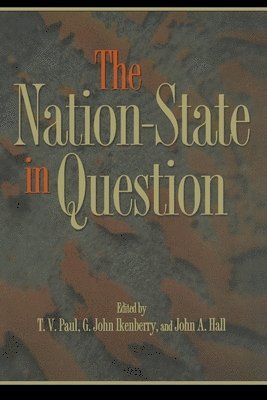
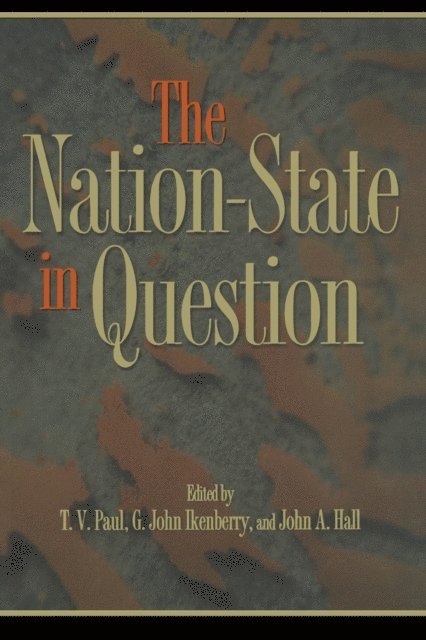
Has globalization forever undermined the state as the mighty guarantor of public welfare and security? In the 1990s, the prevailing and even hopeful view was that it had. The euphoria did not last long. Today the "return of the state" is increasingly being discussed as a desirable reality. This book is the first to bring together a group of prominent scholars from comparative politics, international relations, and sociology to systematically reassess--through a historical lens that moves beyond the standard focus on the West--state-society relations and state power at the dawn of the twenty-first century. The contributors examine the sources and forms of state power in light of a range of welfare and security needs in order to tell us what states can do today. They assess the extent to which international social forces affect states, and the capacity of states to adapt in specific issue areas. Their striking conclusion is that states have continued to be pivotal in diverse areas such as nationalism, national security, multiculturalism, taxation, and industrial relations. Offering rich insights on the changing contours of state power, The Nation-State in Question will be of interest to social scientists, students, and policymakers alike. John Hall''s introduction is followed by chapters by Peter Baldwin, John Campbell, Francesco Duina, Grzegorz Ekiert, Jeffrey Herbst, Christopher Hood, Anatoly Khazanov, Brendan O''Leary, T. V. Paul, Bernard Yack, Rudra Sil, and Minxin Pei. The conclusion is by John Ikenberry.
413 kr
Skickas inom 10-15 vardagar
1 599 kr
Skickas inom 10-15 vardagar
381 kr
Skickas inom 3-6 vardagar
486 kr
Läs direkt efter köp
482 kr
Läs direkt efter köp
1 579 kr
Skickas inom 7-10 vardagar
533 kr
Skickas inom 7-10 vardagar
522 kr
Läs direkt efter köp
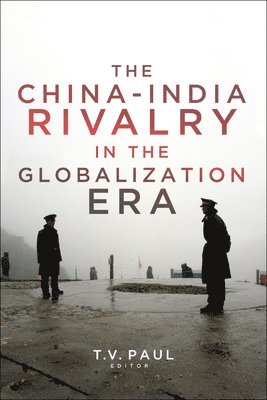
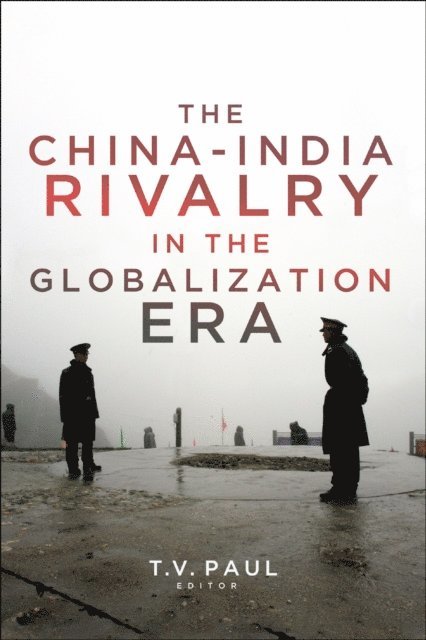
As the aspirations of the two rising Asian powers collide, the China-India rivalry is likely to shape twenty-first-century international politics in the region and far beyond.
This volume by T.V. Paul and an international group of leading scholars examines whether the rivalry between the two countries that began in the 1950s will intensify or dissipate in the twenty-first century. The China-India relationship is important to analyze because past experience has shown that when two rising great powers share a border, the relationship is volatile and potentially dangerous. India and China’s relationship faces a number of challenges, including multiple border disputes that periodically flare up, division over the status of Tibet and the Dalai Lama, the strategic challenge to India posed by China''s close relationship with Pakistan, the Chinese navy''s greater presence in the Indian Ocean, and the two states’ competition for natural resources. Despite these irritants, however, both countries agree on issues such as global financial reforms and climate change and have much to gain from increasing trade and investment, so there are reasons for optimism as well as pessimism.
The contributors to this volume answer the following questions: What explains the peculiar contours of this rivalry? What influence does accelerated globalization, especially increased trade and investment, have on this rivalry? What impact do US-China competition and China’s expanding navy have on this rivalry? Under what conditions will it escalate or end? The China-India Rivalry in the Globalization Era will be of great interest to students, scholars, and policymakers concerned with Indian and Chinese foreign policy and Asian security.
2 361 kr
Skickas inom 7-10 vardagar
797 kr
Skickas inom 3-6 vardagar
783 kr
Läs direkt efter köp
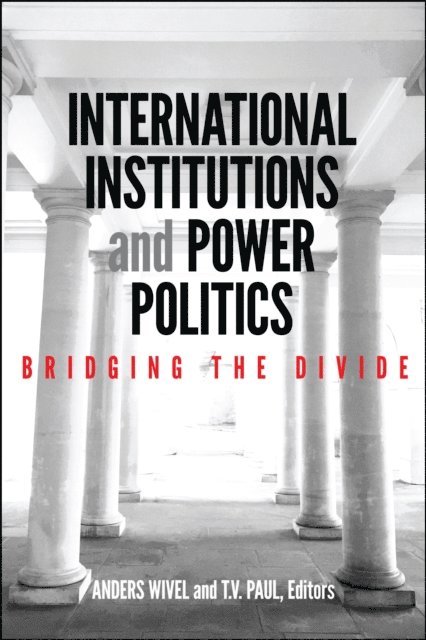
This book moves scholarly debates beyond the old question of whether or not international institutions matter in order to examine how they matter, even in a world of power politics. Power politics and international institutions are often studied as two separate domains, but this is in need of rethinking because today most states strategically use institutions to further their interests. Anders Wivel, T.V. Paul, and the international group of contributing authors update our understanding of how institutions are viewed among the major theoretical paradigms in international relations, and they seek to bridge the divides. Empirical chapters examine specific institutions in practice, including the United Nations, International Atomic Energy Agency, and the European Union. The book also points the way to future research. International Institutions and Power Politics provides insights for both international relations theory and practical matters of foreign affairs, and it will be essential reading for all international relations scholars and advanced students.
1 719 kr
Skickas inom 7-10 vardagar