357 kr
Skickas inom 10-15 vardagar
357 kr
Skickas inom 10-15 vardagar
382 kr
Skickas
1 268 kr
Skickas inom 7-10 vardagar
406 kr
Skickas inom 7-10 vardagar
347 kr
Skickas inom 7-10 vardagar
653 kr
Läs direkt efter köp
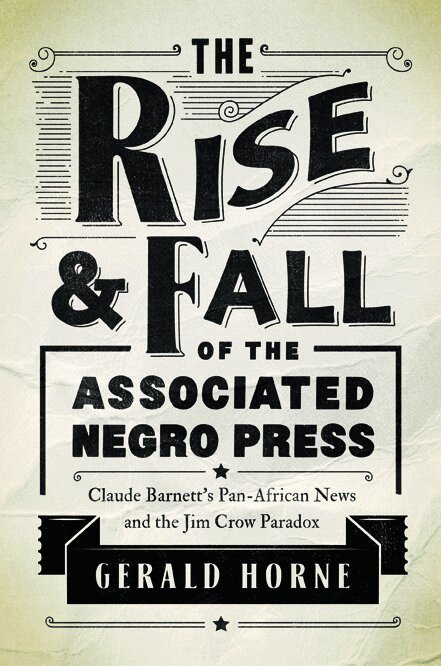
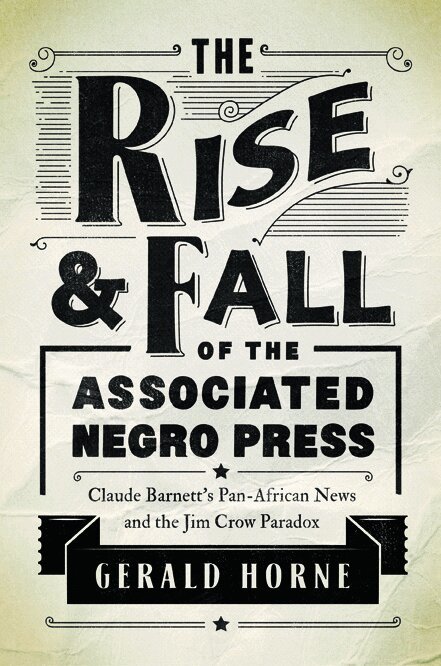
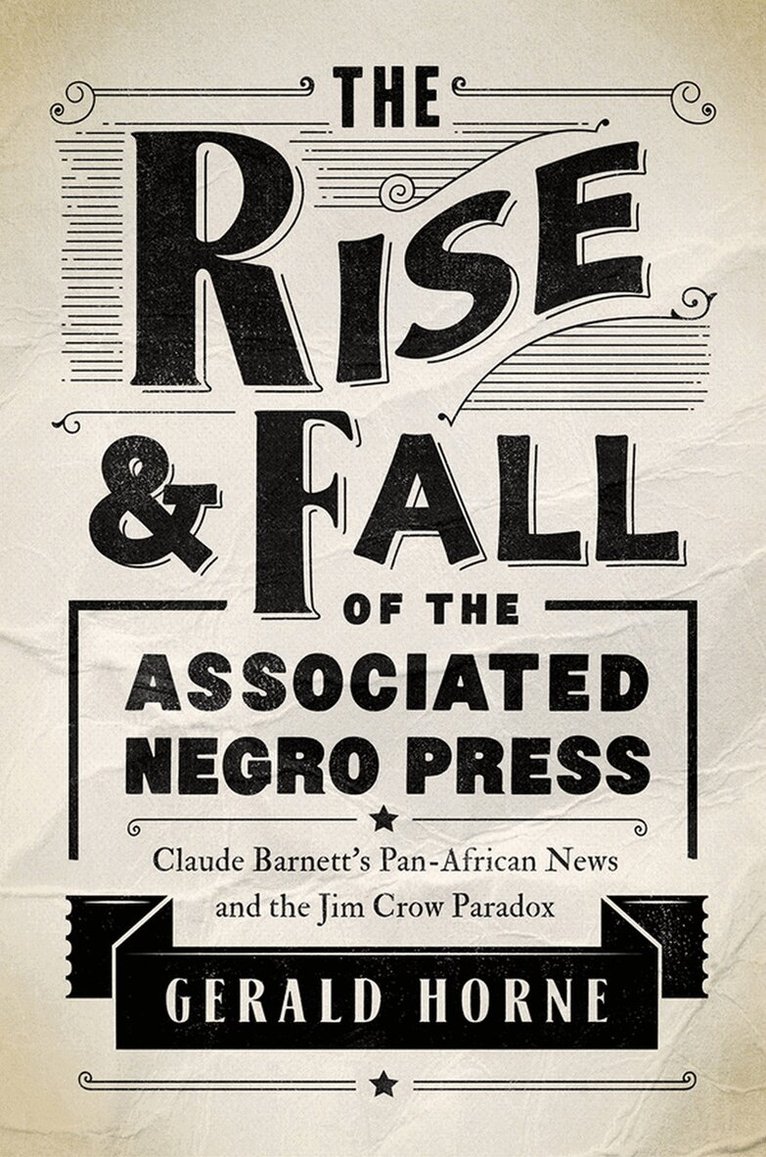
Gerald Horne weaves Barnett''s fascinating life story through a groundbreaking history of the ANP, including its deep dedication to Pan-Africanism. An activist force in journalism, Barnett also helped send doctors and teachers to Africa, advised African governments, gave priority to foreign newsgathering, and saw the African American struggle in global terms. Yet Horne also confronts Barnett''s contradictions. A member of the African American elite, Barnett''s sympathies with black aspirations often clashed with his ethics and a powerful desire to join the upper echelons of business and government. In the end, Barnett''s activist success undid his work. Horne traces the dramatic story of the ANP''s collapse as the mainstream press, retreating from Jim Crow, finally covered black issues and hired African American journalists.
Revelatory and entertaining, The Rise and Fall of the Associated Negro Press tells the story of a forgotten pioneer and the ambitious black institution he created.
387 kr
Skickas inom 7-10 vardagar
223 kr
Skickas inom 7-10 vardagar
852 kr
Läs direkt efter köp
827 kr
Skickas inom 10-15 vardagar
490 kr
Skickas inom 10-15 vardagar
546 kr
Läs direkt efter köp
1 237 kr
Skickas inom 10-15 vardagar
607 kr
Skickas inom 10-15 vardagar
2 497 kr
Skickas inom 10-15 vardagar
687 kr
Skickas inom 10-15 vardagar
470 kr
Skickas inom 7-10 vardagar
532 kr
Läs direkt efter köp
456 kr
Skickas inom 7-10 vardagar
447 kr
Skickas inom 7-10 vardagar
456 kr
Skickas inom 7-10 vardagar
424 kr
Skickas inom 7-10 vardagar
609 kr
Skickas inom 3-6 vardagar
437 kr
Skickas inom 3-6 vardagar
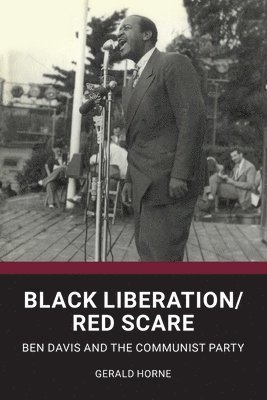
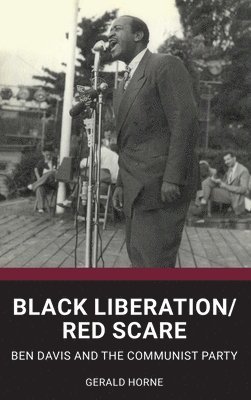
Black Liberation/Red Scare is a study of an African American Communist leader,
Ben Davis, Jr. (1904-64). Though it examines the numerous grassroots campaigns
that he was involved in, it is first and foremost a study of the man and secondarily a
study of the Communist party from the 1930s to the 1960s. By examining the public
life of an important party leader, Gerald Horne uniquely approaches the story of how
and why the party rose and fell.
Ben Davis, Jr., was the son of a prominent Atlanta publisher and businessman who
was also the top African American leader of the Republican party until the onset of
the Great Depression. Davis was trained for the black elite at Morehouse, Amherst,
and Harvard Law School. After graduating from Harvard, he joined the Communist
party, where he remained as one of its most visible leaders for thirty years. In 1943,
after being endorsed by his predecessor, Adam Clayton Powell, Jr., he was elected to
the New York City Council from Harlem and subsequently reelected by a larger
margin in 1945. Davis received support from such community figures as NAACP
leader Roy Wilkins, boxer Joe Louis, and musician Duke Ellington. While on the
council Davis fought for rent control and progressive taxation and struggled against
transit fare hikes and police brutality.
With the onset of the Red Scare and the Cold War, Davis-like the Communist party itself
was marginalized. The Cold War made it difficult for the U.S. to compete with Moscow for
the hearts and minds of African Americans while they were subjected to third-class
citizenship at home. Yet in return for civil rights concessions, African American organizations
such as the NAACP were forced to distance themselves from figures such as Ben Davis. In
1949 he was ousted unceremoniously (and perhaps illegally from the City Council. He was
put on trial, jailed in 1951, and not released until 1956, when the civil rights movement was
gathering momentum. His friendship with the King family, based upon family ties in Atlanta,
was the ostensible cause for the FBI surveillance of Dr. Martin Luther King, Jr.
COINTEL-PRO, the counterintelligence program of the FBI, which was aimed initially at
the CPUSA, made sure to keep a close eye on Davis as well. But when the civil rights
movement reached full strength in the 1960s Davis's controversial appearances at college
campuses helped to set the stage for a new era of activism at universities.
Davis died in 1964. According to Horne, the time has now come when he, along with
his good friend Paul Robeson and W. E. B. DuBois, should be regarded as a premier leader
of African- Americans and the U.S. Left during the twentieth century.
397 kr
Skickas inom 7-10 vardagar
510 kr
Skickas inom 3-6 vardagar
290 kr
Skickas inom 3-6 vardagar
241 kr
Skickas inom 7-10 vardagar
619 kr
Skickas inom 10-15 vardagar
925 kr
Skickas inom 10-15 vardagar