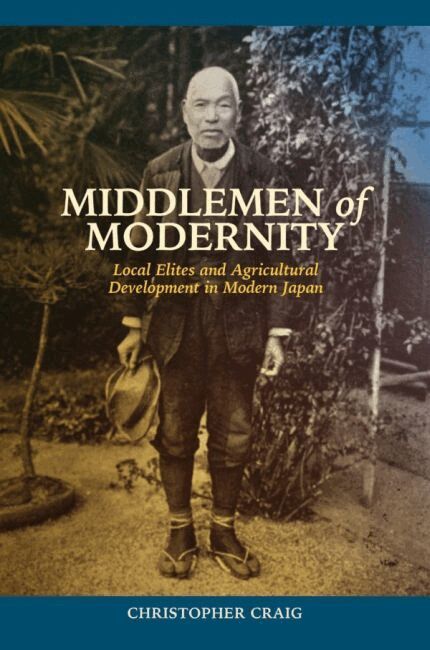
Among the challenges facing Japan in its quest to match the modern states of the Western world, none was more crucial than the development of agriculture. With a state focused more on the emblematic goals of mechanization, urbanization, and a modern military, it fell upon local elites in villages across the country to bring rice production into the modern era. Middlemen of Modernity explores these elites and their actions in a region in northeastern Japan, presenting a view of the transformation of Japanese agriculture from the late nineteenth century to the mid-twentieth century.Meiji-era agricultural policy called for village elites to mobilize their wealth and local reputations to introduce improved farming methods, transform the physical landscape, and increase agricultural production. Farmers looked to the same figures to use their elevated status and government connections to direct public funds toward building prosperous villages. But economic shocks and social change created a new generation of elites with their own vision for agricultural improvement, leading to conditions that caused famine, economic disparity, and village unrest. The official and local responses to these discrepancies brought an end to the elite leadership of agricultural development at the beginning of the twentieth century, but its legacy set the course for farming and rural Japanese society for the next half century.Middlemen of Modernity offers a new perspective on Japanese modernization, one in which farming villages were neither premodern relics nor secondary concerns for the architects of the new nation. Modernity was worked out in the mud of rice paddies, as much as in any stateroom or factory, and the communities of Miyagi and villages throughout Japan helped shape the modern state, even as they were shaped by it. Mining a wealth of local sources, Christopher Craig provides a comprehensive study studded with stories of individual actors that remains closely connected to Japan's development and presents a history of agriculture from the early Meiji period to the postwar American occupation. Craig also engages with scholarship in environmental history and food studies, and his detailed treatment of the interactions between local villagers and central bureaucrats makes a valuable contribution to studies of state-society relations.
Among the challenges facing Japan in its quest to match the modern states of the Western world, none was more crucial than the development of agriculture. With a state focused more on the emblematic goals of mechanization, urbanization, and a modern military, it fell upon local elites in villages across the country to bring rice production into the modern era. Middlemen of Modernity explores these elites and their actions in a region in northeastern Japan, presenting a view of the transformation of Japanese agriculture from the late nineteenth century to the mid-twentieth century. Meiji-era agricultural policy called for village elites to mobilize their wealth and local reputations to introduce improved farming methods, transform the physical landscape, and increase agricultural production. Farmers looked to the same figures to use their elevated status and government connections to direct public funds toward building prosperous villages. But economic shocks and social change created a new generation of elites with their own vision for agricultural improvement, leading to conditions that caused famine, economic disparity, and village unrest. The official and local responses to these discrepancies brought an end to the elite leadership of agricultural development at the beginning of the twentieth century, but its legacy set the course for farming and rural Japanese society for the next half century.Middlemen of Modernity offers a new perspective on Japanese modernization, one in which farming villages were neither premodern relics nor secondary concerns for the architects of the new nation. Modernity was worked out in the mud of rice paddies, as much as in any stateroom or factory, and the communities of Miyagi and villages throughout Japan helped shape the modern state, even as they were shaped by it. Mining a wealth of local sources, Christopher Craig provides a comprehensive study studded with stories of individual actors that remains closely connected to Japan's development and presents a history of agriculture from the early Meiji period to the postwar American occupation. Craig also engages with scholarship in environmental history and food studies, and his detailed treatment of the interactions between local villagers and central bureaucrats makes a valuable contribution to studies of state-society relations.
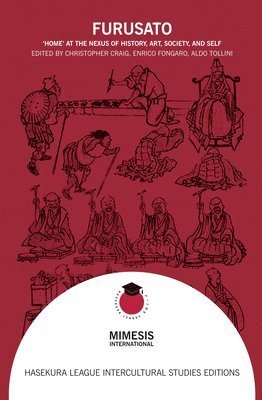
Furusato (home, hometown, and/or place of origin) is a revered and idealized concept in Japan. On an individual level, it plays a central role in personal identity; in a broader social and cultural milieu, it is constitutive of a sense of nostalgia for a romanticized and impossible past; and in the political and legal realms, it connects with ideas of Japaneseness and the construction of foreign others. While the specific forms it takes in context provide a Japanese veneer to the idea of furusato, it in fact finds close analogues in ideas of ‘home’ and ‘origin’ around the world. This volume collects essays exploring furusato and its cognates in other languages and regions. 14 scholars from Japan and Europe employ a diverse array of disciplinary tools, drawing from history, philosophy, literature, anthropology, religious studies, and art history, to map out the contours of home and elucidate the meanings contained within it.
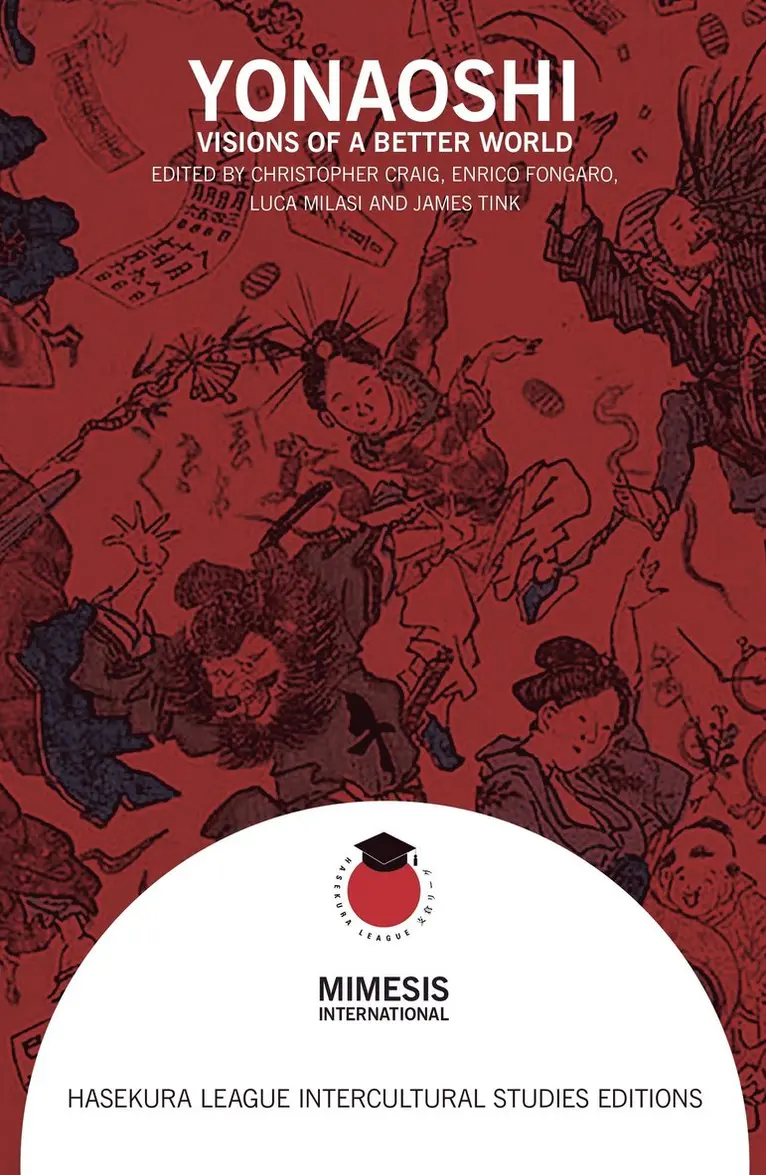
Yonaoshi (世直し、よなおし, world renewal/repair/remaking) is a Japanese term that first appeared in the context of peasant uprisings in the mid-nineteenthth century, signifying the restoration and/or recreation of the world in an ideal form. In the years since, it has been used to evoke a variety of ideas for fixing, redirecting, or recreating all human society in part or entirely. Although arising from a specifically Japanese context, the term nonetheless resonates with experiences and thought among settings around the world. This volume brings together scholars working in such diverse fields as anthropology, art history, literature, history and philosophy, focusing their research on regions across the world to discuss the concept of Yonaoshi in a diverse variety of contexts – temporal, spatial, disciplinary – and the global connections it reveals.