This volume is derived, in concept, from a conference held in honour of John Evans by the School of History and Archaeology and The Prehistoric Society at Cardiff University in March 2006. It brings together papers that address themes and landscapes on a variety of levels. They cover geographical, methodological and thematic areas that were of interest to, and had been studied by, John Evans. The volume is divided into five sections, which echo themes of importance in British prehistory. They include papers on aspects of environmental archaeology, experiments and philosophy; new research on the nature of woodland on the chalklands of southern England; coasts and islands; people, process and social order, and snails and shells - a strong part of John Evans'' career. This volume presents a range of papers examining people''s interaction with the landscape in all its forms. The papers provide a diverse but cohesive picture of how archaeological landscapes are viewed within current research frameworks and approaches, while also paying tribute to the innovative and inspirational work of one of the leading protagonists of environmental archaeology and the holistic approach to landscape interpretation.
The subject of ‘Molluscs in Archaeology’ has not been dealt with collectively for several decades. This new volume in Oxbow’s Studying Scientific Archaeology series addresses many aspects of mollusks in archaeology. It will give the reader an overview of the whole topic; methods of analysis and approaches to interpretation. It aims to be a broad based text book giving readers an insight of how to apply analysis to different present and past landscapes and how to interpret those landscapes.It includes Marine, Freshwater and land snails studies, and examines topics such as diet, economy, climate, environmental and land-use, isotopes and mollusks as artifacts. It aims to provide archaeologists and students with the first port of call giving them a) methods and principles, and b) the potential information mollusks can provide.It concentrates on analysis and interpretation most archaeologists and students can undertake and understand, and to ''review'' the ''heavier'' science in terms of potential, application and interpretational value.
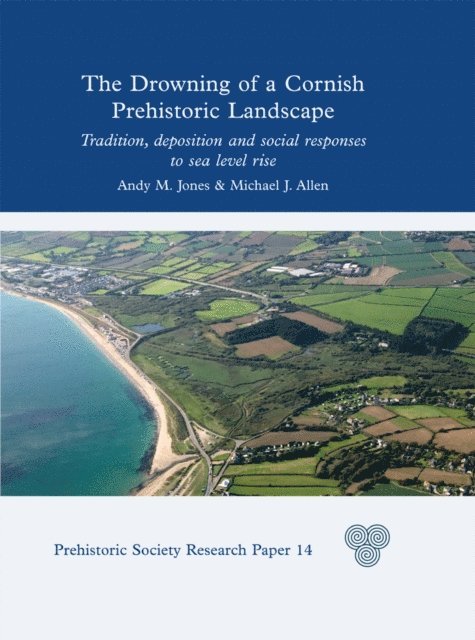
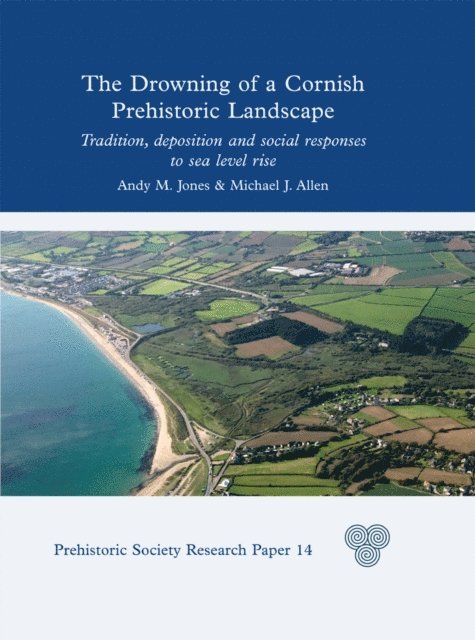
Between 2018 and 2019, Cornwall Archaeological Unit undertook two projects at Mount’s Bay, Penwith. The first involved the excavation of a Bronze Age barrow and the second, environmental augur core sampling in Marazion Marsh. Both sites lie within an area of coastal hinterland, which has been subject to incursions by rising sea levels. Since the Mesolithic, an area of approximately 1 kilometer in extent between the current shoreline and St Michael’s Mount has been lost to gradually rising sea levels. With current climate change, this process is likely to occur at an increasing rate. Given their proximity, the opportunity was taken to draw the results from the two projects together along with all available existing environmental data from the area.For the first time, the results from all previous palaeoenvironmental projects in the Mount’s Bay area have been brought together. Evidence for coastal change and sea level rise is discussed and a model for the drowning landscape presented. In addition to modeling the loss of land and describing the environment over time, social responses including the wider context of the Bronze Age barrow and later Bronze Age metalwork deposition in the Mount’s Bay environs are considered. The effects of the gradual loss of land are discussed in terms of how change is perceived, its effects on community resilience, and the construction of social memory and narratives of place.The volume presents the potential for nationally significant environmental data to survive, which demonstrates the long-term effects of climate change and rising sea levels, and peoples’ responses to these over time.
Leading scholars in these 29 commissioned papers in honour of Richard Bradley discuss key themes in prehistoric archaeology that have defined his career, such as monumentality, memory, rock art, landscape, material worlds and field practice. The scope is broad, covering both Britain and Europe, and while the focus is very much on the archaeology of later prehistory, papers also address the interconnection between prehistory and historic and contemporary archaeology. The result is a rich and varied tribute to Richard''s energy and intellectual inspiration.
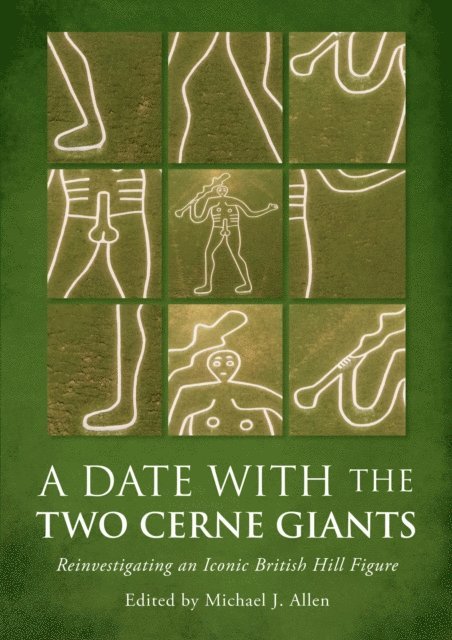
The date of the Cerne Giant has long been a matter for debate, as exemplified by a public and televised debate of March 1996, published as The Cerne Giant: An Antiquity on Trial (1999, Oxbow Books). Excavations were conducted in 2020 by the National Trust in the centenary year of its ownership of the Giant. The excavations were limited and targeted in extent and scope, the aim was to date the actual construction of the iconic figure by absolute dating methods (OSL). As the 1999 publication explained, the jury was still out – with advocates for a prehistoric origin, one connected to the period of the Civil War or a more modern one. In the event, the dates were a complete surprise, falling within the Anglo-Saxon period.The research has provided an accurate, scientifically verified date for the Cerne Giant. These unexpected results, together with the land-use history and ominous ‘disappearance’ of the Giant for six centuries, provide the platform for reconsideration and new discussion and debate.Part 1 deals with new research: the historical background and aims, the excavation results, stratigraphic finds, geoarchaeological interpretation, land-use history (environmental/land snails), and discussion. Part 2 is the wider discussion and implications derived from the results and places the Giant in his local and Saxon context. Part 3 begins with summaries of the other two excavated hill figures (the Long Man of Wilmington and the Uffington White Horse) followed by a series of essays from leading archaeologists, historians and experts in early medieval iconography.