This volume is derived, in concept, from a conference held in honour of John Evans by the School of History and Archaeology and The Prehistoric Society at Cardiff University in March 2006. It brings together papers that address themes and landscapes on a variety of levels. They cover geographical, methodological and thematic areas that were of interest to, and had been studied by, John Evans. The volume is divided into five sections, which echo themes of importance in British prehistory. They include papers on aspects of environmental archaeology, experiments and philosophy; new research on the nature of woodland on the chalklands of southern England; coasts and islands; people, process and social order, and snails and shells - a strong part of John Evans'' career. This volume presents a range of papers examining people''s interaction with the landscape in all its forms. The papers provide a diverse but cohesive picture of how archaeological landscapes are viewed within current research frameworks and approaches, while also paying tribute to the innovative and inspirational work of one of the leading protagonists of environmental archaeology and the holistic approach to landscape interpretation.
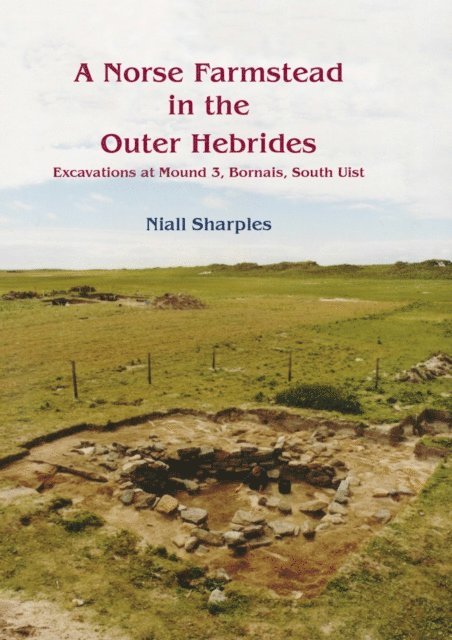
This volume examines South Uist, a small island in the soutern half of the Outer Hebrides. In the middle of the island lies the township of Bornais. This covers a particularly flat area of land which means that the three mounds can be seen all the more clearly. These mounds have been identified as being from the Viking period, with evidence of pre-Viking habitation at the site coming from Iron Age sherds. The excavation of the Bornais settlement is a long-term project, which has been going since 1994. This first volume of results of the excavation focuses on Mound 3, but includes a discussion of the topographic and geophysical survey of all the mounds. There is also considerable analysis of the environmental remains and radiocarbon dating.
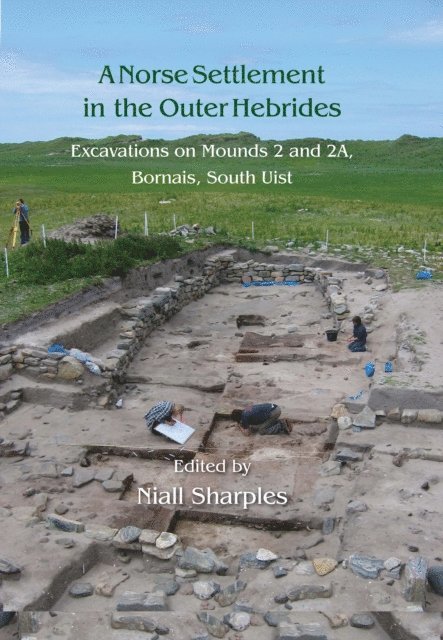
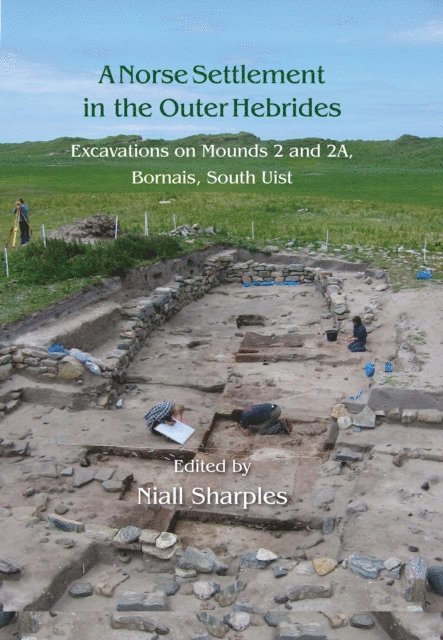
The settlement at Bornais in the Western Isles of Scotland is one of the largest rural settlements known from the Norse period in Britain. It spans the period from the fifth to the fifteenth century AD when the Atlantic seaboard was subject to drastic changes. The islands were systematically ravaged by Viking raiders and then colonised by Norse settlers. In the following centuries the islanders were central to the emergence of the Kingdom of Man and the Isles, played a crucial role in the development of the Lordship of the Isles and were finally assimilated into the Kingdom of Scotland.This volume explores the stratigraphic sequence uncovered by the excavation of Bornais mounds 2 and 2A. The excavation of mound 2 revealed a sequence of high status buildings that span the Norse occupation of the settlement. One of these houses, constructed at the end of the eleventh century AD, was a well preserved bow-walled longhouse and the careful excavation and detailed recording of the floor layers has revealed a wealth of finds that provides invaluable insight into the activities taking place in this building. The final house in this sequence is very different in form and use, and clearly indicates the increasing Scottish influence on the region at the beginning of the thirteenth century. The excavation of mound 2A provides an insight into the less prestigious areas of the settlement and contributes a significant amount of evidence on the settlement economy. The area was initially cultivated before it became a settlement local and throughout its life a focus on agricultural activities, such as grain drying and processing, appears to have been important. In the thirteenth century the mound was occupied by a craftsman who produced composite combs, gaming pieces and simple tools. The evidence presented in this volume makes a major contribution to the understanding of Norse Scotland and the colonisation of the North Atlantic in a period of dramatic transformations.
This book explores the economic evidence for the settlement at Bornais on South Uist. It reports in detail on the large assemblages of material found during the excavations at mounds 2 and 2A. There is important evidence for craft activity, such as bone and antler working and this includes the only comb making workshop from a rural settlement in Britain. A large proportion of the copper alloy, bone and antler assemblages comprise pieces of personal adornment and provide important information on the dress and thereby social relations within the settlement occupation. There is a large assemblage of iron tools and fittings, which provides important information on the activities taking place at the settlement. The information derived from the artefact assemblages is complemented by that provided by the ecofactual material. Large amounts of animal, fish and bird bones plus carbonised plant remains provide detailed information on agricultural practices, and the processing, preparation and consumption of foodstuffs. It is clear that the Norse inhabitants of the settlement had access to a much richer variety of resources than had been exploited before the Viking colonisation of the region. The settlement also had a significantly wider range of connections; material culture indicates contacts to the south with the Irish Sea ports and Bristol, and to the north with Shetland and the Viking homelands of Norway. The evidence produced by these excavations is exceptional and provides an unparalleled opportunity to explore medieval life in the Scandinavian kingdoms of Western Britain.
The settlement at Bornais consists of a complex of mounds which protrude from the relatively flat machair plain in the township of Bornais on the island of South Uist. This sandy plain has proved an attractive settlement from the Beaker period onwards; it appears to have been intensively occupied from the Late Bronze Age to the end of the Norse period. Mound 1 was the original location for settlement in this part of the machair plain; pre-Viking activity of some complexity is present and it is likely that the settlement activity started in the Middle Iron Age, if not earlier. The examination of the mound 1 deposits provides an important contribution to our understanding of the Iron Age sequence in the Atlantic province. The principal contribution comprises the large quantities of mammal, fish and bird bones, carbonised plant remains and pottery, which can be accurately dated to a fairly precise and narrow period in the 1st millennium AD. These are augmented by a substantial collection of small finds which included distinctive bone artefacts. The contextual significance of the site is based on the survival of floor deposits and a burnt-down roof; the floor deposits can be compared with abandonment and adjacent midden deposits providing contrasting contextual environments that help to clarify depositional processes. The burning down of the house and the excellent preservation of the deposits within it provide an unparalleled opportunity to examine the timber superstructure of the building and the layout of the material used by the inhabitants.