1 253 kr
Skickas inom 11-20 vardagar
1 253 kr
Skickas inom 11-20 vardagar
1 648 kr
Skickas inom 7-10 vardagar
790 kr
Skickas inom 10-15 vardagar
505 kr
Skickas inom 7-10 vardagar
924 kr
Läs direkt efter köp
918 kr
Läs direkt efter köp
2 331 kr
Skickas inom 10-15 vardagar
732 kr
Kommande
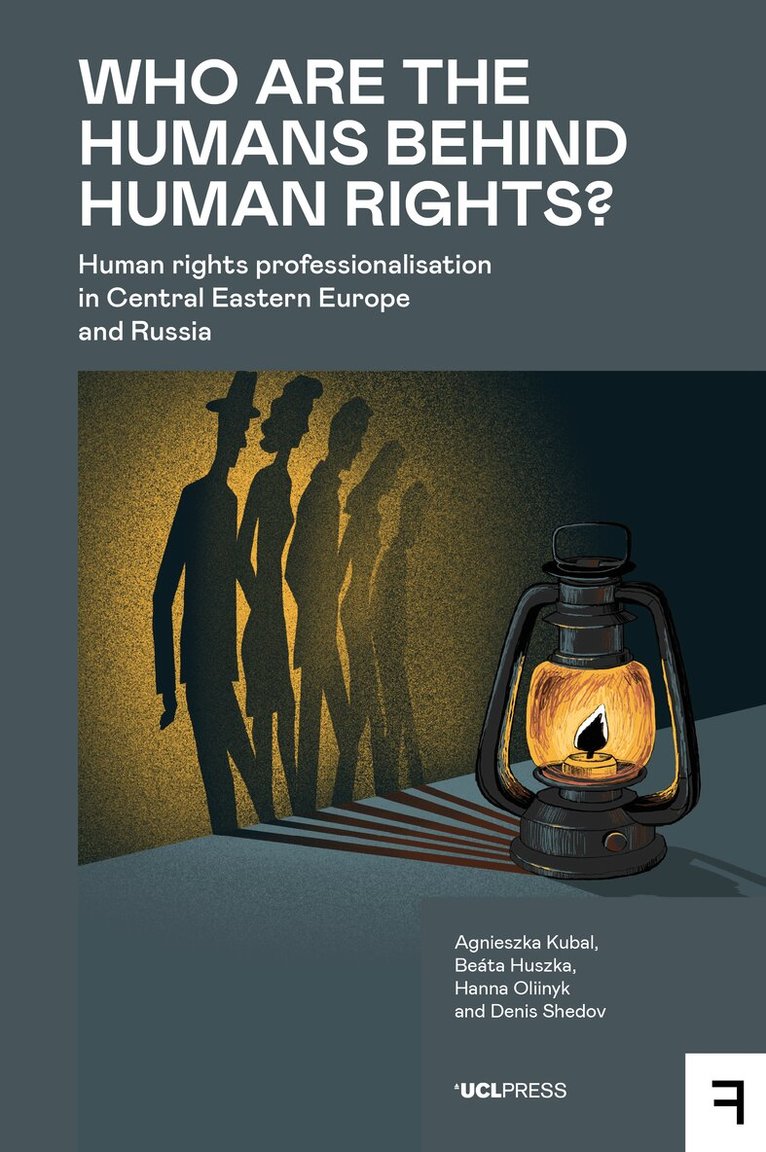
Who are the Humans behind Human Rights? offers a historically grounded and sociologically rich account of how human rights have been lived, practised and transformed in Central and Eastern Europe and Russia over the past five decades. Moving beyond law-centred and institution-focused narratives, the book shifts attention to the people who have given human rights meaning in everyday life: dissidents, activists, lawyers, judges, NGO workers and activists.
Drawing on extensive archival research and expert interviews, the book traces two interconnected processes. It reconstructs how human rights were rooted under late socialism through home-grown practices of documentation, translation and dissent. It then examines how these practices were reconfigured after 1989 through uneven professionalisation of national ‘human rights complexes’. The book’s unique contribution lies in its comparative, socio-legal approach. By placing Hungary, Poland, Ukraine, Romania and Russia side by side, it reveals diverse trajectories of human rights professionalisation, resilience and failure. In doing so, it offers a new relational and bottom-up perspective on human rights as a lived social practice shaped by history, professional networks and human experience.
509 kr
Kommande
Who are the Humans behind Human Rights? offers a historically grounded and sociologically rich account of how human rights have been lived, practised and transformed in Central and Eastern Europe and Russia over the past five decades. Moving beyond law-centred and institution-focused narratives, the book shifts attention to the people who have given human rights meaning in everyday life: dissidents, activists, lawyers, judges, NGO workers and activists.
Drawing on extensive archival research and expert interviews, the book traces two interconnected processes. It reconstructs how human rights were rooted under late socialism through home-grown practices of documentation, translation and dissent. It then examines how these practices were reconfigured after 1989 through uneven professionalisation of national ‘human rights complexes’. The book’s unique contribution lies in its comparative, socio-legal approach. By placing Hungary, Poland, Ukraine, Romania and Russia side by side, it reveals diverse trajectories of human rights professionalisation, resilience and failure. In doing so, it offers a new relational and bottom-up perspective on human rights as a lived social practice shaped by history, professional networks and human experience.
1 955 kr
Kommande