648 kr
Religion and Global Politics – serie
- Häftad, Engelska, 2022For more than half a century, Saudi Arabia--through both official and non-governmental channels--has poured billions of dollars into funding and sponsoring religious activities and Islamic causes around the world. The effect has been to propagate Wahhabism, the distinctively rigid and austere form of Islam associated with the Kingdom's religious establishment, within Muslim communities on almost every continent. This volume features essays by leading scholars who explore the origins and evolution of Saudi religious transnationalism, assess ongoing debates about the impact of these influences in various regions and localities around the world, and discuss possible future trends in light of new Saudi leadership. In addition to chapters devoted to the major actors and institutions involved in Saudi global religious propagation, the volume contains a wide range of country case studies that offer in-depth analysis of the nature and impact of Saudi religious influence in nations across multiple world regions.
- Häftad, Engelska, 2020
473 kr
Skickas inom 7-10 vardagar
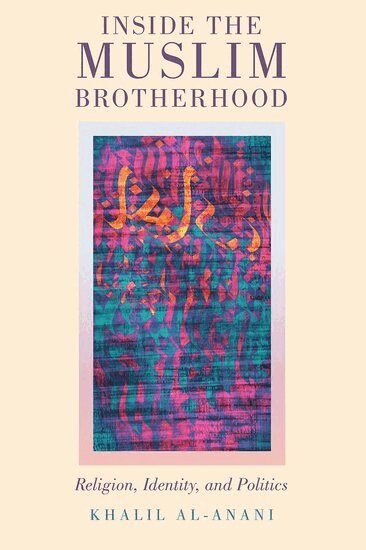
Over the past three decades, through rises and falls in power, regime repression and exclusion, the Egyptian Muslim Brotherhood has endured, proving more resilient than any other Islamist movement in the world. In this book Khalil al-Anani explores the factors that have enabled the Brotherhood to survive so long within an ever-changing political landscape. Inside the Muslim Brotherhood unpacks the principal factors that shape the movement's identity, organization, and activism. Investigating the processes of socialization, indoctrination, recruitment, identification, networking, and mobilization that characterize the movement, al-Anani argues that the Brotherhood is not merely a political actor seeking power but an identity-maker that aims to change societal values, norms, and morals to line up with its ideology and worldview. The Brotherhood is involved in an intensive process of meaning construction and symbolic production that shapes individuals' identity and gives sense to their lives. The result is a distinctive code of identity that binds members together, maintains their activism, and guides their behavior in everyday life. Al-Anani attributes the Brotherhood's longevity to its tight-knit structure coupled with a complex membership system that has helped them resist regime penetration. The book also explores the divisions and differences within the movement and how these affect its strategy and decisions. The culmination of over a decade of research and interviews with leaders and members of the movement, this book challenges the dominant narratives about Islamists and Islamism as a whole. - Inbunden, Engelska, 2017
1 894 kr
Skickas inom 7-10 vardagar
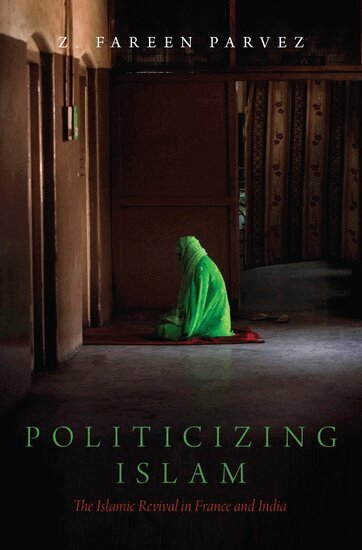
Politicizing Islam is a comparative ethnographic study of Islamic revival movements in France and India, home to the largest Muslim minority populations in Europe and Asia respectively. Both diverse secular democracies, France and India pursue divergent policies toward their religious and other minorities. Yet they face similar struggles over Islam that challenge the substance of national identity and the core of each country's secular doctrine. After 9/11, debates about the role of Islamic madrasas and practices like the headscarf became prominent. How is it that Islam, as an object of debate, is politicized across disparate contexts at the very moment when many Muslim communities have withdrawn from the state? Why exactly is a movement deemed "communitarian" or a threatening form of "political Islam"? Why is the issue of gender central to politicization, even while women are increasingly active agents in Islamic revivals? This book seeks to answer these questions by examining the relationship between religion and politics and showing how it is created and lived by Muslim communities in both countries. Z. Fareen Parvez conducted her fieldwork over the course of two years in the French city of Lyon, and its outer banlieues, and the Indian city of Hyderabad. She immersed herself in mosque communities, women's welfare centers, Islamic study circles, and philanthropic associations, to provide an in-depth view of middle-class and elite Muslims, as well poor and subaltern Muslims in stigmatized neighborhoods. She illuminates how Muslims across class divisions make claims on the secular state and struggle to improve their lives as denigrated minorities. In Hyderabad, Muslim elites fight for redistribution to the poor, who then use their patronage to practice autonomy from the state and build vibrant political communities. In Lyon, middle-class Muslims face widespread discrimination and negotiate with the state for religious recognition. But they remain estranged from Muslims in the working-class banlieues who have embraced a sectarian form of Islam and retreated into the private sphere. Parvez shows how these diverse movements originated in either a flexible or militant secularism, and how Muslim class relations are ultimately tied to other debates within the Islamic tradition-Muslim women's struggle for equal rights, and the potential for minority democratic participation. The book shows how Islam is politicized top-down by the state and then re-politicized by revival movements on the ground. But this re-politicization is highly dependent on Muslim class relations-and it masks an array of practices, social relations, potentialities, and ultimately, different conceptions of politics as rooted in either community or the state. - Inbunden, Engelska, 2015
931 kr
Skickas inom 7-10 vardagar
In The Middle Path of Moderation in Islam, leading Islamic law expert Mohammad Hashim Kamali examines the concept of wasatiyyah, or moderation, arguing that scholars, religious communities, and policy circles alike must have access to this governing principle that drives the silent majority of Muslims, rather than focusing on the extremist fringe. Kamali explores wasatiyyah in both historical/conceptual terms and in contemporary/practical terms. Tracing the definition and scope of the concept from the foundational sources of Islam, the Qu'ran and Hadith, he demonstrates that wasatiyyah has a long and well-developed history in Islamic law and applies the concept to contemporary issues of global policy, such as justice, women's rights, environmental and financial balance, and globalization. Framing his work as an open dialogue against a now-decades long formulation of the arguably destructive Huntingtonian "clash of civilizations" thesis as well as the public rhetoric of fear of Muslim extremism since the attacks of Sept. 11, 2001, Kamali connects historical conceptions of wasatiyyah to the themes of state and international law, governance, and cultural maladies in the Muslim world and beyond. Both a descriptive and prescriptive meditation on a key but often neglected principle of Islam, The Middle Path of Moderation in Islam provides insight into an idea that is in the strategic interest of the West both to show and practice for themselves and to recognize in Muslim countries. - Inbunden, Engelska, 2016
1 894 kr
Skickas inom 7-10 vardagar
In 1870, the Orthodox Bulgarian Exarchate was established by the Sultan's decree without the consent of the Patriarchate of Constantinople. The inability to reach a compromise led to a schism within Orthodoxy and divided Ottoman Christian communities into traditionalists versus nationalists, Greeks versus Slavs and Arabs. Those conflicts were exacerbated by the Russo-Turkish war of 1877-1878, refugee movements, and the increasingly deadly rivalry of irredentist Balkan states.Containing Balkan Nationalism focuses on the implications of the Bulgarian national movement that developed in the context of Ottoman modernization and of European imperialism in the Near East. The movement aimed to achieve the status of an independent church, separating ethnic Bulgarians from the jurisdiction of the Patriarchate of Constantinople. Independent church status meant cultural and legal autonomy in the Islamic structure of the Ottoman Empire.Denis Vovchenko highlights the efforts put forth by ecclesiastics, publicists, and diplomats in Russia, the Ottoman Empire, Greece, and Bulgaria in developing and implementing various plans to reconcile ethnic differences within existing religious and dynastic frameworks. The arrangements were often inspired by modern visions of a political and cultural union of Orthodox Slavs and Greeks. Whether put into effect or simply discussed, they demonstrate the strength and flexibility of supranational identities and institutions on the eve of the First World War. The book should encourage contemporary analysts and policymakers to explore the potential of such traditional loyalties to defuse ethnic tensions today and to serve as organic alternatives to generic mechanical models of power-sharing and federation. - Inbunden, Engelska, 2016
2 031 kr
Skickas inom 7-10 vardagar
Inside the Muslim Brotherhood provides a comprehensive analysis of the Muslim Brotherhood in Egypt since 1981. The book unpacks the principal factors that shape the Brotherhood's identity, organization, and activism, investigating the processes of socialization, indoctrination, recruitment, identification, networking, and mobilization utilized by the movement. Khalil al-Anani argues that the Brotherhood is not merely a political actor seeks power but also an identity maker that aims to change societal values, norms, and morals to line up with its ideology and worldview. As a socio-political movement, he finds, the Brotherhood is involved in an intensive process of meaning construction and symbolic production that shape individuals' identity and gives sense to their lives. The result is Brotherhood a distinctive code of identity that governs the norms, values, and regulations that bind members together, maintains their activism, and guides their behavior in everyday life. The book also explains the Brotherhood's durability and how it endured regime repression and exclusion over the past three decades, which al-Anani attributes to the organization's structure and coherence. A tight-knit structure coupled with complex membership system has allowed the Brotherhood to resist regime penetration. Lastly, the book explores the balance of power within the Brotherhood. It investigates the divisions and differences within the movement and how this affects its strategy and decisions. - Inbunden, Engelska, 2022
1 469 kr
Skickas inom 10-15 vardagar
Drawing from a wide range of archival and secondary Greek, Bulgarian, Ottoman, and Turkish sources, Islam and Nationalism in Modern Greece, 1821-1940 explores the way in which the Muslim populations of Greece were ruled by state authorities from the time of Greece's political emancipation from the Ottoman Empire in the 1820s until the country's entrance into the Second World War, in October 1940. The book examines how state rule influenced the development of the Muslim population's collective identity as a minority and affected Muslim relations with the Greek authorities and Orthodox Christians. Greece was the first country in the Balkans to become an independent state and a pioneer in experimenting with minority issues. Greece's ruling framework and many state administrative measures and patterns would serve as templates in other Christian Orthodox Balkan states with Muslim minorities (Bulgaria, Romania, Serbia, Cyprus). Muslim religious officials were empowered with authority which they did not have in Ottoman times, and aspects of the Islamic law (Sharia) were incorporated into the state legal system to be used for Muslim family and property affairs. Religion remained a defining element in the political, social, and cultural life of the post-Ottoman Balkans; Stefanos Katsikas explores the role religious nationalism and public institutions have played in the development and preservation of religious and ethnic identity. Religion remains a key element of individual and collective identity but only as long as there are strong institutions and the political framework to support and maintain religious diversity. - Inbunden, Engelska, 2017
2 199 kr
Skickas inom 7-10 vardagar
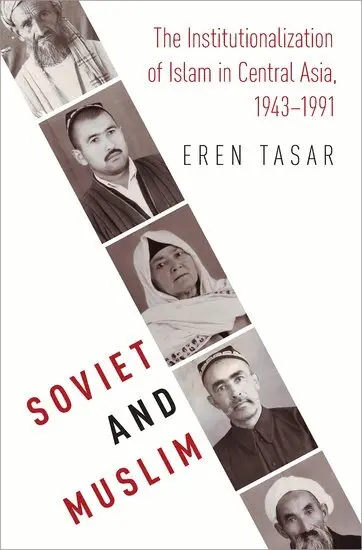
Central Asia was the sole Muslim region of the former Russian Empire that lacked a centralized Islamic organization, or muftiate. When Soviet leader Joseph Stalin created such a body for the region as part of his religious reforms during World War II, he acknowledged that the Muslim faith could enjoy some legal protection under Communist rule. From a skeletal and disorganized body run by one family of Islamic scholars out of a modest house in Tashkent's old city, this muftiate acquired great political importance in the eyes of Soviet policymakers and equally significant symbolic significance for many Muslims.Relying on recently declassified Central Asian archival sources, most of them never seen before by historians, Eren Tasar argues that Islam did not merely "survive" the decades from World War II until the Soviet collapse in 1991, but actively shaped the political and social context of Soviet Central Asia. Muslim figures, institutions, and practices evolved in response to the social and political reality of Communist rule. Through an analysis that spans all aspects of Islam under Soviet rule-from debates about religion inside the Communist Party, to the muftiate's efforts to acquire control over mosques across Central Asia, changes in Islamic practices and dogma, and overseas propaganda targeting the Islamic World-Soviet and Muslim offers a radical new reading of Islam's resilience and evolution under atheism. - Häftad, Engelska, 2017
634 kr
Skickas inom 7-10 vardagar
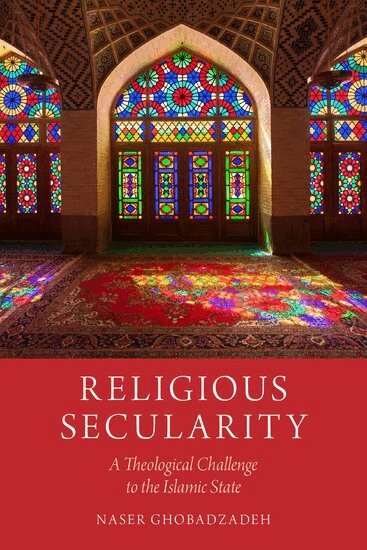
Renewed authoritarianism, national disintegration, sectarian violence, and the increasing radicalization of Jihadi-Salafism since the Arab uprisings have significantly blurred visions for constructive religion-state-society relations in the MENA region. The dissolution of the 'Arab Spring' seems to have revived the questionable notion of Islamic exceptionalism. In sharp contrast, this book seeks to invalidate the supposed incompatibility of Islam and secular democracy. It outlines a complex Islamic political theology that undermines the religious basis of the unification of religion and state, offering religious justification for their separation. Naser Ghobadzadeh coins the seemingly oxymoronic notion 'religious secularity' to encapsulate the Islamic quest to emancipate religion from state. In simultaneous opposition to both the politicisation of Islam and authoritarian secularism, religious secularity employs Islamic sources such as the Quran and Hadiths to articulate a robust religious rationale for state secularism. Whereas mainstream literature frequently presents being secular as 'antithetical to being religious', religious secularity blurs the boundaries between the 'religious' and the 'secular'. This book suggests that the rift between the religious and the secular is no more pronounced than the relationship between the two understood in dualistic terms, as evinced by Islamic history. Thus, religious secularity supports a theoretical shift away from the religious-secular dichotomy. - Inbunden, Engelska, 2019
1 972 kr
Skickas inom 7-10 vardagar
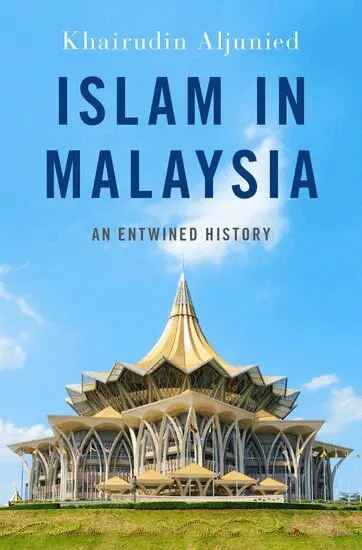
This book surveys the growth and development of Islam in Malaysia from the eleventh to the twenty-first century, investigating how Islam has shaped the social lives, languages, cultures and politics of both Muslims and non-Muslims in one of the most populous Muslim regions in the world. Khairudin Aljunied shows how Muslims in Malaysia built upon the legacy of their pre-Islamic past while benefiting from Islamic ideas, values, and networks to found flourishing states and societies that have played an influential role in a globalizing world. He examines the movement of ideas, peoples, goods, technologies, arts, and cultures across into and out of Malaysia over the centuries. Interactions between Muslims and the local Malay population began as early as the eighth century, sustained by trade and the agency of Sufi as well as Arab, Indian, Persian, and Chinese scholars and missionaries. Aljunied looks at how Malay states and societies survived under colonial regimes that heightened racial and religious divisions, and how Muslims responded through violence as well as reformist movements. Although there have been tensions and skirmishes between Muslims and non-Muslims in Malaysia, they have learned in the main to co-exist harmoniously, creating a society comprising of a variety of distinct populations. This is the first book to provide a seamless account of the millennium-old venture of Islam in Malaysia. - Inbunden, Engelska, 2001
1 353 kr
Skickas inom 7-10 vardagar
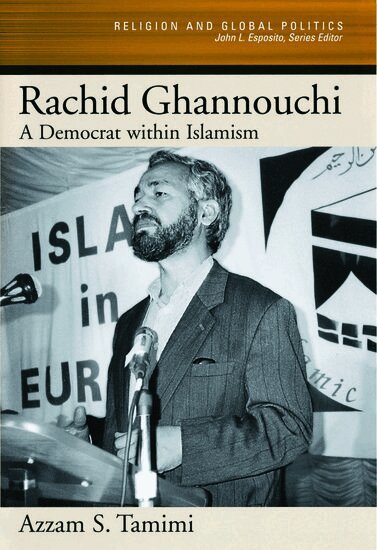
In this book, Azzam Tamimi introduces the thought of Sheikh Rachid Ghannouchi, the renowned Islamist political activist who heads Tunisia's most important - albeit banned - Islamist political opposition to the current authoritarian regime of Zine Abidine Ben Ali. Ghannouchi is the leader of a school in modern Islamic political thought that advocates democracy and pluralism. He believes democracy to be a set of mechanisms for guaranteeing the sovereignty of the people and for supplying safety valves against corruption and the hegemonic monopoly of power. While insisting on the compatibility of democracy with Islam, he believes that because of their secular foundations contemporary forms of liberal democracy may not suit Muslim societies. He insists, however, that Islam is compatible with Western thought in matters concerning the system of government, human rights, and civil liberties. - Inbunden, Engelska, 2001
2 627 kr
Skickas inom 7-10 vardagar
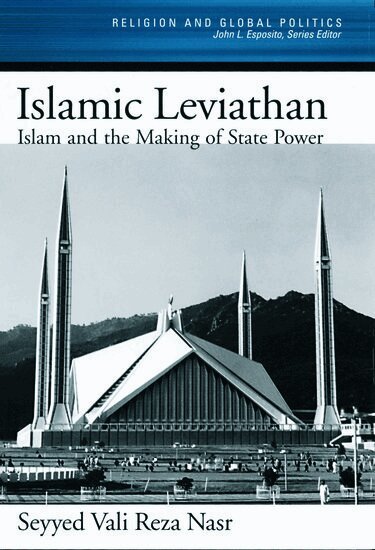
Islamization is commonly seen as the work of Islamist movements who have forced their ideology on ruling regimes and other hapless social actors. There is little doubt that ruling regimes and disparate social and political actors alike are pushed in the direction of Islamic politics by Islamist forces. However, Islamist activism and its revolutionary and utopian rhetoric only partly explain this trend. In fact, argues Vali Nasr, the state itself plays a key role in embedding Islam in the politics of Muslim countries. The turn to Islam, argues Nasr, is a facet of the state's drive to establish hegemony over society and expand its power and control. He focuses on the cases of Malaysia and Pakistan to demonstrate his thesis. - Inbunden, Engelska, 2003
2 948 kr
Skickas inom 7-10 vardagar
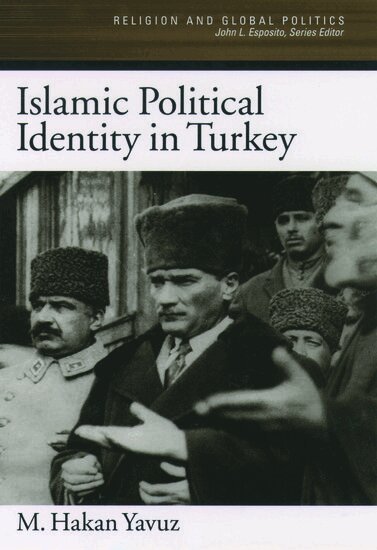
In November of 2002, the Justice and Development Party swept to victory in the Turkish parliamentary elections. Because of the party's Islamic roots, its electoral triumph has sparked a host of questions both in Turkey and in the West: Does the party harbor a secret Islamist agenda? Will the new government seek to overturn nearly a century of secularization stemming from Kemal Atatürk's early-twentieth-century reforms? Most fundamentally, is Islam compatible with democracy? In this penetrating work, M. Hakan Yavuz seeks to answer these questions, and to provide a comprehensive analysis of Islamic political identity in Turkey. He begins in the early twentieth century, when Kemal Atatürk led Turkey through a process of rapid secularization and crushed Islamic opposition to his authoritarian rule. Yavuz argues that, since Atatürk's death in 1938, however, Turkey has been gradually moving away from his militant secularism and experiencing "a quiet Muslim reformation." Islamic political identity is not homogeneous, says Yavuz, but can be modern and progressive as well as conservative and potentially authoritarian. While the West has traditionally seen Kemalism as an engine for reform against "reactionary" political Islam, in fact the Kemalist establishment has traditionally used the "Islamic threat" as an excuse to avoid democratization and thus hold on to power. Yavuz offers an account of the "soft coup" of 1997, in which the Kemalist military-bureaucratic establishment overthrew the democratically elected coalition government, which was led by the pro-Islamic Refah party. He argues that the soft coup plunged Turkey into a renewed legitimacy crisis which can only be resolved by the liberalization of the political system. The book ends with a discussion of the most recent election and its implications for Turkey and the Muslim world. Yavuz argues that Islamic social movements can be important agents for promoting a democratic and pluralistic society, and that the Turkish example holds long term promise for the rest of the Muslim world. Based on extensive fieldwork and interviews, this work offers a sophisticated new understanding of the role of political Islam in one of the world's most strategically important countries. - Häftad, Engelska, 2004
782 kr
Skickas inom 7-10 vardagar
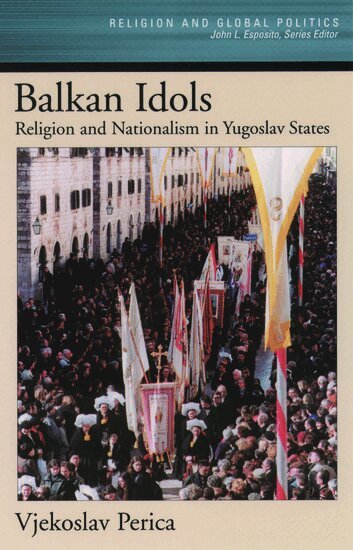
Reporting from the heartland of Yugoslavia in the 1970s, Washington Post correspondent Dusko Doder described "a landscape of Gothic spires, Islamic mosques, and Byzantine domes." A quarter century later, this landscape lay in ruins. In addition to claiming tens of thousands of lives, the former Yugoslavia's four wars ravaged over a thousand religious buildings, many purposefully destroyed by Serbs, Albanians, and Croats alike, providing an apt architectural metaphor for the region's recent history. Rarely has the human impulse toward monocausality--the need for a single explanation--been in greater evidence than in Western attempts to make sense of the country's bloody dissolution. From Robert Kaplan's controversial Balkan Ghosts, which identified entrenched ethnic hatreds as the driving force behind Yugoslavia's demise to NATO's dogged pursuit and arrest of Slobodan Milosevic, the quest for easy answers has frequently served to obscure the Balkans' complex history. Perhaps most surprisingly, no book has focused explicitly on the role religion has played in the conflicts that continue to torment southeastern Europe. Based on a wide range of South Slav sources and previously unpublished, often confidential documents from communist state archives, as well as on the author's own on-the-ground experience, Balkan Idols explores the political role and 1nfluence of Serbian Orthodox, Croatian Catholic, and Yugoslav Muslim religious organizations over the course of the last century. Vjekoslav Perica emphatically rejects the notion that a "clash of civilizations" has played a central role in fomenting aggression. He finds no compelling evidence of an upsurge in religious fervor among the general population. Rather, he concludes, the primary religious players in the conflicts have been activist clergy. This activism, Perica argues, allowed the clergy to assume political power without the accountablity faced by democratically-elected officials.What emerges from Perica's account is a deeply nuanced understanding of the history and troubled future of one of Europes most volatile regions. - Häftad, Engelska, 2005
888 kr
Skickas inom 7-10 vardagar
In November of 2002, the Justice and Development Party swept to victory in the Turkish parliamentary elections. Because of the party's Islamic roots, its electoral triumph has sparked a host of questions both in Turkey and in the West: Does the party harbor a secret Islamist agenda? Will the new government seek to overturn nearly a century of secularization stemming from Kemal Atatürk's early-twentieth-century reforms? Most fundamentally, is Islam compatible with democracy? In this penetrating work, M. Hakan Yavuz seeks to answer these questions, and to provide a comprehensive analysis of Islamic political identity in Turkey. He begins in the early twentieth century, when Kemal Atatürk led Turkey through a process of rapid secularization and crushed Islamic opposition to his authoritarian rule. Yavuz argues that since Atatürk's death in 1938, however, Turkey has been gradually moving away from his militant secularism and experiencing "a quiet Muslim reformation." Islamic political identity is not homogeneous, says Yavuz, but can be modern and progressive as well as conservative and potentially authoritarian. While the West has traditionally seen Kemalism as an engine for reform against "reactionary" political Islam, in fact the Kemalist establishment has traditionally used the "Islamic threat" as an excuse to avoid democratization and thus hold on to power. Yavuz offers an account of the "soft coup" of 1997, in which the Kemalist military-bureaucratic establishment overthrew the democratically elected coalition government, which was led by the pro-Islamic Refah party. He argues that the soft coup plunged Turkey into a renewed legitimacy crisis which can only be resolved by the liberalization of the political system. The book ends with a discussion of the most recent election and its implications for Turkey and the Muslim world. Yavuz argues that Islamic social movements can be important agents for promoting a democratic and pluralistic society, and that the Turkish example holds long term promise for the rest of the Muslim world. Based on extensive fieldwork and interviews, this work offers a sophisticated new understanding of the role of political Islam in one of the world's most strategically important countries. - Inbunden, Engelska, 2007
1 720 kr
Skickas inom 7-10 vardagar
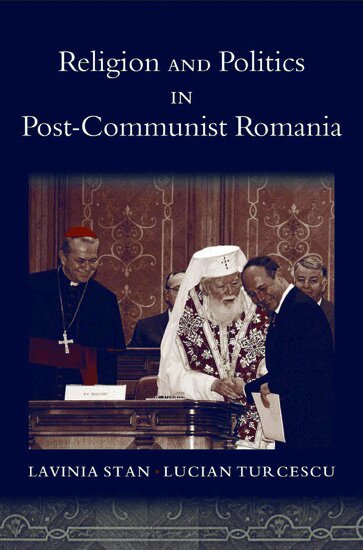
In the post-communist era it has become evident that the emerging democracies in Eastern Europe will be determined by many factors, only some of them political. Throughout the region, the Orthodox, Roman Catholic, and Greek Catholic churches have tried to impose their views on democracy through direct political engagement. Moreover, surveys show that the churches (and the army) enjoy more popular confidence than elected political bodies such as parliaments. These results reflect widespread disenchantment with a democratization process that has allowed politicians to advance their own agendas rather than work to solve the urgent socio-economic problems these countries face. In this penetrating study, Lavinia Stan and Lucian Turcescu investigate the interaction of religion and politics in one such country, Romania. Facing internal challenges and external competitions from other religions old and new, the Orthodox Church in Romania has sought to consolidate its position and ensure Romania's version of democracy recognizes its privileged position of "national Church", enforcing the Church's stances on issues such as homosexuality and abortion. The post-communist state and political elite in turn rely on the Church for compliance with educational and cultural policies and to quell the insistent demands of the Hungarian minority for autonomy. Stan and Turcescu examine the complex relationship between church and state in this new Romania, providing analysis in key areas: church collaboration with communist authorities, post-communist electoral politics, nationalism and ethno-politics, restitution of Greek Catholic property, religious education, and sexual behavior and reproduction. As the first scholars to be given access to confidential materials from the archives of the communist political police, the notorious Securitate, Stan and Turcescu also examine church archives, legislation, news reports, and interviews with politicians and church leaders. This study will move the debate from common analyses of nationalism in isolation to more comprehensive investigations which consider the impact of religious actors on a multitude of other issues relevant to the political and social life of the country. - Inbunden, Engelska, 2011
1 793 kr
Skickas inom 7-10 vardagar
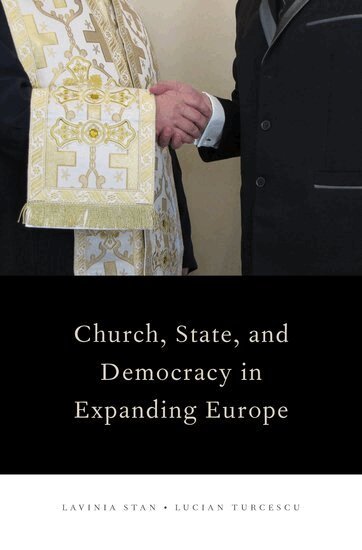
Lavinia Stan and Lucian Turcescu examine the relationship between religion and politics in ten former communist Eastern European countries. Contrary to widespread theories of increasing secularization, Stan and Turcescu argue that in most of these countries, the populations have shown themselves to remain religious even as they embrace modernization and democratization.Church-state relations in the new EU member states can be seen in political representation for church leaders, governmental subsidies, registration of religions by the state, and religious instruction in public schools. Stan and Turcescu outline three major models: the Czech church-state separation model, in which religion is private and the government secular; the pluralist model of Hungary, Bulgaria and Latvia, which views society as a group of complementary but autonomous spheres - for example, education, the family, and religion - each of which is worthy of recognition and support from the state; and the dominant religion model that exists in Poland, Romania, Estonia, and Lithuania, in which the government maintains informal ties to the religious majority.Church, State, and Democracy in Expanding Europe offers critical tools for understanding church-state relations in an increasingly modern and democratic Eastern Europe. - Häftad, Engelska, 2010
775 kr
Skickas inom 7-10 vardagar
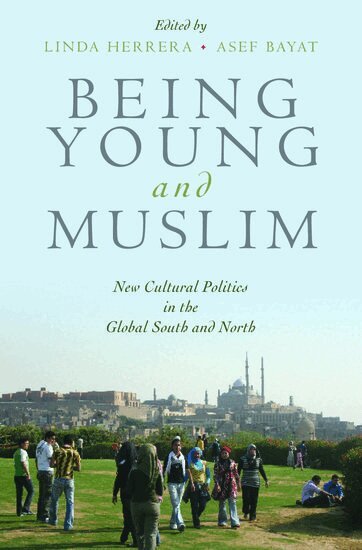
"This is an excellent collection of essays on youth in a number of Muslim majority (and minority) societies in the context of globalization and modernity. A particular strength of this volume is its ability to highlight the multiple and contested roles of religion and personal faith in the fashioning of contemporary youthful Muslim identities. Such insights often challenge secular Western master narratives of modernity and suggest credible reconceptualizations of what it means to be young and modern in a broad swath of the world today."-- Asma Afsaruddin, Professor of Islamic Studies, Indiana UniversityIn recent years, there has been a proliferation of interest in youth issues and Muslim youth in particular. Young Muslims have been thrust into the global spotlight in relation to questions about security and extremism, work and migration, and rights and citizenship. This book interrogates the cultures and politics of Muslim youth in the global South and North to understand their trajectories, conditions, and choices. Drawing on wide-ranging research from Indonesia to Iran and Germany to the U.S., it shows that while the majority of young Muslims share many common social, political, and economic challenges, they exhibit remarkably diverse responses to them. Far from being "exceptional," young Muslims often have as much in common with their non-Muslim global generational counterparts as they share among themselves. As they migrate, forge networks, innovate in the arts, master the tools of new media, and assert themselves in the public sphere, Muslim youth have emerged as important cultural and political actors on a world stage. - Inbunden, Engelska, 2010
1 408 kr
Skickas inom 7-10 vardagar
"This is an excellent collection of essays on youth in a number of Muslim majority (and minority) societies in the context of globalization and modernity. A particular strength of this volume is its ability to highlight the multiple and contested roles of religion and personal faith in the fashioning of contemporary youthful Muslim identities. Such insights often challenge secular Western master narratives of modernity and suggest credible reconceptualizations of what it means to be young and modern in a broad swath of the world today."-- Asma Afsaruddin, Professor of Islamic Studies, Indiana UniversityIn recent years, there has been a proliferation of interest in youth issues and Muslim youth in particular. Young Muslims have been thrust into the global spotlight in relation to questions about security and extremism, work and migration, and rights and citizenship. This book interrogates the cultures and politics of Muslim youth in the global South and North to understand their trajectories, conditions, and choices. Drawing on wide-ranging research from Indonesia to Iran and Germany to the U.S., it shows that while the majority of young Muslims share many common social, political, and economic challenges, they exhibit remarkably diverse responses to them. Far from being "exceptional," young Muslims often have as much in common with their non-Muslim global generational counterparts as they share among themselves. As they migrate, forge networks, innovate in the arts, master the tools of new media, and assert themselves in the public sphere, Muslim youth have emerged as important cultural and political actors on a world stage. - Inbunden, Engelska, 2010
1 848 kr
Skickas inom 7-10 vardagar
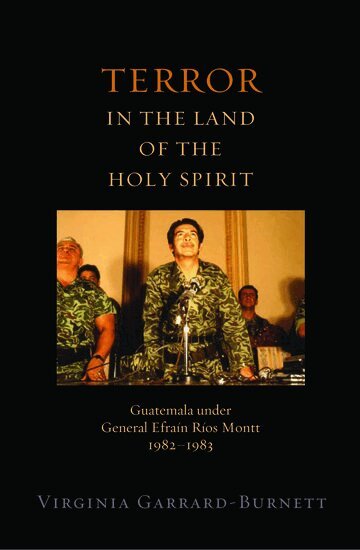
Between 1982 and 1983, in the name of anti-communism the military government of Guatemala prosecuted a scorched-earth campaign of terror against largely Mayan rural communities. Under the leadership of General Efrain Rios Montt, tens of thousands of people perished in what is now known as la violencia, or 'the Mayan holocaust.' Rios Montt, Guatemala's president-by-coup was, and is, an outspokenly born-again Pentecostal Christian - a fact that would seem to be at odds with the atrocities that took place on his watch. Virginia Garrard-Burnett's book is the first in English to view the Rios Montt era through the lens of history. Drawing on newly-available primary sources such as guerrilla documents, evangelical pamphlets, speech transcripts, and declassified US government records, she is able to provide a fine-grained picture of what happened during Rios Montt's rule. Looking back over Guatemalan history between 1954 and the late 1970s, she finds that three decades of war engendered an ideology of violence that cut across class, cultures, communities, religions, and even families. Many Guatemalans converted to Pentecostalism during this period, she says, because of the affinity between these churches' apocalyptic message and the violence of their everyday reality. Examining the role of outside players and observers: The US government, evangelical groups, and the media, she contends that self-interest, willful ignorance, and distraction permitted the human rights tragedies within Guatemala to take place without challenge from the outside world. - Inbunden, Engelska, 2021
1 591 kr
Skickas inom 7-10 vardagar
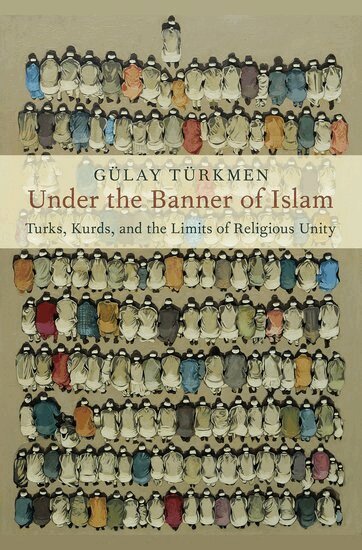
Sunni Islam has played an ambivalent role in Turkey's Kurdish conflict--both as a conflict resolution tool and as a tool of resistance. Under the Banner of Islam uses Turkey as a case study to understand how religious, ethnic, and national identities converge in ethnic conflicts between co-religionists. Gülay Türkmen asks a question that informs the way we understand religiously homogeneous ethnic conflicts today: Is it possible for religion to act as a resolution tool in these often-violent conflicts? In search for answers to this question, in Under the Banner of Islam, Türkmen journeys into the inner circles of religious elites from different backgrounds: non-state-appointed local Kurdish meles, state-appointed Kurdish and Turkish imams, heads of religious NGOs, and members of religious orders. Blending interview data with a detailed historical analysis that goes back as far as the nineteenth century, she argues that the strength of Turkish and Kurdish nationalisms, the symbiotic relationship between Turkey's religious and political fields, the religious elites' varying conceptualizations of religious and ethnic identities, and the recent political developments in the region (particularly in Syria) all contribute to the complex role religion plays in the Kurdish conflict in Turkey. Under the Banner of Islam is a specific story of religion, ethnicity, and nationalism in Turkey's Kurdish conflict, but it also tracks a broader narrative of how ethnic and religious identities are negotiated when resolving conflicts. - Inbunden, Engelska, 2022
1 469 kr
Skickas inom 10-15 vardagar
For more than half a century, Saudi Arabia--through both official and non-governmental channels--has poured billions of dollars into funding and sponsoring religious activities and Islamic causes around the world. The effect has been to propagate Wahhabism, the distinctively rigid and austere form of Islam associated with the Kingdom's religious establishment, within Muslim communities on almost every continent. This volume features essays by leading scholars who explore the origins and evolution of Saudi religious transnationalism, assess ongoing debates about the impact of these influences in various regions and localities around the world, and discuss possible future trends in light of new Saudi leadership. In addition to chapters devoted to the major actors and institutions involved in Saudi global religious propagation, the volume contains a wide range of country case studies that offer in-depth analysis of the nature and impact of Saudi religious influence in nations across multiple world regions. - Inbunden, Engelska, 2021
1 894 kr
Skickas inom 7-10 vardagar
European jihadism is a multi-faceted social phenomenon. It is not only linked to the extremist behavior of a limited group, but also to a much more global crisis, including the lack of a utopian vision and a loss of meaning among the middle classes, and the humiliation and denial of citizenship among disaffiliated young people in poor districts all over Western Europe. This book explores how European jihadism is fundamentally grounded in an unbridled and modern imagination, in an uneasy relationship with social, cultural, and economic reality. That imagination emerges among: young women and their longing for another family model; adolescents and their desire to become adults and to overcome the family crisis; people with mental problems for whom jihad is a catharsis; and young converts who seek contrast with a disenchanted secular Europe. The family and its crisis, in many ways, plays a role in promoting jihadism, particularly in families of immigrant origin whose relationship to patriarchy is different from that of the mainstream society in Europe. Exclusion from mainstream society is also a factor: at the urban level, a large proportion of jihadists come from poor, stigmatized, and ethnically segregated districts. But jihadism is also an expression of the loss of hope in the future in a globalized world among middle class and lower-class youth. - Häftad, Engelska, 2021
411 kr
Skickas inom 5-8 vardagar
European jihadism is a multi-faceted social phenomenon. It is not only linked to the extremist behavior of a limited group, but also to a much more global crisis, including the lack of a utopian vision and a loss of meaning among the middle classes, and the humiliation and denial of citizenship among disaffiliated young people in poor districts all over Western Europe. This book explores how European jihadism is fundamentally grounded in an unbridled and modern imagination, in an uneasy relationship with social, cultural, and economic reality. That imagination emerges among: young women and their longing for another family model; adolescents and their desire to become adults and to overcome the family crisis; people with mental problems for whom jihad is a catharsis; and young converts who seek contrast with a disenchanted secular Europe. The family and its crisis, in many ways, plays a role in promoting jihadism, particularly in families of immigrant origin whose relationship to patriarchy is different from that of the mainstream society in Europe. Exclusion from mainstream society is also a factor: at the urban level, a large proportion of jihadists come from poor, stigmatized, and ethnically segregated districts. But jihadism is also an expression of the loss of hope in the future in a globalized world among middle class and lower-class youth. - Inbunden, Engelska, 2023
863 kr
Skickas inom 5-8 vardagar
Many Muslim intellectuals and political activists have begun to move beyond classical political Islam to embrace a more pluralistic, democratic order by developing the concept of "Muslim democracy." Perhaps the most prominent example is the Tunisian Ennahda Party, which declared itself to no longer be "Islamist" but a "Muslim Democratic" party in 2016. While there has been some scholarship on the phenomenon of "Muslim democracy," this book represents the first volume in English to offer a translation of primary source texts elaborating its ideological contours. The head of the Ennahda Party, and an internationally prominent Muslim political thinker and intellectual, Rached Ghannouchi is known around the world as the preeminent theorist of a reconciliation between modern Islamic political thought and democratic theory. On Muslim Democracy gathers a number of Ghannouchi's most important essays, making them available in English for the first time. The book also includes a lengthy philosophical-theological dialogue between Ghannouchi and American political theorist Andrew March. In the dialogues, March and Ghannouchi discuss the influences on and evolution of Ghannouchi's thought, and the meaning of concepts like democracy, pluralism, justice, and law across Islamic and Western philosophical traditions.This volume presents a well-rounded view into the influential work of Rached Ghannouchi, further supported by previously unpublished, illuminating conversations on critical topics in Muslim politics. - Inbunden, Engelska, 2026
1 546 kr
Skickas inom 3-6 vardagar
Dribbling Divides: Football, Islam, and Identity offers a compelling view of how global football intersects with Muslim identity, faith, and politics in an era shaped by migration, digital media, and rising populism. Drawing from rich case studies of elite Muslim footballers, this book examines how players navigate racism, Islamophobia, and national belonging while maintaining visible piety and engaging in activism. From fasting on match days to taking public stands on global Muslim issues, these athletes challenge dominant narratives about loyalty, integration, and modernity. Sociologist Kamaludeen Nasir brings a unique perspective as both a football fan and a scholar, offering insights into the lived realities of Muslim players in Europe, the Middle East, and beyond. He unpacks how club ownership, digital performance, gender politics, and faith-based practices shape the contemporary sporting landscape. By shifting the analytical gaze from fans to players, Dribbling Divides invites readers to see football not just as entertainment, but as a site of negotiation, resistance, and reimagined identity. - Häftad, Engelska, 2026
335 kr
Skickas inom 5-8 vardagar
Dribbling Divides: Football, Islam, and Identity offers a compelling view of how global football intersects with Muslim identity, faith, and politics in an era shaped by migration, digital media, and rising populism. Drawing from rich case studies of elite Muslim footballers, this book examines how players navigate racism, Islamophobia, and national belonging while maintaining visible piety and engaging in activism. From fasting on match days to taking public stands on global Muslim issues, these athletes challenge dominant narratives about loyalty, integration, and modernity. Sociologist Kamaludeen Nasir brings a unique perspective as both a football fan and a scholar, offering insights into the lived realities of Muslim players in Europe, the Middle East, and beyond. He unpacks how club ownership, digital performance, gender politics, and faith-based practices shape the contemporary sporting landscape. By shifting the analytical gaze from fans to players, Dribbling Divides invites readers to see football not just as entertainment, but as a site of negotiation, resistance, and reimagined identity. - Inbunden, Engelska, 2026
920 kr
Skickas inom 5-8 vardagar
Islamophobia and Translations of Securitization in the UK, France, and Italy develops an alternative framework for studying Islamophobia and the securitization of Muslims. Gaudino integrates cross-disciplinary resources to investigate how and why European Muslims are often portrayed as a security threat by both right and left-wing political parties, exploring research on Islamophobia in the West, critical studies on security and terrorism, and scholarship on the normalization of far-right racism across the political spectrum. Using the United Kingdom, France, and Italy as case studies, Gaudino takes a close look at the gradual evolution of discourse surrounding Islam within three major parties: Labour in Britain, the Socialist Party in France, and the Democratic Party in Italy. In analyzing official documents and speeches released by British, French, and Italian policymakers, he finds that Islamophobia varies by national context and political ideology, particularly in cases related to immigration, counterterrorism, and citizenship policies. The framework therefore challenges the prevailing scholarly narrative regarding the convergence of political parties to the 'centre' in the post-1989 democratic West, showing that in the case of Islam, both the mainstream Right and Left have, in fact, moved further to the right. - Inbunden, Engelska, 2026
977 kr
Skickas inom 5-8 vardagar
Governing Islam in Austria and Germany argues that the foundations of contemporary policies towards Islam in Austria and Germany are deeply rooted in colonial practices from the late 19th and early 20th centuries. Author Farid Hafez traces how colonial knowledge and governing techniques vis-Ã -vis Muslims--acquired during the Austro-Hungarian occupation of Bosnia and Herzegovina and the German Kaiserreich's rule over Tanzania and parts of Togo and Cameroon--shaped both the Nazi regime's approach to Muslims and postwar European policies. Hafez introduces the theory of Islampolitik, a concept that examines how modern European states regulate and govern their Muslim populations.Islampolitik is not simply administrative or cultural policy; it is a mode of governance aimed at managing a constructed, racialized version of Muslim identity and Islam. Colonial legacies still inform the racial politics of religion in Europe, positioning Muslim populations as subjects of control. Governing Islam in Austria and Germany: From Colonial Times to the Present offers a new methodological lens to analyze Austria and Germany's contemporary policies toward Muslims, uncovering the ways in which past imperial logics underpin state administration and religious education. Bridging colonial history, racial politics, and contemporary politics, Hafez shows how Muslim communities were not only managed but strategically incorporated into imperial and national frameworks. - Inbunden, Engelska, 2014
1 390 kr
Skickas inom 7-10 vardagar
David Tittensor offers a groundbreaking new perspective on the Gülen movement, a Turkish Muslim educational activist network that emerged in the 1960s and has grown into a global empire with an estimated worth of $25 billion. Named after its leader Fethullah Gülen, the movement has established more than 1,000 secular educational institutions in over 140 countries, aiming to provide holistic education that incorporates both spirituality and the secular sciences.Despite the movement's success, little is known about how its schools are run, or how Islam is operationalized. Drawing on thirteen months of ethnographic fieldwork in Turkey, Tittensor explores the movement's ideo-theology and how it is practiced in the schools. His interviews with both teachers and graduates from Africa, Indonesia, Central Asia, and Turkey show that the movement is a missionary organization, but of a singular kind: its goal is not simply widespread religious conversion, but a quest to recoup those Muslims who have apparently lost their way through proselytism and to show non-Muslims that Muslims can embrace modernity and integrate into the wider community. Tittensor also examines the movement's operational side and shows how the schools represent an example of Mohammad Yunus's social business model: a business with a social cause at its heart.The House of Service is an insightful exploration of one of the largest transnational Muslim associations in the world today, and will be invaluable for those seeking to understand how Islam will be perceived and practiced in the future.