

Häftad, Engelska, 2009
352 kr
Skickas inom 3-6 vardagar
352 kr
Skickas inom 3-6 vardagar
294 kr
Skickas inom 3-6 vardagar
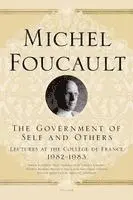
338 kr
Skickas inom 3-6 vardagar
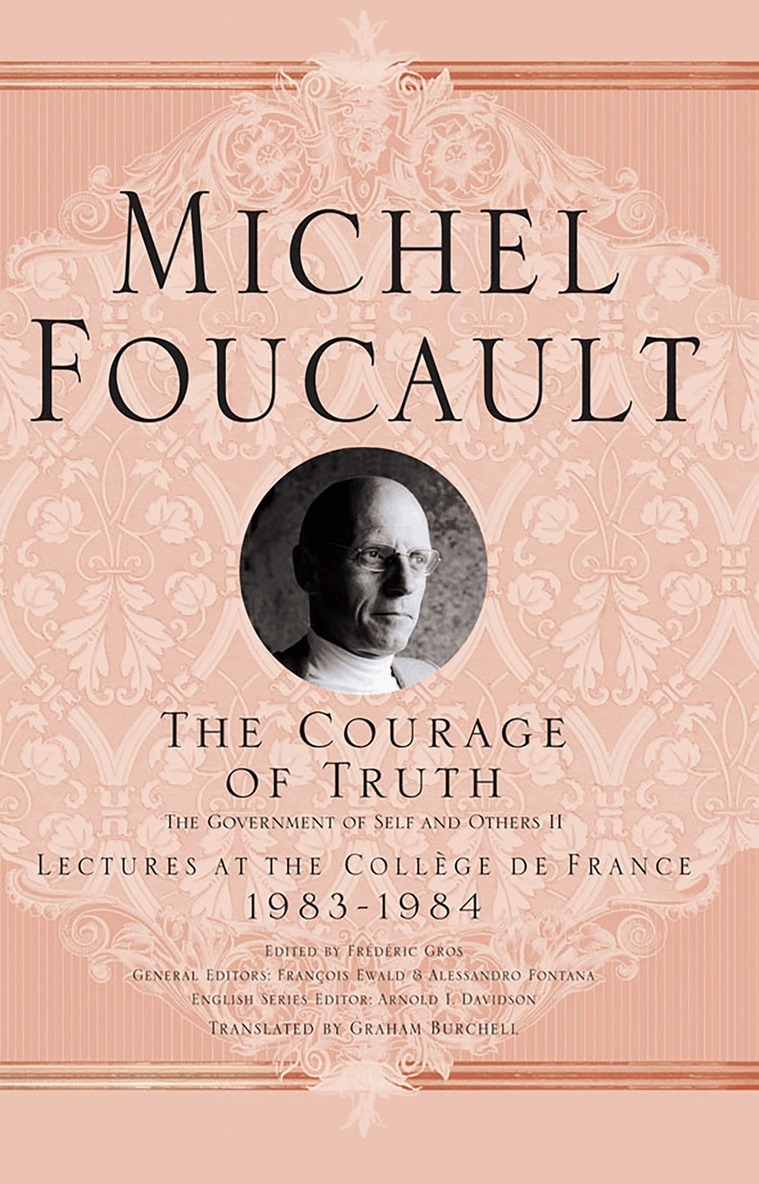
This lecture, given by Michel Foucault at the College de France, launches an inquiry into the notion of parresia and continues his rereading of ancient philosophy. Through the study of this notion of truth-telling, of speaking out freely, Foucault re-examines Greek citizenship, showing how the courage of the truth forms the forgotten ethical basis of Athenian democracy. The figure of the philosopher king, the condemnation of writing, and Socrates' rejection of political involvement are some of the many topics of ancient philosophy revisited here.
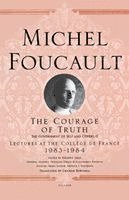
320 kr
Skickas inom 3-6 vardagar
The Courage of the Truth is the last course that Michel Foucault delivered in a series of lectures from 1970 to 1984 at the College de France. Here, Foucault continues the theme of the previous year's lectures in exploring the notion of "truth-telling" in politics to establish a number of ethically irreducible conditions based on courage and conviction. His death, on June 25th, 1984, tempts us to detect the philosophical testament in these lectures, especially in view of the prominence they give to the themes of life and death.

592 kr
Skickas inom 7-10 vardagar
258 kr
Skickas inom 7-10 vardagar
713 kr
Skickas inom 10-15 vardagar
924 kr
Skickas
310 kr
Skickas inom 7-10 vardagar
331 kr
Läs direkt efter köp
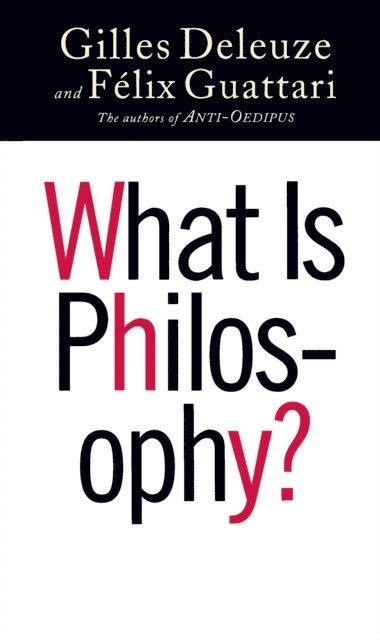
Called by many France''s foremost philosopher, Gilles Deleuze is one of the leading thinkers in the Western World. His acclaimed works and celebrated collaborations with Félix Guattari have established him as a seminal figure in the fields of literary criticism and philosophy. The long-awaited publication of What Is Philosophy? in English marks the culmination of Deleuze''s career.Deleuze and Guattari differentiate between philosophy, science, and the arts, seeing as means of confronting chaos, and challenge the common view that philosophy is an extension of logic. The authors also discuss the similarities and distinctions between creative and philosophical writing. Fresh anecdotes from the history of philosophy illuminate the book, along with engaging discussions of composers, painters, writers, and architects.A milestone in Deleuze''s collaboration with Guattari, What Is Philosophy? brings a new perspective to Deleuze''s studies of cinema, painting, and music, while setting a brilliant capstone upon his work.

317 kr
Skickas inom 3-6 vardagar
224 kr
Skickas inom 7-10 vardagar
779 kr
Läs direkt efter köp
285 kr
Skickas inom 3-6 vardagar
302 kr
Skickas inom 3-6 vardagar
693 kr
Läs direkt efter köp
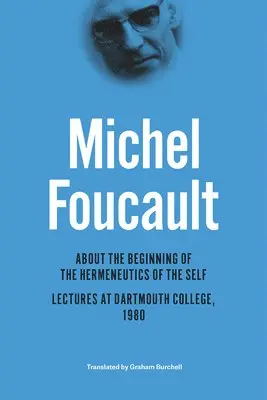
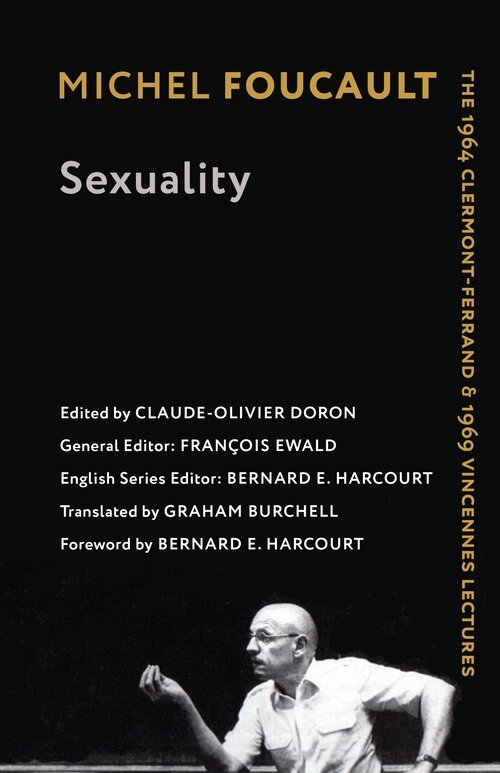
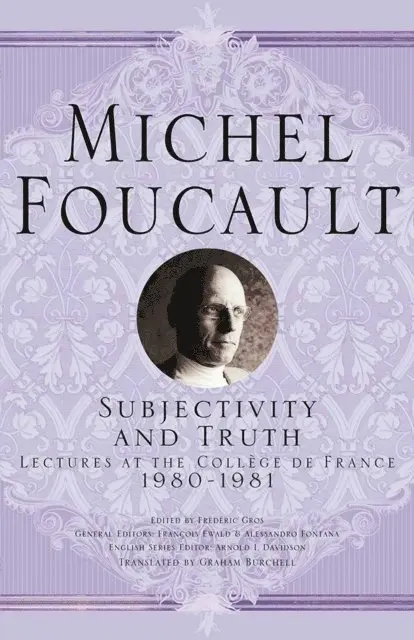
“The working hypothesis is this: it is true that sexuality as experience is obviously not independent of codes and systems of prohibitions, but it needs to be recalled straightaway that these codes are astonishingly stable, continuous, and slow to change. It needs to be recalled also that the way in which they are observed or transgressed also seems to be very stable and very repetitive. On the other hand, the point of historical mobility, what no doubt change most often, what are most fragile, are modalities of experience.”
- Michel Foucault
In 1981 Foucault delivered a course of lectures which marked a decisive reorientation in his thought and of the project of a History of Sexuality outlined in 1976. It was in these lectures that arts of living became the focal point around which he developed a new way of thinking about subjectivity. It was also the moment when Foucault problematized a conception of ethics understood as the patient elaboration of a relationship of self to self. It was the study of the sexual experience of the Ancients that made these new conceptual developments possible. Within this framework, Foucault examined medical writings, tracts on marriage, the philosophy of love, or the prognostic value of erotic dreams, for evidence of a structuration of the subject in his relationship to pleasures (aphrodisia) which is prior to the modern construction of a science of sexuality as well as to the Christian fearful obsession with the flesh. What was actually at stake was establishing that the imposition of a scrupulous and interminable hermeneutics of desire was the invention of Christianity. But to do this it was necessary to establish the irreducible specificity of ancient techniques of self.
In these lectures, which clearly foreshadow The Use of Pleasures and The Care of Self, Foucault examines the Greek subordination of gender differences to the primacy of an opposition between active and passive, as well as the development by Imperial stoicism of a model of the conjugal bond which advocates unwavering fidelity and shared feelings and which leads to the disqualification of homosexuality.
546 kr
Skickas inom 7-10 vardagar
307 kr
Skickas inom 10-15 vardagar
436 kr
Skickas inom 10-15 vardagar
436 kr
Skickas inom 10-15 vardagar
549 kr
Skickas inom 10-15 vardagar
419 kr
Skickas inom 10-15 vardagar
489 kr
Skickas inom 10-15 vardagar
436 kr
Skickas inom 10-15 vardagar
275 kr
Skickas inom 10-15 vardagar
496 kr
Skickas inom 10-15 vardagar
652 kr
Läs direkt efter köp
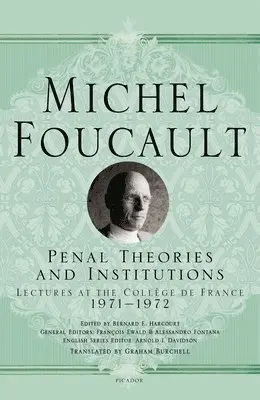
“What characterizes the act of justice is not resort to a court and to judges; it is not the intervention of magistrates (even if they had to be simple mediators or arbitrators). What characterizes the juridical act, the process or the procedure in the broad sense, is the regulated development of a dispute. And the intervention of judges, their opinion or decision, is only ever an episode in this development. What defines the juridical order is the way in which one confronts one another, the way in which one struggles. The rule and the struggle, the rule in the struggle, this is the juridical.”
- Michel Foucault
Penal Theories and Institutions is the title Michel Foucault gave to the lectures he delivered at the Collège de France from November 1971 to March 1972.
In these lectures Michel Foucault presents for the first time his approach to the question of power that will be the focus of his research up to the writing of Disciplineand Punish (1975) and beyond. His analysis starts with a detailed account of Richelieu’s repression of the Nu-pieds revolt (1639-1640) and then goes on to show how the apparatus of power developed by the monarchy on this occasion breaks with the system of juridical and judicial institutions of the Middle Ages and opens out onto a “judicial State apparatus”, a “repressive system”, whose function is focused on the confinement of those who challenge its order.
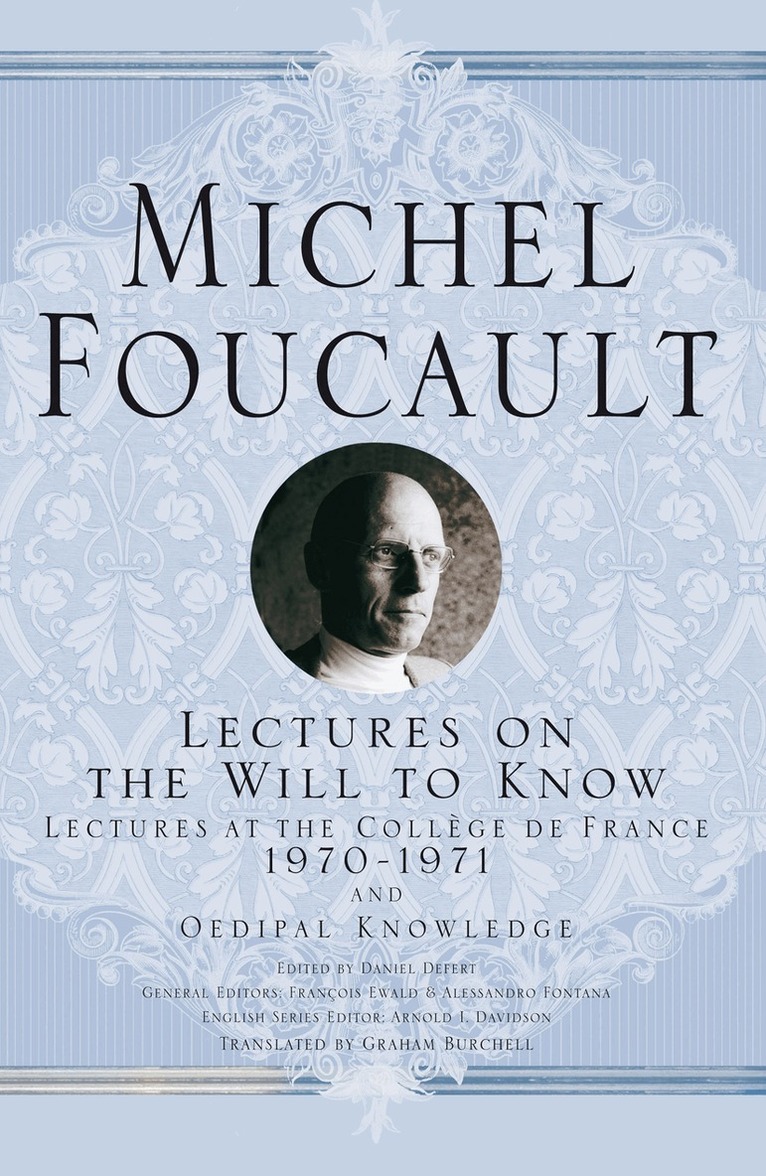
Michel Foucault systemizes the approach of a history of truth on the basis of the study of “juridico-political matrices” that he had begun in the previous year’s lectures (Lectures on the Will to Know) and which is at the heart of the notion of “knowledge-power”.
In these lectures Foucault develops his theory of justice and penal law.
The appearance of this volume marks the end of the publication of the series Foucault’s courses at the Collège de France (the first volume of which was published in 1997).