911 kr
Tillämpad matematik
- Inbunden, Engelska, 2011Quantitative risk assessments cannot eliminate risk, nor can they resolve trade-offs. They can, however, guide principled risk management and reduction - if the quality of assessment is high and decision makers understand how to use it. This book builds a unifying scientific framework for discussing and evaluating the quality of risk assessments and whether they are fit for purpose. Uncertainty is a central topic. In practice, uncertainties about inputs are rarely reflected in assessments, with the result that many safety measures are considered unjustified. Other topics include the meaning of a probability, the use of probability models, the use of Bayesian ideas and techniques, and the use of risk assessment in a practical decision-making context. Written for professionals, as well as graduate students and researchers, the book assumes basic probability, statistics and risk assessment methods. Examples make concepts concrete, and three extended case studies show the scientific framework in action.
- Häftad, Engelska, 2026
200 kr
Skickas
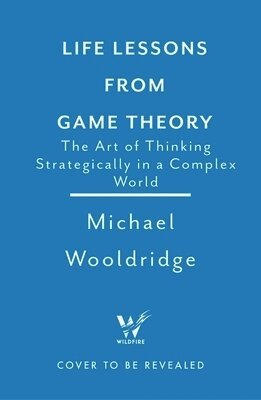
A fascinating deep-dive into game theory, its history and its practical applications by award-winning expert on computer science and artificial intelligence.'This book is simply brilliant . . . I learned so much'SIR DAVID SPIEGELHALTER, UNIVERSITY OF CAMBRIDGE'Fresh, clever and playful'MATT RIDLEY, author of THE ORIGINS OF VIRTUE'Michael explains the complex, strategic structures of our world with masterful beauty'MILIND TAMBE, HARVARD UNIVERSITY~ ~ ~ Most of us have some idea about game theory. Concepts like zero-sum games and the prisoner's dilemma crop up in films, novels and casual conversation, often as shorthand for cut-throat competition or inevitable betrayal. But game theory, the science behind these ideas, is widely misunderstood. All too often it's seen solely as the science of conflict and greed. In fact, this field has a lot to teach us about how to make a better world. It shows us just what it takes to enable cooperation and mutual benefit.This essential primer presents twenty one 'life lessons from game theory', which illustrate the key ideas in the field, and which are packed with real world examples: from overfishing in the Atlantic; to the Cuban Missile Crisis; to security measures at international airports; to advertising wars between major brands. This is a hopeful and practical book that highlights the value of game theory and provides a course correction for its integration into the real world.. . . more praise for LIFE LESSONS FROM GAME THEORY:'Wooldridge is like the teacher you wish you'd had' GUARDIAN'Effortlessly covers a broad swath of core ideas in game theory, with a sprinkle of British humour'EDITH ELKIND, NORTHWESTERN UNIVERSITY'A wonderful book'YOAV SHOHAM, STANFORD UNIVERSITY - Häftad, Engelska, 2025
662 kr
This practical guide to optimization combines mathematical theory with hands-on coding examples to explore how Python can be used to model problems and obtain the best possible solutions. Presenting a balance of theory and practical applications, it is the ideal resource for upper-undergraduate and graduate students in applied mathematics, data science, business, industrial engineering and operations research, as well as practitioners in related fields. Beginning with an introduction to the concept of optimization, this text presents the key ingredients of an optimization problem and the choices one needs to make when modeling a real-life problem mathematically. Topics covered range from linear and network optimization to convex optimization and optimizations under uncertainty. The book's Python code snippets, alongside more than 50 Jupyter notebooks on the author's GitHub, allow students to put the theory into practice and solve problems inspired by real-life challenges, while numerous exercises sharpen students' understanding of the methods discussed. - Inbunden, Engelska, 2011
1 527 kr
Skickas inom 7-10 vardagar
This volume is based on lectures delivered at the 2011 AMS Short Course on Evolutionary Game Dynamics, held January 4-5, 2011 in New Orleans, Louisiana. Evolutionary game theory studies basic types of social interactions in populations of players. It combines the strategic viewpoint of classical game theory (independent rational players trying to outguess each other) with population dynamics (successful strategies increase their frequencies). A substantial part of the appeal of evolutionary game theory comes from its highly diverse applications such as social dilemmas, the evolution of language, or mating behaviour in animals. Moreover, its methods are becoming increasingly popular in computer science, engineering, and control theory. They help to design and control multi-agent systems, often with a large number of agents (for instance, when routing drivers over highway networks or data packets over the Internet). While these fields have traditionally used a top down approach by directly controlling the behaviour of each agent in the system, attention has recently turned to an indirect approach allowing the agents to function independently while providing incentives that lead them to behave in the desired way. Instead of the traditional assumption of equilibrium behaviour, researchers opt increasingly for the evolutionary paradigm and consider the dynamics of behaviour in populations of agents employing simple, myopic decision rules. - E-bokPDF, Engelska, 2007
571 kr
Läs direkt efter köp
Based on a course given at Oxford over many years, this book is a short and concise exposition of the central ideas of general relativity. The focus is on the chain of reasoning that leads to the relativistic theory from the analysis of distance and time measurements in the presence of gravity, rather than on the underlying mathematical structure. The geometric ideas - which are central to the understanding of the nature of gravity - are introduced in parallel with the development of the theory, the emphasis being on laying bare how one is led to pseudo-Riemannian geometry through a natural process of reconciliation of special relativity with the equivalence principle. At centre stage are the "local inertial coordinates" set up by an observer in free fall, in which special relativity is valid over short times and distances.
In more practical terms, the book is a sequel to the author''s Special Relativity in the same series, with some overlap in the treatment of tensors.
- Inbunden, Engelska, 2026
175 kr
Skickas
What makes an aeroplane fly? Why aren't rollercoasters circular? And how long would it take to fall right through the Earth?This wide-ranging popular introduction to the science of motion tells the story of how dynamics developed, from Galileo's time to the present day. Including such exciting discoveries as the motion of the planets, the dynamics of spinning objects, wave motion, elasticity, and fluid mechanics, the book explains the physical phenomena involved, especially those that surprise us and most challenge our elementary intuition. The book brings the fundamental principles of mechanics to life by tackling a wide variety of real-world questions, such as why modern-day loop-the-loop rollercoasters are not circular, why skaters on ice spin faster when they draw in their arms, and how a falling cat, initially upside-down, can sometimes manage to land on its feet. The book also explores the idea that classic problems in mechanics can often acquire a wholly new life by being given a sudden and unexpected modern 'twist', including, for example, the role played by the gravitational three-body problem in the Apollo moon missions of the 1960s.Written in an informal and accessible style, yet underpinned by rigorous scholarship and historical research, this book shows that, even after all these years, classical mechanics still has the potential to surprise us and challenge our understanding of how the world around us really works. - Inbunden, Engelska, 2023
557 kr
Skickas inom 10-15 vardagar
This book is the first comprehensive guide to logic-based Benders decomposition (LBBD), a general and versatile method for breaking large, complex optimization problems into components that are small enough for practical solution. The author introduces logic-based Benders decomposition for optimization, which substantially generalizes the classical Benders method. It can reduce solution times by orders of magnitude and allows decomposition to be applied to a much wider variety of optimization problems. On the theoretical side, this book provides a full account of inference duality concepts that underlie LBBD, as well as a description of how LBBD can be combined with stochastic and robust optimization, heuristic methods, and decision diagrams. It also clarifies the connection between LBBD and combinatorial Benders cuts for mixed integer programming. On the practical side, it explains how LBBD has been applied to a rapidly growingvariety of problem domains. After describing basic theory, this book provides a comprehensive review of the rapidly growing literature that describes these applications, in each case explaining how LBBD is adapted to the problem at hand. In doing so this work provides a sourcebook of ideas for applying LBBD to new problems as they arise. - Kartonnage, Engelska, 2021
481 kr
Skickas
Mathematical models of real life systems and processes are essential in today’s industrial work. To be able to construct such models is therefore a fundamental skill in modern engineering.This is a book about how to build models both from first principles in physics and from information in collected input and output measurements from the system.Physical modeling is nowadays typically done by object oriented software, such as Modelica and Matlab’s Simscape. These techniques are described in the book, together with their theoretical and mathematical underlying principles. Domain-independent methods, such as following energy flows in bond graphs gives a useful background for understanding object oriented modeling. Both classical state-space models and general differential algebraic equations (DAE) are treated.The book also gives a comprehensive treatment of system identification, that is, techniques to estimate mathematical models from measured system inputs and outputs. Both linear and nonlinear models are treated, including artificial neural networks.The text is related to the Swedish text Modellbygge och Simulering, Studentlitteratur, 2003. It also has some roots in the book Modeling of Dynamic Systems, Prentice Hall, 1994.The currrent 2nd edition of book has been extended with more material on the statistical roots of the area, a treatment of so called subspace methods and an orientation on neural networks, deep nets and deep learning. - Inbunden, Engelska, 2020
970 kr
Skickas inom 7-10 vardagar
The real world is perceived and broken down as data, models and algorithms in the eyes of physicists and engineers. Data is noisy by nature and classical statistical tools have so far been successful in dealing with relatively smaller levels of randomness. The recent emergence of Big Data and the required computing power to analyse them have rendered classical tools outdated and insufficient. Tools such as random matrix theory and the study of large sample covariance matrices can efficiently process these big data sets and help make sense of modern, deep learning algorithms. Presenting an introductory calculus course for random matrices, the book focusses on modern concepts in matrix theory, generalising the standard concept of probabilistic independence to non-commuting random variables. Concretely worked out examples and applications to financial engineering and portfolio construction make this unique book an essential tool for physicists, engineers, data analysts, and economists. - Häftad, Engelska, 2011
884 kr
Skickas inom 10-15 vardagar
This is a somewhat extended and modified translation of the third edition of the text, first published in 1969. The Swedish edition has been used for many years at the Royal Institute of Technology in Stockholm, and at the School of Engineering at Link6ping University. It is also used in elementary courses for students of mathematics and science. The book is not intended for students interested only in theory, nor is it suited for those seeking only statistical recipes. Indeed, it is designed to be intermediate between these extremes. I have given much thought to the question of dividing the space, in an appropriate way, between mathematical arguments and practical applications. Mathematical niceties have been left aside entirely, and many results are obtained by analogy. The students I have in mind should have three ingredients in their course: elementary probability theory with applications, statistical theory with applications, and something about the planning of practical investiga tions. When pouring these three ingredients into the soup, I have tried to draw upon my experience as a university teacher and on my earlier years as an industrial statistician. The programme may sound bold, and the reader should not expect too much from this book. Today, probability, statistics and the planning of investigations cover vast areas and, in 356 pages, only the most basic problems can be discussed. If the reader gains a good understanding of probabilistic and statistical reasoning, the main purpose of the book has been fulfilled. - Häftad, Engelska, 2022
132 kr
Skickas
THE INTERNATIONAL BESTSELLER'An entertaining tour that will change how you see the world' Sean Carroll, author of Something Deeply HiddenIs there a secret formula for improving your life? For making something a viral hit? For deciding how long to stick with your current job, Netflix series, or even relationship?This book is all about the equations that make our world go round. Ten of them, in fact. They are integral to everything from investment banking to betting companies and social media giants. And they can help you to increase your chance of success, guard against financial loss, live more healthily and see through scaremongering. They are known only by mathematicians - until now.With wit and clarity, mathematician David Sumpter shows that it isn't the technical details which make these formulas so successful. It is the way they allow mathematicians to view problems from a different angle - a way of seeing the world that anyone can learn.Empowering and illuminating, The Ten Equations that Rule the World shows how maths really can change your life. - Inbunden, Engelska, 2010
793 kr
Skickas inom 10-15 vardagar
A half-century ago, advanced calculus was a well-de?ned subject at the core of the undergraduate mathematics curriulum. The classic texts of Taylor [19], Buck [1], Widder [21], and Kaplan [9], for example, show some of the ways it was approached. Over time, certain aspects of the course came to be seen as more signi?cant—those seen as giving a rigorous foundation to calculus—and they - came the basis for a new course, an introduction to real analysis, that eventually supplanted advanced calculus in the core. Advanced calculus did not, in the process, become less important, but its role in the curriculum changed. In fact, a bifurcation occurred. In one direction we got c- culus on n-manifolds, a course beyond the practical reach of many undergraduates; in the other, we got calculus in two and three dimensions but still with the theorems of Stokes and Gauss as the goal. The latter course is intended for everyone who has had a year-long introduction to calculus; it often has a name like Calculus III. In my experience, though, it does not manage to accomplish what the old advancedcalculus course did. Multivariable calculusnaturallysplits intothreeparts:(1)severalfunctionsofonevariable,(2)one function of several variables, and (3) several functions of several variables. The ?rst two are well-developed in Calculus III, but the third is really too large and varied to be treated satisfactorily in the time remaining at the end of a semester. To put it another way: Green’s theorem ?ts comfortably; Stokes’ and Gauss’ do not. Nonlinear Waves & Hamiltonian Systems
From One To Many Degrees of Freedom, From Discrete To Continuum
Häftad, Engelska, 2024649 kr
Skickas inom 5-8 vardagar
Nonlinear waves are of significant scientific interest across many diverse contexts, ranging from mathematics and physics to engineering, biosciences, chemistry, and finance. The study of nonlinear waves is relevant to Bose-Einstein condensates, the interaction of electromagnetic waves with matter, optical fibers and waveguides, acoustics, water waves, atmospheric and planetary scales, and even galaxy formation. The aim of this book is to provide a self-contained introduction to the continuously developing field of nonlinear waves, that offers the background, the basic ideas, and mathematical, as well as computational methods, while also presenting an overview of associated physical applications.Originated from the authors' own research activity in the field for almost three decades and shaped over many years of teaching on relevant courses, the primary purpose of this book is to serve as a textbook. However, the selection and exposition of the material will be useful to anyone who is curious to explore the fascinating world of nonlinear waves.- Inbunden, Engelska, 2022
555 kr
Skickas inom 10-15 vardagar
This book offers an accessible introduction to random walk and diffusion models at a level consistent with the typical background of students in the life sciences. In recent decades these models have become widely used in areas far beyond their traditional origins in physics, for example, in studies of animal behavior, ecology, sociology, sports science, population genetics, public health applications, and human decision making. Developing the main formal concepts, the book provides detailed and intuitive step-by-step explanations, and moves smoothly from simple to more complex models. Finally, in the last chapter, some successful and original applications of random walk and diffusion models in the life and behavioral sciences are illustrated in detail. The treatment of basic techniques and models is consolidated and extended throughout by a set of carefully chosen exercises. - Häftad, Engelska, 2020
775 kr
This popular textbook, now in a revised and expanded third edition, presents a comprehensive course in modern probability theory.Probability plays an increasingly important role not only in mathematics, but also in physics, biology, finance and computer science, helping to understand phenomena such as magnetism, genetic diversity and market volatility, and also to construct efficient algorithms. Starting with the very basics, this textbook covers a wide variety of topics in probability, including many not usually found in introductory books, such as: limit theorems for sums of random variablesmartingalespercolationMarkov chains and electrical networksconstruction of stochastic processesPoisson point process and infinite divisibilitylarge deviation principles and statistical physicsBrownian motionstochastic integrals and stochastic differential equations.The presentation is self-contained and mathematically rigorous, with the material on probability theory interspersed with chapters on measure theory to better illustrate the power of abstract concepts.This third edition has been carefully extended and includes new features, such as concise summaries at the end of each section and additional questions to encourage self-reflection, as well as updates to the figures and computer simulations. With a wealth of examples and more than 290 exercises, as well as biographical details of key mathematicians, it will be of use to students and researchers in mathematics, statistics, physics, computer science, economics and biology. - Inbunden, Engelska, 2014
786 kr
Skickas
An introduction to category theory as a rigorous, flexible, and coherent modeling language that can be used across the sciences.Category theory was invented in the 1940s to unify and synthesize different areas in mathematics, and it has proven remarkably successful in enabling powerful communication between disparate fields and subfields within mathematics. This book shows that category theory can be useful outside of mathematics as a rigorous, flexible, and coherent modeling language throughout the sciences. Information is inherently dynamic; the same ideas can be organized and reorganized in countless ways, and the ability to translate between such organizational structures is becoming increasingly important in the sciences. Category theory offers a unifying framework for information modeling that can facilitate the translation of knowledge between disciplines.
Written in an engaging and straightforward style, and assuming little background in mathematics, the book is rigorous but accessible to non-mathematicians. Using databases as an entry to category theory, it begins with sets and functions, then introduces the reader to notions that are fundamental in mathematics: monoids, groups, orders, and graphs—categories in disguise. After explaining the “big three” concepts of category theory—categories, functors, and natural transformations—the book covers other topics, including limits, colimits, functor categories, sheaves, monads, and operads. The book explains category theory by examples and exercises rather than focusing on theorems and proofs. It includes more than 300 exercises, with solutions.
Category Theory for the Sciences is intended to create a bridge between the vast array of mathematical concepts used by mathematicians and the models and frameworks of such scientific disciplines as computation, neuroscience, and physics.
- Häftad, Engelska, 2020
649 kr
Skickas
Learn to master basic programming tasks from scratch with real-life, scientifically relevant examples and solutions drawn from both science and engineering. Students and researchers at all levels are increasingly turning to the powerful Python programming language as an alternative to commercial packages and this fast-paced introduction moves from the basics to advanced concepts in one complete volume, enabling readers to gain proficiency quickly. Beginning with general programming concepts such as loops and functions within the core Python 3 language, and moving on to the NumPy, SciPy and Matplotlib libraries for numerical programming and data visualization, this textbook also discusses the use of Jupyter Notebooks to build rich-media, shareable documents for scientific analysis. The second edition features a new chapter on data analysis with the pandas library and comprehensive updates, and new exercises and examples. A final chapter introduces more advanced topics such as floating-point precision and algorithm stability, and extensive online resources support further study. This textbook represents a targeted package for students requiring a solid foundation in Python programming. - Häftad, Engelska, 2010
391 kr
Skickas inom 10-15 vardagar
Mathematics for Finance: An Introduction to Financial Engineering combines financial motivation with mathematical style. Assuming only basic knowledge of probability and calculus, it presents three major areas of mathematical finance, namely Option pricing based on the no-arbitrage principle in discrete and continuous time setting, Markowitz portfolio optimisation and Capital Asset Pricing Model, and basic stochastic interest rate models in discrete setting. - E-bokEngelska, 2024
204 kr
Läs direkt efter köp
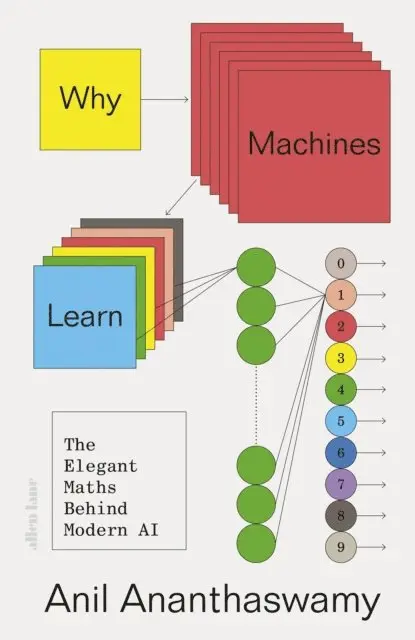
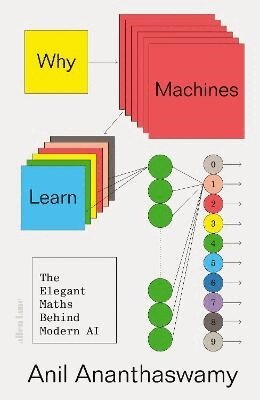
'An invaluable companion for anyone who wants a deep understanding of what’s under the hood of often inscrutable machines' Melanie Mitchell A rich, narrative explanation of the mathematics that has brought us machine learning and the ongoing explosion of artificial intelligenceMachine-learning systems are making life-altering decisions for us: approving mortgage loans, determining whether a tumour is cancerous, or deciding whether someone gets bail. They now influence discoveries in chemistry, biology and physics - the study of genomes, extra-solar planets, even the intricacies of quantum systems.We are living through a revolution in artificial intelligence that is not slowing down. This major shift is based on simple mathematics, some of which goes back centuries: linear algebra and calculus, the stuff of eighteenth-century mathematics. Indeed by the mid-1850s, a lot of the groundwork was all done. It took the development of computer science and the kindling of 1990s computer chips designed for video games to ignite the explosion of AI that we see all around us today. In this enlightening book, Anil Ananthaswamy explains the fundamental maths behind AI, which suggests that the basics of natural and artificial intelligence might follow the same mathematical rules.As Ananthaswamy resonantly concludes, to make the most of our most wondrous technologies we need to understand their profound limitations - the clues lie in the maths that makes AI possible. - Inbunden, Engelska, 2021
315 kr
Skickas inom 7-10 vardagar
- Häftad, Engelska, 2025
179 kr
Skickas inom 7-10 vardagar
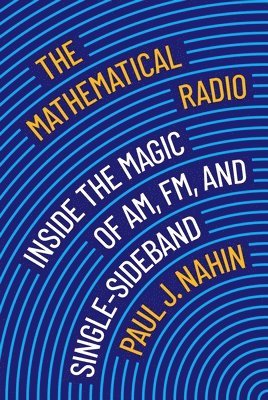
How a modern radio works, told through mathematics, history, and selected puzzlesThe modern radio is a wonder, and behind that magic is mathematics. In The Mathematical Radio, Paul Nahin explains how radios work, deploying mathematics and historical discussion, accompanied by a steady stream of intriguing puzzles for math buffs to ponder. Beginning with oscillators and circuits, then moving on to AM, FM, and single-sideband radio, Nahin focuses on the elegant mathematics underlying radio technology rather than the engineering. He explores and explains more than a century of key developments, placing them in historical and technological context.Nahin, a prolific author of books on math for the general reader, describes in fascinating detail the mathematical underpinnings of a technology we use daily. He explains and solves, for example, Maxwell’s equations for the electromagnetic field. Readers need only a familarity with advanced high school–level math to follow Nahin’s mathematical discussions. Writing with the nonengineer in mind, Nahin examines topics including impulses in time and frequency, spectrum shifting at the transmitter, the superheterodyne, the physics of single-sideband radio, and FM sidebands. Chapters end with “challenge problems” and an appendix offers solutions, partial answers, and hints. Readers will come away with a new appreciation for the beauty of even the most useful mathematics. - Häftad, Engelska, 2013
884 kr
Skickas inom 10-15 vardagar
The first edition of this book was originally published in 1985 under the ti tle "Probabilistic Properties of Deterministic Systems. " In the intervening years, interest in so-called "chaotic" systems has continued unabated but with a more thoughtful and sober eye toward applications, as befits a ma turing field. This interest in the serious usage of the concepts and techniques of nonlinear dynamics by applied scientists has probably been spurred more by the availability of inexpensive computers than by any other factor. Thus, computer experiments have been prominent, suggesting the wealth of phe nomena that may be resident in nonlinear systems. In particular, they allow one to observe the interdependence between the deterministic and probabilistic properties of these systems such as the existence of invariant measures and densities, statistical stability and periodicity, the influence of stochastic perturbations, the formation of attractors, and many others. The aim of the book, and especially of this second edition, is to present recent theoretical methods which allow one to study these effects. We have taken the opportunity in this second edition to not only correct the errors of the first edition, but also to add substantially new material in five sections and a new chapter. - Inbunden, Engelska, 2026
433 kr
Skickas inom 7-10 vardagar
- E-bokEngelska, 2026
314 kr
Läs direkt efter köp
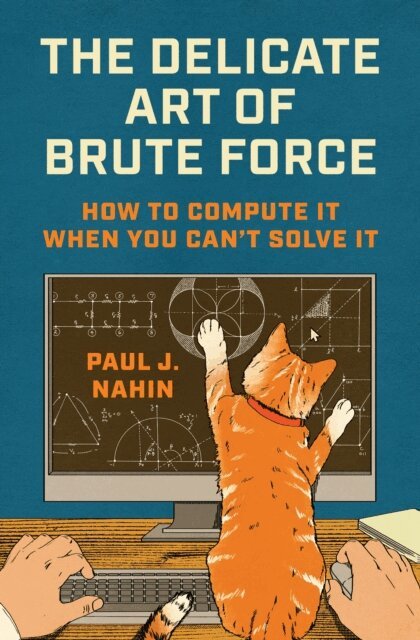
Using everyday computational power to tackle complexand seemingly unsolvablemath problemsConfronted by a math problem of seemingly impenetrable difficulty, what can you do? In The Delicate Art of Brute Force, Paul Nahin shows how even if you can't solve such a problem, you can still get an answer. The computational power of your own computerthe desktop in your home office, the laptop on your coffee tablecan be deployed to overwhelm a problem's complexity through a massive number-crunching assault. Nahin presents a series of apparently intractable math problems and shows the thought process that allows computational solution. Most of the problems are not abstract constructions but originate in the real worldone chapter is titled ';How Wi-Fi Coverage and Anti-Submarine Warfare Are the Same.' For each one, Nahin compares computational and analytical approaches, demonstrating how well the computer solutions agree with theory. As a bonus, sometimes the computational solution is better, giving more insight or greater flexibility.Along the way, Nahin traces the evolution of high-speed electronic computation, explaining that it upended the way analysts approach complex math problems. After the postwar debut of ENIAC (Electronic Numerical Integrator and Computer) and the ever more powerful electronic computers that came afterward, problems that were simply too difficult or messy for analytical treatment could be defeated by the application of pure brute forcethe ability of computers to perform an enormous number of simple operations in just minutes. Today, we can harness that computational power from our couches. Accessible to anyone who's mastered high school calculus, this engaging book gives both mathematicians and nonmathematicians plenty to think about. - Inbunden, Engelska, 2024
259 kr
Skickas inom 7-10 vardagar
How a modern radio works, told through mathematics, history, and selected puzzlesThe modern radio is a wonder, and behind that magic is mathematics. In The Mathematical Radio, Paul Nahin explains how radios work, deploying mathematics and historical discussion, accompanied by a steady stream of intriguing puzzles for math buffs to ponder. Beginning with oscillators and circuits, then moving on to AM, FM, and single-sideband radio, Nahin focuses on the elegant mathematics underlying radio technology rather than the engineering. He explores and explains more than a century of key developments, placing them in historical and technological context.Nahin, a prolific author of books on math for the general reader, describes in fascinating detail the mathematical underpinnings of a technology we use daily. He explains and solves, for example, Maxwell’s equations for the electromagnetic field. Readers need only a familarity with advanced high school–level math to follow Nahin’s mathematical discussions. Writing with the nonengineer in mind, Nahin examines topics including impulses in time and frequency, spectrum shifting at the transmitter, the superheterodyne, the physics of single-sideband radio, and FM sidebands. Chapters end with “challenge problems” and an appendix offers solutions, partial answers, and hints. Readers will come away with a new appreciation for the beauty of even the most useful mathematics. - Häftad, Engelska, 2012
792 kr
Skickas inom 7-10 vardagar
This book presents a concise and rigorous treatment of stochastic calculus. It also gives its main applications in finance, biology and engineering. In finance, the stochastic calculus is applied to pricing options by no arbitrage. In biology, it is applied to populations' models, and in engineering it is applied to filter signal from noise. Not everything is proved, but enough proofs are given to make it a mathematically rigorous exposition.This book aims to present the theory of stochastic calculus and its applications to an audience which possesses only a basic knowledge of calculus and probability. It may be used as a textbook by graduate and advanced undergraduate students in stochastic processes, financial mathematics and engineering. It is also suitable for researchers to gain working knowledge of the subject. It contains many solved examples and exercises making it suitable for self study.In the book many of the concepts are introduced through worked-out examples, eventually leading to a complete, rigorous statement of the general result, and either a complete proof, a partial proof or a reference. Using such structure, the text will provide a mathematically literate reader with rapid introduction to the subject and its advanced applications. The book covers models in mathematical finance, biology and engineering. For mathematicians, this book can be used as a first text on stochastic calculus or as a companion to more rigorous texts by a way of examples and exercises. - Inbunden, Engelska, 2019
341 kr
Skickas inom 7-10 vardagar
- Inbunden, Engelska, 2024
381 kr
Skickas inom 3-6 vardagar
'An invaluable companion for anyone who wants a deep understanding of what’s under the hood of often inscrutable machines' Melanie Mitchell A rich, narrative explanation of the mathematics that has brought us machine learning and the ongoing explosion of artificial intelligenceMachine-learning systems are making life-altering decisions for us: approving mortgage loans, determining whether a tumour is cancerous, or deciding whether someone gets bail. They now influence discoveries in chemistry, biology and physics - the study of genomes, extra-solar planets, even the intricacies of quantum systems.We are living through a revolution in artificial intelligence that is not slowing down. This major shift is based on simple mathematics, some of which goes back centuries: linear algebra and calculus, the stuff of eighteenth-century mathematics. Indeed by the mid-1850s, a lot of the groundwork was all done. It took the development of computer science and the kindling of 1990s computer chips designed for video games to ignite the explosion of AI that we see all around us today. In this enlightening book, Anil Ananthaswamy explains the fundamental maths behind AI, which suggests that the basics of natural and artificial intelligence might follow the same mathematical rules.As Ananthaswamy resonantly concludes, to make the most of our most wondrous technologies we need to understand their profound limitations - the clues lie in the maths that makes AI possible. - Häftad, Engelska, 2024
786 kr
Skickas inom 7-10 vardagar
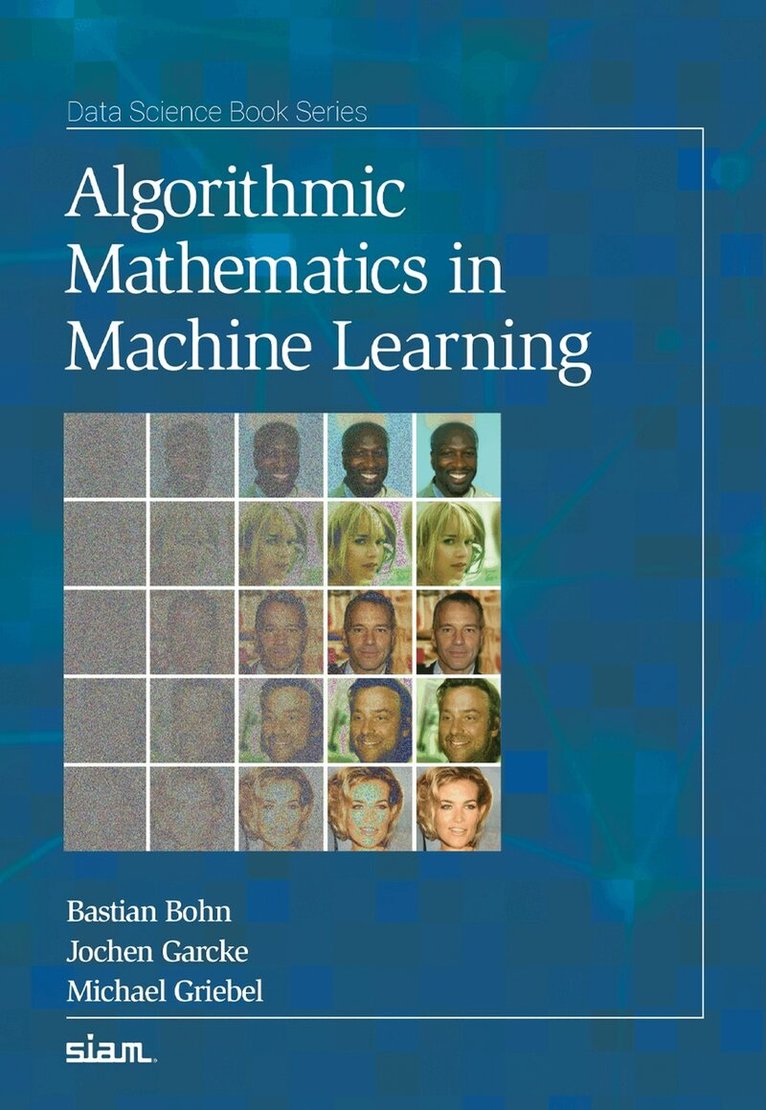
The goal of Algorithmic Mathematics in Machine Learning is to explore several well-known machine learning and data analysis algorithms from a mathematical and programming perspective. In this unique book, the authors:Present machine learning methods, review the underlying mathematics, and provide programming exercises intended to deepen the reader's understanding.Accompany application areas with exercises that explore the unique characteristics of real-world data sets (e.g. pedestrian detection image data, biological cell data).Highlight new terminology and background information on mathematical concepts, as well as exercises, in "info-boxes" throughout the text. - Häftad, Engelska, 2014
898 kr
Skickas inom 10-15 vardagar
The purpose of this book is to provide the reader with a solid background and understanding of the basic results and methods in probability theory before entering into more advanced courses (in probability and/or statistics). The presentation is fairly thorough and detailed with many solved examples. Several examples are solved with di erent methods in order to illustrate their di erent levels of sophistication, their pros, and their cons. The motivation for this style of exposition is that experience has proved that the hard part in courses of this kind usually is the application of the results and methods; to know how, when, and where to apply what; and then, technically, to solve a given problem once one knows how to proceed. Exercises are spread out along the way, and every chapter ends with a large selection of problems. Chapters 1 through 6 focus on some central areas of what might be called pure probability theory: multivariate random variables, conditioning, tra- forms, order variables, the multivariate normal distribution, and convergence.