906 kr
Läs direkt efter köp
906 kr
Läs direkt efter köp
789 kr
Läs direkt efter köp
1 050 kr
Läs direkt efter köp
3 026 kr
Skickas inom 11-20 vardagar
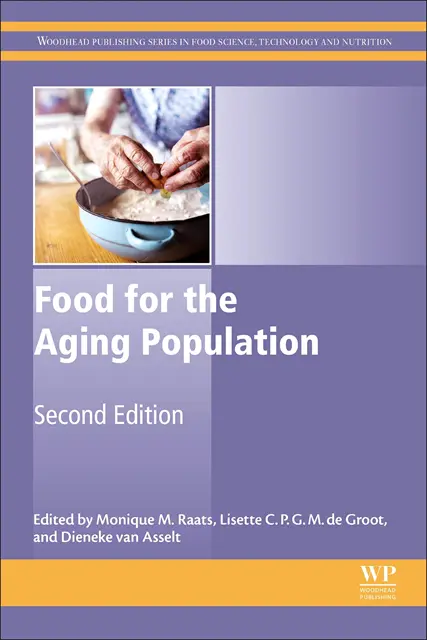
Food for the Aging Population, Second Edition, is a unique volume that reviews the characteristics of the aging population as food consumers, the role of nutrition in healthy aging, and the design of food products and services for the elderly. The first section of the book discusses the older population as consumers of food and beverages, while the second section covers the extension of functionality into later life. The final section highlights tactics on how to develop food products and services for older people.
Fully updated and revised from the first edition, the book covers advances in various fields, introducing a number of new chapters, including, amongst others, topics on the economic determinants of diet in older adults, public policy and older people's diets, and interventions to support healthy eating in later life.
Covers the topic of food for an aging population more broadly than any other book on the market Presents a thoroughly revised and updated edition of a very popular and well regarded book Contains new chapters on the implementation of food-related interventions among the elderly population and their relationship to policymakers4 343 kr
Läs direkt efter köp
589 kr
Skickas inom 11-20 vardagar
2 002 kr
Skickas inom 11-20 vardagar
887 kr
Kommande
1 188 kr
Skickas inom 11-20 vardagar
2 789 kr
Skickas inom 11-20 vardagar
1 096 kr
Skickas inom 11-20 vardagar
1 058 kr
Läs direkt efter köp
1 058 kr
Läs direkt efter köp
1 058 kr
Läs direkt efter köp
2 757 kr
Läs direkt efter köp
1 188 kr
Kommande
1 152 kr
Läs direkt efter köp
624 kr
Skickas inom 11-20 vardagar
Providers serving older adults face a growing problem. Older adults are becoming increasingly dissatisfied with service quality citing deficits in provider communication and relationship skills. The author argues this dissatisfaction is largely related to three widespread issues: ageism, use of professional jargon, and age-related changes in the older adult. To address these concerns, Dr. Storlie advocates adoption of an evidence-based, person-centered approach to communication.
The benefits of person-centered communication are many. They can increase older adult satisfaction with provider services, enhance mutual respect and understanding, improve accuracy of information exchanged, positively impact service outcomes, increase compliance with provider recommendations, and reduce the frustration and stress often experienced by both provider and older adult.
Rare to this genre, readers are introduced to several under-explored topics within the field of communication, along with methods for applying concepts from research findings into these topics to enhance the quality of interpersonal communication. Topics include the role of mental imagery in the communication process, the influence of neurocardiology on relationships, and controversial findings from research into quantum physics. The book concludes by highlighting progress made in narrowing the interpersonal communication gap and forecasts how communications-oriented technological advances might improve quality of life for 21st century older adults and the providers who serve them.
Utilizing interdisciplinary case studies to illustrate common problematic situations, this book provides detailed exercises that explain how providers can integrate person-centered communication into their practices to improve provider-older adult interactions. Written in a style designed to maximize learning, it helps providers find the information they need, understand what they read, and apply what they've learned to improve professional communication.
Person-Centered Communication with Older Adults is an essential guide for today's healthcare professionals and other aging-services providers, and also for the educators who help to prepare the providers of tomorrow.
Presents a conceptual framework for understanding respect-based, person-centered communication Teaches specific communication skills to aging services providers and educators to assist in effectively communicating with older adults Includes numerous case studies to help in identifying common problematic situations and describing practical ways to integrate positive communication One of the first books to integrate scientific, evidence-based findings with a personal approach that includes important new information on neurocardiology812 kr
Läs direkt efter köp
1 057 kr
Skickas inom 11-20 vardagar
1 556 kr
Skickas inom 11-20 vardagar
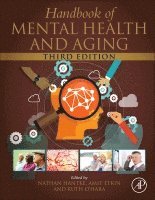
The Handbook of Mental Health and Aging, Third Edition provides a foundational background for practitioners and researchers to understand mental health care in older adults as presented by leading experts in the field. Wherever possible, chapters integrate research into clinical practice. The book opens with conceptual factors, such as the epidemiology of mental health disorders in aging and cultural factors that impact mental health. The book transitions into neurobiological-based topics such as biomarkers, age-related structural changes in the brain, and current models of accelerated aging in mental health. Clinical topics include dementia, neuropsychology, psychotherapy, psychopharmacology, mood disorders, anxiety, schizophrenia, sleep disorders, and substance abuse. The book closes with current and future trends in geriatric mental health, including the brain functional connectome, repetitive transcranial magnetic stimulation (rTMS), technology-based interventions, and treatment innovations.
Identifies factors influencing mental health in older adults Includes biological, sociological, and psychological factors Reviews epidemiology of different mental health disorders Supplies separate chapters on grief, schizophrenia, mood, anxiety, and sleep disorders Discusses biomarkers and genetics of mental health and aging Provides assessment and treatment approaches694 kr
Läs direkt efter köp
1 794 kr
Läs direkt efter köp
1 254 kr
Skickas inom 11-20 vardagar
Molecular Basis of Nutrition and Aging: A Volume in the Molecular Nutrition Series focuses on the nutritional issues associated with aging and the important metabolic consequences of diet, nutrition, and health. The book is subdivided into four parts that reflect the impact of nutrition from a biomolecular level to individual health.
In Part One, chapters explore the general aspects of aging, aging phenotypes, and relevant aspects of nutrition related to the elderly and healthy aging. Part Two includes molecular and cellular targets of nutrition in aging, with chapters exploring lipid peroxidation, inflammaging, anabolic and catabolic signaling, epigenetics, DNA damage and repair, redox homeostasis, and insulin sensitivity, among others.
Part Three looks at system-level and organ targets of nutrition in aging, including a variety of tissues, systems, and diseases, such as immune function, the cardiovascular system, the brain and dementia, muscle, bone, lung, and many others. Finally, Part Four focuses on the health effects of specific dietary compounds and dietary interventions in aging, including vitamin D, retinol, curcumin, folate, iron, potassium, calcium, magnesium, zinc, copper, selenium, iodine, vitamin B, fish oil, vitamin E, resveratrol, polyphenols, vegetables, and fruit, as well as the current nutritional recommendations.
Offers updated information and a perspectives on important future developments to different professionals involved in the basic and clinical research on all major nutritional aspects of aging Explores how nutritional factors are involved in the pathogenesis of aging across body systems Investigates the molecular and genetic basis of aging and cellular senescence through the lens of the rapidly evolving field of molecular nutrition1 152 kr
Läs direkt efter köp
2 894 kr
Skickas inom 11-20 vardagar
Geriatric Neurology, Volume 167, serves as an update on the basic biological and behavioral mechanisms underlying the aging process, with an emphasis on neurological aging and state-of-the-art reviews on our understanding of vascular, cognitive, neurodegenerative and neuropsychiatric diseases in the elderly. Developed with an eye to providing both the basic underpinnings of age-related changes and the clinical information necessary to aid in diagnostics and treatment, the book serves as a useful volume for students, basic and translational scientists, and practicing clinicians on how to understand and treat common neurological disorders in the elderly.
Reviews the foundations of geriatric neurology, including the fundamentals of age associated changes in molecular biology, altered pharmacokinetics and psychopharmacology that make drug therapy in the elderly different from younger patients Contains major advances in our understanding of neurodegenerative diseases Features contributions from world leaders in geriatric neurology-the broadest, most expert coverage available1 385 kr
Skickas inom 11-20 vardagar
Nutritional Modulators of Pain in the Aging Population provides an overview on the role of foods, dietary supplements, obesity, and nutrients in the prevention and amelioration of pain in various diseases in the aging population. Headaches, fibromyalgia, joint pain, arthritis pain, back pain, and stomach pain are discussed. In addition, the potential health risks of using foods to reduce symptoms is evaluated.
Each chapter reviews pain causing conditions before reviewing the role of food or exercise. Both researchers and physicians will learn about dietary approaches that may benefit or harm people with various types of pain. Chapters include current research on the actions of nutrients in pain treatment, the effects of lifestyle and exercise on pain management, and discussions of dietary supplements that provide pain relief from chronic conditions like arthritis.
Presents a comprehensive overview that details the role of nutrition in pain management for the aging population Written for researchers and clinicians in neurology, pain, and food and nutrition Reviews the pain symptoms and role of food and/or exercise associated with each disease1 425 kr
Läs direkt efter köp
1 990 kr
Skickas inom 11-20 vardagar
Metabolic Aspects of Aging, Volume 155, the latest release in the Progress in Molecular Biology and Translational Science series seeks to provide the most topical, informative and exciting monographs available on a wide variety of research topics related to prions, viruses, bacteria and eukaryotes. The series includes in-depth knowledge on the molecular, biological aspects of organismal physiology and function, with this release including chapters on Longevity, Metabolic Disease and Community Health, the Metabolic Aspects of Aging, Obesity, Metabolism, and Aging: A Multiscalar Approach, The Intersection of Curandismo and Western Medicine and Their Epidemiological Impact for Aging Mexican Americans, and more.
Presents updated volumes comprising 15-20 chapters, allowing comprehensive coverage on a topic Uses tables, diagrams, schemata and color figures to enhance the reader's ability to rapidly grasp the information provided in each chapter742 kr
Skickas inom 11-20 vardagar
The End of Alzheimer's: The Brain and Beyond, Second Edition is the first comprehensive overview on the molecular basis of Alzheimer's outside of the brain, merging the most recent findings within the field into a single book. It aims to educate the reader on the many overlooked aspects of Alzheimer's disease that occur outside the brain.
This book uniquely provides step-by-step, peer-reviewed evidence that the current research model may be misguided and that a new and emerging model is more accurate. It carefully outlines the molecular research in Alzheimer's outside the brain and argues that a more thorough, whole-body diagnosis will provide better answers about its causes and lead to new treatments.
It is beneficial to researchers who need to be apprised of the emerging science on the causes of Alzheimer's, and will hopefully redirect many into new avenues of cellular research and discovery.
Comprehensive literature-based summary of the current state of molecular Alzheimer's disease research Details the shortcomings of the prevailing model and therapeutics in development Reviews blood-based biomarkers for Alzheimer's and their link to amyloid- and Tau-independent causes outside the brain Describes the tissues outside the brain impacted by Alzheimer's and the underlying molecular causes Explains the whole-body risks associated with Alzheimer's, along with concomitant measures to slow or prevent the disease Provides a protocol to properly research, evaluate, measure, diagnose, and potentially treat Alzheimer's patients