1 904 kr
Skickas inom 10-15 vardagar
1 904 kr
Skickas inom 10-15 vardagar
1 904 kr
Skickas inom 10-15 vardagar
1 904 kr
Skickas inom 10-15 vardagar
745 kr
Läs direkt efter köp
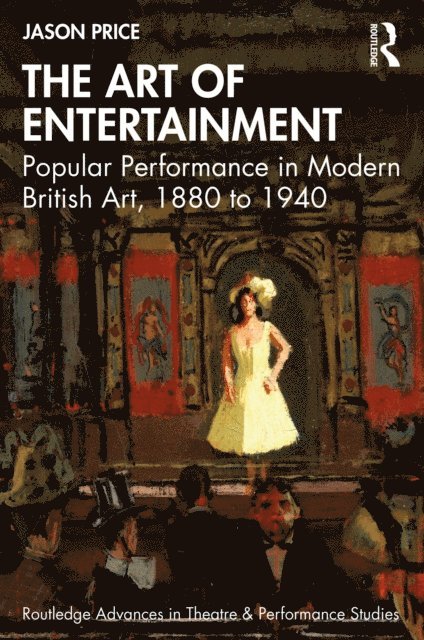
In this book, theatre historian Jason Price looks at the relationships and exchanges that took place between high and low cultural forms in Britain from 1880 to 1940, focusing on the ways in which figures from popular entertainments, such as music hall serio-comics, clowns, and circus acrobats, came to feature in modern works of art.
Readers with an interest in art, theatre, and the history of modern Britain will find Price’s approach, which sees major works of art used to illuminate the histories of once-famous entertainers and the wider social, political, and cultural landscape of this period, accessible and engaging.
The book will bring to life for readers some of the most vivid works of modern British art and reveal how individuals historically overlooked due to their gender, sexuality, or race played a significant role in the shaping of British culture during this period of monumental social change.
767 kr
Läs direkt efter köp
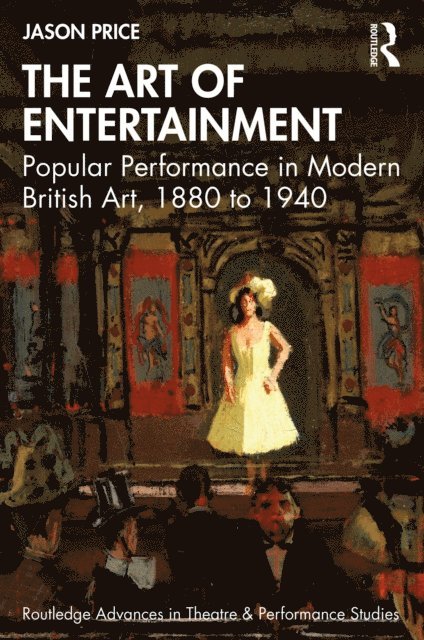
In this book, theatre historian Jason Price looks at the relationships and exchanges that took place between high and low cultural forms in Britain from 1880 to 1940, focusing on the ways in which figures from popular entertainments, such as music hall serio-comics, clowns, and circus acrobats, came to feature in modern works of art.
Readers with an interest in art, theatre, and the history of modern Britain will find Price’s approach, which sees major works of art used to illuminate the histories of once-famous entertainers and the wider social, political, and cultural landscape of this period, accessible and engaging.
The book will bring to life for readers some of the most vivid works of modern British art and reveal how individuals historically overlooked due to their gender, sexuality, or race played a significant role in the shaping of British culture during this period of monumental social change.
856 kr
Läs direkt efter köp
What are the characteristics of contemporary circus? In what way does contemporary circus differ from theater, dance, and performance? Where do hybrid forms exist? Where are there observable commonalities? Despite the diversity of contemporary circus performances, are there generalizable characteristics that unite the performances? What potential do these questions have for dramaturgical practice?
This book adapts a cultural-semiotic approach to analyze contemporary circus performances. It offers the first comprehensive documentation and interpretation of the art form based on the reading theories of cultural, literature, theater, and dance studies. The volume thereby provides a dramaturgy of contemporary circus, which reveals its generalizable characteristics, fundamental techniques and structures, and the effects they produce. At the same time, theories and methods are modified and further developed regarding the characteristics of the circus.
This book is designed for students and scholars in the field of theater and performance studies, as well as for artists, dramaturges, and directors working in the field of circus.
760 kr
Läs direkt efter köp
785 kr
Läs direkt efter köp
785 kr
Läs direkt efter köp
838 kr
Läs direkt efter köp
838 kr
Läs direkt efter köp
785 kr
Läs direkt efter köp
838 kr
Läs direkt efter köp
856 kr
Läs direkt efter köp
1 052 kr
Läs direkt efter köp
This collection of primary sources brings together a series of documents derived from archives, journals, newspapers, out-of-print books, memoirs, letters, and other written materials pertaining to the circus during the long nineteenth century (1789-1919). Historians concur that the ‘modern’ circus emerged in London in the late-eighteenth century, following the entrepreneurial initiatives of Philip Astley (1742-1814). It soon spread to Scotland, Ireland, France, Russia, Scandinavia, and other regions of Europe. Introduced to the United States by and English equestrian, John Bill Ricketts, in 1793, the modern circus transformed into a movable tent show by 1825. Following the Civil War and the development of railroad transport, the uniquely American circus transformed again into an ‘industrialized juggernaut’ capable of entertaining a large and diverse population from coast to coast. Transmitted across the globe through the British colonial project, the circus flourished in the colonies of Australasia, South Africa, South- and Southeast Asia, and was nourished by traditional performance forms of China, Japan, India, and Southeast Asia. The modern circus evolved through interaction with different geographies, socio-political contexts, new technologies, cultural heritage, and absorption of vernacular performance forms. Accompanied by extensive editorial commentary, and edited by an international team of scholars, this collection will be of great interest to students and researchers of circus studies, theatre and performance studies and cultural history.
1 045 kr
Läs direkt efter köp
This collection of primary sources brings together a series of documents derived from archives, journals, newspapers, out-of-print books, memoirs, letters, and other written materials pertaining to the circus during the long nineteenth century (1789-1919). Historians concur that the ‘modern’ circus emerged in London in the late-eighteenth century, following the entrepreneurial initiatives of Philip Astley (1742-1814). It soon spread to Scotland, Ireland, France, Russia, Scandinavia, and other regions of Europe. Introduced to the United States by and English equestrian, John Bill Ricketts, in 1793, the modern circus transformed into a movable tent show by 1825. Following the Civil War and the development of railroad transport, the uniquely American circus transformed again into an ‘industrialized juggernaut’ capable of entertaining a large and diverse population from coast to coast. Transmitted across the globe through the British colonial project, the circus flourished in the colonies of Australasia, South Africa, South- and Southeast Asia, and was nourished by traditional performance forms of China, Japan, India, and Southeast Asia. The modern circus evolved through interaction with different geographies, socio-political contexts, new technologies, cultural heritage, and absorption of vernacular performance forms. Accompanied by extensive editorial commentary, and edited by an international team of scholars, this collection will be of great interest to students and researchers of circus studies, theatre and performance studies and cultural history.
1 030 kr
Läs direkt efter köp
This collection of primary sources brings together a series of documents derived from archives, journals, newspapers, out-of-print books, memoirs, letters, and other written materials pertaining to the circus during the long nineteenth century (1789-1919). Historians concur that the ‘modern’ circus emerged in London in the late-eighteenth century, following the entrepreneurial initiatives of Philip Astley (1742-1814). It soon spread to Scotland, Ireland, France, Russia, Scandinavia, and other regions of Europe. Introduced to the United States by and English equestrian, John Bill Ricketts, in 1793, the modern circus transformed into a movable tent show by 1825. Following the Civil War and the development of railroad transport, the uniquely American circus transformed again into an ‘industrialized juggernaut’ capable of entertaining a large and diverse population from coast to coast. Transmitted across the globe through the British colonial project, the circus flourished in the colonies of Australasia, South Africa, South- and Southeast Asia, and was nourished by traditional performance forms of China, Japan, India, and Southeast Asia. The modern circus evolved through interaction with different geographies, socio-political contexts, new technologies, cultural heritage, and absorption of vernacular performance forms. Accompanied by extensive editorial commentary, and edited by an international team of scholars, this collection will be of great interest to students and researchers of circus studies, theatre and performance studies and cultural history.
1 045 kr
Läs direkt efter köp
This collection of primary sources brings together a series of documents derived from archives, journals, newspapers, out-of-print books, memoirs, letters, and other written materials pertaining to the circus during the long nineteenth century (1789-1919). Historians concur that the ‘modern’ circus emerged in London in the late-eighteenth century, following the entrepreneurial initiatives of Philip Astley (1742-1814). It soon spread to Scotland, Ireland, France, Russia, Scandinavia, and other regions of Europe. Introduced to the United States by and English equestrian, John Bill Ricketts, in 1793, the modern circus transformed into a movable tent show by 1825. Following the Civil War and the development of railroad transport, the uniquely American circus transformed again into an ‘industrialized juggernaut’ capable of entertaining a large and diverse population from coast to coast. Transmitted across the globe through the British colonial project, the circus flourished in the colonies of Australasia, South Africa, South- and Southeast Asia, and was nourished by traditional performance forms of China, Japan, India, and Southeast Asia. The modern circus evolved through interaction with different geographies, socio-political contexts, new technologies, cultural heritage, and absorption of vernacular performance forms. Accompanied by extensive editorial commentary, and edited by an international team of scholars, this collection will be of great interest to students and researchers of circus studies, theatre and performance studies and cultural history.
1 030 kr
Läs direkt efter köp
This collection of primary sources brings together a series of documents derived from archives, journals, newspapers, out-of-print books, memoirs, letters, and other written materials pertaining to the circus during the long nineteenth century (1789-1919). Historians concur that the ‘modern’ circus emerged in London in the late-eighteenth century, following the entrepreneurial initiatives of Philip Astley (1742-1814). It soon spread to Scotland, Ireland, France, Russia, Scandinavia, and other regions of Europe. Introduced to the United States by and English equestrian, John Bill Ricketts, in 1793, the modern circus transformed into a movable tent show by 1825. Following the Civil War and the development of railroad transport, the uniquely American circus transformed again into an ‘industrialized juggernaut’ capable of entertaining a large and diverse population from coast to coast. Transmitted across the globe through the British colonial project, the circus flourished in the colonies of Australasia, South Africa, South- and Southeast Asia, and was nourished by traditional performance forms of China, Japan, India, and Southeast Asia. The modern circus evolved through interaction with different geographies, socio-political contexts, new technologies, cultural heritage, and absorption of vernacular performance forms. Accompanied by extensive editorial commentary, and edited by an international team of scholars, this collection will be of great interest to students and researchers of circus studies, theatre and performance studies and cultural history.
2 922 kr
Skickas inom 10-15 vardagar
179 kr
Skickas inom 7-10 vardagar
1 448 kr
Skickas inom 7-10 vardagar
427 kr
Läs direkt efter köp
437 kr
Läs direkt efter köp
449 kr
Skickas inom 7-10 vardagar
767 kr
Läs direkt efter köp
This pioneering study is one of the major publications in the increasingly popular and largely undocumented area of circus studies.
Through photographs and illustrations, Peta Tait presents an extraordinary survey of 140 years of trapeze acts and the socially changing ideas of muscular action in relation to our understanding of gender and sexuality. She questions how spectators see and enjoy aerial actions, and what cultural identities are presented by bodies in fast, physical aerial movement.
Adeptly locating aerial performance within the wider cultural history of bodies and their identities, Circus Bodies explores this subject through a range of films such as Trapeze (1956) and Wings of Desire (1987) and Tait also examines live performances including:
* the first trapeze performers: Léotard and the Hanlon Brothers* female celebrities; Azella, Sanyeah, black French aerialist LaLa, the infamous Leona Dare, and the female human cannonballs* twentieth-century gender benders; Barbette and Luisita Leers* the Codonas, Concellos, Gaonas, Vazquez and Pages troupes* imaginative aerial acts in Cirque de Soleil and Circus Oz productions.
This book will prove an invaluable resource for all students and scholars interested in this fascinating field.
750 kr
Läs direkt efter köp
This pioneering study is one of the major publications in the increasingly popular and largely undocumented area of circus studies.
Through photographs and illustrations, Peta Tait presents an extraordinary survey of 140 years of trapeze acts and the socially changing ideas of muscular action in relation to our understanding of gender and sexuality. She questions how spectators see and enjoy aerial actions, and what cultural identities are presented by bodies in fast, physical aerial movement.
Adeptly locating aerial performance within the wider cultural history of bodies and their identities, Circus Bodies explores this subject through a range of films such as Trapeze (1956) and Wings of Desire (1987) and Tait also examines live performances including:
* the first trapeze performers: Léotard and the Hanlon Brothers* female celebrities; Azella, Sanyeah, black French aerialist LaLa, the infamous Leona Dare, and the female human cannonballs* twentieth-century gender benders; Barbette and Luisita Leers* the Codonas, Concellos, Gaonas, Vazquez and Pages troupes* imaginative aerial acts in Cirque de Soleil and Circus Oz productions.
This book will prove an invaluable resource for all students and scholars interested in this fascinating field.
767 kr
Läs direkt efter köp
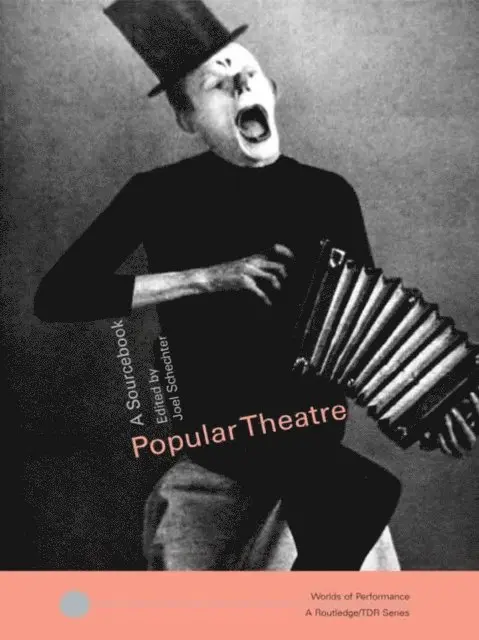
Bertolt Brecht turned to cabaret; Ariane Mnouchkine went to the circus; Joan Littlewood wanted to open a palace of fun. These were a few of the directors who turned to popular theatre forms in the last century, and this sourcebook accounts for their attraction.Popular theatre forms introduced in this sourcebook include cabaret, circus, puppetry, vaudeville, Indian jatra, political satire, and physical comedy. These entertainments are highly visual, itinerant, and readily understood by audiences. Popular Theatre: A Sourcebook follows them around the world, from the bunraku puppetry of Japan to the masked topeng theatre of Bali to South African political satire, the San Francisco Mime Troupe''s comic melodramas, and a ''Fun Palace'' proposed for London.The book features essays from the archives of The Drama Review and other research. Contributions by Roland Barthes, Hovey Burgess, Marvin Carlson, John Emigh, Dario Fo, Ron Jenkins, Joan Littlewood, Brooks McNamara, Richard Schechner, and others, offer some of the most important, informative, and lively writing available on popular theatre. Introducing both Western and non-Western popular theatre practices, the sourcebook provides access to theatrical forms which have delighted audiences and attracted stage artists around the world.