Häftad, Engelska, 2001
274 kr
Skickas inom 10-15 vardagar
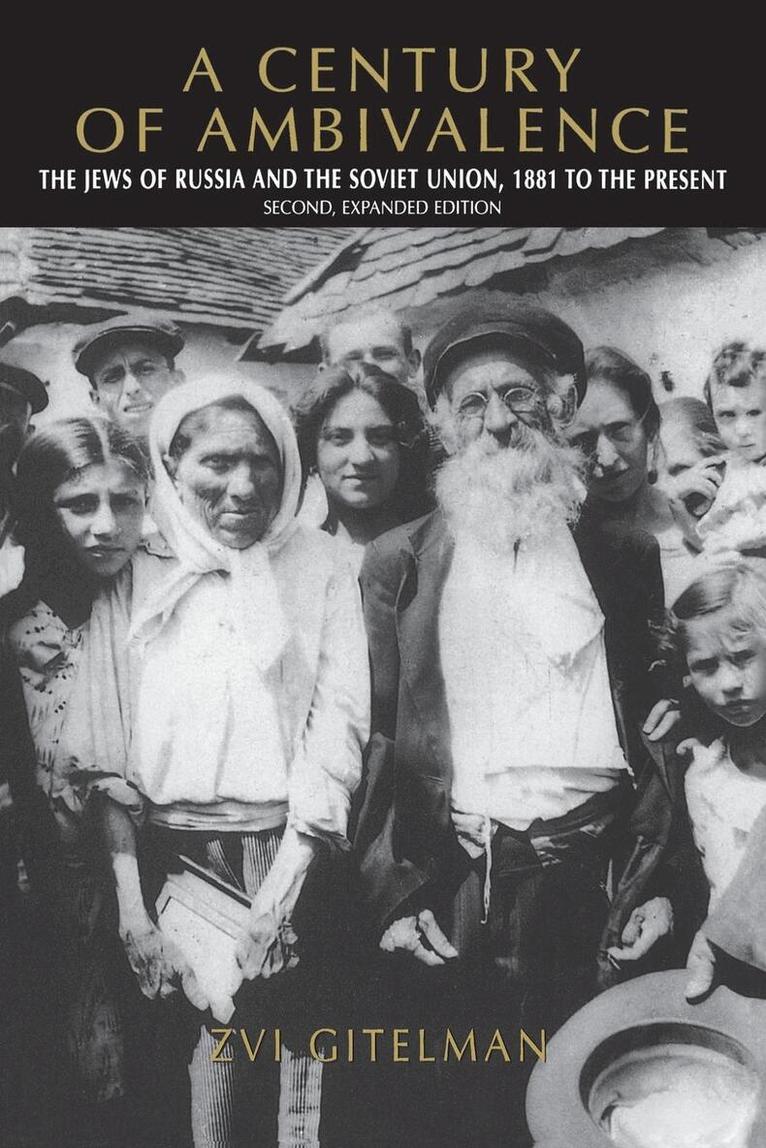
Now back in print in a new edition!A Century of AmbivalenceThe Jews of Russia and the Soviet Union, 1881 to the PresentSecond, Expanded EditionZvi GitelmanA richly illustrated survey of the Jewish historical experience in the Russian Empire, the Soviet Union, and the post-Soviet era."Anyone with even a passing interest in the history of Russian Jewry will want to own this splendid . . . book." —Janet Hadda, Los Angeles Times". . . a badly needed historical perspective on Soviet Jewry. . . . [Gitelman] is evenhanded in his treatment of various periods and themes, as well as in his overall evaluation of the Soviet Jewish experience. . . . A Century of Ambivalence is illuminated by an extraordinary collection of photographs that vividly reflect the hopes, triumphs and agonies of Russian Jewish life." —David E. Fishman, Hadassah Magazine "Wonderful pictures of famous personalities, unknown villagers, small hamlets, markets and communal structures combine with the text to create an uplifting [book] for a broad and general audience." —Alexander Orbach, Slavic Review"Gitelman's text provides an important commentary and careful historic explanation. . . . His portrayal of the promise and disillusionment, hope and despair, intellectual restlessness succeeded by swift repression enlarges the reader's understanding of the dynamic forces behind some of the most important movements in contemporary Jewish life." —Jane S. Gerber, Bergen Jewish News". . . a lucid and reasonably objective popular history that expertly threads its way through the dizzying reversals of the Russian Jewish experience." —Village VoiceA century ago the Russian Empire contained the largest Jewish community in the world, numbering about five million people. Today, the Jewish population of the former Soviet Union has dwindled to half a million, but remains probably the world's third largest Jewish community. In the intervening century the Jews of that area have been at the center of some of the most dramatic events of modern history—two world wars, revolutions, pogroms, political liberation, repression, and the collapse of the USSR. They have gone through tumultuous upward and downward economic and social mobility and experienced great enthusiasms and profound disappointments. In startling photographs from the archives of the YIVO Institute for Jewish Research and with a lively and lucid narrative, A Century of Ambivalence traces the historical experience of Jews in Russia from a period of creativity and repression in the second half of the 19th century through the paradoxes posed by the post-Soviet era. This redesigned edition, which includes more than 200 photographs and two substantial new chapters on the fate of Jews and Judaism in the former Soviet Union, is ideal for general readers and classroom use.Zvi Gitelman is Professor of Political Science and Director of the Jean and Samuel Frankel Center for Judaic Studies at the University of Michigan. He is author of Jewish Nationality and Soviet Politics: The Jewish Sections of the CPSU, 1917–1930 and editor of Bitter Legacy: Confronting the Holocaust in the USSR (Indiana University Press). Published in association with YIVO Institute for Jewish ResearchContentsIntroductionCreativity versus Repression: The Jews in Russia, 1881–1917Revolution and the Ambiguities of LiberationReaching for Utopia: Building Socialism and a New Jewish CultureThe HolocaustThe Black Years and the Gray, 1948–1967Soviet Jews, 1967–1987: To Reform, Conform, or Leave?The "Other" Jews of the Former USSR: Georgian, Central Asian, and Mountain JewsThe Post-Soviet Era: Winding Down or Starting Up Again?The Paradoxes of Post-Soviet Jewry