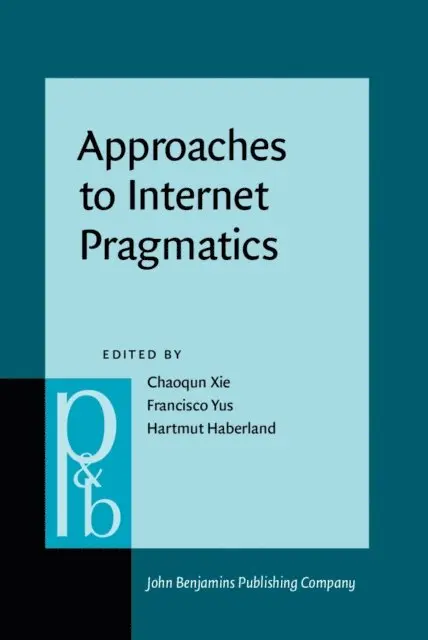
Internet-mediated communication is pervasive nowadays, in an age in which many people shy away from physical settings and often rely, instead, on social media and messaging apps for their everyday communicative needs. Since pragmatics deals with communication in context and how more gets communicated than is said (or typed), applications of this linguistic perspective to internet communication, under the umbrella label of internet pragmatics, are not only welcome, but necessary. The volume covers straightforward applications of pragmatic phenomena to internet interactions, as happens with speech acts and contextualization, and internet-specific kinds of communication such as the one taking place on WhatsApp, WeChat and Twitter. This collection also addresses the role of emoticons and emoji in typed-text dialogues and the importance of "e;physical place"e; in internet interactions (exhibiting an interplay of online-offline environments), as is the case in the role of place in locative media and in broader place-related communication, as in migration.
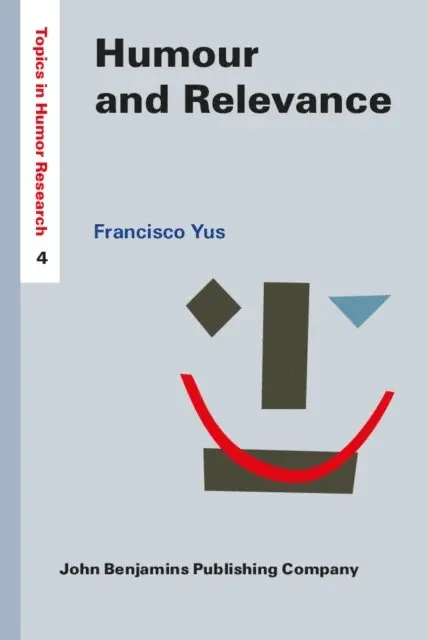
This book offers a cognitive-pragmatic, and specifically relevance-theoretic, analysis of different types of humorous discourse, together with the inferential strategies that are at work in the processing of such discourses. The book also provides a cognitive pragmatics description of how addressees obtain humorous effects. Although the inferences at work in the processing of normal, non-humorous discourses are the same as those employed in the interpretation of humour, in the latter case these strategies (and also the accessibility of contextual information) are predicted and manipulated by the speaker (or writer) for the sake of generating humorous effects. The book covers aspects of research on humour such as the incongruity-resolution pattern, jokes and stand-up comedy performances. It also offers an explanation of why ironies are sometimes labelled as humorous, and proposes a model for the translation of humorous discourses, an analysis of humour in multimodal discourses such as cartoons and advertisements, and a brief exploration of possible tendencies in relevance-theoretic research on conversational humour.