634 kr
Skickas
634 kr
Skickas
440 kr
Läs direkt efter köp
746 kr
Skickas inom 10-15 vardagar
586 kr
Skickas inom 7-10 vardagar
711 kr
Skickas inom 7-10 vardagar
2 135 kr
Skickas inom 7-10 vardagar
4 781 kr
Skickas inom 7-10 vardagar
3 175 kr
Skickas inom 10-15 vardagar
4 748 kr
Skickas inom 7-10 vardagar
2 761 kr
Skickas inom 10-15 vardagar
721 kr
Skickas inom 10-15 vardagar
615 kr
Läs direkt efter köp
620 kr
Läs direkt efter köp
437 kr
Läs direkt efter köp
701 kr
Läs direkt efter köp
701 kr
Läs direkt efter köp
455 kr
Skickas inom 7-10 vardagar
538 kr
Läs direkt efter köp
543 kr
Skickas inom 7-10 vardagar
883 kr
Läs direkt efter köp
877 kr
Läs direkt efter köp
877 kr
Läs direkt efter köp
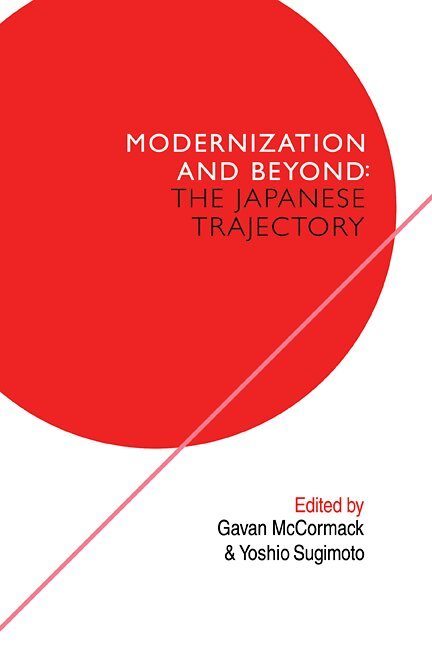
This is a systematic study of the sociological debate on postmodernity in the Japanese context. The volume consists of a collection of 12 papers that explore the idea of postmodernity primarily from sociological perspectives, covering a wide range of domains including work, feminism, communication, science and technology, social stratification, fine arts and literature. The contributors come from diverse disciplines ranging from sociology and history to political science and linguistics. They include advocates of postmodern theories and postmodernist analyses of Japanese society, as well as critics who argue that a suitable revised theory of modernity is still an adequate framework for comparing Japan and the West. Others take the view that an intermediate position might be more productive; that a qualified or provisional version of postmodern can throw new light on issues traditionally neglected by social theory. While the postmodernity debate has been carried out chiefly in the context of European and American experiences, this book aims to pave the way for the postmodernity question to be explored in the non-western but highly industrialized setting of Japan, and brings forward a series of open-ended questions about the bias in the debate. Written by academics based in universities in Japan and Australia, the volume itself is postmodern in its internal diversity and multi-cultural orientation.
883 kr
Läs direkt efter köp
This is a systematic study of the sociological debate on postmodernity in the Japanese context. The volume consists of a collection of 12 papers that explore the idea of postmodernity primarily from sociological perspectives, covering a wide range of domains including work, feminism, communication, science and technology, social stratification, fine arts and literature. The contributors come from diverse disciplines ranging from sociology and history to political science and linguistics. They include advocates of postmodern theories and postmodernist analyses of Japanese society, as well as critics who argue that a suitable revised theory of modernity is still an adequate framework for comparing Japan and the West. Others take the view that an intermediate position might be more productive; that a qualified or provisional version of postmodern can throw new light on issues traditionally neglected by social theory. While the postmodernity debate has been carried out chiefly in the context of European and American experiences, this book aims to pave the way for the postmodernity question to be explored in the non-western but highly industrialized setting of Japan, and brings forward a series of open-ended questions about the bias in the debate. Written by academics based in universities in Japan and Australia, the volume itself is postmodern in its internal diversity and multi-cultural orientation.
906 kr
Läs direkt efter köp
The popular image of Japanese society is a steroetypical one - that of a people characterised by a coherent set of thought and behaviour patterns, applying to all Japanese and transcending time. Ross Mouer and Yoshio Sugimoto found this image quite incongruous during their research for this book in Japan. They ask whether this steroetype of the Japanese is not only generated by foreigners but by the Japanese themselves.
This is likely to be a controversial book as it does not contribute to the continuing mythologising of Japan and the Japanese. The book examines contemporary images of Japanese society by surveying an extensive sample of popular and academic literature on Japan. After tracing the development of "holistic" theories about the Japanese, commonly referred to as the "group model", attention is focused on the evaluation of that image. Empirical evidence contrary to this model is discussed and methodological lacunae are cited. A "sociology of Japanology" is also presented.
In pursuit of other visions of Japanese society, the authors argue that certain aspects of Japanese behaviour can be explained by considering Japanese society as the exact inverse of the portayal provided by the group model. The authors also present a multi-dimensional model of social stratification, arguing that much of the variation in Japanese behaviour can be understood within the framework as having universal equivalence.
935 kr
Läs direkt efter köp
The popular image of Japanese society is a steroetypical one - that of a people characterised by a coherent set of thought and behaviour patterns, applying to all Japanese and transcending time. Ross Mouer and Yoshio Sugimoto found this image quite incongruous during their research for this book in Japan. They ask whether this steroetype of the Japanese is not only generated by foreigners but by the Japanese themselves.
This is likely to be a controversial book as it does not contribute to the continuing mythologising of Japan and the Japanese. The book examines contemporary images of Japanese society by surveying an extensive sample of popular and academic literature on Japan. After tracing the development of "holistic" theories about the Japanese, commonly referred to as the "group model", attention is focused on the evaluation of that image. Empirical evidence contrary to this model is discussed and methodological lacunae are cited. A "sociology of Japanology" is also presented.
In pursuit of other visions of Japanese society, the authors argue that certain aspects of Japanese behaviour can be explained by considering Japanese society as the exact inverse of the portayal provided by the group model. The authors also present a multi-dimensional model of social stratification, arguing that much of the variation in Japanese behaviour can be understood within the framework as having universal equivalence.
2 564 kr
Skickas inom 10-15 vardagar
765 kr
Skickas inom 10-15 vardagar
751 kr
Skickas inom 10-15 vardagar
794 kr
Skickas inom 10-15 vardagar
874 kr
Läs direkt efter köp