In this debut collection in English, one of the most famous poets of the Sinosphere offers biting musings on politics, ideologies, and mortality. Yang Xiaobin is a household name in both Chinese and Taiwanese poetry circles. He was part of the Tiananmen Square protests in 1989, and after the government crackdown, left for graduate school in America. While in the US, he began a prolific career as a poet before moving to Taiwan, where he now lives, writes, and teaches. Several of the book’s poems satirize the use of “-ism” ideology, which was popular among Chinese intellectuals after the country opened up in 1978. Others come from his “Guidebook” series, offering “instructions” on different aspects of a rapidly commercializing lifestyle. While most of the poems are recent, the book will include some of his most representative and best-known older poems, without which no first collection could be complete. The volume includes a critical introduction by the translator.
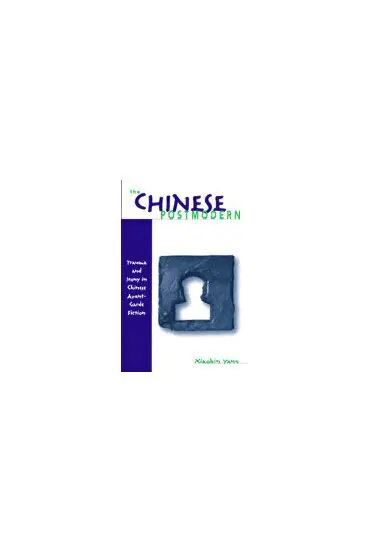
The Chinese Postmodern is a pioneering study of today's Chinese experimental fiction, exploring the works of such major writers as Can Xue, Ge Fei, Ma Yuan, Mo Yan, Xu Xiaohe, and Yu Hua from the perspective of cultural and literary postmodernity. Focusing on the interplay between historical psychology and representational mode, and between political discourse and literary rhetoric, it examines the problem of Chinese postmodernity against the background of the cultural-political reality of twentieth-century China.The book seeks to redefine Chinese modernity and postmodernity through the analyses of both orthodox and avant-garde works. In doing so, the author draws on a number of theories, psychoanalysis and deconstruction in particular, revealing the hidden connection between the deconstructive mode of writing and the experience of history after trauma and showing how avant-garde literature brings about a varied literary paradigm that defies the dominant, subject-centered one in twentieth-century China.The distinctiveness of The Chinese Postmodern is also found in its portrayal of the changes of literary paradigms in modern Chinese literature. By way of characterizing avant-garde fiction, it provides an overview of twentieth-century Chinese literature and offers a theorization of the intellectual history of modern China. Other issues concerning literary theory are explored, including the relationships between postmodernity and totalitarian discourse, between historical trauma and literary writing, and between psychic trauma and rhetorical irony. This book will appeal to readers in the fields of Chinese literature and culture, modern Chinese history, literary theory, and comparative literature.Xiaobin Yang is Croft Assistant Professor, University of Mississippi.