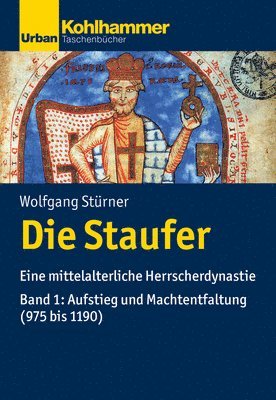
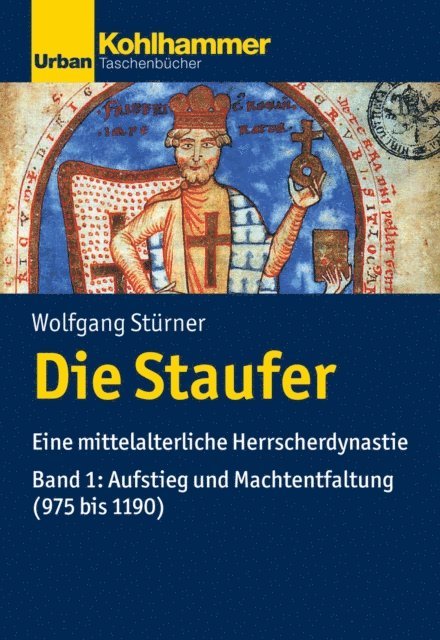
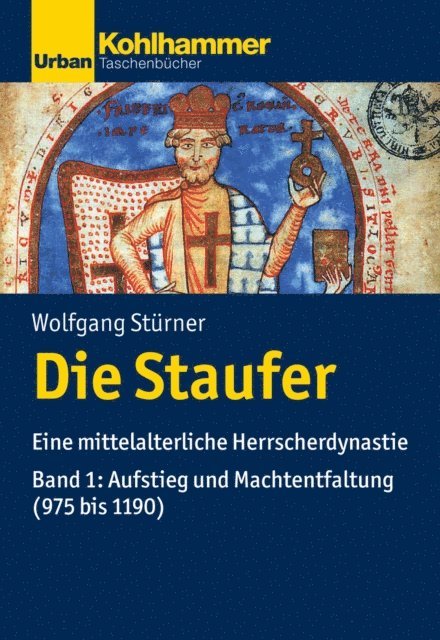
The Staufers were indisputably one of the most powerful dynasties of the High Middle Ages, and also amongst the most fascinating. Initially as dukes, and later as kings and emperors, they decisively determined the destiny of the Holy Roman Empire and large parts of Europe. This volume recounts the history of the ruling family from its beginnings to the coronation of Frederick Barbarossa as emperor. Long reigns enabled the Staufers to plan and exert their influence strategically during this epoch. At the same time, however, they repeatedly faced substantial challenges due to far-reaching social changes & such as the rise of the nobility, the bishops and the new urban upper classes, as well as the continuing conflict between the secular and ecclesiastical powers. Wolfgang Stürner skilfully combines these complex developments into a concise overall presentation.
The Staufers were indisputably one of the most powerful dynasties of the High Middle Ages, and also amongst the most fascinating. Initially as dukes, and later as kings and emperors, they decisively determined the destiny of the Holy Roman Empire and large parts of Europe. This volume recounts the history of the ruling family from its beginnings to the coronation of Frederick Barbarossa as emperor. Long reigns enabled the Staufers to plan and exert their influence strategically during this epoch. At the same time, however, they repeatedly faced substantial challenges due to far-reaching social changes & such as the rise of the nobility, the bishops and the new urban upper classes, as well as the continuing conflict between the secular and ecclesiastical powers. Wolfgang Stürner skilfully combines these complex developments into a concise overall presentation.
Der Band versammelt ausgewählte Beiträge von Wolfgang Stürner zur Geschichte des staufischen Kaiserhauses im 12. und 13. Jahrhundert. Der Schwerpunkt liegt auf der Person Friedrichs II., seiner Regierung im Königreich Sizilien und seinem Wirken in Deutschland. Besonderes Augenmerk gilt dem Spannungsverhältnis von Herrschaftstheorie und Herrschaftspraxis, dem Kontrast zwischen der hochfliegenden Sprache der kaiserlichen Manifeste und der nüchternen Wirklichkeit in der täglichen Politik. Daraus ergibt sich ein ebenso differenziertes wie kompaktes Bild von den Möglichkeiten und Grenzen herrscherlichen Handelns im Reich des hohen Mittelalters. Der abschließende Beitrag befasst sich mit dem Nachleben Kaiser Friedrichs II. und geht dem anhaltenden Interesse an der staufischen Geschichte bis in die Gegenwart nach.