835 kr
Skickas inom 10-15 vardagar
835 kr
Skickas inom 10-15 vardagar
1 042 kr
Skickas inom 10-15 vardagar
641 kr
Läs direkt efter köp
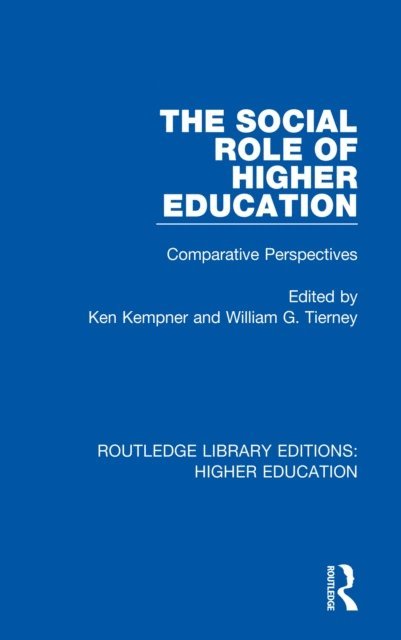
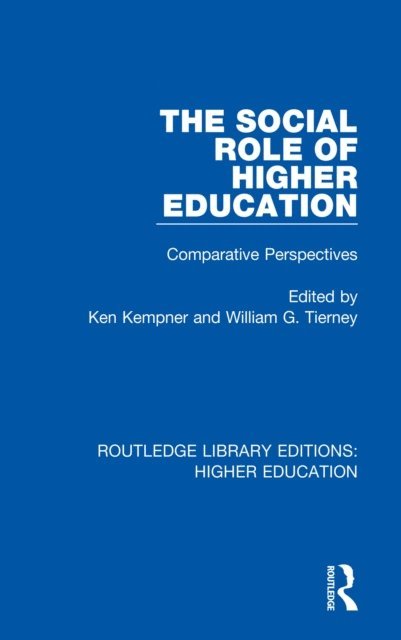
Originally published in 1996 The Social Role of Higher Education is an anthology of nine papers, it presents cases studies showing how culture influences the social role of higher education in various nations. It examines how environments get defined and how they shape universities, and how knowledge and academic work interact in national contexts. This book focuses on how both developed and developing countries'' systems of higher education are affected by their own culture and their place within the larger global context.
636 kr
Läs direkt efter köp
Originally published in 1996 The Social Role of Higher Education is an anthology of nine papers, it presents cases studies showing how culture influences the social role of higher education in various nations. It examines how environments get defined and how they shape universities, and how knowledge and academic work interact in national contexts. This book focuses on how both developed and developing countries'' systems of higher education are affected by their own culture and their place within the larger global context.
2 304 kr
Skickas inom 3-6 vardagar
1 486 kr
Skickas inom 3-6 vardagar
1 068 kr
Skickas inom 3-6 vardagar
442 kr
Skickas inom 7-10 vardagar
579 kr
Skickas inom 7-10 vardagar
537 kr
Skickas inom 7-10 vardagar
530 kr
Skickas inom 7-10 vardagar
368 kr
Skickas inom 7-10 vardagar
Presidency in Higher Education
1 151 kr
Skickas inom 7-10 vardagar
1 043 kr
Skickas inom 10-15 vardagar
601 kr
Skickas inom 10-15 vardagar
835 kr
Skickas inom 10-15 vardagar
504 kr
Skickas inom 10-15 vardagar
552 kr
Läs direkt efter köp
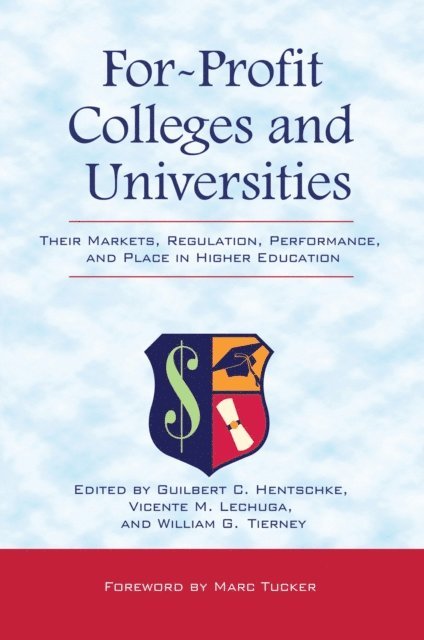
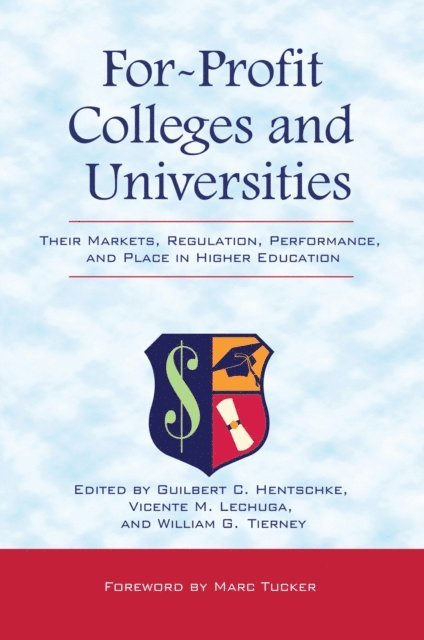
Do for-profit colleges and universities (FPCUs) pose a threat to traditional providers of higher education, or do they play a vital role at a time when the capacity of public and private non-profits to meet demand is constrained? With the US no longer the leader in developing a college-educated workforce, can FPCUs help redress the competitive gap? What can be learned from the management practices and growth of FPCUs – that now number close to 3,000 institutions in the US – whose increase in enrollments has out-paced that of traditional institutions, and who now grant around 8% of all degrees? This book offers a clear-eyed and balanced analysis of for-profit colleges and universities, reviewing their history, business strategies, and management practices; setting them in the context of marketplace conditions, the framework of public policy and government regulations; and viewing them in the light of the public good.Individual chapters variously explore FPCU’s governance, how they develop courses and programs, and the way they define faculty work; present findings from in-depth interviews with part-time and full-time faculty to understand how external forces and the imperative of profit generation affect faculty roles and responsibilities of faculty; analyze policy considerations that affect FPCUs, including federal regulation and oversight, accountability and assessment, and the legal and regulatory issues FPCUs face internationally; and finally address the notion of academic freedom and the distribution of public monies to FPCUs. Looking beyond FPCUs’ current strategy of offering career programming to non-traditional students, the book reveals how they are positioning themselves to meet future market needs by developing new programs targeting a wider group of students.Recognizing that FPCUs are more developing than fully developed, the authors convey both the current state and the unresolved issues facing these businesses, and, in so doing, surface enduring topics that face all of post-secondary education.
451 kr
Läs direkt efter köp
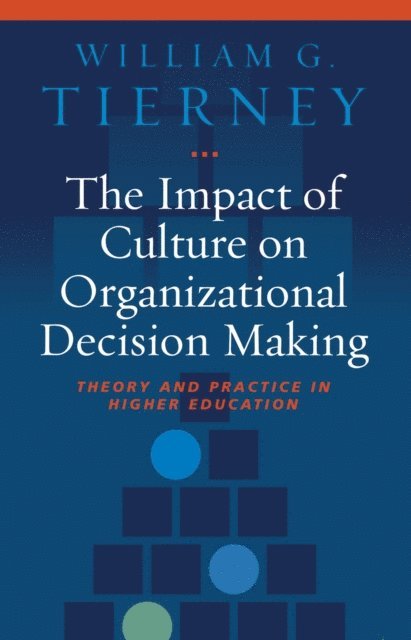
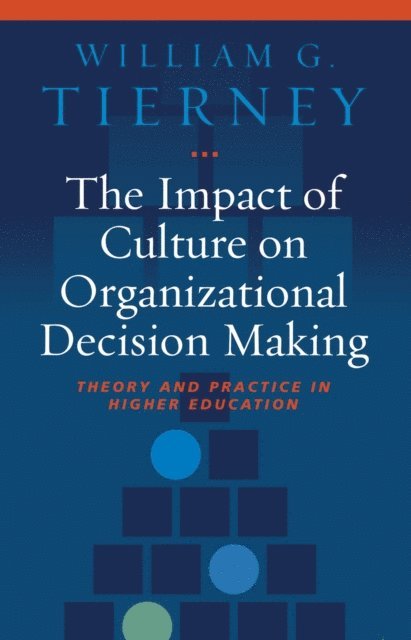
Colleges and universities are currently undergoing the most significant challenges they have faced since World War II. Rising costs, increased competition from for-profit providers, the impact of technology, and the changing desires and needs of consumers have combined to create a dynamic tension for those who work in, and study, postsecondary education. What worked yesterday is unlikely to work tomorrow. The status quo or bromides such as “stay the course†are insufficient responses in a market that demands creativity and innovation if an organization does not simply wish to survive, but thrive.Managerial responses or top-down linear decisions are antithetical to academic organizations and most likely recipes for disaster. In today’s “flat worldâ€, decision-making for most organizations has become less hierarchical and more decentralized. Understanding this trend is of particular importance for organizations with traditions of shared governance. The message of this book is that understanding organizational culture is critical for those who recognize that academe must change, but are unsure how to make that change happen. Even the most seasoned college and university administrators and professors often ask themselves, “What holds this place together?†The author’s answer is that an organization’s culture is the glue of academic life. Paradoxically, this “glue†does not make things get stuck, but unstuck. An understanding of culture enables an organization’s participants to interpret the institution to themselves and others, and in consequence, to propel the institution forward.An organization’s culture is reflected in what is done, how it is done, and who is involved in doing it. It concerns decisions, actions, and communication on an instrumental and symbolic level. This book considers various facets of academic culture, discusses how to study it, how to analyze it, and how to improve it in order to move colleges and universities aggressively into the future while maintaining core academic values. This book presents updated versions of eight key articles on organizational culture in higher education by William G. Tierney. The new introduction that sets them in the context of current and future challenges will add further value to articles that are already in high demand.
455 kr
Läs direkt efter köp
Colleges and universities are currently undergoing the most significant challenges they have faced since World War II. Rising costs, increased competition from for-profit providers, the impact of technology, and the changing desires and needs of consumers have combined to create a dynamic tension for those who work in, and study, postsecondary education. What worked yesterday is unlikely to work tomorrow. The status quo or bromides such as “stay the course†are insufficient responses in a market that demands creativity and innovation if an organization does not simply wish to survive, but thrive.Managerial responses or top-down linear decisions are antithetical to academic organizations and most likely recipes for disaster. In today’s “flat worldâ€, decision-making for most organizations has become less hierarchical and more decentralized. Understanding this trend is of particular importance for organizations with traditions of shared governance. The message of this book is that understanding organizational culture is critical for those who recognize that academe must change, but are unsure how to make that change happen. Even the most seasoned college and university administrators and professors often ask themselves, “What holds this place together?†The author’s answer is that an organization’s culture is the glue of academic life. Paradoxically, this “glue†does not make things get stuck, but unstuck. An understanding of culture enables an organization’s participants to interpret the institution to themselves and others, and in consequence, to propel the institution forward.An organization’s culture is reflected in what is done, how it is done, and who is involved in doing it. It concerns decisions, actions, and communication on an instrumental and symbolic level. This book considers various facets of academic culture, discusses how to study it, how to analyze it, and how to improve it in order to move colleges and universities aggressively into the future while maintaining core academic values. This book presents updated versions of eight key articles on organizational culture in higher education by William G. Tierney. The new introduction that sets them in the context of current and future challenges will add further value to articles that are already in high demand.
556 kr
Läs direkt efter köp
Do for-profit colleges and universities (FPCUs) pose a threat to traditional providers of higher education, or do they play a vital role at a time when the capacity of public and private non-profits to meet demand is constrained? With the US no longer the leader in developing a college-educated workforce, can FPCUs help redress the competitive gap? What can be learned from the management practices and growth of FPCUs – that now number close to 3,000 institutions in the US – whose increase in enrollments has out-paced that of traditional institutions, and who now grant around 8% of all degrees? This book offers a clear-eyed and balanced analysis of for-profit colleges and universities, reviewing their history, business strategies, and management practices; setting them in the context of marketplace conditions, the framework of public policy and government regulations; and viewing them in the light of the public good.Individual chapters variously explore FPCU’s governance, how they develop courses and programs, and the way they define faculty work; present findings from in-depth interviews with part-time and full-time faculty to understand how external forces and the imperative of profit generation affect faculty roles and responsibilities of faculty; analyze policy considerations that affect FPCUs, including federal regulation and oversight, accountability and assessment, and the legal and regulatory issues FPCUs face internationally; and finally address the notion of academic freedom and the distribution of public monies to FPCUs. Looking beyond FPCUs’ current strategy of offering career programming to non-traditional students, the book reveals how they are positioning themselves to meet future market needs by developing new programs targeting a wider group of students.Recognizing that FPCUs are more developing than fully developed, the authors convey both the current state and the unresolved issues facing these businesses, and, in so doing, surface enduring topics that face all of post-secondary education.
529 kr
Skickas inom 7-10 vardagar
597 kr
Skickas inom 7-10 vardagar
2 085 kr
Skickas inom 10-15 vardagar
533 kr
Skickas inom 10-15 vardagar
527 kr
Skickas inom 7-10 vardagar
381 kr
Skickas inom 7-10 vardagar
596 kr
Skickas inom 7-10 vardagar
1 241 kr
Skickas inom 7-10 vardagar
588 kr
Skickas inom 3-6 vardagar