1 650 kr
Skickas inom 7-10 vardagar
1 650 kr
Skickas inom 7-10 vardagar
1 113 kr
Läs direkt efter köp
1 106 kr
Läs direkt efter köp
1 329 kr
Skickas inom 7-10 vardagar
905 kr
Läs direkt efter köp
905 kr
Läs direkt efter köp
539 kr
Skickas inom 5-8 vardagar
453 kr
Läs direkt efter köp
453 kr
Läs direkt efter köp
978 kr
Skickas inom 7-10 vardagar
2 063 kr
Skickas inom 3-6 vardagar
255 kr
Skickas inom 5-8 vardagar
238 kr
Läs direkt efter köp
238 kr
Läs direkt efter köp
491 kr
Läs direkt efter köp
680 kr
Läs direkt efter köp
1 526 kr
Skickas inom 7-10 vardagar
569 kr
Läs direkt efter köp
336 kr
Skickas inom 10-15 vardagar
346 kr
Skickas inom 10-15 vardagar
417 kr
Läs direkt efter köp
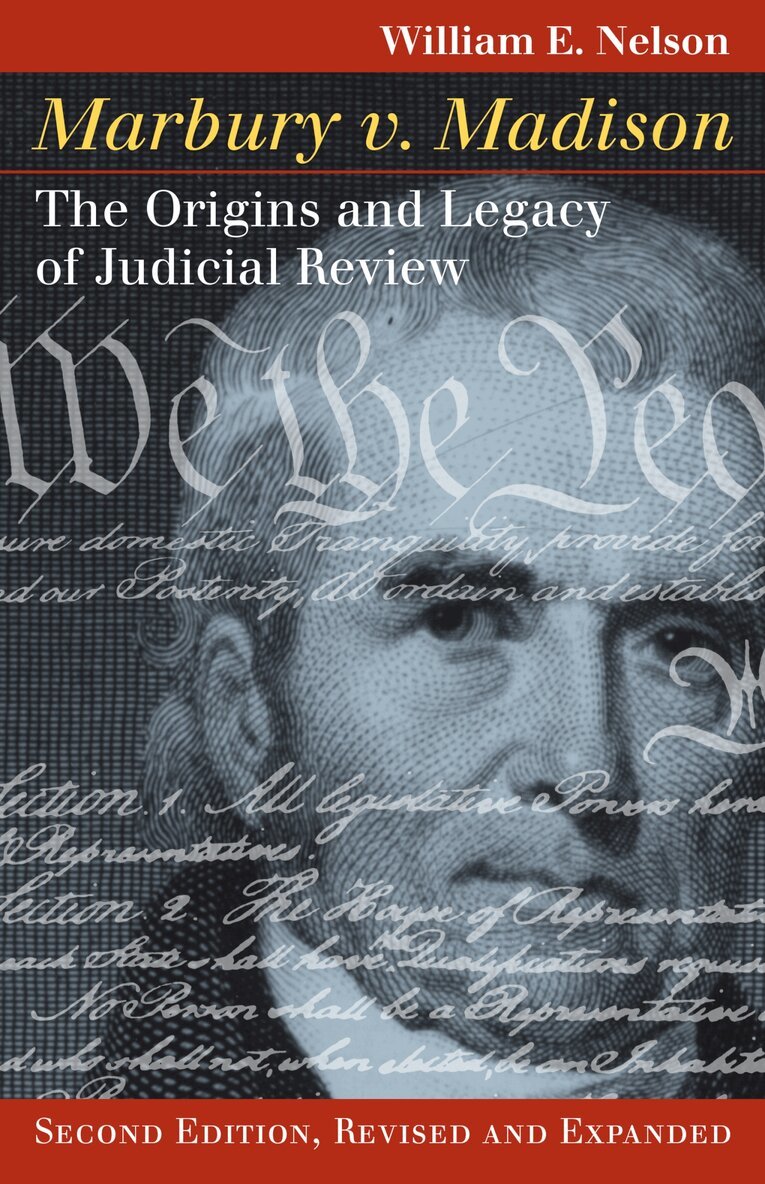
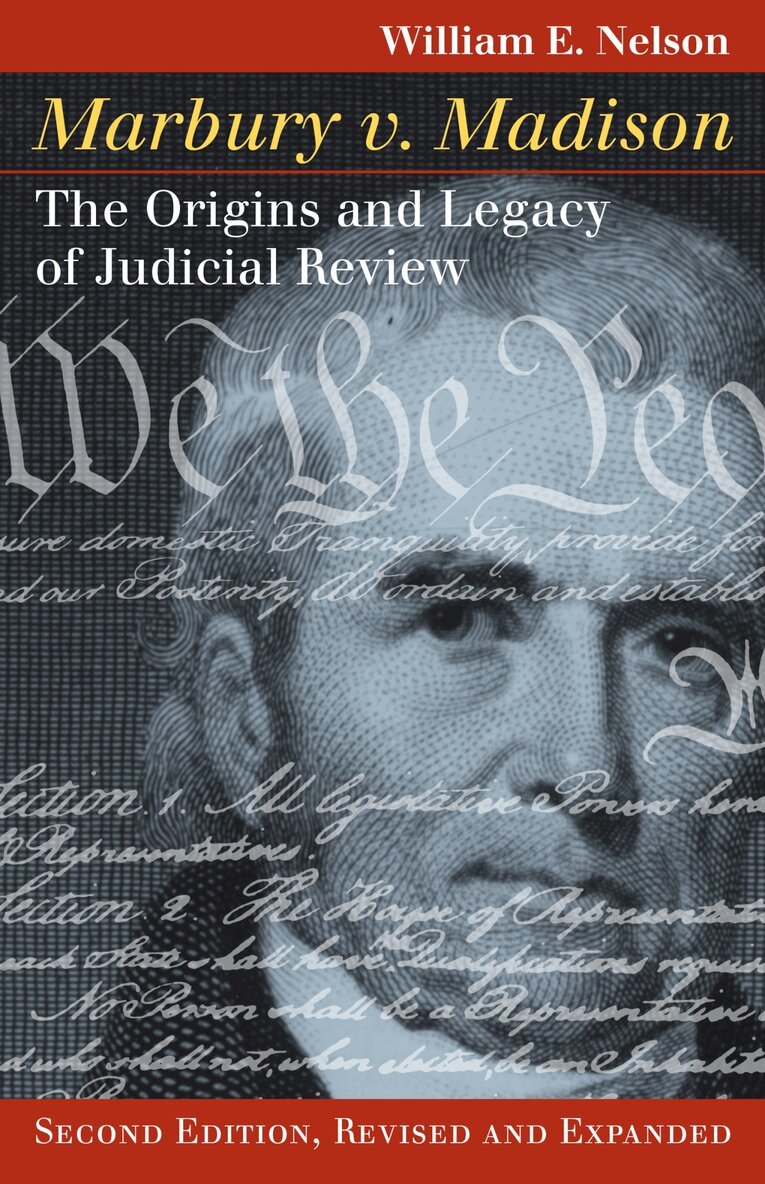
On the surface, the case itself seems a minor one at best. William Marbury, a last-minute judicial appointee of outgoing Federalist president John Adams, demanded redress from the Supreme Court when his commission was not delivered. But Chief Justice John Marshall could clearly see the danger his demand posed for a weak court filled with Federalist judges. Wary of the Court’s standing with the new Republican administration of Thomas Jefferson, Marshall hit upon a solution that was both principled and pragmatic. He determined that while Marbury was justified in his suit, the law on which his claim was based was in conflict with the Constitution. It was the first time that the Court struck down an act of Congress as unconstitutional, thus establishing the doctrine of judicial review that designates the Court as chief interpreter of the Constitution.
Nelson relates the story behind Marbury and explains why it is a foundational case for understanding the Supreme Court. He reveals how Marshall deftly avoided a dangerous political confrontation between the executive and judicial branches by upholding the rule of law. Nelson also shows how Marshall managed to shore up the Court’s prestige and power rather than have it serve partisan political agendas.
Nelson expands upon his original historical analysis by providing a more complete and nuanced account of eighteenth-century constitutionalism and the early development of judicial review. The new material includes chapters on nullification of legislation in local courts, James Otis’s articulation of the doctrine of judicial review in the Writs of Assistance Case, the use of this doctrine in response to the Stamp Act and Townshend Act, and the expansion of judicial review in the State Cases. This revised and expanded edition provides a fuller picture of colonial America and a richer understanding of Marshall’s foundational decision.
746 kr
Skickas inom 7-10 vardagar
464 kr
Skickas inom 10-15 vardagar
303 kr
Läs direkt efter köp
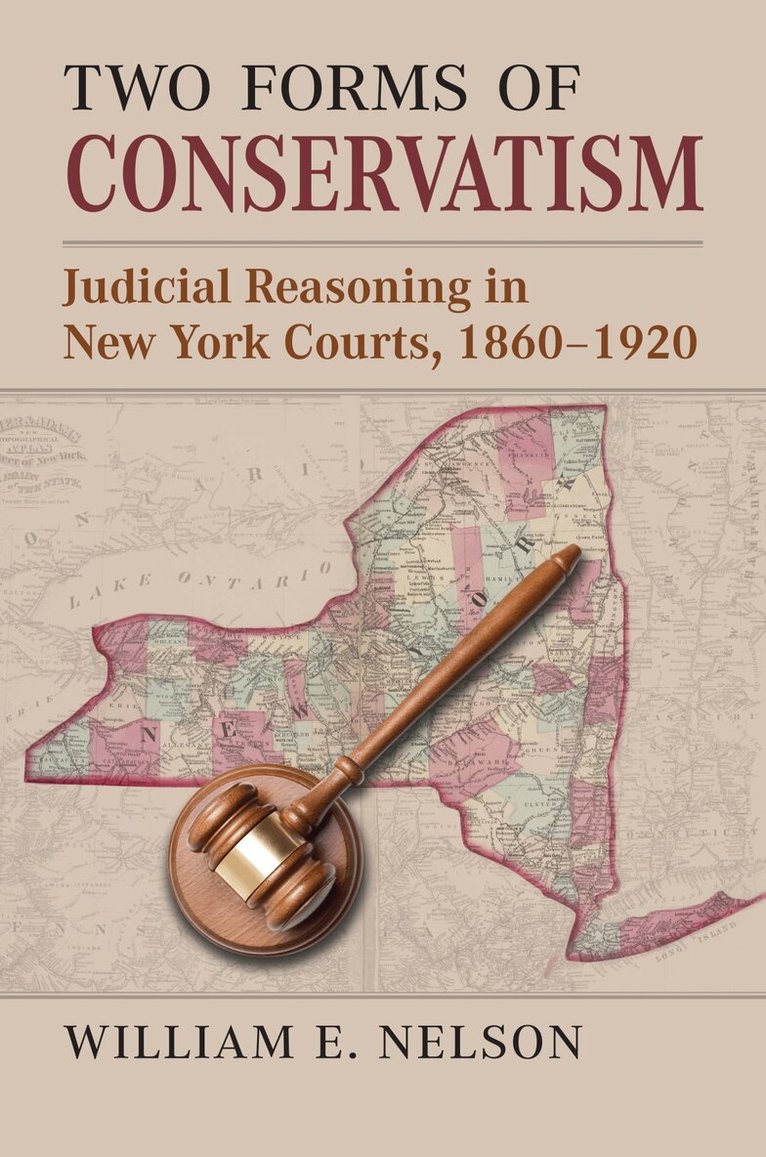
The period between 1860 and 1920—inclusive of the Gilded Age and much of the Lochner era in legal history—is typically regarded as the heyday of conservative jurisprudence. According to this received wisdom, conservative judges and much of the legal profession were on the side of big business and the rich. Judges in this period subscribed to “classical” legal thought, and it was only when this was supplanted by “progressive” legal thought that courts reached decisions critical of business.
Renowned legal historian William E. Nelson seeks to correct this narrative by examining in close detail the work of judges in the single jurisdiction of New York as well as the rulings of U.S. Supreme Court justices. What he finds is another type of conservatism besides the one that favors the rich. Instead, the judges in this period often reached decisions that were critical of business. Many of their accomplishments were forward-looking and progressive in character but conservative for another reason: they rigidly followed precedent, with only occasional exceptions. While some legal realists see the emphasis on precedent as a veneer to hide the judges’ policy preferences, Nelson shows that this explanation does not fit the evidence. The judges had no consistent policy preferences, and their decisions favored a wide array of policies.
Two Forms of Conservatism is the work of an expert historian with an eye for detail and a deep understanding of legal thought. He shows that these New York judges, who were quite conservative regarding the law, nevertheless laid the foundation for the liberalism of later political leaders.
494 kr
Skickas inom 10-15 vardagar
410 kr
Läs direkt efter köp
597 kr
Skickas inom 10-15 vardagar
1 314 kr
Skickas inom 10-15 vardagar
544 kr
Skickas inom 7-10 vardagar
408 kr
Läs direkt efter köp