2 571 kr
Skickas inom 10-15 vardagar
2 571 kr
Skickas inom 10-15 vardagar
842 kr
Skickas inom 10-15 vardagar
387 kr
Läs direkt efter köp
415 kr
Skickas inom 7-10 vardagar
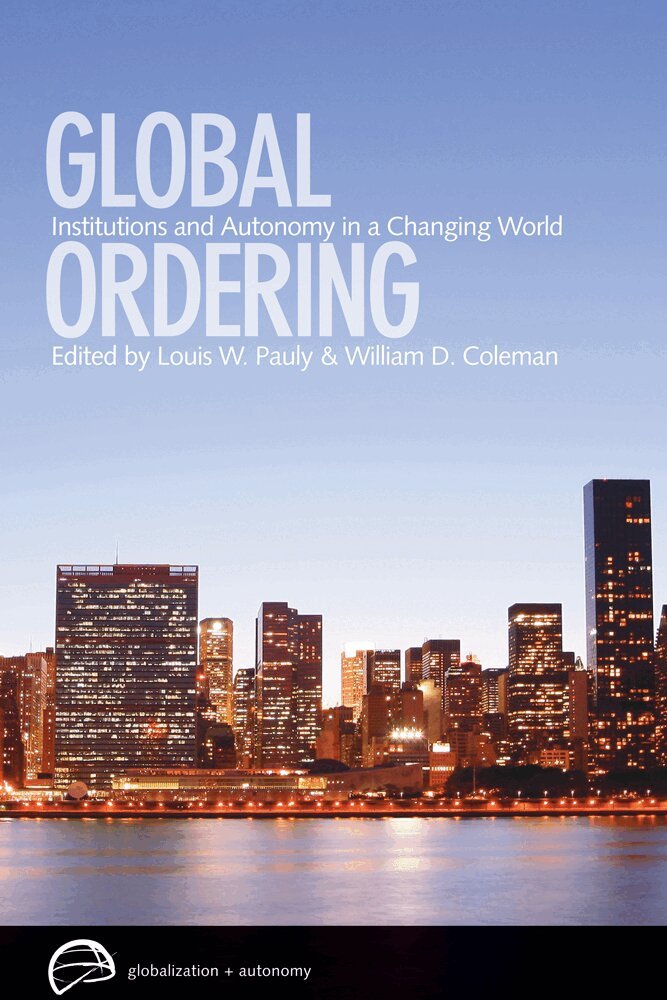
Despite myriad global forces influencing the lives of individuals, societies, and polities, people continue to value their personal and communal independence. They insist on shaping the conditions of their existence to the fullest extent possible. At the same time, many formal and informal institutions – from transnational legal and financial regimes to new governance arrangements for aboriginal communities in environmentally sensitive regions – are evolving, adapting to meet new challenges, or failing to adjust rapidly enough.
Global Ordering examines the key institutions and organizations that mediate the increasingly complex relationship between globalization and autonomy. Bringing together an outstanding group of scholars, this ground-breaking book contributes significantly to the work of re-imagining the circumstances under which integrative systemic forces can be brought into alignment with irreducible commitments to individual and collective autonomy. It is important work that maps the new frontier of globalization studies.
1 225 kr
Skickas inom 7-10 vardagar
428 kr
Skickas inom 7-10 vardagar
Globalization is one of the most significant developments of our time. But what distinguishes the present era from "golden" periods of empire building in past? Which elements of contemporary globalization and forms of autonomy are particularly novel and which are merely continuations of long-standing historical trends?
To address these questions, Empires and Autonomy brings together a distinguished group of scholars who explore particular historical moments that involved either the establishment or protection of autonomy. These global encounters inevitably involved friction, and the contributors examine the dialectic between globalization and autonomy at historical junctures that range in time from the Chinese occupation of Tibet in 1720 to the meeting between Ronald Reagan and Mikhail Gorbachev in 1986 that led to the end of the Cold War. By examining these uniquely telling moments in the history of globalization and autonomy, this innovative collection provides novel insights into changes that are overtaking our contemporary world.
1 189 kr
Skickas inom 7-10 vardagar
415 kr
Skickas inom 7-10 vardagar
1 189 kr
Skickas inom 7-10 vardagar
415 kr
Skickas inom 7-10 vardagar
1 189 kr
Skickas inom 7-10 vardagar
415 kr
Skickas inom 7-10 vardagar
1 189 kr
Skickas inom 7-10 vardagar
387 kr
Skickas inom 7-10 vardagar
1 119 kr
Skickas inom 7-10 vardagar
387 kr
Skickas inom 7-10 vardagar
370 kr
Skickas inom 7-10 vardagar
949 kr
Läs direkt efter köp
963 kr
Läs direkt efter köp
779 kr
Läs direkt efter köp
549 kr
Skickas inom 10-15 vardagar
457 kr
Läs direkt efter köp
408 kr
Läs direkt efter köp
443 kr
Tillfälligt slut
1 189 kr
Tillfälligt slut
1 189 kr
Tillfälligt slut
415 kr
Tillfälligt slut
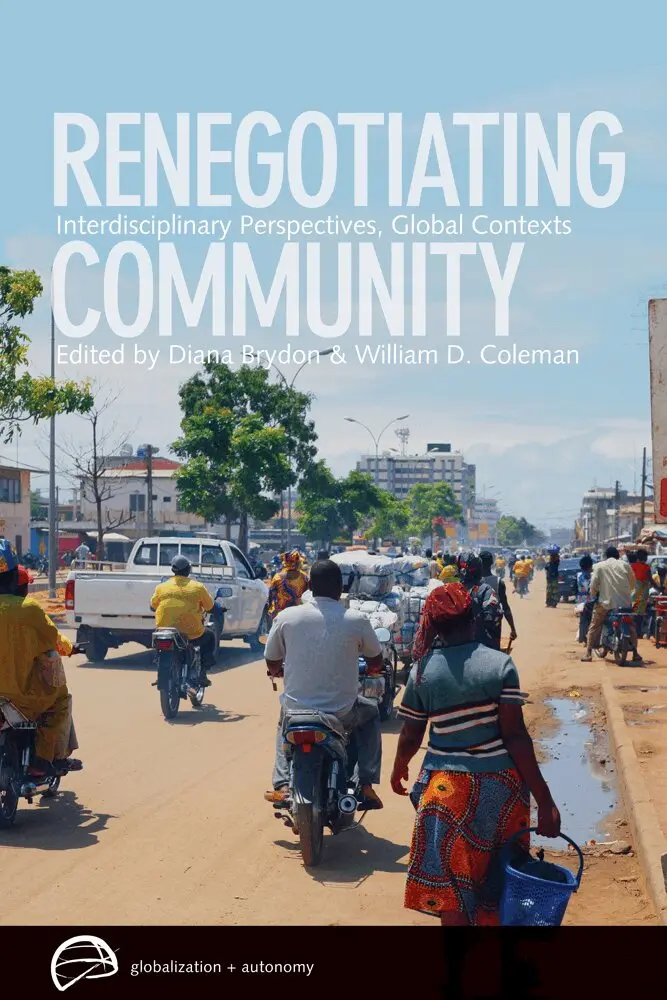
Both as a concept and a set of social relationships, community is central to contemporary debates about globalization. Faced with finding a livable response to globalization, many communities are renegotiating their identities and functions and, in some instances, entirely new communities are being formed. Yet there is no clear consensus on why community matters or on how globalization affects particular communities.
Renegotiating Community asks what happens to the autonomy of individuals and communities under the influence of globalization. Original case studies show how a range of communities are renegotiating the meanings of community and autonomy while living with, and sometimes challenging, the processes of globalization. By addressing the coercive and comforting dimensions of community – as well as the need to reconcile conflicting claims to autonomy – this book redraws the conceptual maps through which community, globalization, and autonomy are understood.