244 kr
Skickas inom 7-10 vardagar
244 kr
Skickas inom 7-10 vardagar
2 602 kr
Skickas inom 10-15 vardagar
656 kr
Skickas inom 10-15 vardagar
762 kr
Läs direkt efter köp
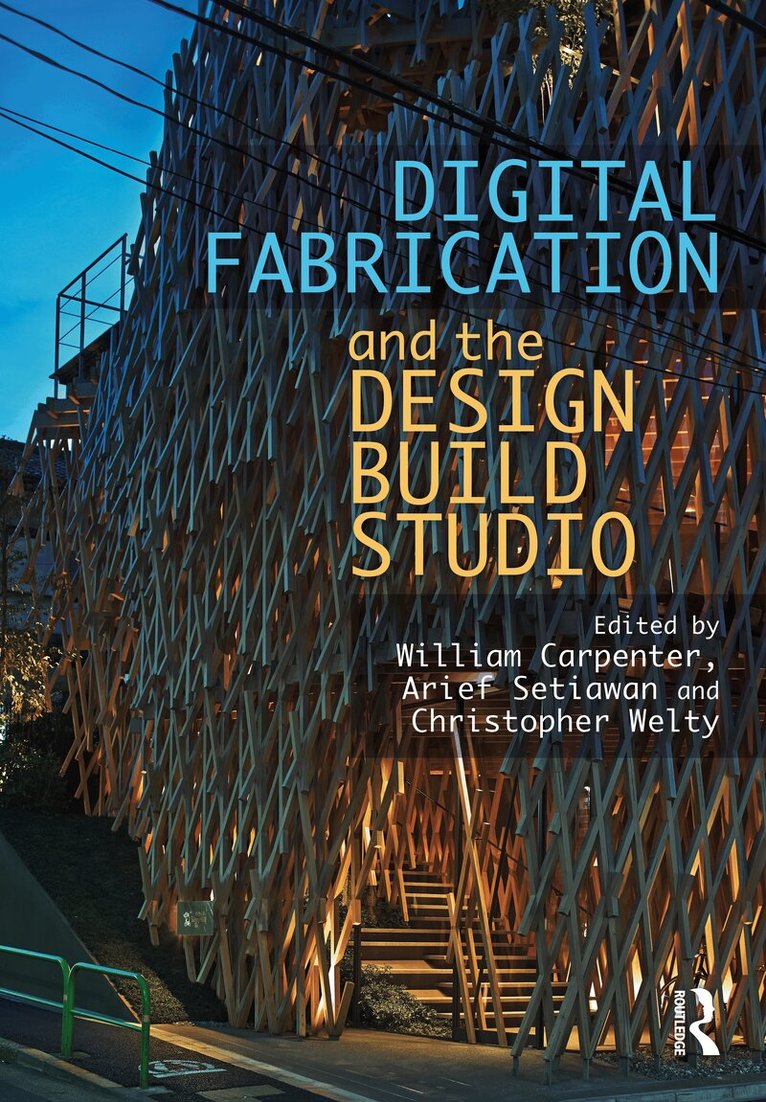
This book explores the connection between digital fabrication and the design build studio in both academic and professional studios.
The book presents 17 essays and cases studies from well-known scholars and practitioners, including Kengo Kuma, Joseph Choma, Dan Rockhill, Keith Zawistowski, and Marie Zawistowski, whose theoretical and practical work addresses design build at various levels. Four introductory essays trace the history of the design build movement, exploring the emergence of design build in the pedagogy of the Bauhaus, the integration of technology into architectural design, and the influence of the act of making on the design build studio. The rest of the book is divided into two parts; the first part looks at traditional pedagogical models for the design build studio, and the second part focuses on experimental methods used in design build programs. Together, these works discuss human behavior, social-cultural trends, and motivations in socially minded studios which are based on a service-learning model. They look at component-based studios where innovation allows for an increased level of research and testing of new materials and assemblies, sustainable principles, and zero-energy prototypes.
Illustrated with over 200 color images, this book will be a valuable resource for architecture students, educators, and practitioners seeking to explore the impact of digital fabrication on the global design build movement.

767 kr
Läs direkt efter köp
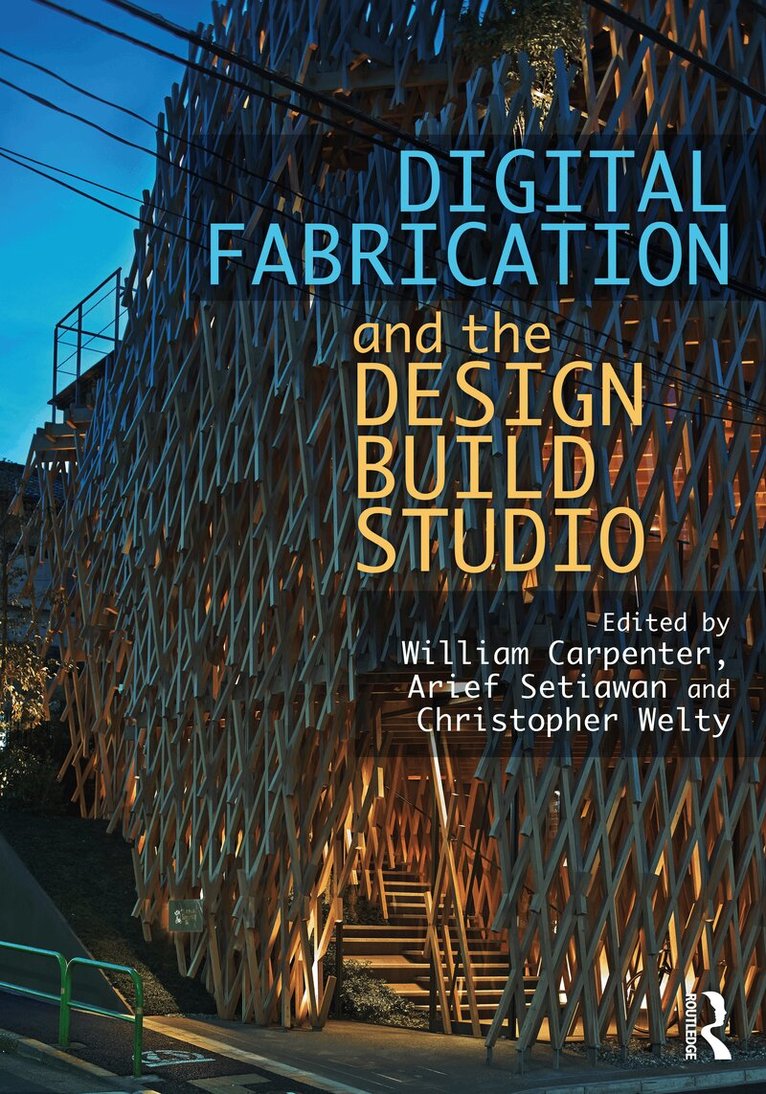
This book explores the connection between digital fabrication and the design build studio in both academic and professional studios.
The book presents 17 essays and cases studies from well-known scholars and practitioners, including Kengo Kuma, Joseph Choma, Dan Rockhill, Keith Zawistowski, and Marie Zawistowski, whose theoretical and practical work addresses design build at various levels. Four introductory essays trace the history of the design build movement, exploring the emergence of design build in the pedagogy of the Bauhaus, the integration of technology into architectural design, and the influence of the act of making on the design build studio. The rest of the book is divided into two parts; the first part looks at traditional pedagogical models for the design build studio, and the second part focuses on experimental methods used in design build programs. Together, these works discuss human behavior, social-cultural trends, and motivations in socially minded studios which are based on a service-learning model. They look at component-based studios where innovation allows for an increased level of research and testing of new materials and assemblies, sustainable principles, and zero-energy prototypes.
Illustrated with over 200 color images, this book will be a valuable resource for architecture students, educators, and practitioners seeking to explore the impact of digital fabrication on the global design build movement.

176 kr
Skickas inom 7-10 vardagar
396 kr
Skickas inom 7-10 vardagar
250 kr
Skickas inom 7-10 vardagar
370 kr
Skickas inom 7-10 vardagar
220 kr
Skickas inom 7-10 vardagar
385 kr
Skickas inom 7-10 vardagar
242 kr
Skickas inom 7-10 vardagar
285 kr
Skickas inom 7-10 vardagar
446 kr
Skickas inom 7-10 vardagar
321 kr
Skickas inom 7-10 vardagar
367 kr
Skickas inom 7-10 vardagar
201 kr
Skickas inom 7-10 vardagar
485 kr
Skickas inom 7-10 vardagar
371 kr
Skickas inom 7-10 vardagar
494 kr
Skickas inom 3-6 vardagar
203 kr
Skickas inom 3-6 vardagar
119 kr
Läs direkt efter köp
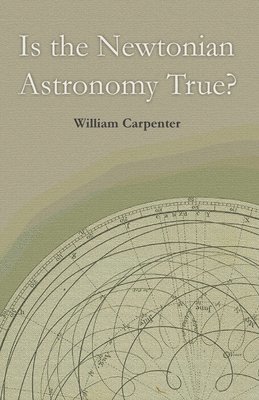
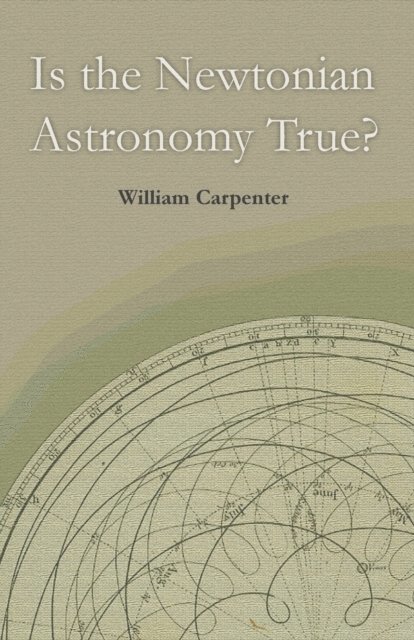
William Carpenter, a printer and author, was born in England and later moved to Baltimore where he continued to advocate for the flat-Earth theory. While this is not Williams first publication on the topic, it is certainly impressive as to the amount of information that William was able to provide and the passion with which he makes each point.
Carpenter''s evidence is given in short paragraphs allowing the reader to take in the information without feeling overwhelmed. The book ends with a collection of letters that had not been answered by the time the list went to print in 1885. These prove to be as thought-provoking as the actual text, as one gets a better understanding of what public views were on the topic at the time of publication.
A must-read for anyone interested in science or astrology, and for all those who wonder what evidence could prove that the earth is flat.
404 kr
Skickas inom 3-6 vardagar
181 kr
Skickas inom 7-10 vardagar
185 kr
Skickas inom 7-10 vardagar
84 kr
Läs direkt efter köp
86 kr
Läs direkt efter köp
255 kr
Skickas inom 7-10 vardagar
257 kr
Skickas inom 7-10 vardagar
49 kr
Läs direkt efter köp
"This can only be described as an extraordinary book .... His arguments are certainly plausible and ingenious, and even the reader who does not agree with him will find a singular interest and fascination in analyzing the ''one hundred proofs.''... The proofs are set forth in brief, forcible, compact, very clear paragraphs, the meaning of which can be comprehended at a glance." -Daily News
During the nineteenth century, William Carpenter, an English printer and author, gained recognition as a supporter of the flat Earth theory which holds that the Earth is not a globe. He was a proponent of English writer Samuel Rowbotham who produced a pamphlet, under the pseudonym Parallax, called Zetetic Astronomy.
This new edition, presented in large type for enhanced readability, also includes "Experiments proving the Earth to be a Plane" by Parallax.