1 888 kr
Läs direkt efter köp
1 888 kr
Läs direkt efter köp
906 kr
Läs direkt efter köp
1 431 kr
Skickas inom 7-10 vardagar
956 kr
Skickas inom 7-10 vardagar
906 kr
Läs direkt efter köp
2 948 kr
Skickas inom 7-10 vardagar
1 888 kr
Läs direkt efter köp
746 kr
Skickas inom 10-15 vardagar
942 kr
Skickas inom 10-15 vardagar
776 kr
Skickas inom 10-15 vardagar
2 843 kr
Skickas inom 10-15 vardagar
2 601 kr
Skickas inom 10-15 vardagar
3 175 kr
Skickas inom 10-15 vardagar
3 564 kr
Skickas inom 7-10 vardagar
2 843 kr
Skickas inom 10-15 vardagar
2 265 kr
Skickas inom 7-10 vardagar
1 275 kr
Skickas inom 7-10 vardagar
578 kr
Skickas inom 7-10 vardagar
2 245 kr
Skickas inom 10-15 vardagar
2 199 kr
Skickas inom 10-15 vardagar
593 kr
Skickas inom 10-15 vardagar
2 214 kr
Skickas inom 7-10 vardagar
787 kr
Skickas inom 7-10 vardagar
1 082 kr
Läs direkt efter köp
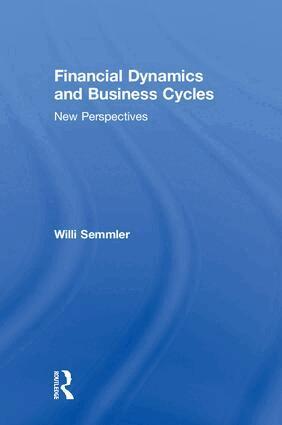
The financial instability and its spillover to the real sector have become a great challenge to macro-economic theory. The book takes a Keynesian theoretical perspective, representing an attempt to revive what Keynes stressed in his General Theory, namely the role of the financial market in macroeconomic outcomes. Although this book is inspired and motivated by the Asian currency and financial crises in the years 1997-8 and the experiences of the currently evolving U.S. financial disruptions, it also focuses on reviving a modeling tradition that provides a theoretical framework that throws light on recent financial market episodes and disturbances and their macroeconomic effects.
It brings to the forefront, as Keynes has suggested, the role of financial market stability for growth and macroeconomics. It criticizes theories that see economic disruptions and shocks rooted solely in the real side of the economy. It stresses the financial real interaction as the major source for macroeconomic instability and disruptions.
This important new book from a group of Keynesian, but nonetheless technically oriented economists would be of most interest to specialists and graduate students in macroeconomics and financial economics, especially those with an interest in US and European financial markets, emerging market analysis, and dynamic economic modeling.
1 071 kr
Läs direkt efter köp
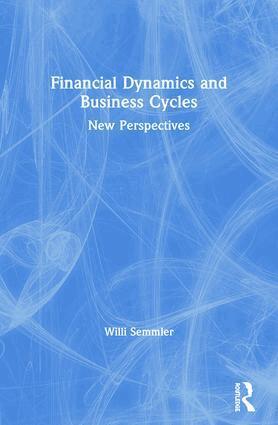
The financial instability and its spillover to the real sector have become a great challenge to macro-economic theory. The book takes a Keynesian theoretical perspective, representing an attempt to revive what Keynes stressed in his General Theory, namely the role of the financial market in macroeconomic outcomes. Although this book is inspired and motivated by the Asian currency and financial crises in the years 1997-8 and the experiences of the currently evolving U.S. financial disruptions, it also focuses on reviving a modeling tradition that provides a theoretical framework that throws light on recent financial market episodes and disturbances and their macroeconomic effects.
It brings to the forefront, as Keynes has suggested, the role of financial market stability for growth and macroeconomics. It criticizes theories that see economic disruptions and shocks rooted solely in the real side of the economy. It stresses the financial real interaction as the major source for macroeconomic instability and disruptions.
This important new book from a group of Keynesian, but nonetheless technically oriented economists would be of most interest to specialists and graduate students in macroeconomics and financial economics, especially those with an interest in US and European financial markets, emerging market analysis, and dynamic economic modeling.
910 kr
Läs direkt efter köp
This book represents the second of three volumes offering a complete reinterpretation and restructuring of Keynesian macroeconomics and a detailed investigation of the disequilibrium adjustment processes characterizing the financial, the goods and the labour markets and their interaction.
In this second volume the authors present a detailed analysis and comparison of two competing types of approaches to Keynesian macroeconomics, one that integrates goods, labour and financial markets, and another from the perspective of a conventional type of LM-analysis or interest-rate policy of the central bank. The authors employ rigorous dynamic macro-models of a descriptive and applicable nature, which will be of interest to all macroeconomists who use formal model-building in their investigations.
The research in this book with its focus on Keynesian propagation mechanisms provides a unique alternative to the black-box shock-absorber approaches that dominate modern macroeconomics. The main conclusion of the work is that policy makers need to reconsider Keynesian ideas, but in the modern form in which they are expressed in this volume.
Reconstructing Keynesian Macroeconomics will be of interest to students and researchers who want to look at alternatives to the mainstream macrodynamics that emerged from the Monetarist critique of Keynesianism. This book will also engage central bankers and macroeconomic policy makers.
890 kr
Läs direkt efter köp
This book represents the second of three volumes offering a complete reinterpretation and restructuring of Keynesian macroeconomics and a detailed investigation of the disequilibrium adjustment processes characterizing the financial, the goods and the labour markets and their interaction.
In this second volume the authors present a detailed analysis and comparison of two competing types of approaches to Keynesian macroeconomics, one that integrates goods, labour and financial markets, and another from the perspective of a conventional type of LM-analysis or interest-rate policy of the central bank. The authors employ rigorous dynamic macro-models of a descriptive and applicable nature, which will be of interest to all macroeconomists who use formal model-building in their investigations.
The research in this book with its focus on Keynesian propagation mechanisms provides a unique alternative to the black-box shock-absorber approaches that dominate modern macroeconomics. The main conclusion of the work is that policy makers need to reconsider Keynesian ideas, but in the modern form in which they are expressed in this volume.
Reconstructing Keynesian Macroeconomics will be of interest to students and researchers who want to look at alternatives to the mainstream macrodynamics that emerged from the Monetarist critique of Keynesianism. This book will also engage central bankers and macroeconomic policy makers.
1 027 kr
Läs direkt efter köp
This book represents the first of three volumes offering a complete reinterpretation and restructuring of Keynesian macroeconomics and a detailed investigation of the disequilibrium adjustment processes characterizing the financial, the goods and the labour markets and their interaction. It questions in a radical way the evolution of Keynesian macroeconomics after World War II and focuses on the limitations of the traditional Keynesian approach until it fell apart in the early 1970s, as well as the inadequacy of the new consensus in macroeconomics that emerged from the Monetarist critique of Keynesianism.
Professors Chiarella, Flaschel and Semmler investigate basic methodological issues, the pitfalls of the Rational Expectations School, important feedback channels in the tradition of Tobin’s work, and theories of the wage-price spiral and the evidences for them. The book uses primarily partial approaches, the integration of which will be the subject of subsequent volumes. With its focus on Keynesian propagation mechanisms, the research in this book provides a unique alternative to the black-box shock-absorber approaches that dominate modern macroeconomics.
Reconstructing Keynesian Macroeconomics should be of interest to students and researchers who want to look at alternatives to the mainstream macrodynamics that emerged from the Monetarist critique of Keynesianism.
1 004 kr
Läs direkt efter köp
This book represents the first of three volumes offering a complete reinterpretation and restructuring of Keynesian macroeconomics and a detailed investigation of the disequilibrium adjustment processes characterizing the financial, the goods and the labour markets and their interaction. It questions in a radical way the evolution of Keynesian macroeconomics after World War II and focuses on the limitations of the traditional Keynesian approach until it fell apart in the early 1970s, as well as the inadequacy of the new consensus in macroeconomics that emerged from the Monetarist critique of Keynesianism.
Professors Chiarella, Flaschel and Semmler investigate basic methodological issues, the pitfalls of the Rational Expectations School, important feedback channels in the tradition of Tobin’s work, and theories of the wage-price spiral and the evidences for them. The book uses primarily partial approaches, the integration of which will be the subject of subsequent volumes. With its focus on Keynesian propagation mechanisms, the research in this book provides a unique alternative to the black-box shock-absorber approaches that dominate modern macroeconomics.
Reconstructing Keynesian Macroeconomics should be of interest to students and researchers who want to look at alternatives to the mainstream macrodynamics that emerged from the Monetarist critique of Keynesianism.
869 kr
Skickas inom 10-15 vardagar