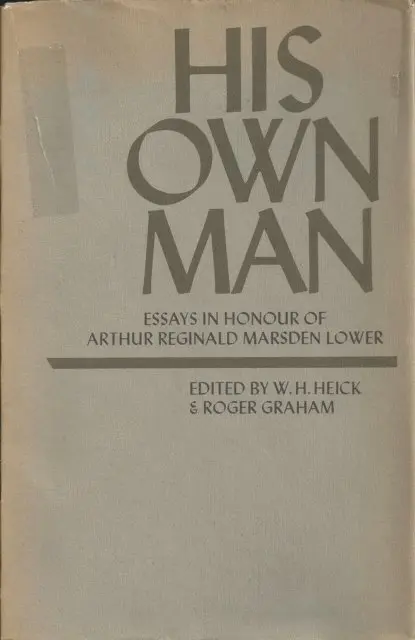
For Canada the last century was one of great social and economic change: an increasingly urban population witnessed shifts from an agricultural to a mixed economy and from moderate to greater wealth. Heick chronicles how changing attitudes toward butter and margarine reflected the nature of that society. He demonstrates how the ban on the manufacture, importation, and sale of margarine was instigated in 1986 at the behest of the nascent, yet influential diary industry, particularly in Ontario. This ban was based on the premise that margarine was not a pure food. Despite the lifting of the ban in 1918 - 23, margarine would only appear as a permanent fixture of the Canadian food spectrum after World War II. The author contends that post-World War II urbanization, and a desire to enjoy a more prosperous life after wartime stringencies, were instrumental in this change. It was increasingly difficult for the Canadian diary industry to meet the nation's growing dairy requirements. Margarine was no longer viewed as impure; in fact it was now recognized as being a wholesome food and substitute for butter. Heick's important study of the Canadian butter/margarine competition brings to light how the lengthy debate manifested itself in political, economic and social milieux.
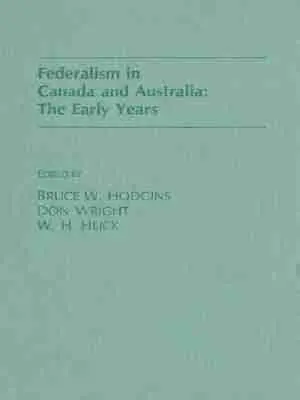
This book is a comparison of the history and politics of two sister societies, comparing Canada with Australia, rather than, as is traditional, with the United Kingdom or the United States. It is representative of a particular interest in promoting more contact and exchange among Canadian and Australian scholars who were investigating various features of the two societies. Because some of them were individually involved in aspects of federalist studies, an examination of the early evolution of federalism in what once were the two sister dominions seemed quite an appropriate area in which to begin comparisons. The book discusses Canadian federalism from about 1864 to 1880 and Australian federalism from about 1897 to 1914. It examines the background and changes wrought on early Canadian federalism and early Australian federalism.