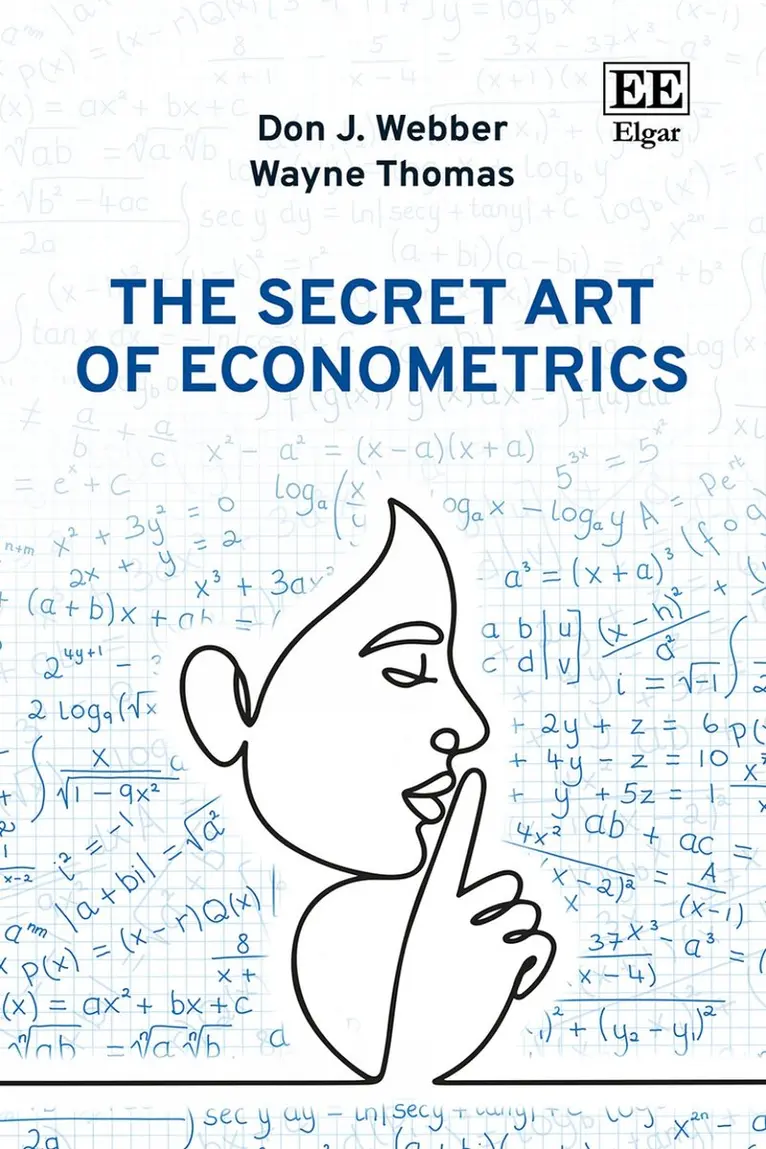
Analysing the need to make numerous undocumented subjective choices when estimating econometric models, this book collates these choices, revealing the normative nature of econometric research.Don Webber and Wayne Thomas examine a range of issues impacting econometric analysis, including the importance of specification, (re)framing research problems to fit convention, rhetoric and persuasion, and the pressing need to present statistically significant results. They also explore multiple sources of errors, implicit biases and the lack of critical reflection regarding the strength of results for real-world policymaking. The book concludes that, if done correctly, econometrics can make key contributions to evidence-based policymaking, but that it requires much greater transparency about subjective choices than is currently the case.Scholars of economic methodologies and social science will benefit from the book's insights into the difficulties of formulating econometric models and the data processing choices. The book is indispensable for economic practitioners and policymakers, as it challenges the belief that econometrics provides the strongest possible support for evidence-based policymaking.
Don’t you love those moments in your course when students are fully engaged? When the “Aha!” revelations are bursting like fireworks? Financial Accounting by Spiceland, Thomas, and Herrmann brings together best practices to engage your students by: (1) Building a framework for financial accounting focused on measurement, communication, and decision making; (2) reinforcing the framework in each chapter’s text and end-of-chapter assignments; and (3) enriching that framework using data analytics tools, Excel assignments, General Ledger problems, and a variety of auto-graded cases involving ethics, earnings management, and real-world companies, all communicated in a student-friendly, conversational writing style. The market-leading success of this text will motivate, engage, and challenge students—it will illuminate the financial accounting course like never before. Other books in the Spiceland/Thomas series include Intermediate Accounting and Financial Accounting for Managers.
Financial Accounting for Managers gives the flexibility to emphasize or deemphasize debits and credits in an undergraduate or graduate course by providing a modular structure to fit different course lengths, approaches, and assignments that can be easily filtered to fit the needs of individual instructor teaching styles. Each business transaction throughout the text is illustrated with its effects on the balance sheet and income statement. The focus prepares students to be business managers who understand how accounting information reveals a company’s profitability, risk, and efficiency of operations. When paired with Connect, it has student success resources that include auto-graded cases, Tableau Dashboard Activities, Integrated Excel, multiple video types, Guided Examples, General Ledger Problems, and SmartBook, an adaptive reading and practice tool for students.
"Buy this book, it's a barn burner!"Dorothy AllisonIn an extraordinarily diverse anthology of poetry, fiction, nonfiction, and graphic narratives by contemporary Appalachian writers, Red Holler takes us over and beyond the stock imagery of rural mountain communities. We travel into housing projects, forest-stripped ravines, and trailer parks, to explore vibrant hometown and migrant Appalachian cultures. Editors John E. Branscum and Wayne Thomas have assembled a collection spanning ten years and communities in locales ranging from Mississippi to New York, placing fresh new voices alongside widely known and celebrated authors. Drawing on Appalachian literature’s roots in Native American myth, African American urban legend, and European folk culture, and embracing Appalachian urban fiction, the Southern Gothic, gritty no-holds-barred realism, and magical realism, the stories and poems of Red Holler elegantly cohere to perfectly depict what makes Appalachia so fascinating: its irreverent and outlaw challenges to mainstream notions of propriety and convention.