While the remit of social work professionals is, in general, locality-based, social work has a long tradition of concern about international issues. Broadening Horizons provides an engaging and original contribution to the debate on how to tackle social work problems on a global scale. Filling both a theoretical and a practice gap in the literature, the book discusses the experiences of academics, practitioners and students involved in international exchanges in social work. It draws on a major EU-Canadian exchange project as well as separate projects in countries including South Africa, the USA, China and Australia. The contributors highlight the opportunities and barriers that shaped their experience and give guidance on how to deal with both the practicalities and aspirations of living and working across borders. This book will thus be invaluable both to readers interested in the meaning and realities of international social work and to those hoping to embark on an exchange programme themselves.

Through in-depth qualitative and quantitative research with African Canadians in three Canadian cities – Calgary, Toronto and Halifax – this book explores how experiences of racism, combined with other social and economic factors, affect the health and well-being of African Canadians. With a special interest in how racial stereotyping impacts Black men and boys, this book shares stories of racism and violence and explores how experiences and interpretations of, and reactions to, racism differ across a range of social and economic variables. Rejecting the notion that Black communities are homogeneous, this book gives a detailed examination of three distinct communities: Caribbean, immigrant African and Canadian Black. The authors also explore how individuals, families and communities can better understand and challenge racism.
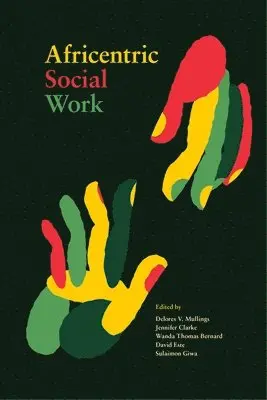
This edited collection focuses on Africentric social work practice, providing invaluable assistance to undergraduate students in developing foundational skills and knowledge to further their understanding of how to initiate and maintain best practices with African Canadians. In social work education and field practice, students will benefit from the depth and breadth of this book’s discussions of social, health and educational concerns related to Black people across Canada. The book’s contributors present a broad spectrum of personal and professional experiences as African Canadian social work practitioners, students and educators. They address issues that African Canadians confront daily, which social work educators and potential practitioners need to understand to provide racially and culturally relevant services. The book presents students with an invaluable opportunity to develop their practical skills through case studies and critical thinking exercises, with recommendations for how to ethically and culturally engage in African-centred service provision.
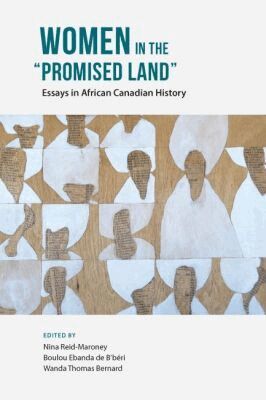
Women in the “Promised Land” places African Canadian women’s lived experiences, identities, and histories at the centre of Canada’s past. This collection of original research edited by leading scholars in the field encourages readers to interrogate the idea of Canada as a “Promised Land” by examining the rich and varied history of African Canadian women. The nine chapters span the early 1830’s of slavery through to the late twentieth centuries of activism. This interdisciplinary collection draws on existing research from cultural studies, literary studies, communications, and visual culture to reframe familiar figures in African Canadian women’s history, such as feminist Mary Ann Shadd and civil rights activist Viola Desmond, in the wider African diaspora. This invaluable text sheds light on questions of the past, present, and future in the field, and is best suited for undergraduate courses in women’s studies, African studies, sociology, and history.Features:contains interdisciplinary, accessible, and original work that examines African Canadian women’s history through a visual culture lensincludes chapter abstracts, questions for discussion, and a bibliographic appendixencourages readers to make connections between African Canadian women’s history and emerging scholarship on race, indigeneity, and queer histories