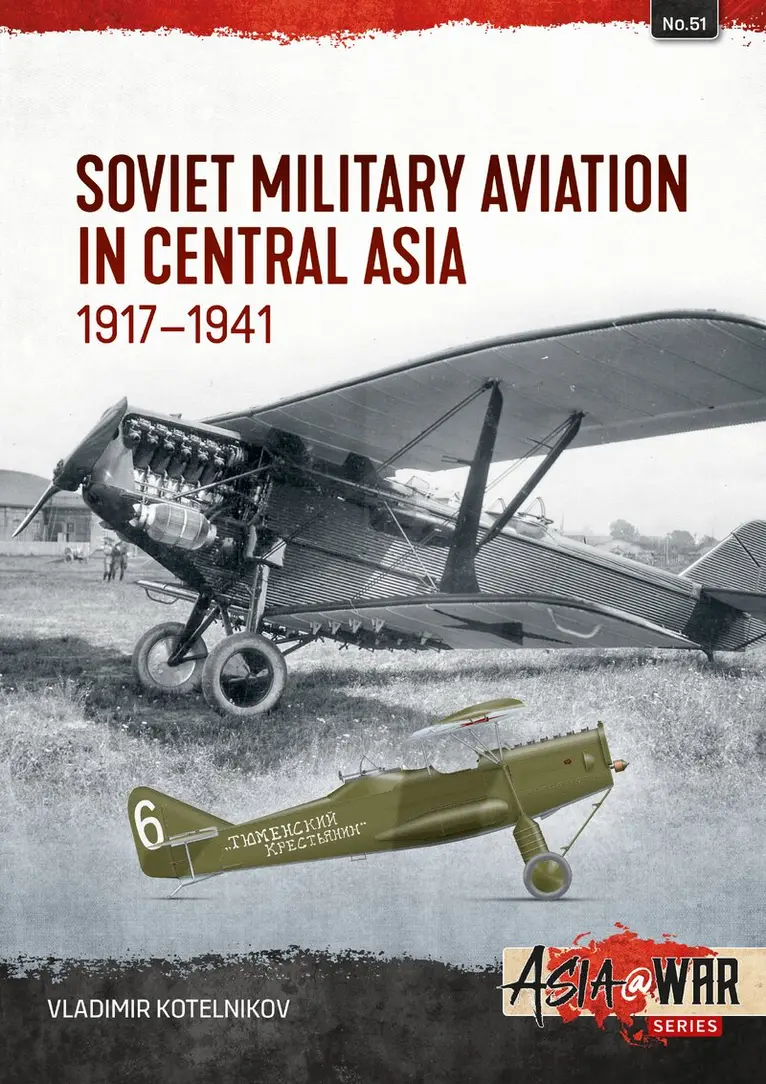
Soviet Military Aviation in Central Asia 1917-41
223 kr
Skickas
223 kr
Skickas
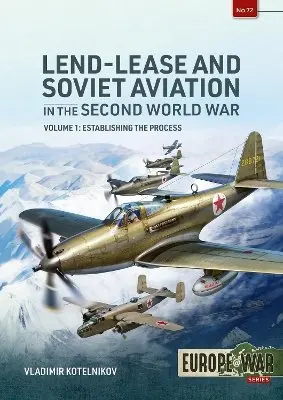
Establishing the Process
220 kr
Kommande
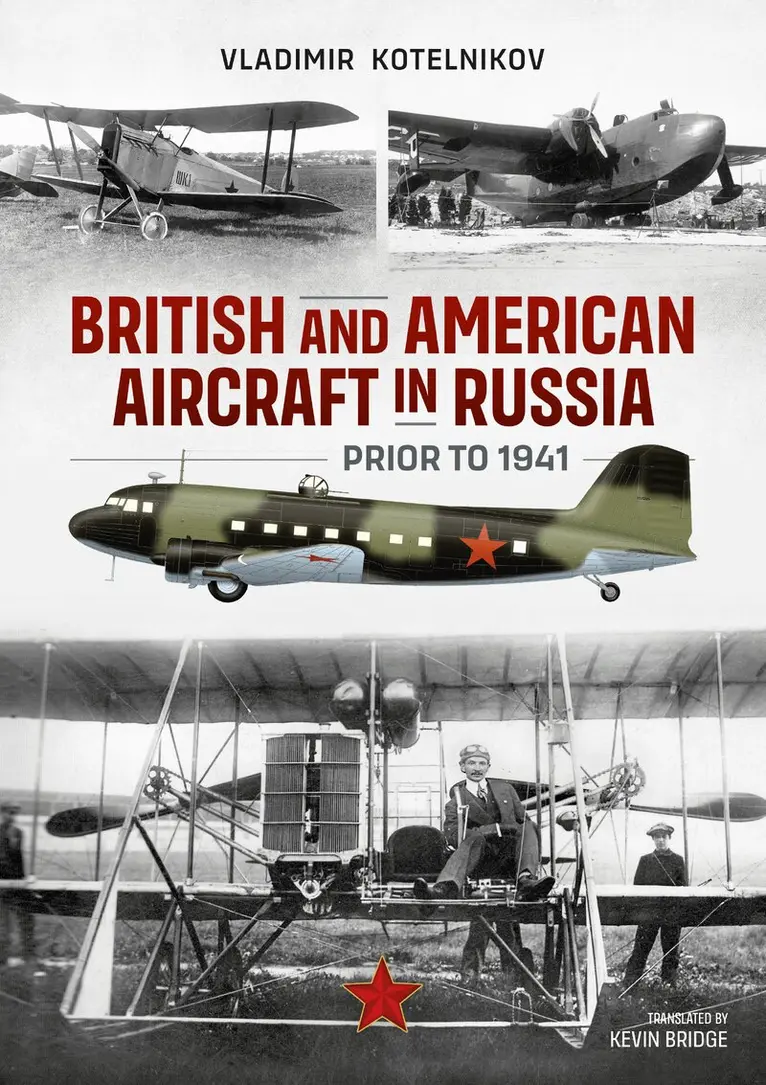
When Germany invaded the Soviet Union in June 1941, Britain and the United States rapidly became indispensable sources of aircraft, equipment, raw materials and technical expertise for Soviet aviation. For decades before the Second World War, however, Russian and Soviet pilots, engineers and manufacturers had already been studying, purchasing, operating and, in some cases, reproducing British and American aircraft and technology.
Beginning with the earliest British and American aircraft in Imperial Russia, the story opens by tracing this long and complex history. It follows the First World War, Civil War and inter-war years, when foreign machines, engines and manufacturing methods helped shape the development of Soviet aviation. British types such as the Sopwith 1½ Strutter and Avro 504 played important roles, while the 1930s saw Soviet interest increasingly shift towards American aircraft, industrial processes and technical innovation. Licensed production of designs such as the Douglas DC-3, together with the acquisition of equipment, engines and manufacturing technology, provided a foundation upon which wartime cooperation would later be built.
The narrative then turns to the creation of the wartime assistance programme – Lend-Lease – itself: the political negotiations, purchasing mechanisms, protocols and administrative arrangements through which Allied aircraft began to flow to the Soviet Union. It explains what ‘Lend-Lease’ actually meant, how British and American assistance differed, and how the immense machinery of procurement and acceptance was established.
Alongside this wider story are detailed histories of the aircraft types examined in the series, starting with the Hawker Hurricane, Supermarine Spitfire, Republic P-47 Thunderbolt, North American Mustang, De Havilland Mosquito and Curtiss O-52 Owl. Their technical characteristics, Soviet testing, operational employment and contemporary assessments reveal how differently Western aircraft could be judged once exposed to the particular demands of Soviet service.
Illustrated throughout with a wealth of period photographs and specially prepared colour aircraft profiles, this first volume lays the essential foundation for understanding one of the most important – and most frequently misunderstood – forms of Allied cooperation with the Soviet Union during the Second World War.
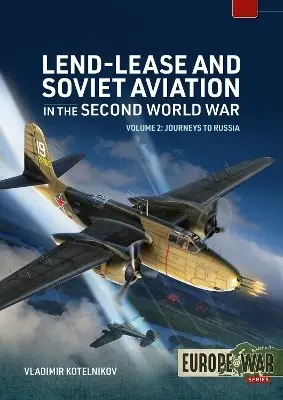
Journeys to Russia
225 kr
Skickas inom 11-20 vardagar
The requisitioning of aircraft for the Soviet Union was only the beginning of the operation. Before a Hurricane, Airacobra, Boston or Mitchell could fight over the Eastern Front, it first had to survive an extraordinary journey across oceans, mountains, deserts, Arctic seas or some of the most inhospitable territory on earth.
Volume Two of Lend-Lease and Soviet Aviation in the Second World War tells the remarkable story of how Allied aircraft actually reached their Soviet operators. It follows the great supply arteries that connected British and American factories with the USSR: the perilous Arctic convoys to Murmansk and Archangelsk; the long southern route through Iraq and Iran—the famous Persian Corridor; and the immense Alaska-Siberia air route, ALSIB, stretching from the United States through Canada and Alaska, across the Bering Strait and thousands of kilometres of Siberian wilderness to Krasnoyarsk.
Each route presented a different combination of danger and logistical difficulty. Arctic shipping faced U-boats, Luftwaffe attacks, and extreme environments. In the south, aircraft arrived by sea, were assembled and test-flown in Iraq and Iran, and then ferried northwards by Soviet crews. Across ALSIB, pilots confronted extreme temperatures, mountain ranges, primitive airfields, navigation difficulties and immense landscapes in which a forced landing could easily become a catastrophe.
The volume also tackles the sometimes surprisingly complicated question of numbers: how many aircraft were dispatched, how many actually reached Soviet hands, how many were lost en route, and what imported aircraft represented in relation to Soviet wartime production. The familiar headline figures are placed firmly within their operational and logistical context.
Completing the volume are detailed studies of important Lend-Lease aircraft, including the Douglas A-20 Havoc/Boston, Handley Page Hampden, Short Stirling and Douglas C-47 Skytrain.
Combining logistics, aviation history, technical detail and the experiences of the men who flew these dangerous routes, Journeys to Russia is richly illustrated with period photographs and colour aircraft profiles that bring both the aircraft and the vast delivery network vividly to life.
225 kr
Kommande
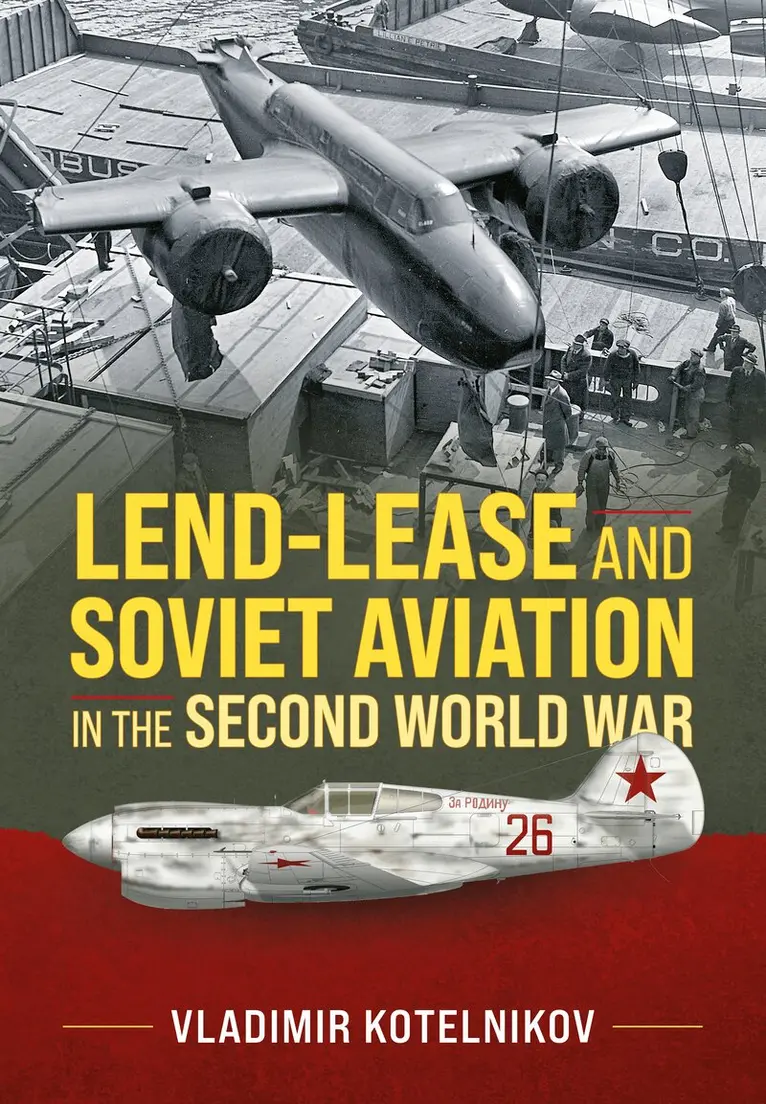
Receiving an Allied aircraft was one thing. Turning it into an effective Soviet weapon was quite another.
British and American aircraft had been designed for very different operational environments, maintenance systems and tactical doctrines from those encountered on the Soviet-German Front. Their engines expected different fuels and lubricants; instruments used unfamiliar units of measurement; manuals were written in English; equipment and controls followed foreign standards; and machines designed for Western European, Mediterranean or Pacific conditions often reacted badly to Russian winters, primitive airfields and the exceptionally intensive operational tempo of the Eastern Front.
Volume 3 of Lend-Lease and Soviet Aviation in the Second World War examines how Soviet pilots, engineers and technicians learned to master this unfamiliar equipment. Foreign aircraft were ‘Sovietised’ through an extraordinary range of modifications: winterisation, replacement of armament and equipment, structural reinforcement, changes to bomb loads and reconnaissance installations, and even conversions which gave aircraft entirely new operational roles. Some types that had disappointed Western users proved unexpectedly effective under Soviet conditions; others required considerable ingenuity before their potential could be realised.
The volume also explores the training system created to convert entire regiments to foreign aircraft. Soviet crews learned initially from British and American instructors, then through specialist backup regiments and training centres. They had to master unfamiliar cockpit layouts, imperial measurements, foreign maintenance procedures and technical terminology—often under wartime pressure and sometimes directly at the front.
Behind the machines stood another story: the Allied and Soviet personnel who made Lend-Lease function. The programme was never a seamless coalition organisation, but a complicated network of military missions, purchasing commissions, diplomats, logisticians and technical specialists. Cooperation frequently remained formal and mistrustful, yet practical relationships repeatedly overcame political friction.
Detailed aircraft histories examine the Curtiss P-40 Tomahawk/Kittyhawk, Bell P-63 Kingcobra, Hawker Typhoon, North American B-25 Mitchell, Consolidated PBY Catalina, Vought OS2U Kingfisher, Curtiss C-46 Commando and North American AT-6 Texan in Soviet hands.
Lavishly illustrated with wartime photographs and detailed colour aircraft profiles, this third volume explains not simply what the Allies supplied, but how Soviet aviation learned to adapt, maintain and fight with foreign machines on Soviet terms.
223 kr
Kommande
The final volume in this four-part series offers the first comprehensive evaluation of the overall impact of Lend-Lease aviation on the Soviet war effort and its enduring legacy. Drawing on a vast range of Soviet and Western archival sources, aviation historian Vladimir Kotelnikov assesses how thousands of Allied aircraft shaped combat, logistics, and doctrine between 1941 and 1945, and how their influence extended well into the postwar years.
Kotelnikov analyses the combat performance of all major Lend-Lease types—fighters, bombers, transports, and naval aircraft—drawing on Soviet reports, pilot testimonies, and comparative evaluations. He examines the practicalities of sustaining foreign aircraft in frontline conditions: the supply of spares and fuel, the adaptation of maintenance procedures, and the training of air and ground crews to operate unfamiliar designs. The volume highlights both successes and failures, showing where Allied aircraft provided vital capabilities and where they fell short of Soviet expectations.
Beyond the battlefield, the study considers the strategic contribution of Lend-Lease aviation. By alleviating pressure on Soviet industry and filling critical gaps in equipment, Allied deliveries allowed Soviet designers and factories to concentrate on future projects. Kotelnikov traces the influence of Western aircraft on postwar Soviet development, from transport aviation to long-range bombing concepts, and shows how wartime experience informed Cold War-era design and doctrine.
Illustrated with colour profiles, rare photographs, technical data, and statistical appendices, this concluding volume provides a balanced, authoritative account of how Lend-Lease aviation contributed to Soviet victory in the Second World War and left a lasting imprint on the evolution of Soviet air power.
149 kr
Läs direkt efter köp
494 kr
Tillfälligt slut
331 kr
Tillfälligt slut
532 kr
Tillfälligt slut