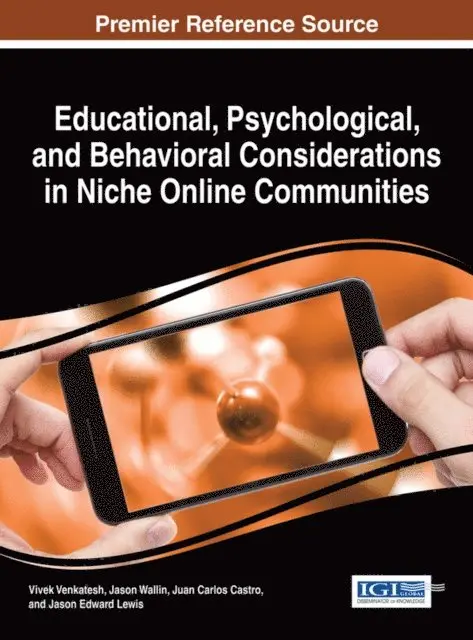
Online communities continue to evolve as more people take on a virtual presence. This shift in online communities and the diversity of individuals populating the web has allowed for the emergence of virtual communities centered on niche topics of interests ranging from heavy metal music to indigenous and native culture. Educational, Psychological, and Behavioral Considerations in Niche Online Communities examines the presence of online communities centered around niche topics of interest and the impact of these virtual spaces on community members. Taking perspectives from interdisciplinary fields such as sociology, psychology, and education, this publication will appeal to educators, psychologists, behaviorists, students, and researchers interested in the impact of virtual communities on individuals as well as the opportunities these online communities present.
The Ethics of Extremity critically examines how we can understand, interact with, and intervene in a world where what was once considered extreme has become normalized as part of everyday life.Contributors invite us to re-examine our explicit and implicit expectations that ethics would curtail extremity - and how those assumptions have frequently failed. This opens up a central question: what is the relationship between ethics and extremity today? Rather than offering fixed solutions to this question, the chapters invite readers to rethink how ethics might respond to a world in which extremity is embedded in everyday experience. Through contributions from scholars, artists, and activists, the volume explores how extremity manifests in areas such as public health, digital media, gender violence, combat sports, and ecological collapse. Drawing on diverse methods and contexts, the book unfolds across five thematic interventions proposed by the authors for grappling with extremity today: engaging in uncomfortable forms of closeness; seeing and feeling extremity anew; reclaiming truth in a post-truth era; rethinking illegality and marginality; and using extremity as a teaching tool. Together, these offer entry points for reimagining what ethical life might look like under conditions of persistent crisis.
The Ethics of Extremity critically examines how we can understand, interact with, and intervene in a world where what was once considered extreme has become normalized as part of everyday life.Contributors invite us to re-examine our explicit and implicit expectations that ethics would curtail extremity-and how those assumptions have frequently failed. This opens up a central question: what is the relationship between ethics and extremity today? Rather than offering fixed solutions to this question, the chapters invite readers to rethink how ethics might respond to a world in which extremity is embedded in everyday experience. Through contributions from scholars, artists, and activists, the volume explores how extremity manifests in areas such as public health, digital media, gender violence, combat sports, and ecological collapse. Drawing on diverse methods and contexts, the book unfolds across five thematic interventions proposed by the authors for grappling with extremity today: engaging in uncomfortable forms of closeness; seeing and feeling extremity anew; reclaiming truth in a post-truth era; rethinking illegality and marginality; and using extremity as a teaching tool. Together, these offer entry points for reimagining what ethical life might look like under conditions of persistent crisis.
The Polarized Classroom shows how teachers, administrators, and policymakers can navigate disputes over race, gender identity, free expression, disinformation, curriculum, sexuality education, trans inclusion, and democratic citizenship without retreating from the core responsibilities of schooling.Contributors – including leading and emerging educational scholars – examine how educators can make principled decisions under pressure, resist censorship and ideological simplification, and create classrooms where disagreement can become a condition for learning rather than a source of paralysis.The Polarized Classroom provides a timely framework for sustaining educational integrity in contentious times. It shows how schools can confront division while remaining committed to democratic inquiry, student dignity, and responsible teaching.