This book was written to provide a clear and systematic sum mary of the principles of gynaecology in synoptic form. It is part of a three volume series, the first two volumes covering topics in undergraduate obstetricE! and neonatal medicine respectively. Where appropriate, fundamentals of related anatomy and physiology are also covered. It is primarily directed at under graduate medical students and midwives, but material useful as reference to doctors revising for further qualifications has been included. Although much of the content is organized in the form of lists, this book differs from the usual ''list'' book in that cover age is full and systematic. Thus the text has been organized into the following subheadings, where appropriate: Definitions, Aetiology, Pathophysiology, Clinical features, Differential Diag nosis, Investigations, Treatment, and Prognosis. To avoid rep etition, certain clinical areas including ectopic pregnancy and abortion which have been covered in the earlier volumes are not included. Certain useful diagnostic lists are also provided, and, in pre paring the book, previous examination papers of the Univer sities of Oxford, Cambridge and London, as well as of the Central Midwives Board, were consulted. Illustrations have been specially prepared in the form of explanatory line drawings that are simple, and easy to memorize and reproduce. Although drug dosages were checked with care before going to press, changes in medical practice make it advisable to verify regimes and doses with the latest prescribing information and the pharmacopoeia, before use.
This book was written to provide a clear and systematic sum mary of the principles of gynaecology in synoptic form. It is part of a three volume series, the first two volumes covering topics in undergraduate obstetricE! and neonatal medicine respectively. Where appropriate, fundamentals of related anatomy and physiology are also covered. It is primarily directed at under graduate medical students and midwives, but material useful as reference to doctors revising for further qualifications has been included. Although much of the content is organized in the form of lists, this book differs from the usual 'list' book in that cover age is full and systematic. Thus the text has been organized into the following subheadings, where appropriate: Definitions, Aetiology, Pathophysiology, Clinical features, Differential Diag nosis, Investigations, Treatment, and Prognosis. To avoid rep etition, certain clinical areas including ectopic pregnancy and abortion which have been covered in the earlier volumes are not included. Certain useful diagnostic lists are also provided, and, in pre paring the book, previous examination papers of the Univer sities of Oxford, Cambridge and London, as well as of the Central Midwives Board, were consulted. Illustrations have been specially prepared in the form of explanatory line drawings that are simple, and easy to memorize and reproduce. Although drug dosages were checked with care before going to press, changes in medical practice make it advisable to verify regimes and doses with the latest prescribing information and the pharmacopoeia, before use.
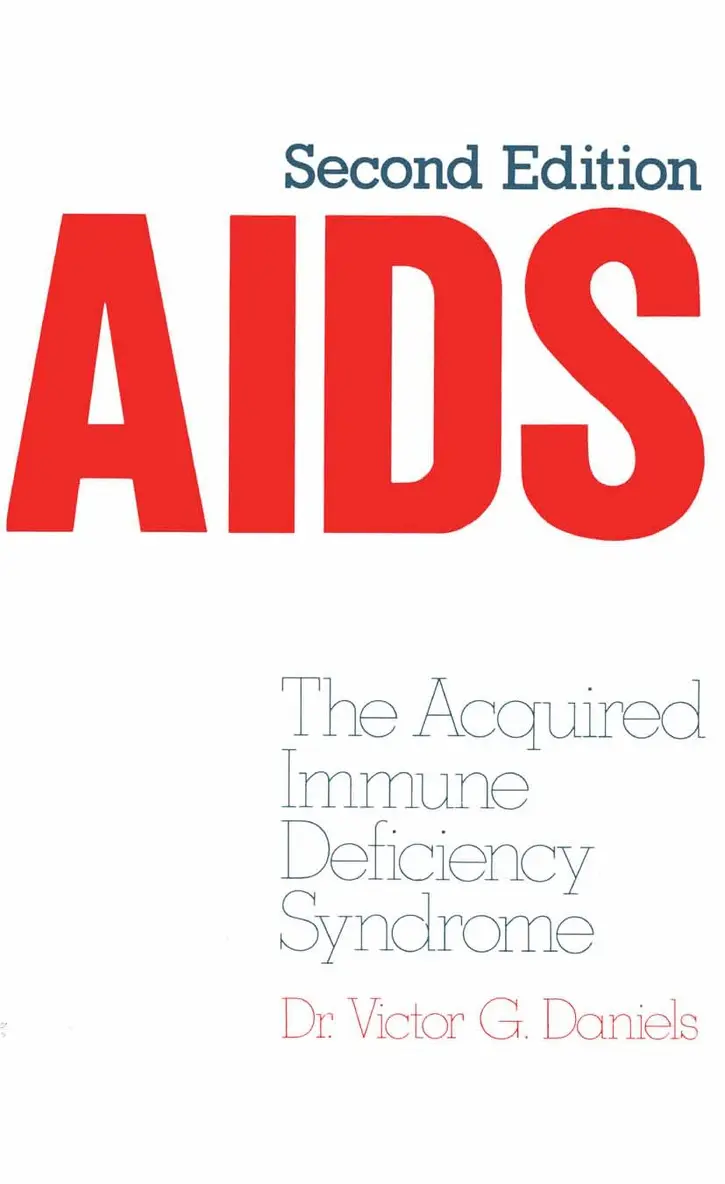
Within eighteen months of the preparation of the first edition much has happened in the AIDS field. The number affected are still increas at an alarming rate - these are now (at December 1986) almost ing 30000 cases in the United States and over 600 cases in the United Kingdom. Worldwide the AIDS pandemic is a most serious disease threat and now affects over 80 countries. It is estimated that for every AIDS patient there are about 50 other persons infected with the AIDS virus. AIDS threatens every country and every society. The main pre ventative measures of health education to prevent the spread of AIDS must be taken by millions of individuals helped by governments and voluntary organizations. What is clear is that AIDS and AIDS related conditions will be with us, in our hospitals and in our com munities for many years to come. It has been well established that the agent that causes AIDS is a virus called human immunodeficiency virus (HIV). People can catch HIV through sexual contact or by infected blood from infected needles and syringes, from infected mother to unborn child, or treatment with contaminated blood or blood products.
Within eighteen months of the preparation of the first edition much has happened in the AIDS field. The number affected are still increas at an alarming rate - these are now (at December 1986) almost ing 30000 cases in the United States and over 600 cases in the United Kingdom. Worldwide the AIDS pandemic is a most serious disease threat and now affects over 80 countries. It is estimated that for every AIDS patient there are about 50 other persons infected with the AIDS virus. AIDS threatens every country and every society. The main pre ventative measures of health education to prevent the spread of AIDS must be taken by millions of individuals helped by governments and voluntary organizations. What is clear is that AIDS and AIDS related conditions will be with us, in our hospitals and in our com munities for many years to come. It has been well established that the agent that causes AIDS is a virus called human immunodeficiency virus (HIV). People can catch HIV through sexual contact or by infected blood from infected needles and syringes, from infected mother to unborn child, or treatment with contaminated blood or blood products.