567 kr
Skickas inom 10-15 vardagar
567 kr
Skickas inom 10-15 vardagar
1 762 kr
Läs direkt efter köp
1 648 kr
Skickas inom 11-20 vardagar
921 kr
Skickas inom 7-10 vardagar
836 kr
Skickas inom 7-10 vardagar
636 kr
Skickas inom 7-10 vardagar
1 022 kr
Skickas inom 7-10 vardagar
3 053 kr
Skickas inom 7-10 vardagar
2 298 kr
Skickas inom 7-10 vardagar
1 291 kr
Skickas inom 7-10 vardagar
A Study in the Theory of the Capital-Using Enterprise
439 kr
Skickas inom 7-10 vardagar
386 kr
Skickas inom 10-15 vardagar
1 375 kr
Skickas inom 7-10 vardagar
420 kr
Läs direkt efter köp
420 kr
Läs direkt efter köp
978 kr
Läs direkt efter köp
1 007 kr
Läs direkt efter köp
432 kr
Skickas inom 7-10 vardagar
4 075 kr
Skickas inom 7-10 vardagar
106 kr
Skickas inom 7-10 vardagar
732 kr
Läs direkt efter köp
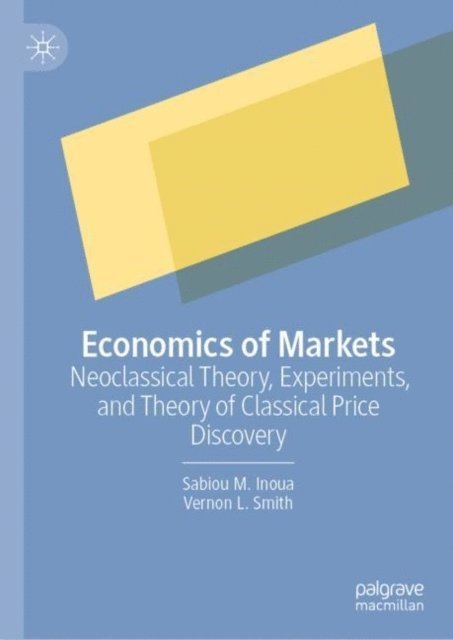
This book establishes that neoclassical economics based on the marginal utility calculus failed to derive a theory of consumer market price discovery consistent with the experimental market evidence. Such markets involve inherently discrete final-demand items bought for consumption and not subject to resale. Classical economists following Adam Smith articulated a rich narrative of price discovery theory consistent with experimental evidence based on operational concepts of discrete demand values (maximum willingness-to-pay), and symmetrically, supply costs (minimum willingness-to-accept). We develop and extend a mathematical model of classical market price formation. Chapter 1 & 2 describes this theme and chapter 3 connects it with experiments. Chapter 4 builds on experimental examples for an intuitive overview of the theory. A partial equilibrium version of the theory constitutes Chapter 5. Chapter 6 extends this framework to price formation by wealth constrained agents in multiple-goods markets. Chapter 7 applies this framework to the study of re-tradable durable-goods and financial claims that are subject to sources of instability absent in markets for consumer non-durables.
686 kr
Skickas inom 7-10 vardagar
900 kr
Skickas inom 10-15 vardagar
1 175 kr
Läs direkt efter köp
303 kr
Skickas inom 10-15 vardagar
417 kr
Läs direkt efter köp
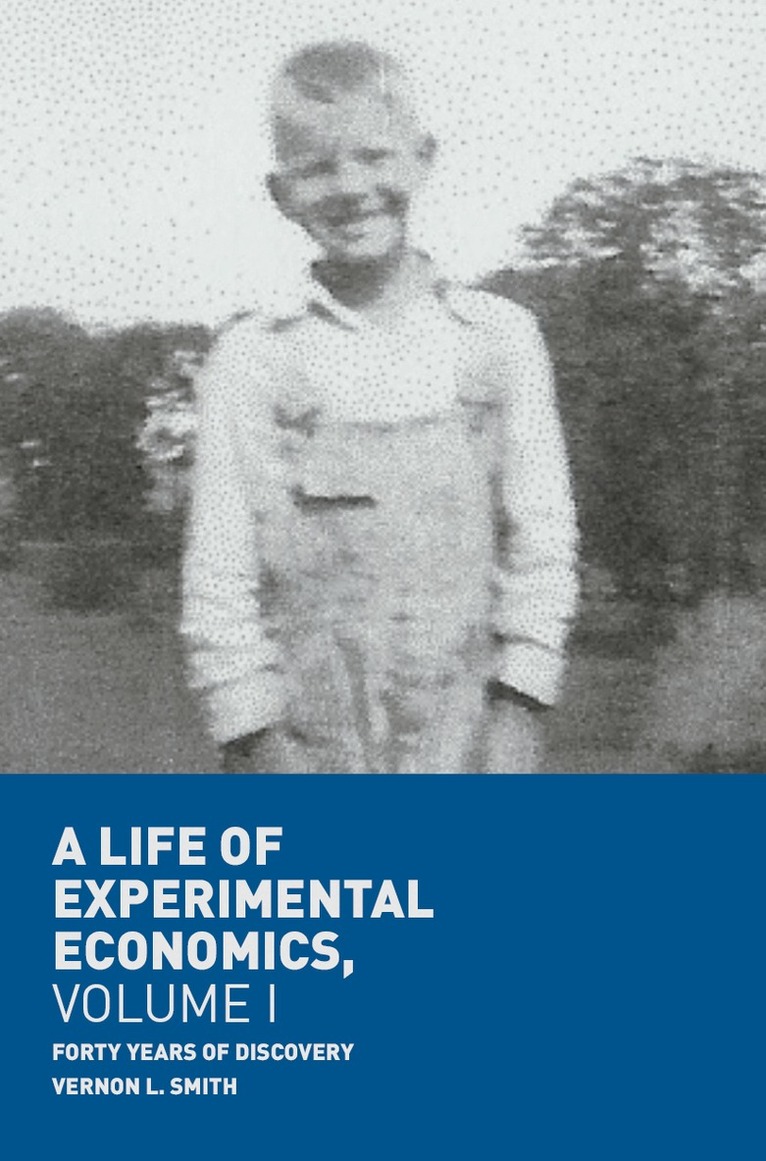
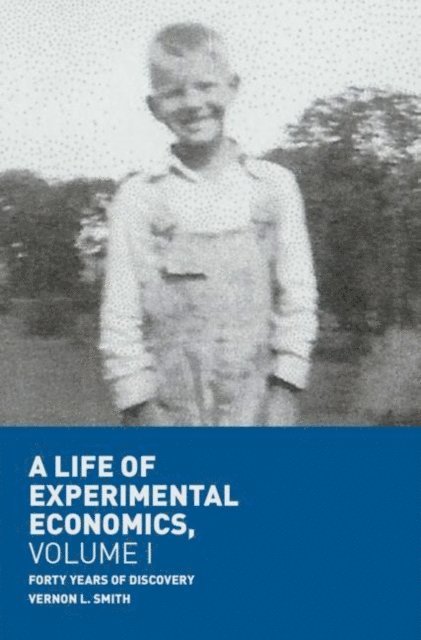
This book provides an intimate history of Nobel Laureate Vernon Smith’s early life, combining elements of biography, history, economics and philosophy to show how crucial incidents early in his life provided the necessary framework for his research into experimental economics. Smith takes the reader from his family roots on the railroads and oil fields of Middle America to his early life on a farm in Depression-wracked Kansas. A mediocre student in high school, Smith attended Friends University, on Wichita’s west side, where an intense study of mathematics, physics, chemistry, and astronomy enabled him to pass the examinations to enter Caltech and study under luminary scientists like Linus Pauling. Eventually Smith discovered economics and pursued graduate study in the field at University of Kansas and Harvard. This volume ends with his Camelot years at Purdue, where he began his famous work in experimental economics, nurturing his research into an unlikely new field of economics.
236 kr
Skickas
420 kr
Läs direkt efter köp
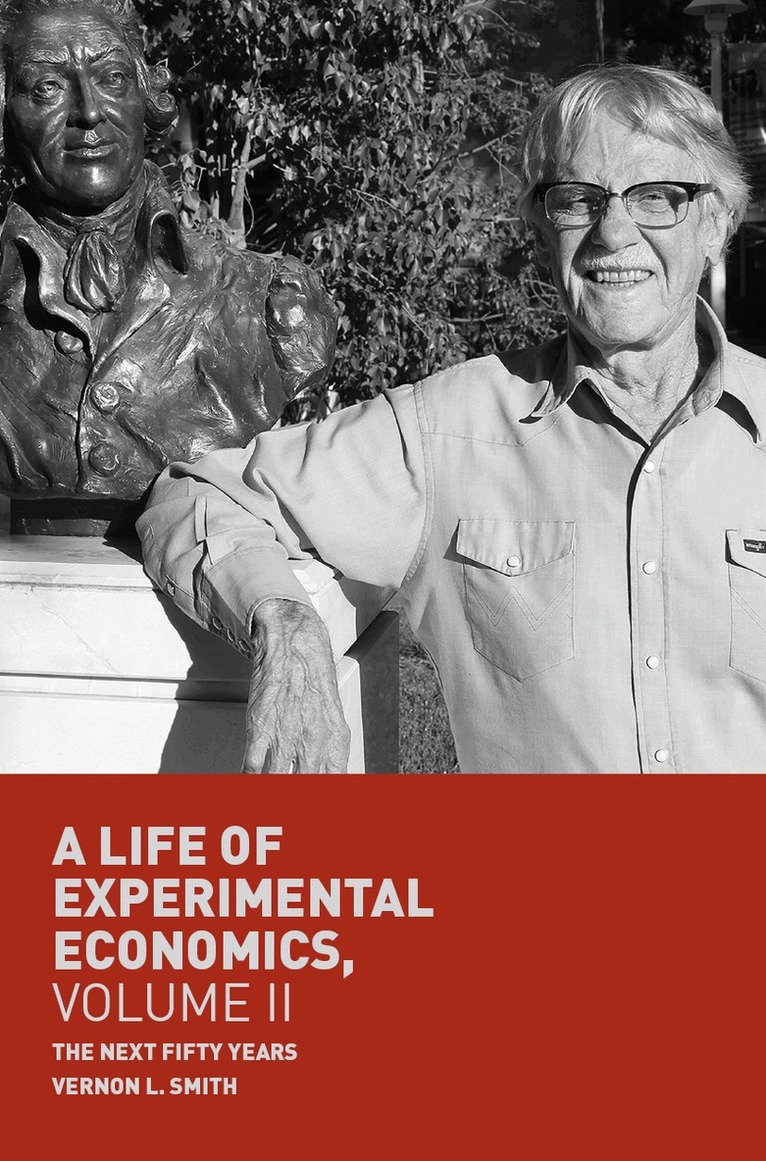
This sequel to A Life of Experimental Economics, Volume I, continues the intimate history of Vernon Smith’s personal and professional maturation after a dozen years at Purdue. The scene now shifts to twenty-six transformative years at the University of Arizona, then to George Mason University, and his recognition by the Nobel Prize Committee in 2002. The book ends with his most recent decade at Chapman University.
At Arizona Vernon and his students studied asset trading markets and learned how wrong it had been to suppose that price bubbles could not occur where markets were full-information transparent. Their work in computerization of the lab facilitated very complex supply and demand experiments in natural gas pipeline, communication and electricity markets that paved the way for implementing, through decentralized market processes, the liberalization of industries traditionally believed to be “natural” monopolies. The “Smart ComputerAssisted Market” was born. Smith’s move to George Mason University greatly facilitated government and industry work in tandem with various public and private entities, whereas his relocation to Chapman University coincided with the Great Recession, whose similarity with the Depression was evident in his research. There he integrated two fundamental kinds of markets with laboratory experiments: Consumer non-durables, the supply and demand for which was stable in the lab and in the economy, and durable assets whose bubble tendencies made them unstable in the lab as well as in the economy—witness the great housing-mortgage market bubble run-up of 1997-2007.
This book’s conversational style and emphasis on the backstory of published research accomplishments allows readers an exclusive peak into how and why economists pursue their work. It’s a must-read for those interested in experimental economics, the housing crisis, and economic history.