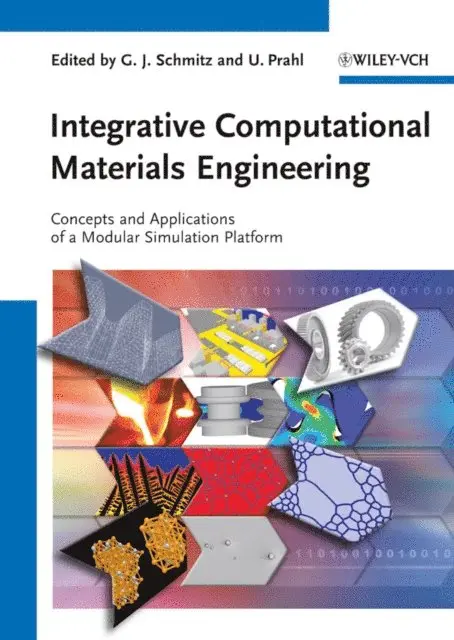
Presenting the results of an ambitious project, this book summarizes the efforts towards an open, web-based modular and extendable simulation platform for materials engineering that allows simulations bridging several length scales. In so doing, it covers processes along the entire value chain and even describes such different classes of materials as metallic alloys and polymers. It comprehensively describes all structural ideas, the underlying concepts, standard specifications, the verification results obtained for different test cases and additionally how to utilize the platform as a user and how to join it as a provider. A resource for researchers, users and simulation software providers alike, the monograph provides an overview of the current status, serves as a generic manual for prospective users, and offers insights into the inner modular structure of the simulation platform.
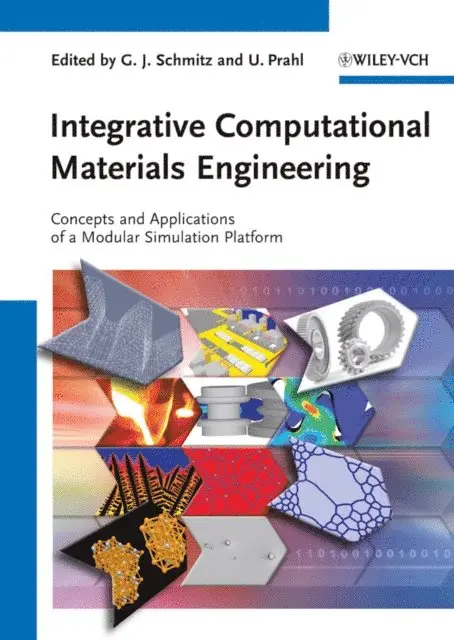
Presenting the results of an ambitious project, this book summarizes the efforts towards an open, web-based modular and extendable simulation platform for materials engineering that allows simulations bridging several length scales. In so doing, it covers processes along the entire value chain and even describes such different classes of materials as metallic alloys and polymers. It comprehensively describes all structural ideas, the underlying concepts, standard specifications, the verification results obtained for different test cases and additionally how to utilize the platform as a user and how to join it as a provider. A resource for researchers, users and simulation software providers alike, the monograph provides an overview of the current status, serves as a generic manual for prospective users, and offers insights into the inner modular structure of the simulation platform.
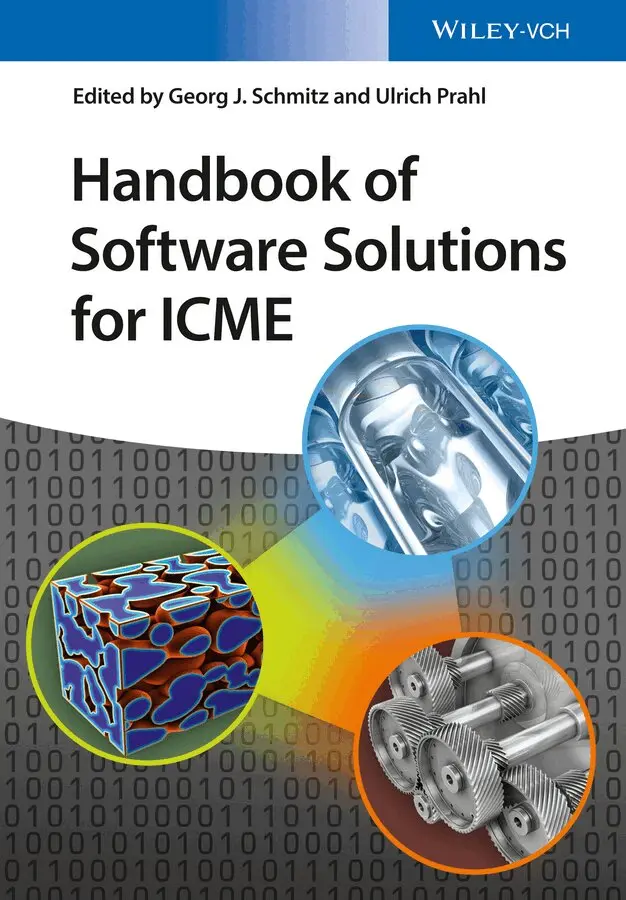
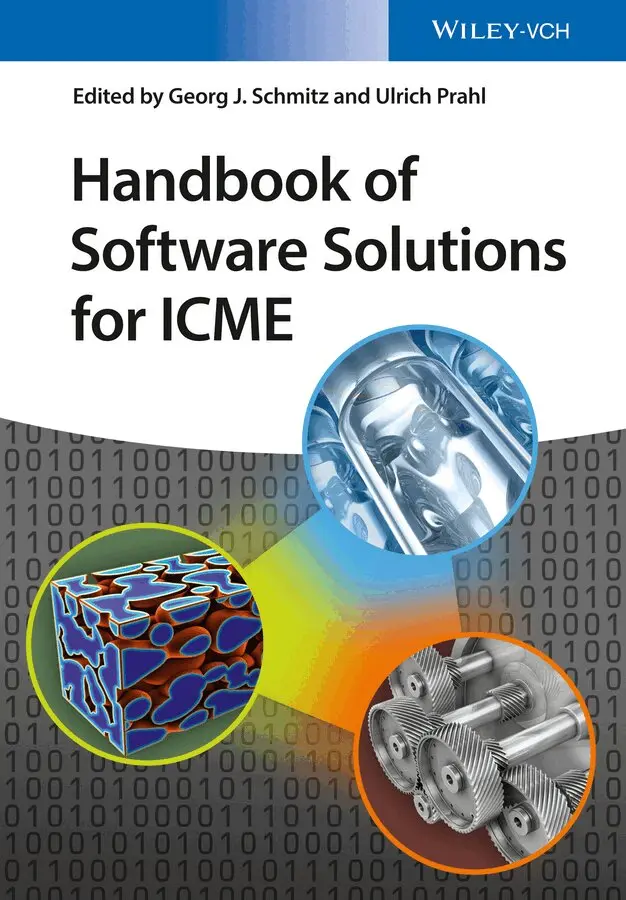
As one of the results of an ambitious project, this handbook provides a well-structured directoryof globally available software tools in the area of Integrated Computational MaterialsEngineering (ICME).The compilation covers models, software tools, and numerical methods allowing describingelectronic, atomistic, and mesoscopic phenomena, which in their combination determine themicrostructure and the properties of materials. It reaches out to simulations of componentmanufacture comprising primary shaping, forming, joining, coating, heat treatment, andmachining processes. Models and tools addressing the in-service behavior like fatigue, corrosion,and eventually recycling complete the compilation.An introductory overview is provided for each of these different modelling areas highlighting therelevant phenomena and also discussing the current state for the different simulation approaches.A must-have for researchers, application engineers, and simulation software providers seekinga holistic overview about the current state of the art in a huge variety of modelling topics.This handbook equally serves as a reference manual for academic and commercial software developersand providers, for industrial users of simulation software, and for decision makers seekingto optimize their production by simulations. In view of its sound introductions into the differentfields of materials physics, materials chemistry, materials engineering and materials processingit also serves as a tutorial for students in the emerging discipline of ICME, which requires a broadview on things and at least a basic education in adjacent fields.
As one of the results of an ambitious project, this handbook provides a well-structured directoryof globally available software tools in the area of Integrated Computational MaterialsEngineering (ICME).The compilation covers models, software tools, and numerical methods allowing describingelectronic, atomistic, and mesoscopic phenomena, which in their combination determine themicrostructure and the properties of materials. It reaches out to simulations of componentmanufacture comprising primary shaping, forming, joining, coating, heat treatment, andmachining processes. Models and tools addressing the in-service behavior like fatigue, corrosion,and eventually recycling complete the compilation.An introductory overview is provided for each of these different modelling areas highlighting therelevant phenomena and also discussing the current state for the different simulation approaches.A must-have for researchers, application engineers, and simulation software providers seekinga holistic overview about the current state of the art in a huge variety of modelling topics.This handbook equally serves as a reference manual for academic and commercial software developersand providers, for industrial users of simulation software, and for decision makers seekingto optimize their production by simulations. In view of its sound introductions into the differentfields of materials physics, materials chemistry, materials engineering and materials processingit also serves as a tutorial for students in the emerging discipline of ICME, which requires a broadview on things and at least a basic education in adjacent fields.
As one of the results of an ambitious project, this handbook provides a well-structured directoryof globally available software tools in the area of Integrated Computational MaterialsEngineering (ICME).The compilation covers models, software tools, and numerical methods allowing describingelectronic, atomistic, and mesoscopic phenomena, which in their combination determine themicrostructure and the properties of materials. It reaches out to simulations of componentmanufacture comprising primary shaping, forming, joining, coating, heat treatment, andmachining processes. Models and tools addressing the in-service behavior like fatigue, corrosion,and eventually recycling complete the compilation.An introductory overview is provided for each of these different modelling areas highlighting therelevant phenomena and also discussing the current state for the different simulation approaches.A must-have for researchers, application engineers, and simulation software providers seekinga holistic overview about the current state of the art in a huge variety of modelling topics.This handbook equally serves as a reference manual for academic and commercial software developersand providers, for industrial users of simulation software, and for decision makers seekingto optimize their production by simulations. In view of its sound introductions into the differentfields of materials physics, materials chemistry, materials engineering and materials processingit also serves as a tutorial for students in the emerging discipline of ICME, which requires a broadview on things and at least a basic education in adjacent fields.