626 kr
Skickas inom 10-15 vardagar
626 kr
Skickas inom 10-15 vardagar
687 kr
Skickas inom 10-15 vardagar
2 444 kr
Skickas inom 10-15 vardagar
802 kr
Läs direkt efter köp
808 kr
Läs direkt efter köp
2 455 kr
Skickas inom 10-15 vardagar
671 kr
Läs direkt efter köp
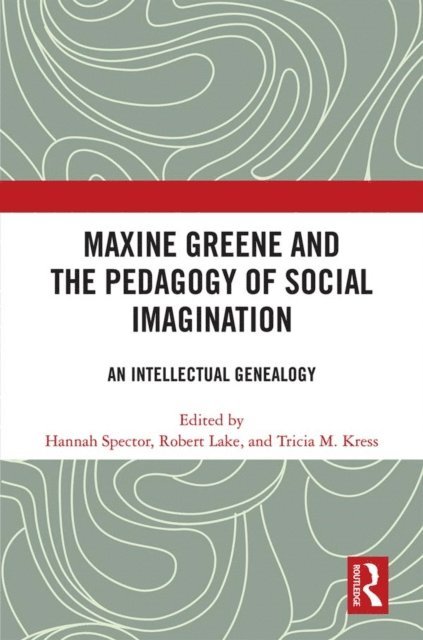
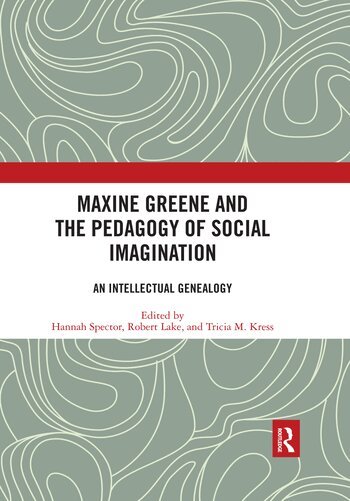
Devoted to and inspired by the late Maxine Greene, a champion of education and advocator of the arts, this book recognizes the importance of Greene’s scholarship by revisiting her oeuvre in the context of the intellectual historicity that shaped its formation. As a scholar, Greene dialogued with philosophers, social theorists, writers, musicians, and artists. These conversations reveal the ways in which the arts, just like philosophy and science, allow for the facilitation of "wide-awakeness," a term that is central to Greene’s pedagogy. Amidst contemporary trends of neoliberal, one-size-fits-all curriculum reforms in which the arts are typically squeezed out or pushed aside, Greene’s work reminds us that the social imagination is stunted without the arts. Artistic ways of knowing allow for people to see beyond their own worlds and beyond "what is" into other worlds of "what was" and "what might" be some day. This volume demonstrates Maxine Greene’s profound ability to illuminate the importance of the artistic world and the imaginary for development of the self in the world and for encouraging a "wide-awakeness" reflective of an emerging political awareness and a longing for a democratic world that "is not yet." This book was originally published as a Special Issue of The Review of Education, Pedagogy and Cultural Studies.
671 kr
Läs direkt efter köp
Devoted to and inspired by the late Maxine Greene, a champion of education and advocator of the arts, this book recognizes the importance of Greene’s scholarship by revisiting her oeuvre in the context of the intellectual historicity that shaped its formation. As a scholar, Greene dialogued with philosophers, social theorists, writers, musicians, and artists. These conversations reveal the ways in which the arts, just like philosophy and science, allow for the facilitation of "wide-awakeness," a term that is central to Greene’s pedagogy. Amidst contemporary trends of neoliberal, one-size-fits-all curriculum reforms in which the arts are typically squeezed out or pushed aside, Greene’s work reminds us that the social imagination is stunted without the arts. Artistic ways of knowing allow for people to see beyond their own worlds and beyond "what is" into other worlds of "what was" and "what might" be some day. This volume demonstrates Maxine Greene’s profound ability to illuminate the importance of the artistic world and the imaginary for development of the self in the world and for encouraging a "wide-awakeness" reflective of an emerging political awareness and a longing for a democratic world that "is not yet." This book was originally published as a Special Issue of The Review of Education, Pedagogy and Cultural Studies.
557 kr
Skickas inom 7-10 vardagar
1 039 kr
Skickas inom 7-10 vardagar
396 kr
Läs direkt efter köp
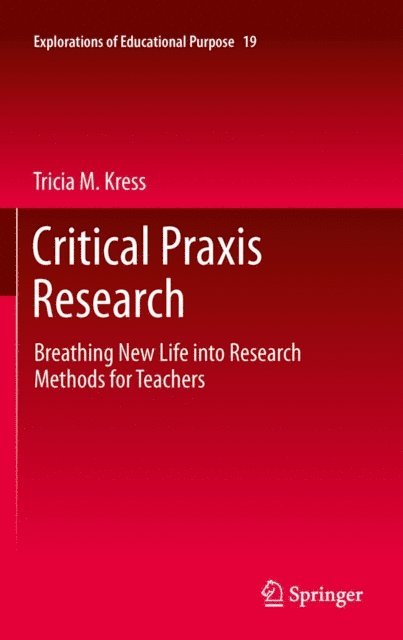
This year (2012) marks ten years of No Child Left Behind and the U.S. federal government’s official designation of what qualifies as “scientifically based research” (SBR) in education. Combined, these two policies have resulted in a narrowing of education via standardization and high stakes testing (Au, 2007) as well as the curtailment of forms of inquiry that are deemed legitimate for examining education (Wright, 2006). While there has been much debate about the benefits and limitations of the NCLB legislation (e.g., Au, 2010) and SBR (e.g., Eisenhart & Towne, 2003), critical researchers have held strong to their position: The reductionistic narrowing of education curricula and educational research cannot solve the present and historical inequities in society and education (Shields, 2012). Contrarily, reductionism (via standardization and/or methodological prescription) exacerbates the challenges we face because it effectively erases the epistemological, ontological, and axiological diversity necessary for disrupting hegemonic social structures that lie at the root of human suffering (Kincheloe, 2004). Not only has NCLB proven incapable of overcoming inequalities, but there seems to be sufficient evidence to suggest it was never really intended to eliminate poverty and human suffering. That is, it seems NCLB, despite its lofty title and public discourse, is actually designed to advance the agenda of handing public education over to for-profit corporations to manage and privatize thereby intensifying the capitalist class’ war on those who rely on a wage to survive (Malott, 2010). In the present ethos, reductionism upholds and retrenches the status quo (i.e. the basic structures of power), and it puts at risk education and educational research as means of working toward social justice (Biesta, 2007). Because social justice can be interpreted in multiple ways, we might note that we understand critical social justice as oriented toward action and social change. Thus, critical education and research may have potential to contribute to a number of social justice imperatives, such as: redistributing land from the neo-colonizing settler-state to Indigenous peoples, halting exploitative labor relations and hazardous working conditions for wage-earners, and engaging in reparations with formerly enslaved communities.
489 kr
Skickas inom 3-6 vardagar
527 kr
Skickas inom 7-10 vardagar
594 kr
Läs direkt efter köp
Breathing New Life into Research Methods for Teachers
1 060 kr
Skickas inom 10-15 vardagar
1 408 kr
Läs direkt efter köp
Breathing New Life into Research Methods for Teachers
1 060 kr
Skickas inom 10-15 vardagar