2 526 kr
Skickas inom 10-15 vardagar
2 526 kr
Skickas inom 10-15 vardagar
883 kr
Läs direkt efter köp
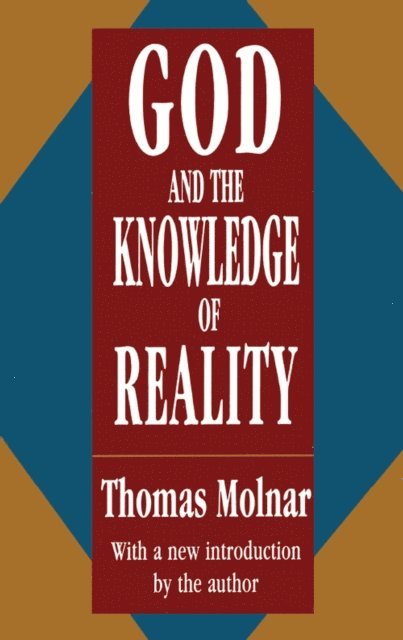
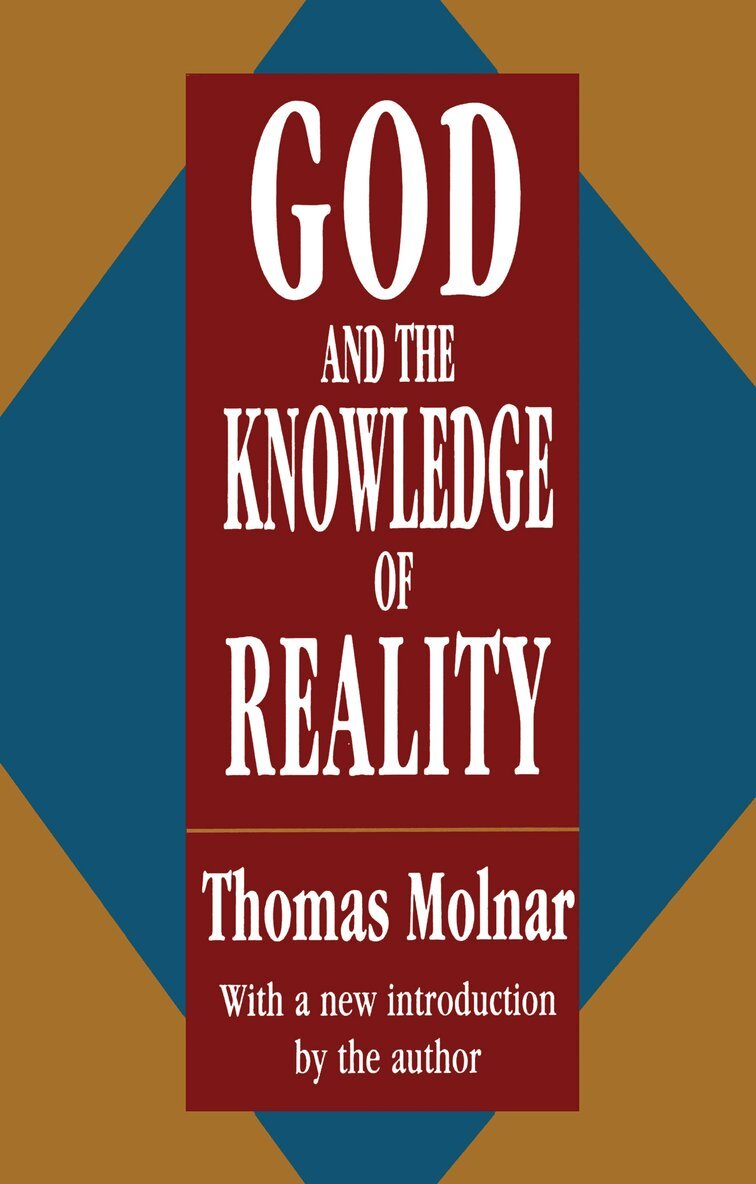
Written simply yet comprehensively, Molnar''s anlaysis of the history of philosophy and false mysticism leads him to conclude that a return to a moderate realism will save the philosophical enterprise from a series of epistemological and societal absolutes that are embodied in contemporary rationalism and mysticism alike. Issues that have been systematically excluded from discourse will have to be reintroduced into the discussion of person and providence Molnar divided the philosophical systems into two groups according to their vision of God, and consequently of reality One group removes God from the human scope, therefore rendering the world unreal, unknowable, and meaningless. The second group holds that God is immanent in the human soul, thereby emphasizing the human attainment of divine status, and reducing the extra-mental world to a condition of utter imperfection. Either way, the result is a pseudo-mysticism, a denial of the creaturely status of human beings What is most needed, Molnar claims, is a theory of knowledge whose ideal is not fusion but distinction-between God and Man, subject and object, the self and the society. By thus raising the question of philosophy over against magic Molnar seeks to awaken the reader from neo-dogmatic assumptions and restore speculative thought to its traditional place.
877 kr
Läs direkt efter köp
Written simply yet comprehensively, Molnar''s anlaysis of the history of philosophy and false mysticism leads him to conclude that a return to a moderate realism will save the philosophical enterprise from a series of epistemological and societal absolutes that are embodied in contemporary rationalism and mysticism alike. Issues that have been systematically excluded from discourse will have to be reintroduced into the discussion of person and providence Molnar divided the philosophical systems into two groups according to their vision of God, and consequently of reality One group removes God from the human scope, therefore rendering the world unreal, unknowable, and meaningless. The second group holds that God is immanent in the human soul, thereby emphasizing the human attainment of divine status, and reducing the extra-mental world to a condition of utter imperfection. Either way, the result is a pseudo-mysticism, a denial of the creaturely status of human beings What is most needed, Molnar claims, is a theory of knowledge whose ideal is not fusion but distinction-between God and Man, subject and object, the self and the society. By thus raising the question of philosophy over against magic Molnar seeks to awaken the reader from neo-dogmatic assumptions and restore speculative thought to its traditional place.
808 kr
Läs direkt efter köp
796 kr
Läs direkt efter köp
710 kr
Skickas inom 10-15 vardagar
2 526 kr
Skickas inom 10-15 vardagar
2 760 kr
Skickas inom 10-15 vardagar
2 526 kr
Skickas inom 10-15 vardagar
2 760 kr
Skickas inom 10-15 vardagar
813 kr
Läs direkt efter köp
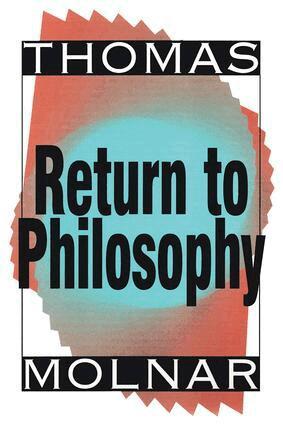
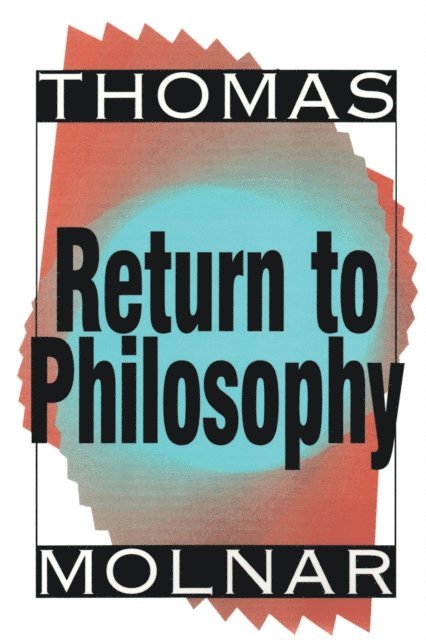
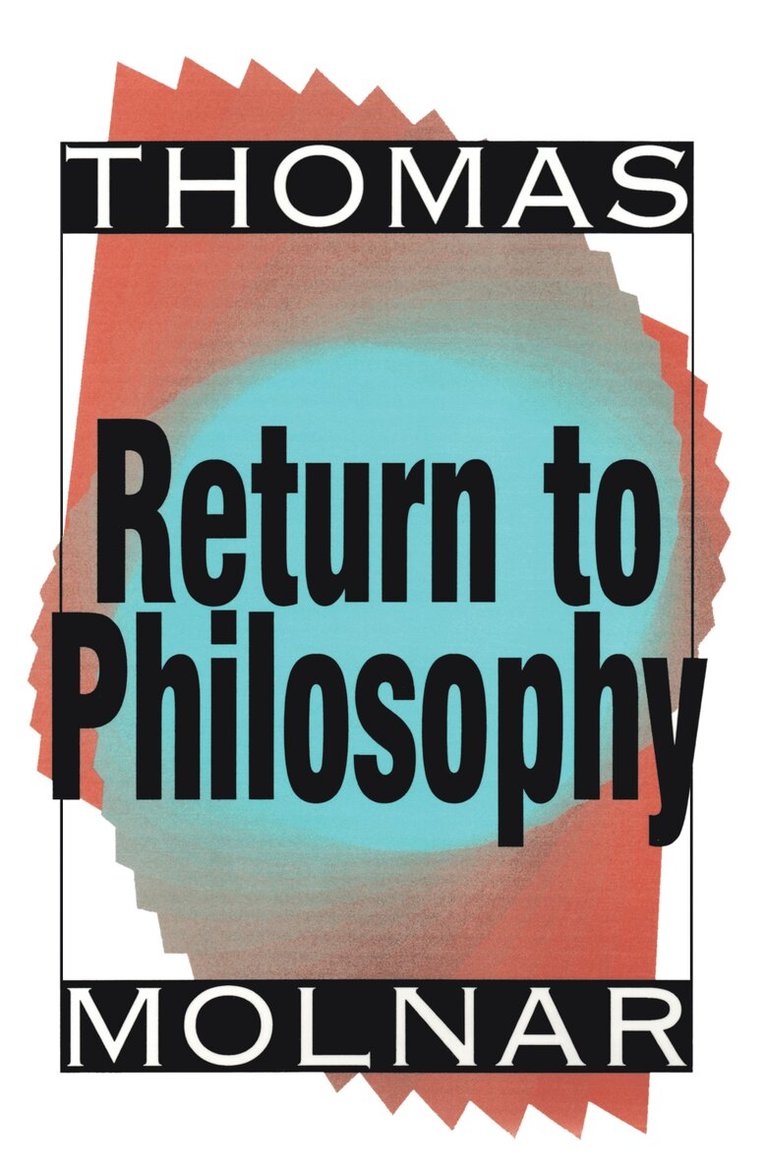
From its earliest beginnings and through much of its history, the philosophical enterprise has rooted its intellectual procedures in common sense. Ordinary discourse is what the pre-Socratic thinkers did at the dawn of speculation. The same approach was characteristic of the medieval mystics, Pascal in the seventeenth century, and Gaston Bachelard in the twentieth century. However with the ascendency of the physical sciences, mathematics, and depth psychology as influences in contemporary thought, philosophical language and forms of expression became increasingly distant from ordinary language. This created estrangement and confusion in the learner''s mind. In Return to Philosophy Thomas Molnar diagnoses the verbal derailment of philosophy and shows how it might be reconnected to the realities of human life.
While granting that philosophy must use a somewhat specialized language, Molnar attacks jargon-laden thought by tracing certain root assumptions that go deeper than the issue of language itself. He locates these assumptions in the work of philosophers who, espousing modernity, no longer trust the "reality of the real," and are convinced that the world and our perception of it are elusive, offering no foundation except in the human mind which, however, is also the result of a "social contract," a temporary consensus or transient network of meanings readily discardable. According to changing ideologies and social structures we use "signs" linguistic, psychological, hermeneutical, structuralist, existentialist not to express reality but to establish communication with others. Philosophy, then, shifts from the task of knowing reality to the task of communicating here and now.
Return to Philosophy is a unique endeavor. Molnar''s book unmasks the modern derailment and shows that many leading philosophers do not so much philosophize, but merely elaborate verbal-technical instruments in what may be little more than trivial language games. This volume will be of interest to philosophers, cultural historians, and sociologists.
826 kr
Läs direkt efter köp
From its earliest beginnings and through much of its history, the philosophical enterprise has rooted its intellectual procedures in common sense. Ordinary discourse is what the pre-Socratic thinkers did at the dawn of speculation. The same approach was characteristic of the medieval mystics, Pascal in the seventeenth century, and Gaston Bachelard in the twentieth century. However with the ascendency of the physical sciences, mathematics, and depth psychology as influences in contemporary thought, philosophical language and forms of expression became increasingly distant from ordinary language. This created estrangement and confusion in the learner''s mind. In Return to Philosophy Thomas Molnar diagnoses the verbal derailment of philosophy and shows how it might be reconnected to the realities of human life.
While granting that philosophy must use a somewhat specialized language, Molnar attacks jargon-laden thought by tracing certain root assumptions that go deeper than the issue of language itself. He locates these assumptions in the work of philosophers who, espousing modernity, no longer trust the "reality of the real," and are convinced that the world and our perception of it are elusive, offering no foundation except in the human mind which, however, is also the result of a "social contract," a temporary consensus or transient network of meanings readily discardable. According to changing ideologies and social structures we use "signs" linguistic, psychological, hermeneutical, structuralist, existentialist not to express reality but to establish communication with others. Philosophy, then, shifts from the task of knowing reality to the task of communicating here and now.
Return to Philosophy is a unique endeavor. Molnar''s book unmasks the modern derailment and shows that many leading philosophers do not so much philosophize, but merely elaborate verbal-technical instruments in what may be little more than trivial language games. This volume will be of interest to philosophers, cultural historians, and sociologists.
938 kr
Läs direkt efter köp
917 kr
Läs direkt efter köp
929 kr
Läs direkt efter köp
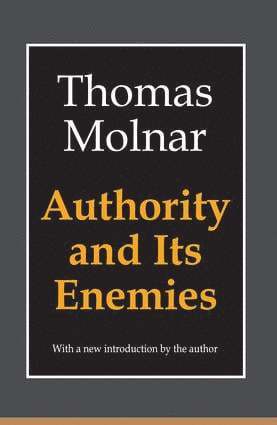
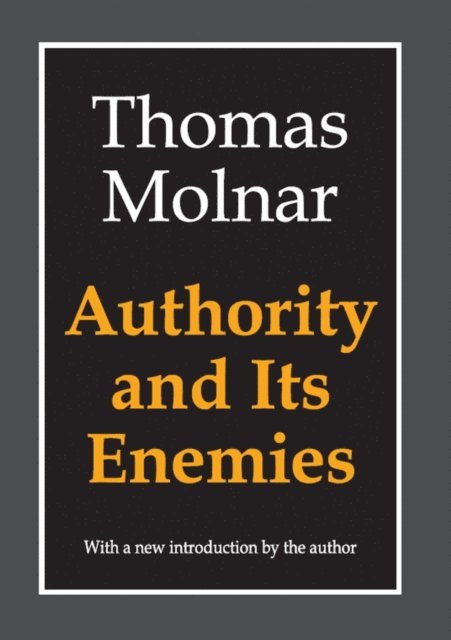
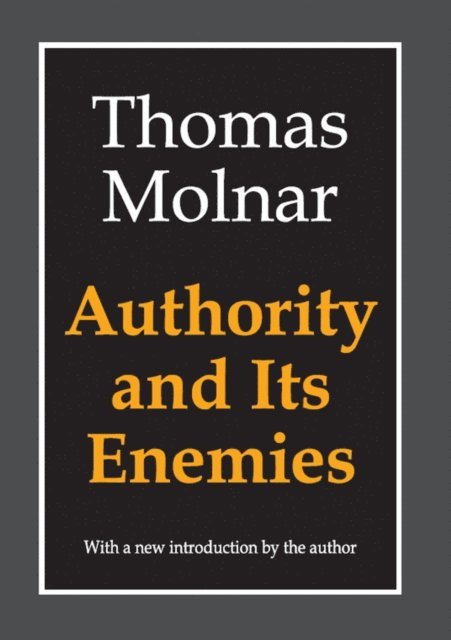
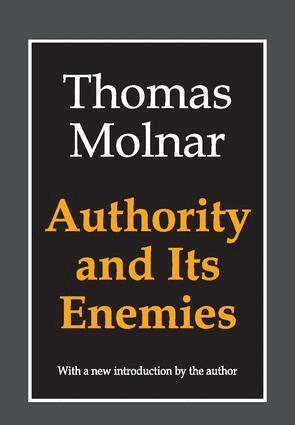
Ideological warfare against authority, especially in the world of higher education, broke out in the 1960s, and continues into the 1990s. No source or symbol of authority escaped untouched neither parents nor teachers nor the cop on the beat. While the hippies have gone underground or disappeared entirely, the assault on legitimate authority continues unabated. As familiar institutions crumble before our eyes, befuddled liberals and conservatives alike throw up their hands in despair. In Authority and Its Enemies, Thomas Molnar asserts that the Western world is reeling from an overdose of freedom without order or authority.
915 kr
Läs direkt efter köp
Ideological warfare against authority, especially in the world of higher education, broke out in the 1960s, and continues into the 1990s. No source or symbol of authority escaped untouched neither parents nor teachers nor the cop on the beat. While the hippies have gone underground or disappeared entirely, the assault on legitimate authority continues unabated. As familiar institutions crumble before our eyes, befuddled liberals and conservatives alike throw up their hands in despair. In Authority and Its Enemies, Thomas Molnar asserts that the Western world is reeling from an overdose of freedom without order or authority.
874 kr
Läs direkt efter köp
894 kr
Läs direkt efter köp
757 kr
Läs direkt efter köp
757 kr
Läs direkt efter köp
751 kr
Skickas inom 10-15 vardagar
2 526 kr
Skickas inom 10-15 vardagar
754 kr
Skickas inom 10-15 vardagar
754 kr
Skickas inom 10-15 vardagar
798 kr
Skickas inom 10-15 vardagar
768 kr
Skickas inom 10-15 vardagar
867 kr
Skickas inom 10-15 vardagar
677 kr
Tillfälligt slut