Likelihood Methods in Statistics
3 223 kr
Skickas inom 7-10 vardagar
3 223 kr
Skickas inom 7-10 vardagar
1 335 kr
Skickas inom 3-6 vardagar
812 kr
Skickas inom 10-15 vardagar
1 612 kr
Skickas inom 7-10 vardagar
969 kr
Skickas inom 10-15 vardagar
2 761 kr
Skickas inom 10-15 vardagar
1 135 kr
Läs direkt efter köp
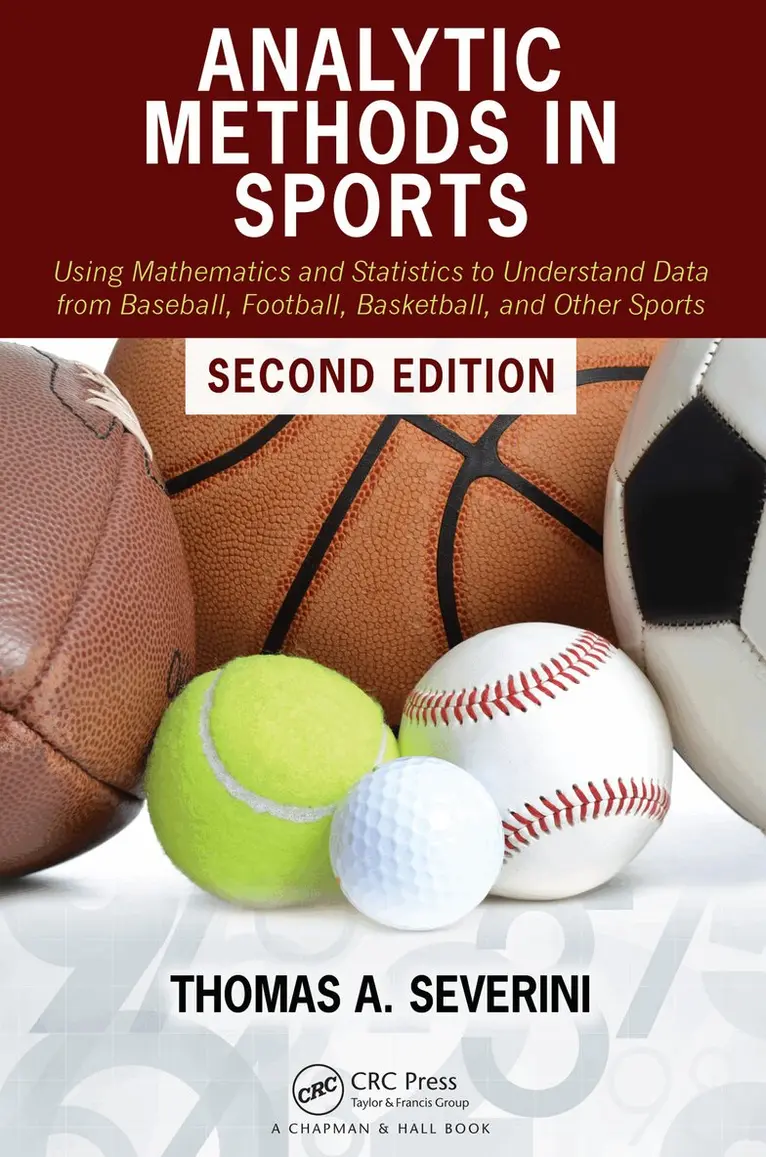
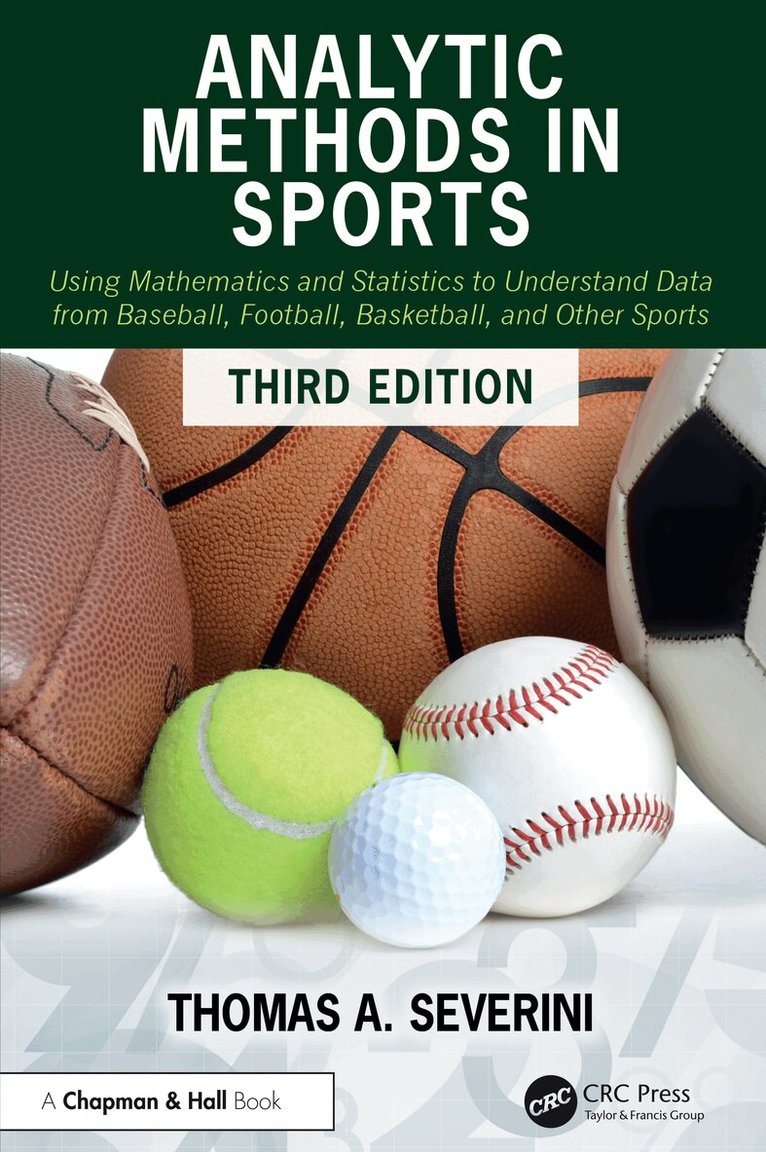
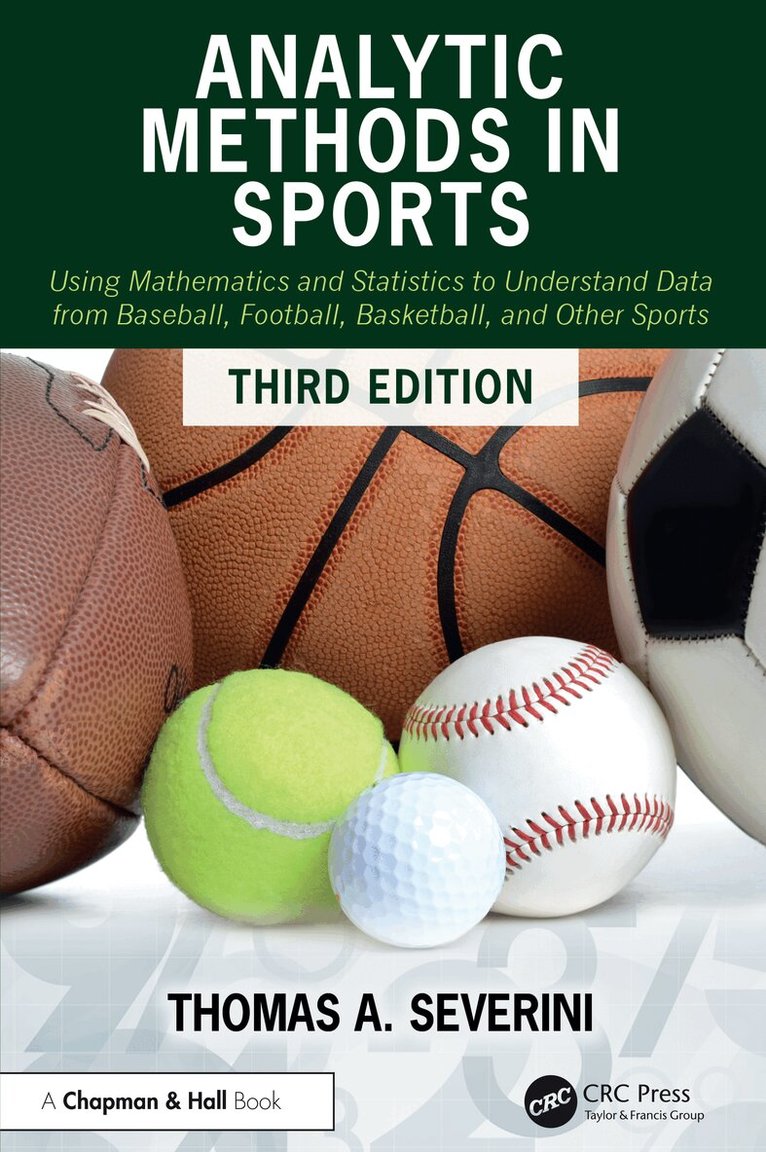
One of the greatest changes in sports analytics in the past 25 years has been the use of mathematical methods to analyze performances, recognize trends and patterns, and predict results. Analytic Methods in Sports: Using Mathematics and Statistics to Understand Data from Baseball, Football, Basketball, and Other Sports, Third Edition, provides a concise, yet thorough, introduction to the analytic and statistical methods that are useful in studying sports.
Key Features:
New to the third edition is a chapter on applying mathematical and statistical methods to the analysis of daily fantasy sports Covers numerous statistical procedures for analyzing data based on sports results Presents fundamental methods for describing and summarizing data Describes aspects of probability theory and basic statistical concepts that are necessary to understand and deal with the randomness inherent in sports data Explains the statistical reasoning underlying the methods Discusses several more advanced methods, including logistic regression models, random forests, regression models with random effects, spline methods, principal components analysis, multidimensional scaling, quantile regression, and more Illustrates the methods using real data drawn from a wide variety of sports Offers many of the data sets on the author’s website, enabling you to replicate the analyses or conduct related analyses R code is included for all calculations Exercises are given for each chapter, to enable use for courses and self-studyThis popular textbook is primarily designed to be used to teach an introductory course on statistics to undergraduate students using sports examples. Its practical focus on application rather than theory ensures students develop immediately applicable skills for the rapidly expanding field of sports analytics. It is a perfect reference for readers comfortable with mathematics seeking to enter the growing field of sports analytics without prior statistical training. Its concise yet thorough approach makes it equally suitable for self-study by sports enthusiasts, coaches, and industry professionals looking to leverage the power of data-driven decision making in competitive environments.

1 143 kr
Läs direkt efter köp
One of the greatest changes in sports analytics in the past 25 years has been the use of mathematical methods to analyze performances, recognize trends and patterns, and predict results. Analytic Methods in Sports: Using Mathematics and Statistics to Understand Data from Baseball, Football, Basketball, and Other Sports, Third Edition, provides a concise, yet thorough, introduction to the analytic and statistical methods that are useful in studying sports.
Key Features:
New to the third edition is a chapter on applying mathematical and statistical methods to the analysis of daily fantasy sports Covers numerous statistical procedures for analyzing data based on sports results Presents fundamental methods for describing and summarizing data Describes aspects of probability theory and basic statistical concepts that are necessary to understand and deal with the randomness inherent in sports data Explains the statistical reasoning underlying the methods Discusses several more advanced methods, including logistic regression models, random forests, regression models with random effects, spline methods, principal components analysis, multidimensional scaling, quantile regression, and more Illustrates the methods using real data drawn from a wide variety of sports Offers many of the data sets on the author’s website, enabling you to replicate the analyses or conduct related analyses R code is included for all calculations Exercises are given for each chapter, to enable use for courses and self-studyThis popular textbook is primarily designed to be used to teach an introductory course on statistics to undergraduate students using sports examples. Its practical focus on application rather than theory ensures students develop immediately applicable skills for the rapidly expanding field of sports analytics. It is a perfect reference for readers comfortable with mathematics seeking to enter the growing field of sports analytics without prior statistical training. Its concise yet thorough approach makes it equally suitable for self-study by sports enthusiasts, coaches, and industry professionals looking to leverage the power of data-driven decision making in competitive environments.
840 kr
Skickas inom 7-10 vardagar
1 508 kr
Skickas inom 10-15 vardagar
974 kr
Läs direkt efter köp
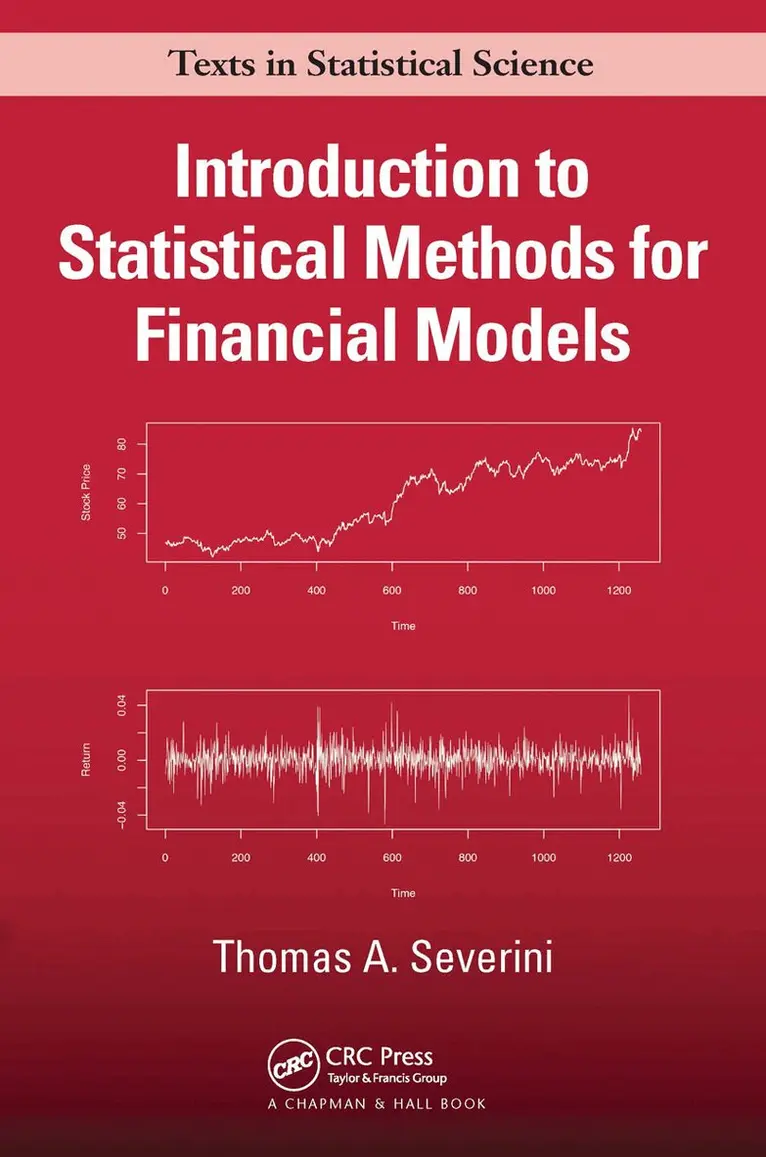
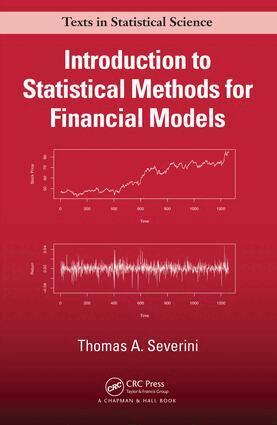
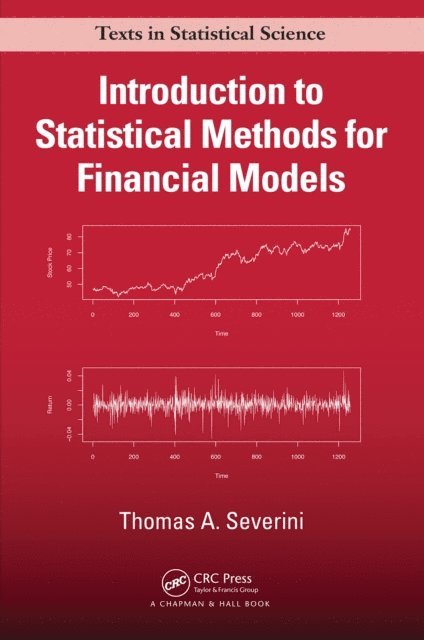
This book provides an introduction to the use of statistical concepts and methods to model and analyze financial data. The ten chapters of the book fall naturally into three sections. Chapters 1 to 3 cover some basic concepts of finance, focusing on the properties of returns on an asset. Chapters 4 through 6 cover aspects of portfolio theory and the methods of estimation needed to implement that theory. The remainder of the book, Chapters 7 through 10, discusses several models for financial data, along with the implications of those models for portfolio theory and for understanding the properties of return data.
The audience for the book is students majoring in Statistics and Economics as well as in quantitative fields such as Mathematics and Engineering. Readers are assumed to have some background in statistical methods along with courses in multivariate calculus and linear algebra.
960 kr
Läs direkt efter köp
This book provides an introduction to the use of statistical concepts and methods to model and analyze financial data. The ten chapters of the book fall naturally into three sections. Chapters 1 to 3 cover some basic concepts of finance, focusing on the properties of returns on an asset. Chapters 4 through 6 cover aspects of portfolio theory and the methods of estimation needed to implement that theory. The remainder of the book, Chapters 7 through 10, discusses several models for financial data, along with the implications of those models for portfolio theory and for understanding the properties of return data.
The audience for the book is students majoring in Statistics and Economics as well as in quantitative fields such as Mathematics and Engineering. Readers are assumed to have some background in statistical methods along with courses in multivariate calculus and linear algebra.
548 kr
Skickas inom 7-10 vardagar
755 kr
Läs direkt efter köp