Popularly called as the land of the red river and blue hills, Assam is the gateway to the northeastern part of lndia. Situated between 90-96 degree East Longitude and 24-28degree North Latitude, Assam is bordered in the North and East by the Kingdom of Bhutan and Arunachal Pradesh. Along the south lies Nagaland, Manipur and Mizoram. Meghalaya lies to her South-West, Bengal and Bangladesh to her West. Renowned for its tea, wildlife and silk, Assam is a state with rich biodiversity. With its capital at Dispur, a suburb of the city Guwahati, it encompasses the Brahmaputra, the Barak river valleys, the Karbi Anglong, and the North Cachar Hills. There has been racial intermixture among the population of Assam. The Mongoloid racial stock have large number of tribes. The book is an asset for all scholars, researchers, teachers, students and of course, the general readers.
The purpose of this collection is to underscore that tradition forms the framework of political thought in India. It evidences continuity and change, adaptive of new situations and search for unending potentialities for sustaining purposive sovereignty. Indifferent and unresponsive thinking in intellectual analyses and indifference to even the minor impartiality of appreciation of the diverse aspects of human achievement deceive the self-satisfied distinctiveness of colonial mind-set and stereotypes. This is misleading about the concept of religion and dharma. The misunderstandings again put a question mark on the role of religion and dharma in politics. In this volume, eminent theorists have contributed to resolving the above dilemma and for this purpose they have analysed the major thought of representative Indian thinkers.
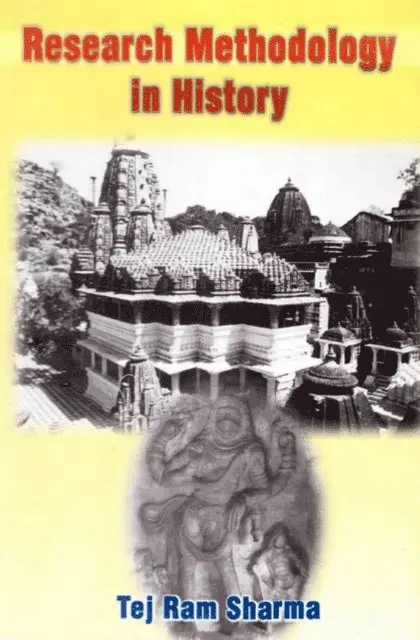
The present work is based on the author''s long teaching and research guiding experience in History. The author has added ''A Word About History'' in the First chapter to make the book useful for the general reader as well as the specialist. The succeeding chapters deal with the Research Methodology, the emphasis being on the quality of research. The author has tried to touch upon all the areas and delicate matters to help the researcher achieve his ends. In the end the author has added two chapters-Caivsaf/on in History and Objectivity in History to give holistic treatment to the subject.
Herein the author has explained the nature of puberty along with the significance of the allied physical changes. Emotional and social behaviours, personal, social and recreational interests, the nature of friendship and leadership during adolescence have been so described that the same give a complete picture of the lives of adolescents in India. Feelings of sex during Adolescence and difficulties of the newly married adolescent couples have also been hinted at in a captivating manner. Religious doubts and concepts of morality and the personality of an adolescent have also been explained for guidance of those who happen to be responsible for the bright future of their adolescent wards. Purpose of this Book Parents, teachers and guardians are generally ignorant about the problems of their adolescents. As the above contents indicate, the purpose of this little book is to acquaint them with the same. This book is likely to be very interesting and educative to all concerned. The book may interest university students of psychology and education (that is, B.Ed., M.Ed. and M.A. in education).