A long-overdue look at the outstanding achievements of a group of early naturalists who studied weather and natural history at isolated fur-trading posts on Hudson Bay.
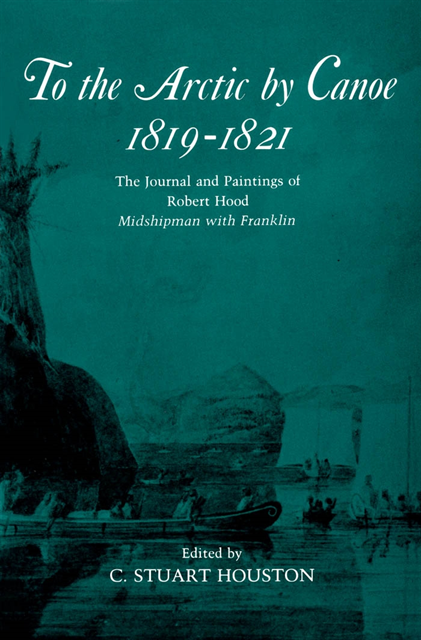
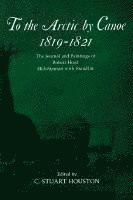
When supplies ran out, the return trek across the Barrens became one of the most tragic incidents in the history of Arctic exploration. Robert Hood was one of those who perished on this trip. Weakened by starvation, he was shot through the head by a member of the party turned cannibal. A highly sensitive and educated man with a painter''s eye for detail, Hood was an astute observer of the political and social ways of the North. The journal reveals his awareness, unusual in his time, of the adverse effects on Native peoples and their environment of the coming of the Europeans. Hood''s paintings capture the beauty as well as the harshness of the North. His bird paintings in particular are of special artistic and historical interest.
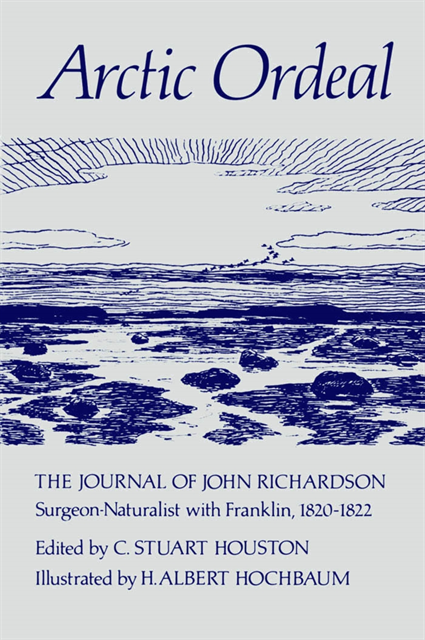
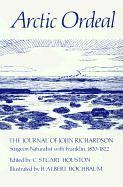
In addition to his achievements as a doctor, meteorologist, and cartographer, Richardson was the first great naturalist to study the North American Arctic. His journal made such an outstanding contribution to ornithology, ichthyology, botany, and geology that much of modern Arctic research is founded upon his observations. Enhanced by fifty-six line drawings and eight maps, Arctic Ordeal will interest a wide audience as well as medical historians, geographers, anthropologists, and botanists.
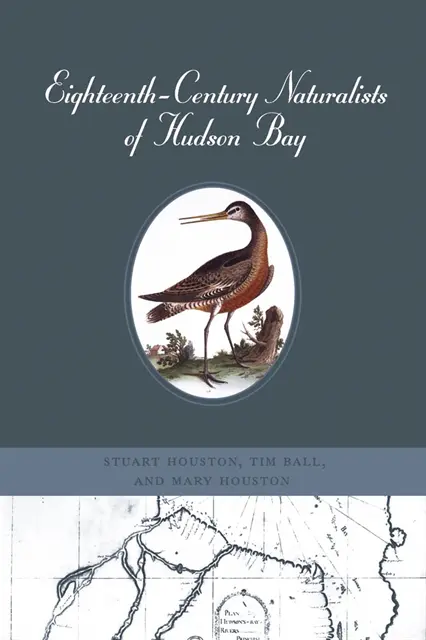
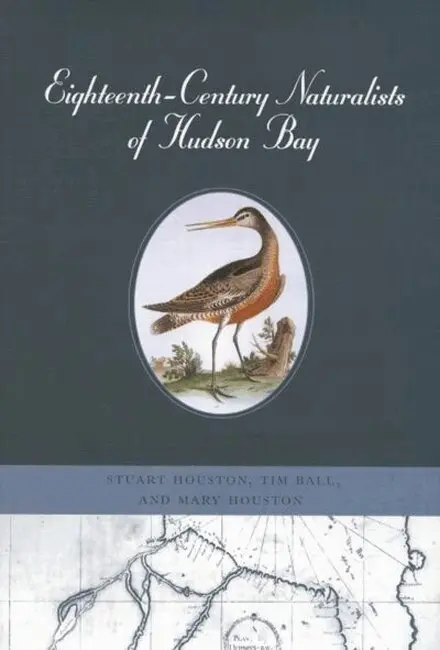
The authors show that meteorologic data and weather information recorded at the HBC trading posts over two centuries provide the largest and longest consecutive series available anywhere in North America, one that can help us understand the mechanisms and amount of climate change. They demonstrate that Hudson Bay is the second largest site of new bird species named by Linnaeus and reproduce some of George Edwards'' colour paintings of these new species. Six informative appendices reveal how the invaluable HBC archives were transferred from London, England, to Winnipeg, correct previous misinterpretations of the collaboration and relative contributions of Thomas Hutchins and Andrew Graham, use two centuries of HBC fur returns to demonstrate the ten-year hare and lynx cycles, tell how the swan trade almost extirpated the Trumpeter Swan, explain how the Canada Goose got its name before there was a Canada, and offer an extensive list of eighteenth-century Cree names for birds, mammals, and fish. Informative tables list the eighteenth-century surgeons at York Factory and give names and dates for the annual supply ships.
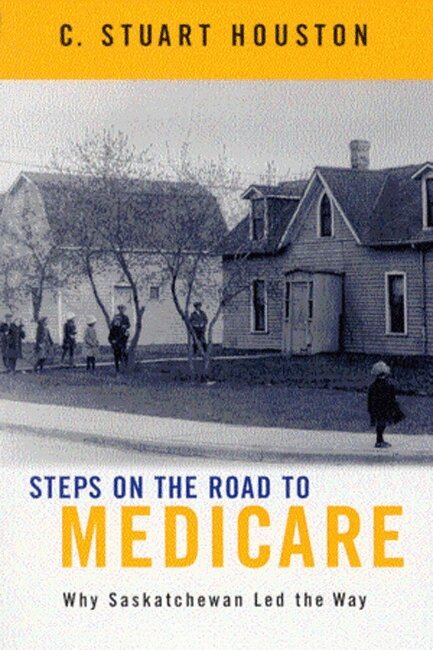
In Steps on the Road to Medicare Stuart Houston shows that Saskatchewan has led in the development of publicly funded health care since 1915. Among Saskatchewan''s many firsts were the payment of municipal doctors, the development of municipal hospitals, and advances in the treatment and prevention of tuberculosis - then the leading cause of death - that culminated in January 1929 with universal free diagnosis and treatment of TB. Given this background of leadership, it was logical for North America''s first social democratic government, the CCF, led by Tommy Douglas, to go further, beginning with medical care for pensioners and widows. This was quickly followed by a universal, comprehensive health care plan, instituted in the Swift Current region in July 1945, two years before Britain began such a program. Universal, province-wide hospitalization insurance was put in place in January 1946. Advances in psychiatry consisted of the first inclusion of psychotic patients in an open psychiatric ward in a general teaching hospital in 1955, while cancer firsts included the first government-sponsored cancer clinics, the first full-time cancer physicist, and the world''s first use of calibrated betatron and cobalt-60 machines for treating cancer. Why was Saskatchewan so consistently first in health care? Houston argues that not only was the population both altruistic and ingenious with a well-developed spirit of co-operation but that its leaders, including Maurice Seymour, R.G. Ferguson, Harold Johns, and Tommy Douglas, showed unusual foresight. He details how from 1915 through 1962 government responded quickly to public need and suggests that it should be equally responsive today.
Back's journal is particularly valuable because it is the only one that records the entire expedition; Franklin himself relied on it for his own published account of the journey. Both the journal and Back's earlier notes have been edited by Houston, who provides an introduction and extensive annotations, as well as synopses of the frank comments regarding the expedition recorded in the various journals of the Hudson's Bay fur trade posts. I.S. MacLaren's commentary on Back's paintings reveals a midshipman-artist of exceptional talent. Conversant with the artistic conventions and aesthetic temper of his age, Back used his sketch-books not only to depict the expedition's progress but also to capture his imaginative response to the northern wilderness. MacLaren edits and comments on two other documents written by Back during the expedition: a candid letter to his brother and a poem dramatizing the disaster that claimed the lives of eleven of the twenty explorers in Franklin's party. Arctic Artist will be of interest to Franklin and Arctic enthusiasts, and to Canadian studies, northern studies, art history, and anthropology specialists.
When supplies ran out, the return trek across the Barrens became one of the most tragic incidents in the history of Arctic exploration. Robert Hood was one of those who perished on this trip. Weakened by starvation, he was shot through the head by a member of the party turned cannibal. A highly sensitive and educated man with a painter's eye for detail, Hood was an astute observer of the political and social ways of the North. The journal reveals his awareness, unusual in his time, of the adverse effects on Native peoples and their environment of the coming of the Europeans. Hood's paintings capture the beauty as well as the harshness of the North. His bird paintings in particular are of special artistic and historical interest.
In addition to his achievements as a doctor, meteorologist, and cartographer, Richardson was the first great naturalist to study the North American Arctic. His journal made such an outstanding contribution to ornithology, ichthyology, botany, and geology that much of modern Arctic research is founded upon his observations. Enhanced by fifty-six line drawings and eight maps, Arctic Ordeal will interest a wide audience as well as medical historians, geographers, anthropologists, and botanists.
In Steps on the Road to Medicare Stuart Houston shows that Saskatchewan has led in the development of publicly funded health care since 1915. Among Saskatchewan's many firsts were the payment of municipal doctors, the development of municipal hospitals, and advances in the treatment and prevention of tuberculosis - then the leading cause of death - that culminated in January 1929 with universal free diagnosis and treatment of TB. Given this background of leadership, it was logical for North America's first social democratic government, the CCF, led by Tommy Douglas, to go further, beginning with medical care for pensioners and widows. This was quickly followed by a universal, comprehensive health care plan, instituted in the Swift Current region in July 1945, two years before Britain began such a program. Universal, province-wide hospitalization insurance was put in place in January 1946. Advances in psychiatry consisted of the first inclusion of psychotic patients in an open psychiatric ward in a general teaching hospital in 1955, while cancer firsts included the first government-sponsored cancer clinics, the first full-time cancer physicist, and the world's first use of calibrated betatron and cobalt-60 machines for treating cancer. Why was Saskatchewan so consistently first in health care? Houston argues that not only was the population both altruistic and ingenious with a well-developed spirit of co-operation but that its leaders, including Maurice Seymour, R.G. Ferguson, Harold Johns, and Tommy Douglas, showed unusual foresight. He details how from 1915 through 1962 government responded quickly to public need and suggests that it should be equally responsive today.