217 kr
Tillfälligt slut
217 kr
Tillfälligt slut
1 068 kr
Skickas inom 10-15 vardagar
2 497 kr
Skickas inom 10-15 vardagar
599 kr
Skickas inom 10-15 vardagar
2 324 kr
Skickas inom 10-15 vardagar
1 195 kr
Läs direkt efter köp
1 195 kr
Läs direkt efter köp
1 705 kr
Skickas inom 10-15 vardagar
997 kr
Skickas inom 10-15 vardagar
1 486 kr
Skickas inom 3-6 vardagar
At the mention of Columbine High School in Littleton, Colorado, most Americans shudder to remember the violent massacre of 12 students and a teacher, as well as the deaths of the two students who committed the crime. Although this tragedy alerted the public that American education would never be the same, it was not an isolated incident. Tragedies of similar proportions at schools in Kentucky, Arkansas, Pennsylvania and Oregon by students ranging in age from 11 to 15 demonstrate that the problem is widespread geographically. Educators, researchers and parents all struggle to understand why violent crime by school-aged children has increased since 1989, while crime in society has declined.
This special issue of THE ANNALS, School Violence, explores the roots of school violence and how to create systems to prevent it. This issue aims to develop short- and long-term strategies to address school violence. Articles in this issue discuss the following:
· Gangs in Schools
· Effects of School Climate on School Disorder
· School Discipline
· Poverty, Inequality, and Youth Violence
· Juvenile Corrections
· Creating Peaceable Schools
The several contributors to this volume bring together their critical and analytical skills to address what is clearly one of the most pressing problems facing American society as we enter the 21st century. This issue is a valuable resource for both academics and researchers exploring the nature, scope, causes and policy implications of the growing trend to school violence.
695 kr
Skickas inom 3-6 vardagar
At the mention of Columbine High School in Littleton, Colorado, most Americans shudder to remember the violent massacre of 12 students and a teacher, as well as the deaths of the two students who committed the crime. Although this tragedy alerted the public that American education would never be the same, it was not an isolated incident. Tragedies of similar proportions at schools in Kentucky, Arkansas, Pennsylvania and Oregon by students ranging in age from 11 to 15 demonstrate that the problem is widespread geographically. Educators, researchers and parents all struggle to understand why violent crime by school-aged children has increased since 1989, while crime in society has declined.
This special issue of THE ANNALS, School Violence, explores the roots of school violence and how to create systems to prevent it. This issue aims to develop short- and long-term strategies to address school violence. Articles in this issue discuss the following:
· Gangs in Schools
· Effects of School Climate on School Disorder
· School Discipline
· Poverty, Inequality, and Youth Violence
· Juvenile Corrections
· Creating Peaceable Schools
The several contributors to this volume bring together their critical and analytical skills to address what is clearly one of the most pressing problems facing American society as we enter the 21st century. This issue is a valuable resource for both academics and researchers exploring the nature, scope, causes and policy implications of the growing trend to school violence.
474 kr
Skickas inom 7-10 vardagar
1 764 kr
Skickas inom 3-6 vardagar
1 018 kr
Skickas inom 10-15 vardagar
458 kr
Skickas inom 7-10 vardagar
714 kr
Skickas inom 10-15 vardagar
762 kr
Läs direkt efter köp
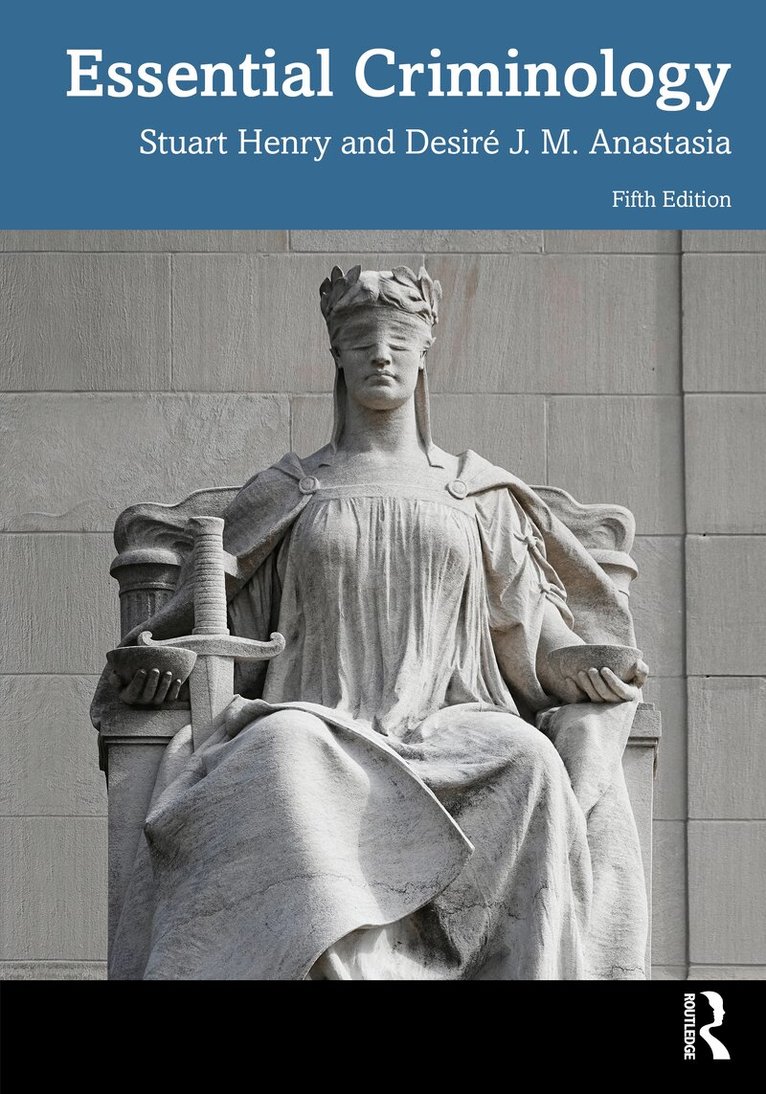
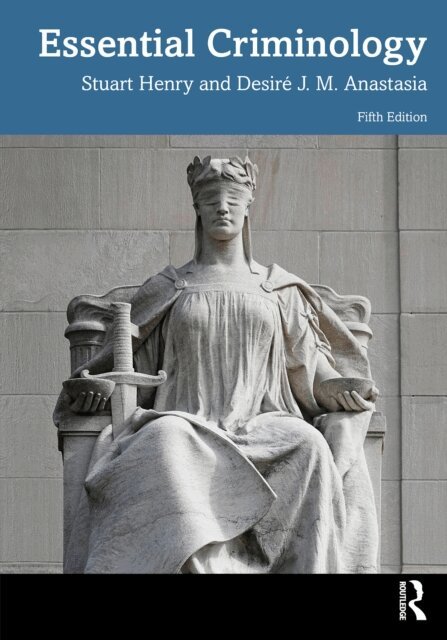
This significantly expanded edition of Essential Criminology covers the broadest range of criminological theories—the essential criminological theories—from longstanding ones such as classical theory and strain theory to recently introduced ones such as ultra-realism and green cultural criminology. Whether all are “essential†depends on one’s theoretical stance. The value of this text is its carefully designed comparative analysis, which helps readers consider their relative contribution to the field.
Originally designed as an alternative to lengthy and expensive introductory texts, Essential Criminology provides a concise, yet comprehensive overview of the field. The book offers a clear, structured, student-friendly, critical analytical examination of the nature of crime, theories of crime causation, and their criminal justice policy implications. Causal theories covered range from micro-level classical and rational choice to biological psychological, social learning, social control, and interactionist perspectives, to macro-level social ecology, anomie/strain, conflict, Marxist, feminist, and postmodernist theories. Over its 26-year history the book has added new theoretical perspectives as these have gained prominence. New to this edition are chapters on critical and ultra-realism, and critical green criminology and discussions of zemiology, critical race theory, and quantum holographic criminology. The authors have also expanded some theoretical frameworks that had previously been underdeveloped such as opportunity theory, subcultural theory, and social constructionism.
Essential Criminology contextualizes criminology in the globally interdependent 21st century, addressing the crimes of terrorism, global pandemics, and climate change. With its cutting-edge updates, illustrative real-world examples, and student-friendly study tools, including analytically comparable summary charts exposing each theory''s ontological assumptions, this text was designed primarily for undergraduate criminology courses, but has also been adopted by community colleges and graduate programs in criminology, sociology, and political science.

762 kr
Läs direkt efter köp
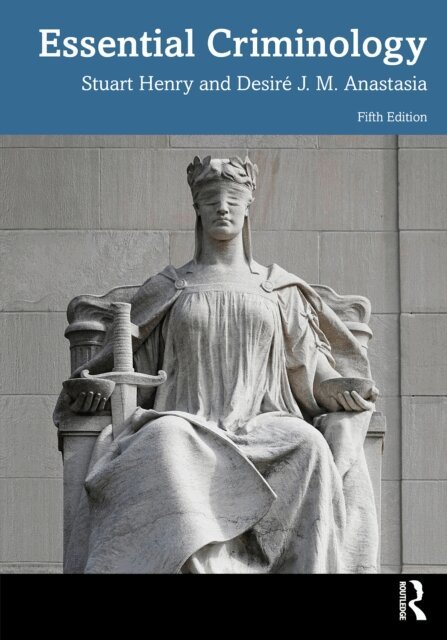
This significantly expanded edition of Essential Criminology covers the broadest range of criminological theories—the essential criminological theories—from longstanding ones such as classical theory and strain theory to recently introduced ones such as ultra-realism and green cultural criminology. Whether all are “essential†depends on one’s theoretical stance. The value of this text is its carefully designed comparative analysis, which helps readers consider their relative contribution to the field.
Originally designed as an alternative to lengthy and expensive introductory texts, Essential Criminology provides a concise, yet comprehensive overview of the field. The book offers a clear, structured, student-friendly, critical analytical examination of the nature of crime, theories of crime causation, and their criminal justice policy implications. Causal theories covered range from micro-level classical and rational choice to biological psychological, social learning, social control, and interactionist perspectives, to macro-level social ecology, anomie/strain, conflict, Marxist, feminist, and postmodernist theories. Over its 26-year history the book has added new theoretical perspectives as these have gained prominence. New to this edition are chapters on critical and ultra-realism, and critical green criminology and discussions of zemiology, critical race theory, and quantum holographic criminology. The authors have also expanded some theoretical frameworks that had previously been underdeveloped such as opportunity theory, subcultural theory, and social constructionism.
Essential Criminology contextualizes criminology in the globally interdependent 21st century, addressing the crimes of terrorism, global pandemics, and climate change. With its cutting-edge updates, illustrative real-world examples, and student-friendly study tools, including analytically comparable summary charts exposing each theory''s ontological assumptions, this text was designed primarily for undergraduate criminology courses, but has also been adopted by community colleges and graduate programs in criminology, sociology, and political science.

1 400 kr
Skickas inom 10-15 vardagar
395 kr
Skickas inom 10-15 vardagar
328 kr
Skickas inom 7-10 vardagar
462 kr
Läs direkt efter köp
This book, first published in 1983, looks at discipline in industry and shows how private justice is integrally bound up with formal law. It is a timely examination of the forms of social control that exist ostensibly outside the formal legal system but on which it crucially depends. Private Justice: Towards Integrated Theorising in the Sociology of Law will be of interest to students of law, sociology, and criminology.
Dr. Stuart Henry is currently Professor and Director of the School of Public Affairs at San Diego State University where he has been since 2006. Since leaving Trent Polytechnic (now Nottingham Trent University) in 1983 he has held positions in the United States at Eastern Michigan University, Wayne State University, and the University of Texas at Arlington. He is the author or editor of 30 books and over 100 articles on crime, deviance and social control.
452 kr
Läs direkt efter köp
This book, first published in 1983, looks at discipline in industry and shows how private justice is integrally bound up with formal law. It is a timely examination of the forms of social control that exist ostensibly outside the formal legal system but on which it crucially depends. Private Justice: Towards Integrated Theorising in the Sociology of Law will be of interest to students of law, sociology, and criminology.
Dr. Stuart Henry is currently Professor and Director of the School of Public Affairs at San Diego State University where he has been since 2006. Since leaving Trent Polytechnic (now Nottingham Trent University) in 1983 he has held positions in the United States at Eastern Michigan University, Wayne State University, and the University of Texas at Arlington. He is the author or editor of 30 books and over 100 articles on crime, deviance and social control.
5 695 kr
Läs direkt efter köp
5 734 kr
Läs direkt efter köp
2 515 kr
Skickas inom 10-15 vardagar
285 kr
Läs direkt efter köp
807 kr
Skickas inom 7-10 vardagar
274 kr
Skickas inom 7-10 vardagar
1 098 kr
Skickas inom 10-15 vardagar