2 515 kr
Skickas inom 10-15 vardagar
2 515 kr
Skickas inom 10-15 vardagar
823 kr
Skickas inom 10-15 vardagar
800 kr
Skickas inom 10-15 vardagar
970 kr
Läs direkt efter köp
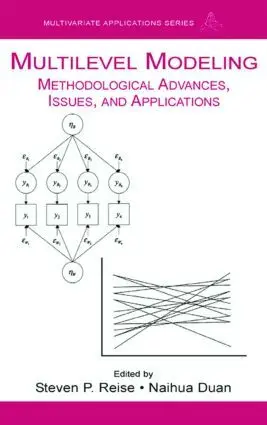
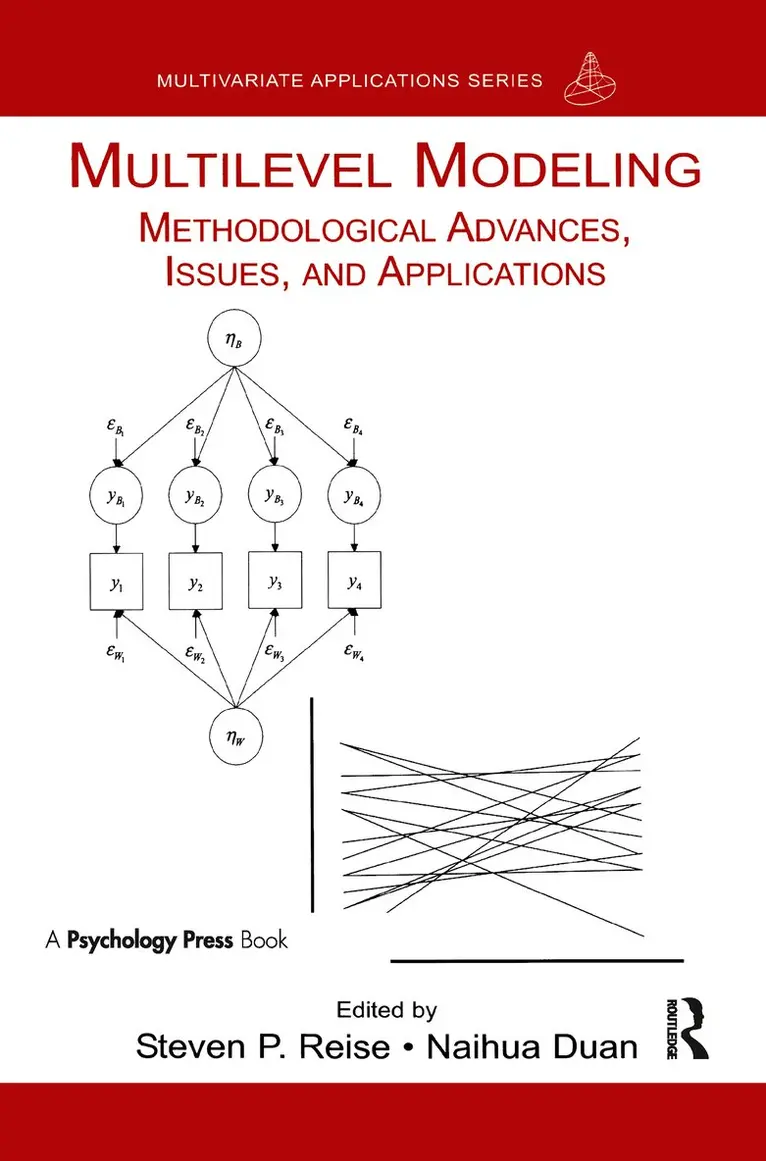
This book illustrates the current work of leading multilevel modeling (MLM) researchers from around the world.
The book''s goal is to critically examine the real problems that occur when trying to use MLMs in applied research, such as power, experimental design, and model violations. This presentation of cutting-edge work and statistical innovations in multilevel modeling includes topics such as growth modeling, repeated measures analysis, nonlinear modeling, outlier detection, and meta analysis.
This volume will be beneficial for researchers with advanced statistical training and extensive experience in applying multilevel models, especially in the areas of education; clinical intervention; social, developmental and health psychology, and other behavioral sciences; or as a supplement for an introductory graduate-level course.
949 kr
Läs direkt efter köp
This book illustrates the current work of leading multilevel modeling (MLM) researchers from around the world.
The book''s goal is to critically examine the real problems that occur when trying to use MLMs in applied research, such as power, experimental design, and model violations. This presentation of cutting-edge work and statistical innovations in multilevel modeling includes topics such as growth modeling, repeated measures analysis, nonlinear modeling, outlier detection, and meta analysis.
This volume will be beneficial for researchers with advanced statistical training and extensive experience in applying multilevel models, especially in the areas of education; clinical intervention; social, developmental and health psychology, and other behavioral sciences; or as a supplement for an introductory graduate-level course.
1 151 kr
Läs direkt efter köp
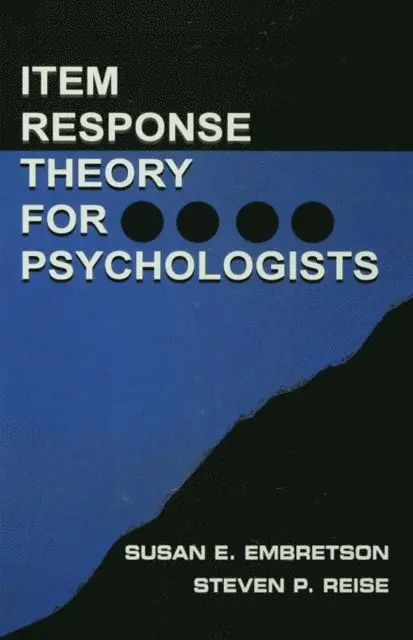
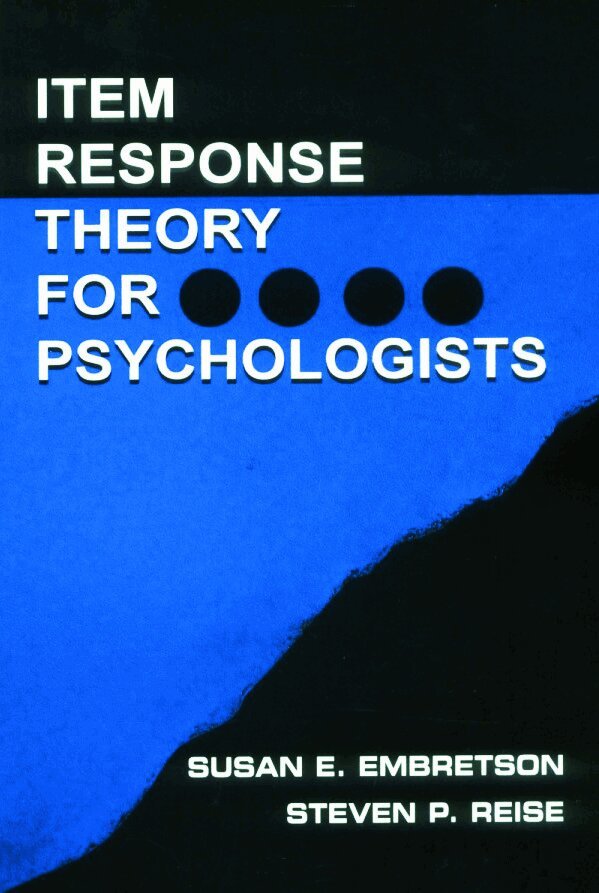
This book develops an intuitive understanding of IRT principles through the use of graphical displays and analogies to familiar psychological principles. It surveys contemporary IRT models, estimation methods, and computer programs. Polytomous IRT models are given central coverage since many psychological tests use rating scales.
Ideal for clinical, industrial, counseling, educational, and behavioral medicine professionals and students familiar with classical testing principles, exposure to material covered in first-year graduate statistics courses is helpful. All symbols and equations are thoroughly explained verbally and graphically.
1 159 kr
Läs direkt efter köp
This book develops an intuitive understanding of IRT principles through the use of graphical displays and analogies to familiar psychological principles. It surveys contemporary IRT models, estimation methods, and computer programs. Polytomous IRT models are given central coverage since many psychological tests use rating scales.
Ideal for clinical, industrial, counseling, educational, and behavioral medicine professionals and students familiar with classical testing principles, exposure to material covered in first-year graduate statistics courses is helpful. All symbols and equations are thoroughly explained verbally and graphically.
1 943 kr
Skickas inom 10-15 vardagar
866 kr
Läs direkt efter köp
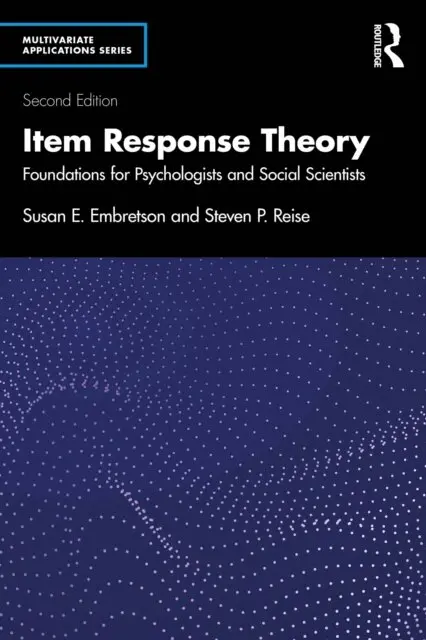
This book provides an intuitive and accessible introduction to item response theory (IRT), making complex psychometric concepts easier to grasp through graphical displays and familiar analogies. It bridges theory and application, helping readers interpret and implement IRT models effectively to improve measurement quality in psychology and the social sciences. Covering both foundational and advanced topics, it offers a clear path for understanding contemporary IRT methods and their relevance in research and practice.
With a strong focus on applications, this book explains contemporary IRT models and estimation methods, placing special emphasis on polytomous IRT models, which are widely used in psychological assessments and rating scales. Applications in various research areas are explored in detail, alongside a dedicated chapter on available software to support implementation. The final section delves into advanced IRT topics, including multidimensional models and explanatory approaches for hypothesis testing, making it a valuable resource for those looking to deepen their understanding of psychometric analysis.
This book is essential for graduate students, researchers, and practitioners in psychology, education, and the social sciences. It is useful for researchers who are implementing or developing person assessments, as well as for professionals in clinical, industrial, counseling, and behavioral medicine fields who need a strong grasp of contemporary psychometric foundations. Professors teaching measurement courses will find it an ideal core textbook, offering a structured and engaging introduction to IRT and its applications in test development and analysis.
860 kr
Läs direkt efter köp
This book provides an intuitive and accessible introduction to item response theory (IRT), making complex psychometric concepts easier to grasp through graphical displays and familiar analogies. It bridges theory and application, helping readers interpret and implement IRT models effectively to improve measurement quality in psychology and the social sciences. Covering both foundational and advanced topics, it offers a clear path for understanding contemporary IRT methods and their relevance in research and practice.
With a strong focus on applications, this book explains contemporary IRT models and estimation methods, placing special emphasis on polytomous IRT models, which are widely used in psychological assessments and rating scales. Applications in various research areas are explored in detail, alongside a dedicated chapter on available software to support implementation. The final section delves into advanced IRT topics, including multidimensional models and explanatory approaches for hypothesis testing, making it a valuable resource for those looking to deepen their understanding of psychometric analysis.
This book is essential for graduate students, researchers, and practitioners in psychology, education, and the social sciences. It is useful for researchers who are implementing or developing person assessments, as well as for professionals in clinical, industrial, counseling, and behavioral medicine fields who need a strong grasp of contemporary psychometric foundations. Professors teaching measurement courses will find it an ideal core textbook, offering a structured and engaging introduction to IRT and its applications in test development and analysis.
2 355 kr
Läs direkt efter köp
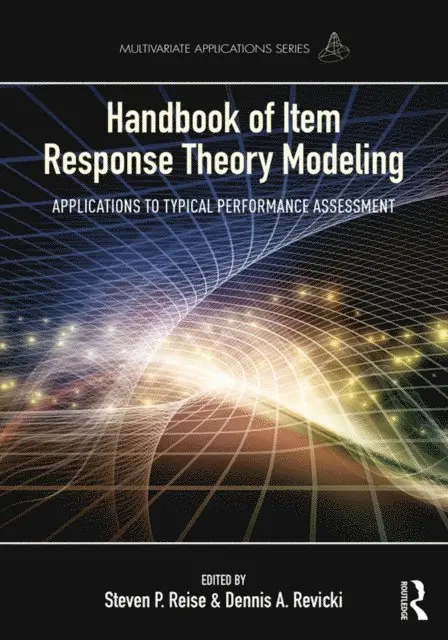
Item response theory (IRT) has moved beyond the confines of educational measurement into assessment domains such as personality, psychopathology, and patient-reported outcomes. Classic and emerging IRT methods and applications that are revolutionizing psychological measurement, particularly for health assessments used to demonstrate treatment effectiveness, are reviewed in this new volume. World renowned contributors present the latest research and methodologies about these models along with their applications and related challenges. Examples using real data, some from NIH-PROMIS, show how to apply these models in actual research situations. Chapters review fundamental issues of IRT, modern estimation methods, testing assumptions, evaluating fit, item banking, scoring in multidimensional models, and advanced IRT methods. New multidimensional models are provided along with suggestions for deciding among the family of IRT models available. Each chapter provides an introduction, describes state-of-the art research methods, demonstrates an application, and provides a summary. The book addresses the most critical IRT conceptual and statistical issues confronting researchers and advanced students in psychology, education, and medicine today. Although the chapters highlight health outcomes data the issues addressed are relevant to any content domain.
The book addresses:
IRT models applied to non-educational data especially patient reported outcomes
Differences between cognitive and non-cognitive constructs and the challenges these bring to modeling.
The application of multidimensional IRT models designed to capture typical performance data.
Cutting-edge methods for deriving a single latent dimension from multidimensional data
A new model designed for the measurement of constructs that are defined on one end of a continuum such as substance abuse
Scoring individuals under different multidimensional IRT models and item banking for patient-reported health outcomes
How to evaluate measurement invariance, diagnose problems with response categories, and assess growth and change.
Part 1 reviews fundamental topics such as assumption testing, parameter estimation, and the assessment of model and person fit. New, emerging, and classic IRT models including modeling multidimensional data and the use of new IRT models in typical performance measurement contexts are examined in Part 2. Part 3 reviews the major applications of IRT models such as scoring, item banking for patient-reported health outcomes, evaluating measurement invariance, linking scales to a common metric, and measuring growth and change. The book concludes with a look at future IRT applications in health outcomes measurement. The book summarizes the latest advances and critiques foundational topics such a multidimensionality, assessment of fit, handling non-normality, as well as applied topics such as differential item functioning and multidimensional linking.
Intended for researchers, advanced students, and practitioners in psychology, education, and medicine interested in applying IRT methods, this book also serves as a text in advanced graduate courses on IRT or measurement. Familiarity with factor analysis, latent variables, IRT, and basic measurement theory is assumed.

2 338 kr
Läs direkt efter köp
Item response theory (IRT) has moved beyond the confines of educational measurement into assessment domains such as personality, psychopathology, and patient-reported outcomes. Classic and emerging IRT methods and applications that are revolutionizing psychological measurement, particularly for health assessments used to demonstrate treatment effectiveness, are reviewed in this new volume. World renowned contributors present the latest research and methodologies about these models along with their applications and related challenges. Examples using real data, some from NIH-PROMIS, show how to apply these models in actual research situations. Chapters review fundamental issues of IRT, modern estimation methods, testing assumptions, evaluating fit, item banking, scoring in multidimensional models, and advanced IRT methods. New multidimensional models are provided along with suggestions for deciding among the family of IRT models available. Each chapter provides an introduction, describes state-of-the art research methods, demonstrates an application, and provides a summary. The book addresses the most critical IRT conceptual and statistical issues confronting researchers and advanced students in psychology, education, and medicine today. Although the chapters highlight health outcomes data the issues addressed are relevant to any content domain.
The book addresses:
IRT models applied to non-educational data especially patient reported outcomes
Differences between cognitive and non-cognitive constructs and the challenges these bring to modeling.
The application of multidimensional IRT models designed to capture typical performance data.
Cutting-edge methods for deriving a single latent dimension from multidimensional data
A new model designed for the measurement of constructs that are defined on one end of a continuum such as substance abuse
Scoring individuals under different multidimensional IRT models and item banking for patient-reported health outcomes
How to evaluate measurement invariance, diagnose problems with response categories, and assess growth and change.
Part 1 reviews fundamental topics such as assumption testing, parameter estimation, and the assessment of model and person fit. New, emerging, and classic IRT models including modeling multidimensional data and the use of new IRT models in typical performance measurement contexts are examined in Part 2. Part 3 reviews the major applications of IRT models such as scoring, item banking for patient-reported health outcomes, evaluating measurement invariance, linking scales to a common metric, and measuring growth and change. The book concludes with a look at future IRT applications in health outcomes measurement. The book summarizes the latest advances and critiques foundational topics such a multidimensionality, assessment of fit, handling non-normality, as well as applied topics such as differential item functioning and multidimensional linking.
Intended for researchers, advanced students, and practitioners in psychology, education, and medicine interested in applying IRT methods, this book also serves as a text in advanced graduate courses on IRT or measurement. Familiarity with factor analysis, latent variables, IRT, and basic measurement theory is assumed.
1 575 kr
Skickas inom 3-6 vardagar
3 708 kr
Skickas inom 10-15 vardagar
1 191 kr
Tillfälligt slut