302 kr
Skickas
302 kr
Skickas
2 961 kr
Skickas inom 10-15 vardagar
738 kr
Skickas inom 10-15 vardagar
927 kr
Läs direkt efter köp
2015 Gradiva Award Winner
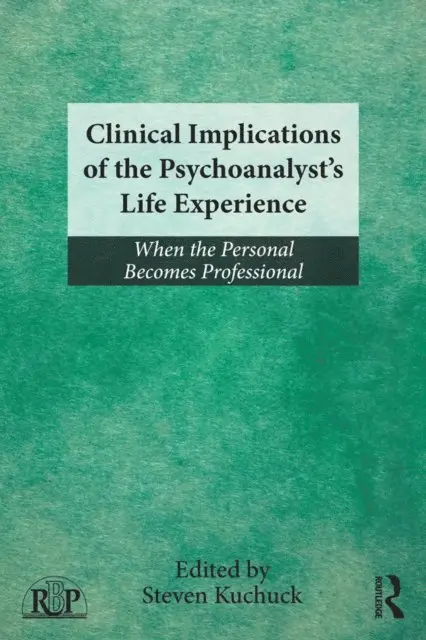
Clinical Implications of the Psychoanalyst’s Life Experience explores how leaders in the fields of psychoanalysis and psychotherapy address the phenomena of the psychoanalyst’s personal life and psychology. In this edited book, each author describes pivotal childhood and adult life events and crises that have contributed to personality formation, personal and professional functioning, choices of theoretical positions, and clinical technique.
By expanding psychoanalytic study beyond clinical theory and technique to include a more careful examination of the psychoanalyst’s life events and other subjective phenomena, readers will have an opportunity to focus on specific ways in which these events and crises affect the tenor of the therapist’s presence in the consulting room, and how these occurrences affect clinical choices. Chapters cover a broad range of topics including illness, adoption, sexual identity and experience, trauma, surviving the death of one’s own analyst, working during 9/11, cross cultural issues, growing up in a communist household, and other family dynamics.
Throughout, Steven Kuchuck (ed) shows how contemporary psychoanalysis teaches that it is only by acknowledging the therapist’s life experience and resulting psychological makeup that analysts can be most effective in helping their patients. However, to date, few articles and fewer books have been entirely devoted to this topic. Clinical Implications of the Psychoanalyst’s Life Experience forges new ground in exploring these under-researched areas. It will be essential reading for practicing psychoanalysts, psychotherapists, psychologists, social workers, those working in other mental health fields and graduate students alike.
907 kr
Läs direkt efter köp
2015 Gradiva Award Winner
Clinical Implications of the Psychoanalyst’s Life Experience explores how leaders in the fields of psychoanalysis and psychotherapy address the phenomena of the psychoanalyst’s personal life and psychology. In this edited book, each author describes pivotal childhood and adult life events and crises that have contributed to personality formation, personal and professional functioning, choices of theoretical positions, and clinical technique.
By expanding psychoanalytic study beyond clinical theory and technique to include a more careful examination of the psychoanalyst’s life events and other subjective phenomena, readers will have an opportunity to focus on specific ways in which these events and crises affect the tenor of the therapist’s presence in the consulting room, and how these occurrences affect clinical choices. Chapters cover a broad range of topics including illness, adoption, sexual identity and experience, trauma, surviving the death of one’s own analyst, working during 9/11, cross cultural issues, growing up in a communist household, and other family dynamics.
Throughout, Steven Kuchuck (ed) shows how contemporary psychoanalysis teaches that it is only by acknowledging the therapist’s life experience and resulting psychological makeup that analysts can be most effective in helping their patients. However, to date, few articles and fewer books have been entirely devoted to this topic. Clinical Implications of the Psychoanalyst’s Life Experience forges new ground in exploring these under-researched areas. It will be essential reading for practicing psychoanalysts, psychotherapists, psychologists, social workers, those working in other mental health fields and graduate students alike.
2 952 kr
Skickas inom 10-15 vardagar
736 kr
Skickas inom 10-15 vardagar
820 kr
Läs direkt efter köp
Winner of the 2016 Gradiva Award for Edited Book
The Legacy of Sándor Ferenczi, first published in 1993 & edited by Lewis Aron & Adrienne Harris, was one of the first books to examine Ferenczi’s invaluable contributions to psychoanalysis and his continuing influence on contemporary clinicians and scholars. Building on that pioneering work, The Legacy of Sándor Ferenczi: From Ghost to Ancestor brings together leading international Ferenczi scholars to report on previously unavailable data about Ferenczi and his professional descendants.
Many—including Sigmund Freud himself—considered Sándor Ferenczi to be Freud’s most gifted patient and protégé. For a large part of his career, Ferenczi was almost as well known, influential, and sought after as a psychoanalyst, teacher and lecturer as Freud himself. Later, irreconcilable differences between Freud, his followers and Ferenzi meant that many of his writings were withheld from translation or otherwise stifled, and he was accused of being mentally ill and shunned. In this book, Harris and Kuchuck explore how newly discovered historical and theoretical material has returned Ferenczi to a place of theoretical legitimacy and prominence. His work continues to influence both psychoanalytic theory and practice, and covers many major contemporary psychoanalytic topics such as process, metapsychology, character structure, trauma, sexuality, and social and progressive aspects of psychoanalytic work.
Among other historical and scholarly contributions, this book demonstrates the direct link between Ferenczi’s pioneering work and subsequent psychoanalytic innovations. With rich clinical vignettes, newly unearthed historical data, and contemporary theoretical explorations, it will be of great interest and use to clinicians of all theoretical stripes, as well as scholars and historians.

820 kr
Läs direkt efter köp
Winner of the 2016 Gradiva Award for Edited Book
The Legacy of Sándor Ferenczi, first published in 1993 & edited by Lewis Aron & Adrienne Harris, was one of the first books to examine Ferenczi’s invaluable contributions to psychoanalysis and his continuing influence on contemporary clinicians and scholars. Building on that pioneering work, The Legacy of Sándor Ferenczi: From Ghost to Ancestor brings together leading international Ferenczi scholars to report on previously unavailable data about Ferenczi and his professional descendants.
Many—including Sigmund Freud himself—considered Sándor Ferenczi to be Freud’s most gifted patient and protégé. For a large part of his career, Ferenczi was almost as well known, influential, and sought after as a psychoanalyst, teacher and lecturer as Freud himself. Later, irreconcilable differences between Freud, his followers and Ferenzi meant that many of his writings were withheld from translation or otherwise stifled, and he was accused of being mentally ill and shunned. In this book, Harris and Kuchuck explore how newly discovered historical and theoretical material has returned Ferenczi to a place of theoretical legitimacy and prominence. His work continues to influence both psychoanalytic theory and practice, and covers many major contemporary psychoanalytic topics such as process, metapsychology, character structure, trauma, sexuality, and social and progressive aspects of psychoanalytic work.
Among other historical and scholarly contributions, this book demonstrates the direct link between Ferenczi’s pioneering work and subsequent psychoanalytic innovations. With rich clinical vignettes, newly unearthed historical data, and contemporary theoretical explorations, it will be of great interest and use to clinicians of all theoretical stripes, as well as scholars and historians.
The Work Books of Masud Khan 1967-1972
619 kr
Skickas inom 7-10 vardagar
Masud Khan (1924–1989) was an eminent and, ultimately, scandalous Indian-born, British psychoanalyst. From August 1967 to March 1980, he wrote his Work Books, a diary in thirty-nine volumes, containing observations and reflections on his own life, the world of psychoanalysis, his evolving theoretical formulations, Western culture, and the turbulent social and political developments of the time.
In this volume, comprising the first fourteen Work Books spanning August 1967 to January 1972, readers will find fascinating entries on Khan’s colleague and mentor Donald Winnicott and other well-known analysts of the period, including Anna Freud. Khan’s unique charm extended to celebrity social circles, with cultural figures such as Julie Andrews, the Redgraves, and Henri Cartier-Bresson featuring in these pages of his diary.
This unique, first-person account of a particularly fertile period of European and American intellectual and cultural society is an absolute must-read for those interested in psychoanalysis, history, or biography.
205 kr
Skickas