LETHAL JUSTICEWhen Tokyo falls victim to a deadly terrorist attack, Detective Sergeant Mariko Oshiro knows who is responsible, even if she doesn’t have proof. She urges her commanding officers to arrest the perpetrator—an insane zealot who was just released from police custody. When her pleas fall on deaf ears, she loses her temper and then her badge, as well as her best chance of fighting back.Left on her own, and armed with only her cunning and her famed Inazuma blade, Mariko must work outside the system to stop a terrorist mastermind. But going rogue draws the attention of an underground syndicate known as the Wind. For centuries, they have controlled Japanese politics from the shadows, using mystical relics to achieve their nefarious ends—relics like Mariko’s own sword and the iron demon mask whose evil curse is bound to the blade. Now the Wind is set on acquiring Mariko.Mariko is left with a perilous choice: Join an illicit insurgency to thwart a deadly villain, or remain true to the law. Either way, she cannot escape her sword’s curse. As sure as the blade will bring her to victory, it also promises to destroy her….
ANCIENT POWERAs the only female detective in Tokyo’s most elite police unit, Mariko Oshiro has to fight for every ounce of respect, especially from her new boss. But when he gives her the least promising case possible—the attempted theft of an old samurai sword—it proves more dangerous than anyone on the force could have imagined. The owner of the sword, Professor Yasuo Yamada, says it was crafted by the legendary Master Inazuma, a sword smith whose blades are rumored to have magical qualities. The man trying to steal it already owns another Inazuma—one whose deadly power eventually comes to control all who wield it. Mariko’s investigation has put her on a collision course with a curse centuries old and as bloodthirsty as ever. She is only the latest in a long line of warriors and soldiers to confront this power, and even the sword she learns to wield could turn against her.
Detective Sergeant Mariko Oshiro has been promoted to Japan’s elite Narcotics unit—and with this promotion comes a new partner, a new case, and new danger. The underboss of a powerful yakuza crime syndicate has put a price on her head, and he’ll lift the bounty only if she retrieves an ancient iron demon mask that was stolen from him in a daring raid. However, Mariko has no idea of the tumultuous past carried within the mask—or of its deadly link with the famed Inazuma blade she wields. The secret of this mask originated hundreds of years before Mariko was born, and over time the mask’s power has evolved to bend its owner toward destruction, stopping at nothing to obtain Inazuma steel. Mariko’s fallen sensei knew much of the mask’s hypnotic power and of its mysterious link to a murderous cult. Now Mariko must use his notes to find the mask before the cult can bring Tokyo to its knees—and before the underboss decides her time is up....
"Purifying Zen: Watsuji Tetsuro’s Shamon Dogen makes available in a clear and fluid translation an early classic in modern Japanese philosophy. Steve Bein’s annotations, footnotes, introduction, and commentary bridge the gap separating not only the languages but also the cultures of its original readers and its new Western audience." —from the Foreword by Thomas P. KasulisIn 1223 the monk Dogen Kigen (1200–1253) came to the audacious conclusion that Japanese Buddhism had become hopelessly corrupt. He undertook a dangerous pilgrimage to China to bring back a purer form of Buddhism and went on to become one of the founders of Soto Zen, still the largest Zen sect in Japan. Seven hundred years later, the philosopher Watsuji Tetsuro (1889–1960) also saw corruption in the Buddhism of his day. Watsuji’s efforts to purify the religion sent him not across the seas but searching Japan’s intellectual past, where he discovered writings by Dogen that had been hidden away by the monk’s own sect. Watsuji later penned Shamon Dogen (Dogen the monk), which single-handedly rescued Dogen from the brink of obscurity, reintroducing Japan to its first great philosophical mind.Purifying Zen is the first English translation of Watsuji’s landmark book. A text intended to reacquaint Japan with one of its finest philosophers, the work delves into the complexities of individuals in social relationships, lamenting the stark egoism and loneliness of life in an increasingly Westernized Japan. In addition to an introduction that provides biographical details on Watsuji and Dogen, the translation is supplemented with a brief guide to the themes and ideas of Shamon Dogen, beginning with a consideration of the nature of faith and the role of responsibility in Watsuji’s vision of Dogen’s Zen. It goes on to examine the technical terms of Dogen’s philosophy and the role of written language in Dogen’s thought.
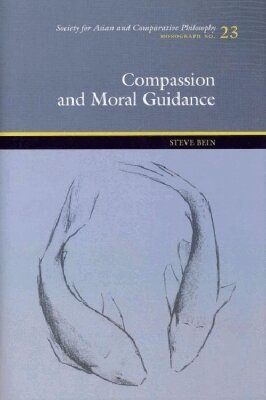
Compassion is a word we use frequently but rarely precisely. One reason we lack a philosophically precise understanding of compassion is that moral philosophers today give it virtually no attention. Indeed, in the predominant ethical traditions of the West (deontology, consequentialism, virtue ethics), compassion tends to be either passed over without remark or explicitly dismissed as irrelevant. And yet in the predominant ethical traditions of Asia, compassion is centrally important: All else revolves around it. This is clearly the case in Buddhist ethics, and compassion plays a similarly indispensable role in Confucian and Daoist ethics.In Compassion and Moral Guidance, Steve Bein seeks to explain why compassion plays such a substantial role in the moral philosophies of East Asia and an insignificant one in those of Europe and the West. The book opens with detailed surveys of compassion’s position in the philosophical works of both traditions. The surveys culminate in an analysis of the conceptions of self and why the differences between these conceptions serve either to celebrate or marginalise the importance of compassion. Bein moves on to develop a model for the ethics of compassion, including a chapter on applied ethics seen from the perspective of the ethics of compassion. The result is a new approach to ethics, one that addresses the Rawlsian and Kantian concern for fairness, the utilitarian concern for satisfactory consequences, and the concern in care ethics for the proper treatment of marginalised groups. Bein argues that compassion’s capacity to address all of these makes it a primary tool for ethical decision-making.