2 571 kr
Skickas inom 10-15 vardagar
2 571 kr
Skickas inom 10-15 vardagar
1 189 kr
Skickas inom 7-10 vardagar
313 kr
Skickas inom 7-10 vardagar
855 kr
Läs direkt efter köp
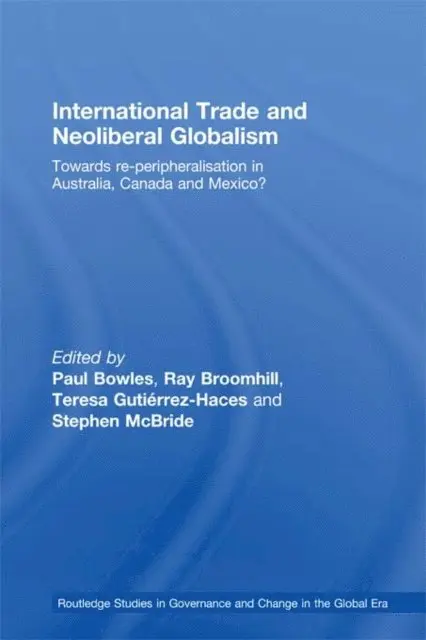
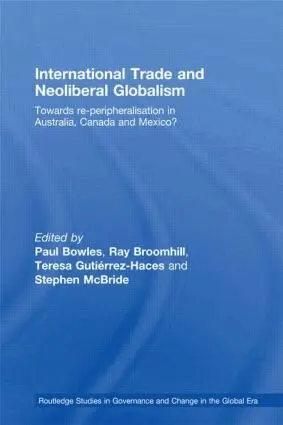
International trade must be analysed within the historical context within which it occurs. Behind the statistics on trade flows lie power structures, class interests and international hierarchies. These change over time and how countries respond to them has critical implications for their citizen’s well-being.
In this book, the history of trade in Australia, Canada and Mexico is analysed. Trade agreements are analysed in detail to explore the new forms that dependence and subordination have taken. Arguing that the free trade agreements are significantly biased in favour of the United States, the contributors analyse how each of the three countries are being subject to specific forms of re-peripheralisation and examine possible alternatives for a progressive future based on an integration in the global economy which enhances, rather than limits, democracy and social justice. By providing an historical and critical account of trade policy in the three countries, the book provides a welcome antidote to the ahistorical accounts of free trade supporters.
877 kr
Läs direkt efter köp
International trade must be analysed within the historical context within which it occurs. Behind the statistics on trade flows lie power structures, class interests and international hierarchies. These change over time and how countries respond to them has critical implications for their citizen’s well-being.
In this book, the history of trade in Australia, Canada and Mexico is analysed. Trade agreements are analysed in detail to explore the new forms that dependence and subordination have taken. Arguing that the free trade agreements are significantly biased in favour of the United States, the contributors analyse how each of the three countries are being subject to specific forms of re-peripheralisation and examine possible alternatives for a progressive future based on an integration in the global economy which enhances, rather than limits, democracy and social justice. By providing an historical and critical account of trade policy in the three countries, the book provides a welcome antidote to the ahistorical accounts of free trade supporters.
765 kr
Skickas inom 10-15 vardagar
1 090 kr
Skickas inom 10-15 vardagar
1 449 kr
Läs direkt efter köp
479 kr
Skickas inom 7-10 vardagar
370 kr
Läs direkt efter köp
405 kr
Läs direkt efter köp
522 kr
Läs direkt efter köp
1 046 kr
Skickas
964 kr
Skickas inom 7-10 vardagar
964 kr
Skickas inom 7-10 vardagar
554 kr
Läs direkt efter köp
The fall-out from the economic and financial crisis of 2008 had profound implications for countries across the world, leading different states to determine the best approach to mitigating its effects. In The Austerity State, a group of established and emerging scholars tackles the question of why states continue to rely on policies that, on many levels, have failed.
After 2008, austerity policies were implemented in various countries, a fact the contributors link to the persistence of neoliberalism and its accepted wisdoms about crisis management. In the immediate aftermath of the 2008 collapse, governments and central banks appeared to adopt a Keynesian approach to salvaging the global economy. This perception is mistaken, the authors argue. The “austerian” analysis of the crisis is ahistorical and shifts the blame from the under-regulated private sector to public, or sovereign, debt for which public authorities are responsible.
The Austerity State provides a critical examination of the accepted discourse around austerity measures and explores the reasons behind its continued prevalence in the world.
554 kr
Läs direkt efter köp
Bryan M. Evans, Stephen McBride, and their contributors delve further into the more practical, ground-level side of the austerity equation in Austerity: The Lived Experience.
Economically, austerity policies cannot be seen to work in the way elite interests claim that they do. Rather than soften the blow of the economic and financial crisis of 2008 for ordinary citizens, policies of austerity slow growth and lead to increased inequality. While political consent for such policies may have been achieved, it was reached amidst significant levels of disaffection and strong opposition to the extremes of austerity. The authors build their analysis in three sections, looking alternatively at theoretical and ideological dimensions of the lived experience of austerity; how austerity plays out in various public sector occupations and policy domains; and the class dimensions of austerity. The result is a ground-breaking contribution to the study of austerity politics and policies.
443 kr
Skickas inom 7-10 vardagar
443 kr
Skickas inom 7-10 vardagar
1 274 kr
Skickas inom 7-10 vardagar
232 kr
Skickas
290 kr
Skickas
315 kr
Skickas inom 11-20 vardagar
385 kr
Läs direkt efter köp
385 kr
Läs direkt efter köp
504 kr
Skickas inom 7-10 vardagar
485 kr
Skickas
347 kr
Skickas inom 11-20 vardagar
This new edition is reorganized to make it a more usable text and updated to include the Liberal government’s pursuit of neo-liberal policies.