880 kr
Skickas inom 10-15 vardagar
880 kr
Skickas inom 10-15 vardagar
2 342 kr
Skickas inom 7-10 vardagar
2 470 kr
Skickas inom 10-15 vardagar
2 618 kr
Skickas inom 10-15 vardagar
1 628 kr
Läs direkt efter köp
This textbook comprehensively covers the basic principles and most recent advances regarding visual displays, auditory and tactile displays and controls; psychophysics; cognitive processes; human-computer interaction, artificial intelligence and artificial life; stress and human performance; occupational accidents and prevention; human group dynamics and complex systems; and anthropometry, workspace and environmental design. The systems perspective emphasizes nonlinear dynamics for system performance changes and emergent behaviours of complex person-machine systems.
This book-
• Surveys principles of conventional and computer-based machine interaction. • Assesses the relative effectiveness of accident analysis and prevention strategies. • Highlights nonlinear dynamics for system performance changes. • Examines artificial intelligence and complex systems. • Investigates sources of cognitive workload and fatigue.
The textbook will be a valuable resource for advanced undergraduates and graduate students in diverse fields including ergonomics, human factors, cognitive science, computer science, operations management, and psychology. The textbook brings together core principles of person-machine interaction, accident analysis and prevention strategies, risk analysis and resilience, artificial intelligence, group dynamics, and nonlinear dynamics for an enhanced understanding of complex person-machine systems.
1 392 kr
Skickas inom 10-15 vardagar
3 827 kr
Skickas inom 10-15 vardagar
762 kr
Läs direkt efter köp
680 kr
Skickas inom 7-10 vardagar
906 kr
Läs direkt efter köp
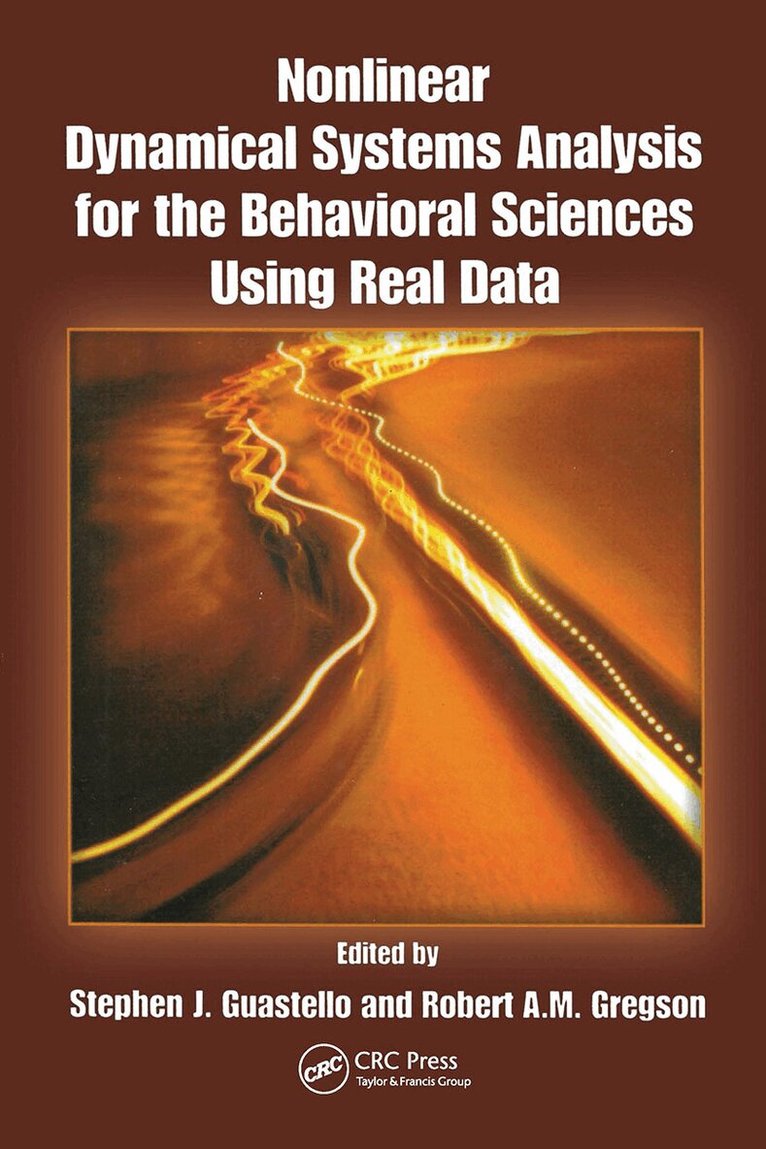
Whether talking about steering a wheelbarrow over rugged terrain or plotting the course of international relations, human performance systems involve change. Sometimes changes are subtle or evolutionary, sometimes they are catastrophic or revolutionary, and sometimes the changes are from periods of relative calm to periods of vibrant oscillations to periods of chaos. As a general rule, more complex systems are likely to produce more complex forms of change. Although social scientists have long acknowledged that change occurs and have considered ways to effect desirable change, the dynamical processes of change have been poorly understood in the past. This volume combines recent advances in mathematics and experimental design with the best available social science theories to produce a new, integrated, and compact theory of work, organizations, and social evolution. The domains of application extend from human decision-making processes to personnel selection and work motivation, work performance under conditions of stress, accident and health risk analysis, the development of social institutions and economic systems, creativity and innovation, organizational development and group dynamics, and political revolutions and war. Relative to other literature on nonlinear dynamical systems theory (NDS), this book is unique in that it integrates new developments in NDS with substantive psychological theory. It builds on many recent developments in organizational theory to show that nonlinear dynamics were often implicit in those works all along. The result is an entirely new way of viewing social events, understanding change processes, and asking questions about social systems. This book also contains much new empirical work and explains the newly developed methods for testing these new hypotheses.
1 027 kr
Läs direkt efter köp
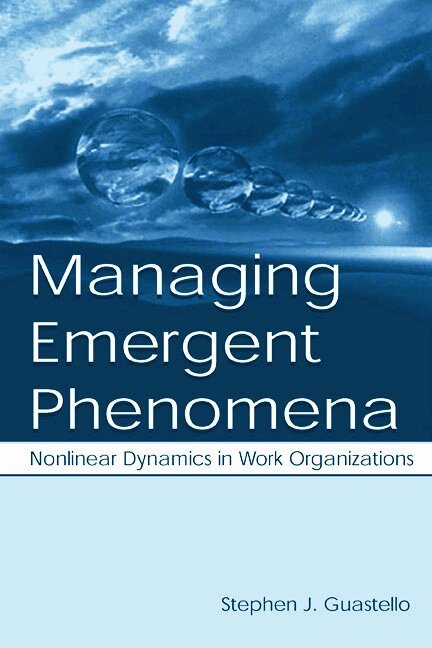
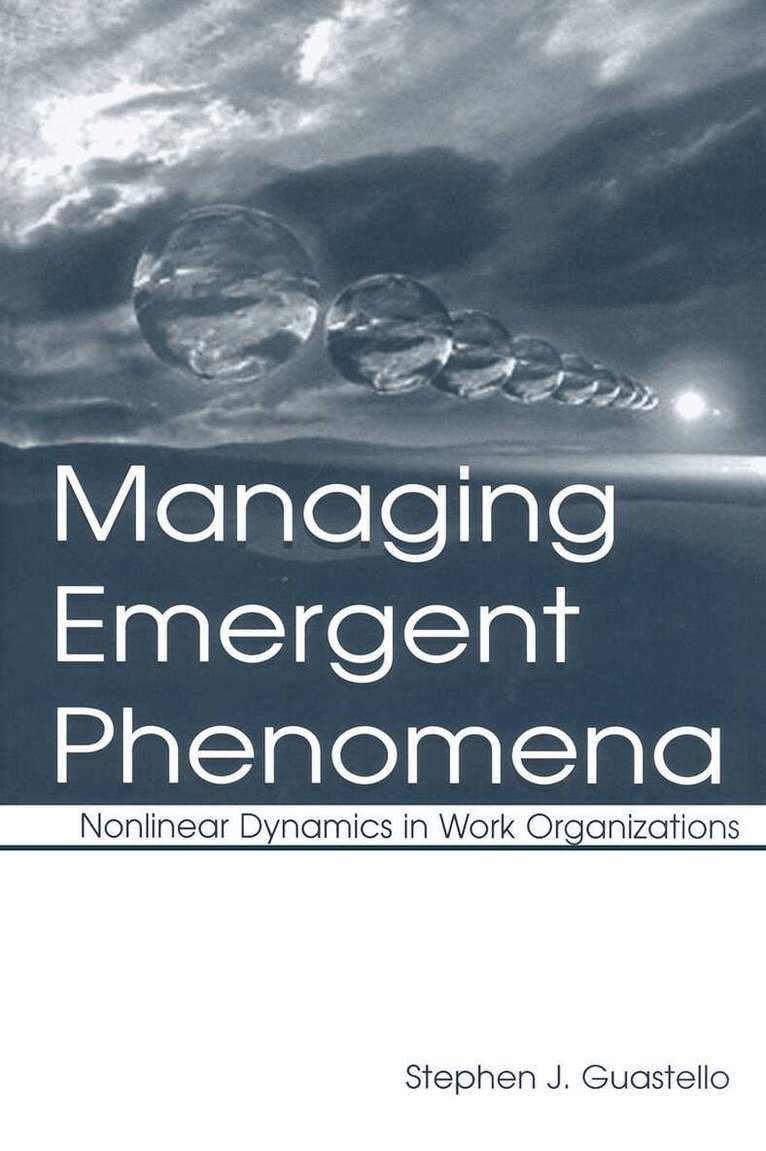
Chaos, catastrophe, self-organization, and complexity theories (nonlinear dynamics) now have practical and measurable roles in the functioning of work organizations. Managing Emergent Phenomena begins by describing how the concept of an organization has changed from a bureaucracy, to a humanistic and organic system, to a complex adaptive system. The dynamics concepts are then explained along with the most recent research methods for analyzing real data. Applications include: work motivation, personnel selection and turnover, creative thinking by individuals and groups, the development of social networks, coordination in work groups, the emergence of leaders, work performance in organizational hierarchies, economic problems that are relevant to organizations, techniques for predicting the future, and emergency management. Each application begins with a tight summary of standard thinking on a subject, followed by the new insights that are afforded by nonlinear dynamics and the empirical data supporting those ideas. Unusual concepts are also encountered, such as the organizational unconscious, collective intelligence, and the revolt of the slaved variables. The net results are a new perspective on what is really important in organizational life, original insights on familiar experiences, and some clear signposts for the next generation of nonlinear social scientists.

994 kr
Läs direkt efter köp
Chaos, catastrophe, self-organization, and complexity theories (nonlinear dynamics) now have practical and measurable roles in the functioning of work organizations. Managing Emergent Phenomena begins by describing how the concept of an organization has changed from a bureaucracy, to a humanistic and organic system, to a complex adaptive system. The dynamics concepts are then explained along with the most recent research methods for analyzing real data. Applications include: work motivation, personnel selection and turnover, creative thinking by individuals and groups, the development of social networks, coordination in work groups, the emergence of leaders, work performance in organizational hierarchies, economic problems that are relevant to organizations, techniques for predicting the future, and emergency management. Each application begins with a tight summary of standard thinking on a subject, followed by the new insights that are afforded by nonlinear dynamics and the empirical data supporting those ideas. Unusual concepts are also encountered, such as the organizational unconscious, collective intelligence, and the revolt of the slaved variables. The net results are a new perspective on what is really important in organizational life, original insights on familiar experiences, and some clear signposts for the next generation of nonlinear social scientists.

792 kr
Skickas inom 10-15 vardagar
666 kr
Läs direkt efter köp
661 kr
Läs direkt efter köp
749 kr
Skickas inom 10-15 vardagar
762 kr
Läs direkt efter köp
1 090 kr
Skickas inom 10-15 vardagar
1 502 kr
Läs direkt efter köp
1 123 kr
Skickas inom 10-15 vardagar