2 652 kr
Skickas inom 10-15 vardagar
2 652 kr
Skickas inom 10-15 vardagar
626 kr
Skickas inom 10-15 vardagar
531 kr
Skickas inom 10-15 vardagar
725 kr
Läs direkt efter köp
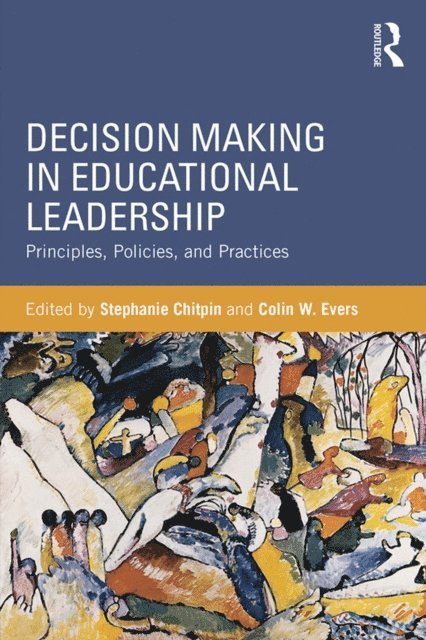
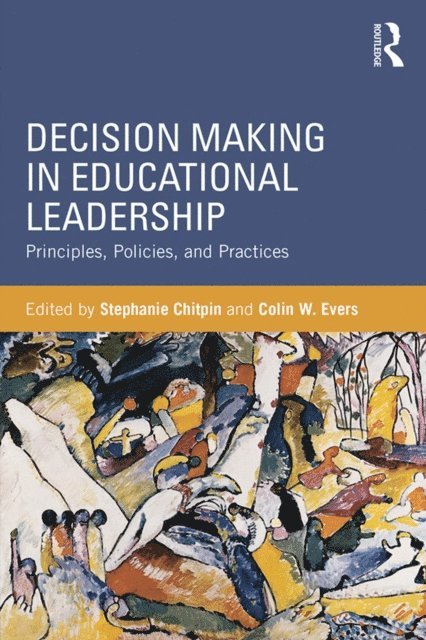
The increased focus on raising standards in education requires leaders to engage in complex decision making about teacher assessment, mandated accountability measures, and the collection and use of large amounts of data. Showcasing exemplary practices of school and district administrators, Decision Making in Educational Leadership covers issues concerning the role of emotion, ethical and legal ramifications, the use of data, and complexity in decision making. Chapter authors in this research-based volume explore what administrators and school leaders actually know about educational problems, how they draw upon and revise theories of action for responding to problems, and which theories are tenable in educational decision making. This important resource provides a broad and international perspective on effective models and methods of educational decision making and shares valuable knowledge about how theory can be translated into practice in a variety of school settings.
725 kr
Läs direkt efter köp
The increased focus on raising standards in education requires leaders to engage in complex decision making about teacher assessment, mandated accountability measures, and the collection and use of large amounts of data. Showcasing exemplary practices of school and district administrators, Decision Making in Educational Leadership covers issues concerning the role of emotion, ethical and legal ramifications, the use of data, and complexity in decision making. Chapter authors in this research-based volume explore what administrators and school leaders actually know about educational problems, how they draw upon and revise theories of action for responding to problems, and which theories are tenable in educational decision making. This important resource provides a broad and international perspective on effective models and methods of educational decision making and shares valuable knowledge about how theory can be translated into practice in a variety of school settings.
2 455 kr
Skickas inom 10-15 vardagar
718 kr
Skickas inom 10-15 vardagar
2 983 kr
Skickas inom 10-15 vardagar
641 kr
Läs direkt efter köp
Challenging the theory of induction in teacher education, this book proposes a knowledge-building framework based on the critical rationalism of philosopher of science, Karl Popper. The Objective Knowledge Growth Framework developed in this book is designed to be an effective critical analysis framework for empowering teachers and schools to build and share professional knowledge. This book is essential reading for educational scholars, researchers, professionals, policymakers, and all those interested in exploring the application of Popperian philosophy to the field of education and re-envisioning educational practice.
823 kr
Läs direkt efter köp
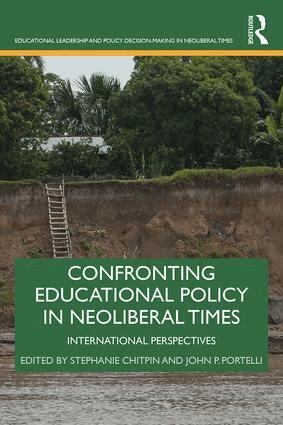
This volume explores how educational policy is changing as a result of neoliberal restructuring and how these issues affect educators’ practice. Evidence-based chapters present a sharp analysis of neoliberal education policy while also offering suggestions and recommendations for future action to bring about change consistent with more robust understandings of democracy. Covering issues relating to historical context, philosophical assumptions, policy implementation, accountability, teacher professionalism and standardization, Confronting Educational Policy in Neoliberal Times critically engages the ways micro- and macro- neoliberal politics shapes the purposes and implementation of schooling.
836 kr
Läs direkt efter köp
This volume explores how educational policy is changing as a result of neoliberal restructuring and how these issues affect educators’ practice. Evidence-based chapters present a sharp analysis of neoliberal education policy while also offering suggestions and recommendations for future action to bring about change consistent with more robust understandings of democracy. Covering issues relating to historical context, philosophical assumptions, policy implementation, accountability, teacher professionalism and standardization, Confronting Educational Policy in Neoliberal Times critically engages the ways micro- and macro- neoliberal politics shapes the purposes and implementation of schooling.
1 025 kr
Läs direkt efter köp
951 kr
Skickas inom 7-10 vardagar
1 025 kr
Läs direkt efter köp
1 075 kr
Läs direkt efter köp
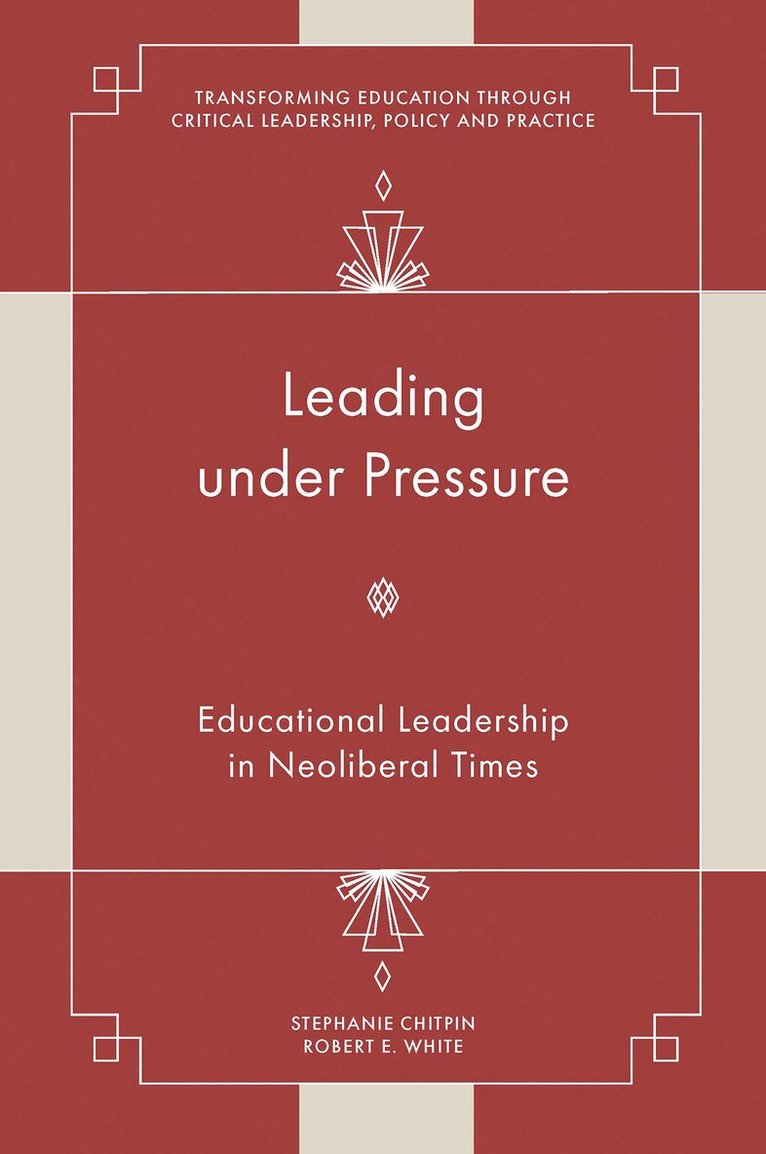
The best leaders lead by example, not by mandate. However, so much leadership has become conscripted by neoliberal values. Educators and politicians, who are increasingly making policy for educators, have come to believe that standardized test scores are the same as knowledge acquired, as if test scores actually measure knowledge as opposed to information. Simply put, educational policy is no longer being developed for educational purposes but education is increasingly being manipulated as an experiment in social engineering.
Educational leaders are caught on the horns of a dilemma – to follow and inscribe policies they do not agree with or to “go rogue” and do what they know is needed. Leading under Pressure is aptly titled, as there is significant pressure being placed on school leaders at any stage in their careers. However, in an otherwise increasingly hostile political, commercial and natural environment, there are some rays of hope. For example, teachers still know what it is that their students need and strive to provide that, despite mandates that try to create consumers of us all.
This volume is divided into three sections, the first of which seeks to explore social contexts of educational leadership. The second section explores the experiences of a variety of educational leaders in various contexts, while the third section of this volume looks at some of the consequences, unintended and otherwise, of the neoliberal commodification of education.
1 014 kr
Skickas inom 7-10 vardagar
1 091 kr
Läs direkt efter köp
The best leaders lead by example, not by mandate. However, so much leadership has become conscripted by neoliberal values. Educators and politicians, who are increasingly making policy for educators, have come to believe that standardized test scores are the same as knowledge acquired, as if test scores actually measure knowledge as opposed to information. Simply put, educational policy is no longer being developed for educational purposes but education is increasingly being manipulated as an experiment in social engineering.
Educational leaders are caught on the horns of a dilemma – to follow and inscribe policies they do not agree with or to “go rogue” and do what they know is needed. Leading under Pressure is aptly titled, as there is significant pressure being placed on school leaders at any stage in their careers. However, in an otherwise increasingly hostile political, commercial and natural environment, there are some rays of hope. For example, teachers still know what it is that their students need and strive to provide that, despite mandates that try to create consumers of us all.
This volume is divided into three sections, the first of which seeks to explore social contexts of educational leadership. The second section explores the experiences of a variety of educational leaders in various contexts, while the third section of this volume looks at some of the consequences, unintended and otherwise, of the neoliberal commodification of education.
1 106 kr
Läs direkt efter köp
1 028 kr
Skickas inom 7-10 vardagar
1 106 kr
Läs direkt efter köp
School Discipline and Administrator Decision-Making has been developed for leaders, practitioners, and researchers to explore the theory and practice of decision-making, with specific reference to school administrators and their response to school discipline. This work delves into the experiences of Canadian and Mauritian principals faced with tensions―sometimes racial―regarding discipline.
School leaders have the potential to make valuable changes within their schools as their influence touches on all aspects of the school building and culture. Yet, often discipline presents a challenge for school leaders as it requires a certain degree of discretion, especially when examining the issue of racial discipline disparity gaps in schools.
Exploring both a Western and non-Western context, the opening chapters highlight the rigidity of behavioural policies and the desire to break from such neoliberal practices despite fears of repercussion in Mauritius. This is followed by an exploration of the decision-making of principals in Ontario and Nova Scotia in a Canadian context. The chapters challenge neoliberal policies and guidelines by questioning current practices and proposing various leadership frameworks. By incorporating both a Canadian and Mauritian context, the authors highlight various strategies which can be used to rethink our current approaches to decision-making.
1 114 kr
Läs direkt efter köp
1 033 kr
Skickas inom 7-10 vardagar
1 114 kr
Läs direkt efter köp
The Invisible Influences on Decision-Making explores the often unseen factors that influence decision-making in both everyday life and various professional settings, with a particular focus on policing, medicine, education, and counselling.
Chitpin and Dougan present key findings and trends in decision-making research, then go on to explore the concept of indecisiveness before examining decision-making processes in these specific professions. The authors employ qualitative research methodologies, such as case studies and phenomenology, alongside social influence theories, to provide a nuanced and current understanding of decision-making within these fields. By incorporating perspectives from professionals, chapters aim to enhance public understanding and confidence in how decisions are made in these critical areas, especially within a Canadian context.
While there is existing literature on decision-making in community service professions, it often remains discipline specific. The Invisible Influences on Decision-Making addresses the need for more inter-professional and interdisciplinary research, highlighting the collaborative nature of these professions and the complexities of their decision-making processes. By integrating real professional examples with research and theory, this study offers a compelling and insightful narrative that will engage researchers, practitioners, and graduate students across various fields.