3 798 kr
Skickas inom 10-15 vardagar
3 798 kr
Skickas inom 10-15 vardagar
794 kr
Skickas inom 10-15 vardagar
881 kr
Läs direkt efter köp
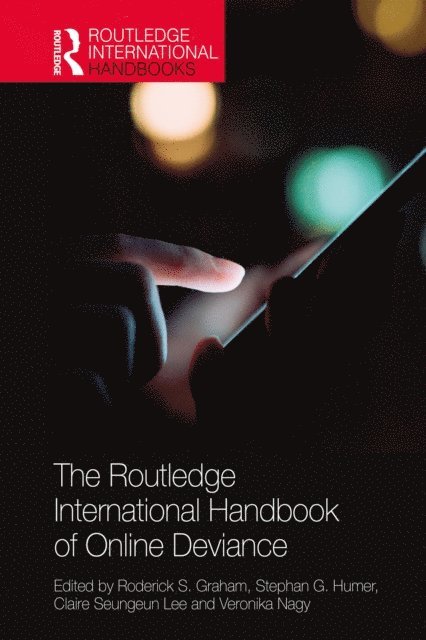
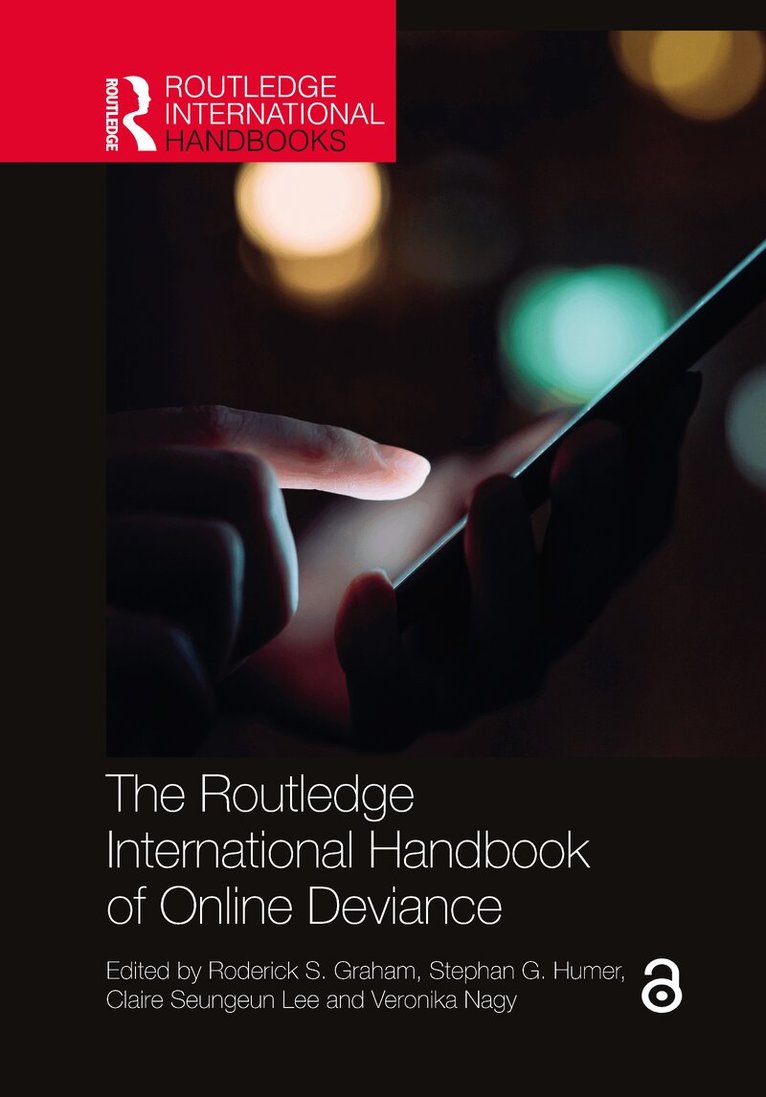
Covering a wide range of different online platforms, including social media sites and chatrooms, this volume is a comprehensive exploration of the current state of sociological and criminological scholarship focused on online deviance.
Understanding deviance broadly, the handbook acknowledges both an objective normative approach and a subjective, reactivist approach to the topic, putting into sharp relief the distinctions between cybercrime and online deviance on the one hand, and wider concerns of online communities related to online deviance on the other. Divided into five sections, the first section is devoted primarily to scholarship about the theories and methods foundational to exploring online deviance. The second section, “Gender, Sex, and Sexuality”, presents empirical research on expressions of gender, sex, and sexuality in online spaces considered deviant. The third section, “Violence and Aggression,” highlights scholarship on types of violent communications such as hate speech and cyberstalking. The fourth section, “Communities and Culture,” describes empirical research on online communities and networks that can be described as deviant by wider society. Lastly, the fifth section, “Regional Perspectives,” highlights research in which a terrestrial location is impactful to the online phenomena studied.
Providing a window into future scholarship over the next several years and acknowledging the ephemeral nature of research on digital technology, The Routledge International Handbook on Online Deviance is essential reading for students and scholars of Criminology and Sociology focused on deviant online behaviour. It will also appeal to those working in related areas within Internet/Digital Studies, Media/Communication Studies, Psychology, and Cybersecurity.
Chapter 2 of this book is freely available as a downloadable Open Access PDF at http://www.taylorfrancis.com under a Creative Commons Attribution-Non Commercial-No Derivatives (CC-BY-NC-ND) 4.0 license.
901 kr
Läs direkt efter köp
Covering a wide range of different online platforms, including social media sites and chatrooms, this volume is a comprehensive exploration of the current state of sociological and criminological scholarship focused on online deviance.
Understanding deviance broadly, the handbook acknowledges both an objective normative approach and a subjective, reactivist approach to the topic, putting into sharp relief the distinctions between cybercrime and online deviance on the one hand, and wider concerns of online communities related to online deviance on the other. Divided into five sections, the first section is devoted primarily to scholarship about the theories and methods foundational to exploring online deviance. The second section, “Gender, Sex, and Sexuality”, presents empirical research on expressions of gender, sex, and sexuality in online spaces considered deviant. The third section, “Violence and Aggression,” highlights scholarship on types of violent communications such as hate speech and cyberstalking. The fourth section, “Communities and Culture,” describes empirical research on online communities and networks that can be described as deviant by wider society. Lastly, the fifth section, “Regional Perspectives,” highlights research in which a terrestrial location is impactful to the online phenomena studied.
Providing a window into future scholarship over the next several years and acknowledging the ephemeral nature of research on digital technology, The Routledge International Handbook on Online Deviance is essential reading for students and scholars of Criminology and Sociology focused on deviant online behaviour. It will also appeal to those working in related areas within Internet/Digital Studies, Media/Communication Studies, Psychology, and Cybersecurity.
Chapter 2 of this book is freely available as a downloadable Open Access PDF at http://www.taylorfrancis.com under a Creative Commons Attribution-Non Commercial-No Derivatives (CC-BY-NC-ND) 4.0 license.
470 kr
Skickas inom 3-6 vardagar
Frauen in extremistischen und terroristischen Bewegungen bewegen sich im Spannungsfeld zwischen Unsichtbarkeit und Überhöhung. Oft gelten sie in der öffentlichen Wahrnehmung entweder als verführte Opfer oder als schockierende Ausnahmefiguren. Dieser Sammelband zeigt, wie irreführend dieses Bild ist. Er versammelt aktuelle wissenschaftliche und praxisnahe Perspektiven, die deutlich machen, dass Frauen keineswegs am Rand stehen, sondern als Akteurinnen, Ideologieträgerinnen und organisatorische Knotenpunkte zentrale Rollen sowohl in Extremismus und Terrorismus einnehmen.Die Beiträge eröffnen einen Zugang zu den vielfältigen Beteiligungsformen: von salafistischen Influencerinnen auf TikTok über jihadistische Unterstützerinnen und Netzwerkerinnen bis hin zu Akteurinnen der extremen Rechten und historischen wie gegenwärtigen Formen linker Militanz. Sie zeigen, wie Geschlecht als Ressource und soziale Strukturkategorie Radikalisierungsprozesse prägt und dass ohne Frauen weder die Idee einer „Volksgemeinschaft“ noch der Anspruch eines „Islamischen Staates“ tragfähig wäre.Gleichzeitig führt der Band vor Augen, wie sehr Prävention, Deradikalisierung und Forschung von einer gendersensiblen Perspektive profitieren. Er macht sichtbar, dass Radikalisierungsprozesse erst dann nachvollziehbar werden, wenn die Beteiligung von Frauen und die Bedeutung von Geschlecht mitgedacht werden, weil gerade Geschlechterbilder zur Mobilisierung und Stabilisierung extremistischer Gruppen beitragen. Zugleich zeigt er, welche Chancen sich eröffnen, wenn Beratungsarbeit biografische Brüche, emotionale Ambivalenzen und Geschlechterrollen ernst nimmt.
280 kr
Läs direkt efter köp
19 kr
Läs direkt efter köp