Stefan Themerson Läsebok Översättning, urval och kommentarer av Magnus Hedlund. Illustrationer av Franciszka Themerson. Boken fanns med i Rönnells Antikvariats första förlagskatalog 2001, bland kommande titlar. Sjutton år senare är den här! Idén var ursprungligen att sätta samman en behändig Themerson-läsebok utifrån ett radioprogram som Magnus Hedlund och Claes Hylinger gjorde 1982 i en serie som hette Medan tiden går ... "Nu blev det inte precis så, men ungefär", skriver Hedlund i förordet. "Det krävdes förtydliganden och här och var korrigeringar, det behövdes lite längre texter än de korta snuttar vi hade haft med i programmet". Med finns en lite utförligare version av Magnus Hedlunds besök hos Themersons i London tidigare publicerad i Ökenkejsaren och andra stycken. Läseboken rymmer även ett urval av Themersons semantiska och andra dikter. Utgåvan är rikt illustrerad med Franciszka Themersons teckningar och kreativt formgiven av Lars Paulsrud.
At times in his life, Tom Harris is a dull schoolboy, an apprentice barber, a delinquent husband, an old man with a monkey who drinks at the Green Man Pub, "il professore Harris" at the University of Genoa, and possibly a murderer. But the question of who the elusive Tom Harris really is, and what crimes he has really committed, obsesses the narrator of this novel. Tom Harris can perhaps be described as a sort of philosophical detective story, ingeniously plotted and wittily told with a stylistic virtuosity on par with the most playful works of Raymond Queneau.
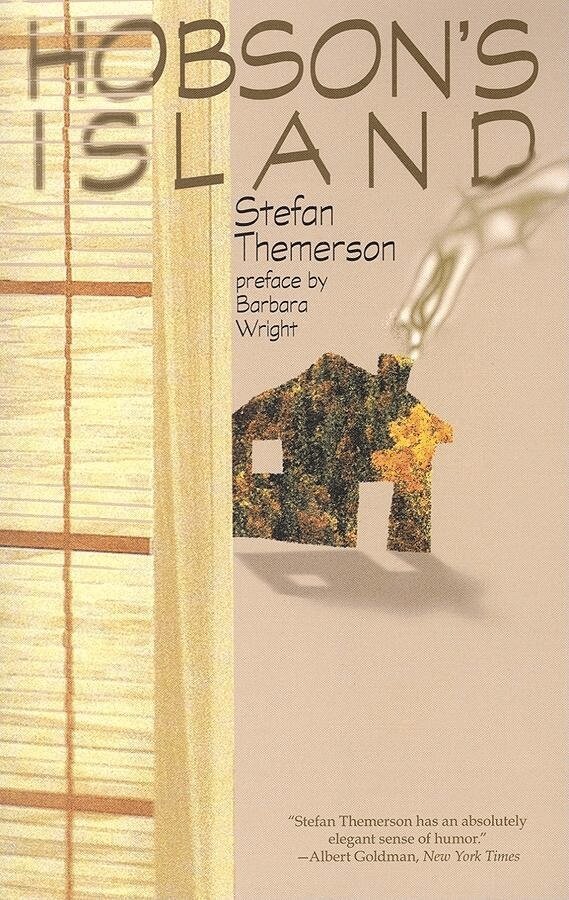
Hobson's Island (so called because Mr. Hobson bought it, or did Mr. Hobson buy it because it was so called?) enjoyed decades of isolation in the Atlantic Ocean. For years, the caretakers lived there peacefully, with only a cow for company and an empty house to care for. But all is suddenly disrupted when a wave of unusual visitors arrive: a deposed African king fleeing a revolution, a Hobson descendant claiming ownership, government agents eyeing the nation-less real estate, and scientists looking to test a dangerous new invention. In typical Themerson fashion, the comic is wound up with the serious and let go to devastating effect. A clever and apt parodying of Cold War power plays and twisted science, Hobson's Island is a strangely touching, sympathetic, and emotional account of the families and individuals brought together and broken up by Hobson's Island.
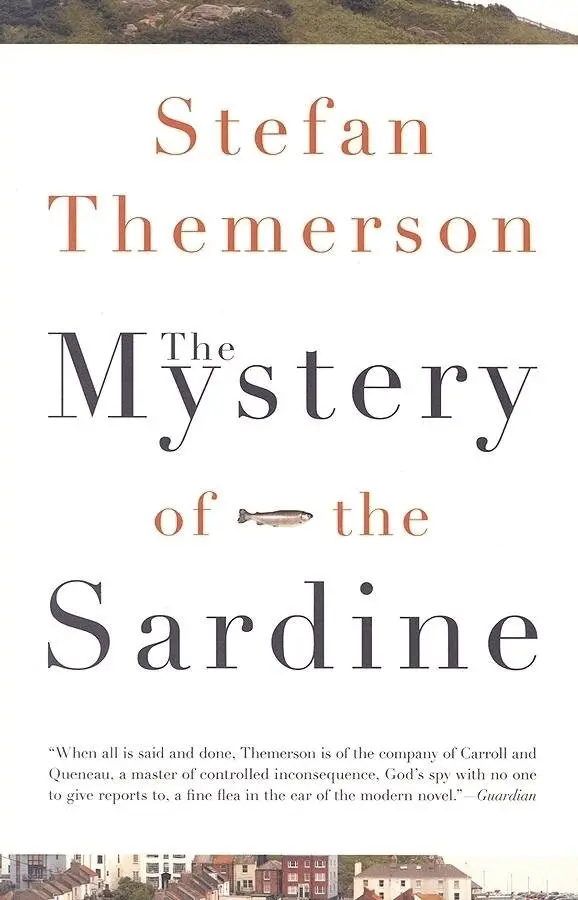
When an unknown black poodle inexplicably explodes in philosophy professor Timothy Chesterton-Brown's back yard--paralyzing the professor and killing his guest--the "mystery of the sardine" begins. Its solution will involve such unwitting detectives as a twelve-year-old mathematician, his mother, his beloved, a palmist named Miss Prentice, and a bureaucrat dubbed the Minister of Imponderabilia. The clues they unearth--drawing on logic, the occult, intuition, and everything in between--lead them far away from the tiny seaside town where they begin. We follow them to Majorca, Rome, Warsaw, and London, but in the end, the solution lies beyond even the furthest and most magical reaches of reason.
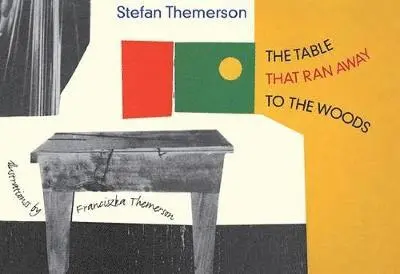
"The Table that Ran Away to the Woods" tells the tale of a writing desk that one day 'grabbed two pairs of shoes/ran downstairs, and took flight', escaping into the countryside with its owners in barefoot pursuit. This is the first time the story - first published in a Polish newspaper in 1940 and recreated in this exquisite collaged version in 1963 - has been made available to an English-speaking audience. Franciszka and Stefan Themerson were Polish avant-garde artists and filmmakers who arrived as refugees in London, she in 1940, he in 1942, and who continued to work on a huge range of creative projects in England. With her unique illustrations, and his deceptively simple, humorous stories, they created many successful children's books together. Lovingly republished, this will be an opportunity for a new audience to escape into a book, which, as Wadely says in his introductory note, 'has all the innocence of a child's song, as the table dances back to nature, and the liberated typography floats across the page'.
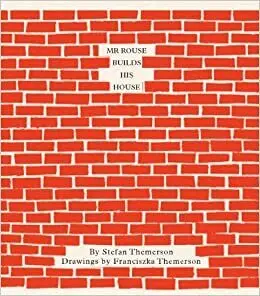
Mr Rouse has decided to build himself a house. Inevitably, the process is much longer and more detailed than Mr Rouse initially envisages: "Mr Builder, I'm not a bird, you know; how could I live in a house made of leaves?" This quirky tale takes the reader through a timeline of inventions. In a wonderful blend of absurd poetry and British pragmatism, Mr Rouse contends with housing, transport, lighting, plumbing and timekeeping, encountering quarrelling stairs and dapper guttering on his way.