400 kr
Läs direkt efter köp
400 kr
Läs direkt efter köp
2 040 kr
Skickas inom 7-10 vardagar
740 kr
Skickas inom 7-10 vardagar
2 526 kr
Skickas inom 10-15 vardagar
827 kr
Skickas inom 10-15 vardagar
3 490 kr
Skickas inom 10-15 vardagar
874 kr
Läs direkt efter köp
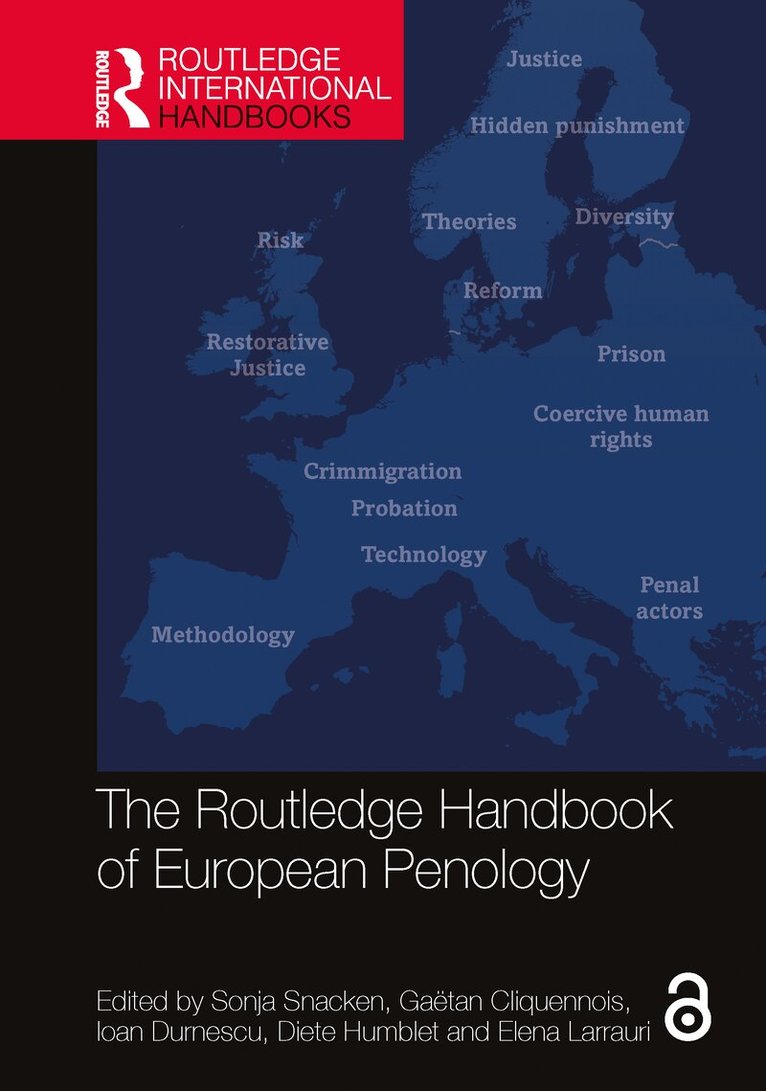
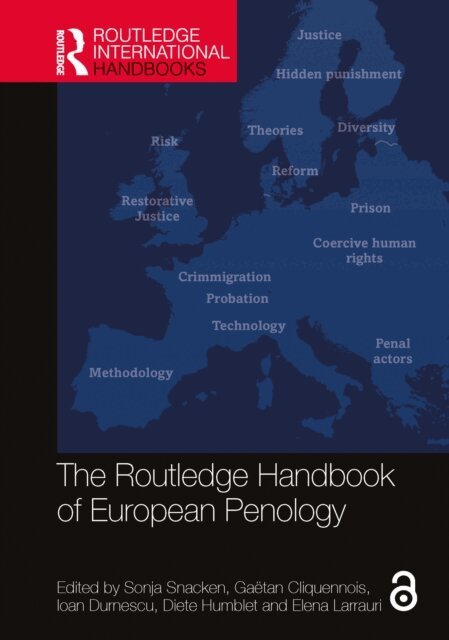
European penology, the multidisciplinary scientific study of punishment carried out on the European continent, is booming. This Handbook aims to offer an overview of the current state of the art and cutting-edge penological research in Europe, covering all the regions (north, south, east, west) and Europe’s institutional organisations – the Council of Europe and the European Union – including research that may hitherto not have been published in English. The Handbook also reflects on whether there is anything distinctive or typically (not necessarily exclusively) European in the ways penology is applied in Europe.
This challenge is taken up by a team of 5 editors and 60 authors from 21 different countries, reflecting a balance of gender, early and promising career, and established researchers.
After the editors’ Introduction, the book is organised into three parts:
Part I: European Penology – Scientific Developments discusses theoretical and methodological developments and important issues within comparative penology.
Part II: European Penality – Developments in Penal Practices focuses on transversal European developments, particular groups of offenders and specific forms of punishment.
Part III offers a reflection on penal policies and practices in Europe as seen from abroad.
The Handbook offers graduate and postgraduate students, postgraduate researchers, academics and other research users, such as governments and NGOs, critical and up-to-date reflections on some of the most prominent discussions on penology in Europe today.
Chapter 17 of this book is freely available as a downloadable Open Access PDF at http://www.taylorfrancis.com under a Creative Commons [Attribution-Non Commercial-No Derivatives (CC BY-NC-ND)] 4.0 license.
901 kr
Läs direkt efter köp
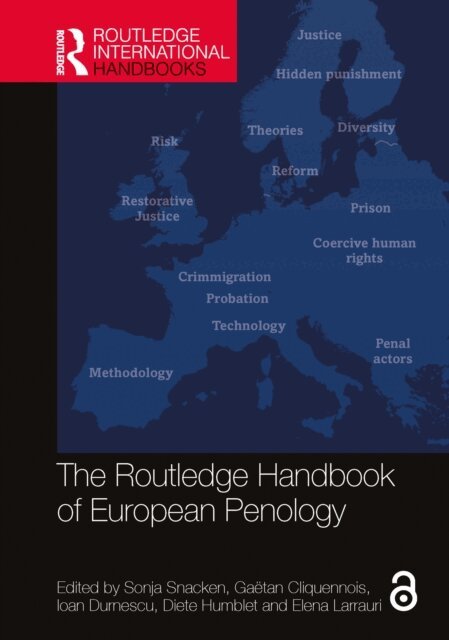
European penology, the multidisciplinary scientific study of punishment carried out on the European continent, is booming. This Handbook aims to offer an overview of the current state of the art and cutting-edge penological research in Europe, covering all the regions (north, south, east, west) and Europe’s institutional organisations – the Council of Europe and the European Union – including research that may hitherto not have been published in English. The Handbook also reflects on whether there is anything distinctive or typically (not necessarily exclusively) European in the ways penology is applied in Europe.
This challenge is taken up by a team of 5 editors and 60 authors from 21 different countries, reflecting a balance of gender, early and promising career, and established researchers.
After the editors’ Introduction, the book is organised into three parts:
Part I: European Penology – Scientific Developments discusses theoretical and methodological developments and important issues within comparative penology.
Part II: European Penality – Developments in Penal Practices focuses on transversal European developments, particular groups of offenders and specific forms of punishment.
Part III offers a reflection on penal policies and practices in Europe as seen from abroad.
The Handbook offers graduate and postgraduate students, postgraduate researchers, academics and other research users, such as governments and NGOs, critical and up-to-date reflections on some of the most prominent discussions on penology in Europe today.
Chapter 17 of this book is freely available as a downloadable Open Access PDF at http://www.taylorfrancis.com under a Creative Commons [Attribution-Non Commercial-No Derivatives (CC BY-NC-ND)] 4.0 license.
972 kr
Läs direkt efter köp
This new book brings together some of the leading criminologists across Europe, to showcase the best of European criminology. This Handbook aims to reflect the range and depth of current work in Europe, and to counterbalance the impact of the – sometimes insular and ethnocentric – Anglo-American criminological tradition. The end-product is a collection of twenty-eight chapters illustrating a truly comparative and interdisciplinary European criminology.
The editors have assembled a cast of leading voices to reflect on differences and commonalities, elaborate on theoretically grounded comparisons and reflect on emerging themes in criminology in Europe. After the editors’ introduction, the book is organised in three parts:
five chapters offering historical, theoretical and policy oriented overviews of European issues in crime and crime control; seven chapters looking at different dimensions of crime in Europe, includingcrime trends, state crime, gender and crime and urban safety; fifteen chapters examining the variety of institutional responses, exploring issues such as policing, juvenile justice, punishment, green crime and the role of the victim.This book gives some indication of the richness and scope of the emerging comparative European criminology and will be required reading for anyone who wants to understand trends in crime and its control across Europe. It will also be a valuable teaching resource, especially at postgraduate level, as well as an important reference point for researchers and scholars of criminology across Europe.
951 kr
Läs direkt efter köp
This new book brings together some of the leading criminologists across Europe, to showcase the best of European criminology. This Handbook aims to reflect the range and depth of current work in Europe, and to counterbalance the impact of the – sometimes insular and ethnocentric – Anglo-American criminological tradition. The end-product is a collection of twenty-eight chapters illustrating a truly comparative and interdisciplinary European criminology.
The editors have assembled a cast of leading voices to reflect on differences and commonalities, elaborate on theoretically grounded comparisons and reflect on emerging themes in criminology in Europe. After the editors’ introduction, the book is organised in three parts:
five chapters offering historical, theoretical and policy oriented overviews of European issues in crime and crime control; seven chapters looking at different dimensions of crime in Europe, includingcrime trends, state crime, gender and crime and urban safety; fifteen chapters examining the variety of institutional responses, exploring issues such as policing, juvenile justice, punishment, green crime and the role of the victim.This book gives some indication of the richness and scope of the emerging comparative European criminology and will be required reading for anyone who wants to understand trends in crime and its control across Europe. It will also be a valuable teaching resource, especially at postgraduate level, as well as an important reference point for researchers and scholars of criminology across Europe.
892 kr
Läs direkt efter köp
This volume provides an important and exciting contribution to the knowledge on punishment across Europe.
Over the past decade, punitiveness has been studied through analyses of ‘increased’ or ‘new’ forms of punishment in western countries. Comparative studies on the other hand have illustrated important differences in levels of punitiveness between these countries and have tried to explain these differences by looking at risk and protective factors. Covering both quantitative and qualitative dimensions, this book focuses on mechanisms interacting with levels of punitiveness that seem to allow room for less punitive (political) choices, especially within a European context: social policies, human rights and a balanced approach to victim rights and public opinion in constitutional democracies.
The book is split into three sections:
Punishment and Welfare. Chapters look into possible lessons to be learned from characteristics and developments in Scandinavian and some Continental European countries. Punishment and Human Rights. Contributions analyze how human rights in Europe can and do act as a shield against – but sometimes also as a possible motor for – criminalization and penalization. Punishment and Democracy. The increased political attention to victims’ rights and interests and to public opinion surveys in European democracies is discussed as a possible risk for enhanced levels of punitiveness in penal policies and evaluated against the background of research evidence about the wishes and expectations of victims of crime and the ambivalence and ‘polycentric consistency’ of public opinion formations about crime and punishments.
This book will be a valuable addition to the literature in this field and will be of interest to students, scholars and policy officials across Europe and elsewhere.
887 kr
Skickas inom 10-15 vardagar
555 kr
Skickas inom 10-15 vardagar
602 kr
Läs direkt efter köp
598 kr
Läs direkt efter köp
1 314 kr
Skickas inom 10-15 vardagar
2 515 kr
Tillfälligt slut