457 kr
Skickas inom 3-6 vardagar
457 kr
Skickas inom 3-6 vardagar
311 kr
Skickas inom 10-15 vardagar
357 kr
Skickas inom 10-15 vardagar
387 kr
Skickas inom 10-15 vardagar
357 kr
Skickas inom 10-15 vardagar
151 kr
Skickas inom 3-6 vardagar
161 kr
Skickas inom 3-6 vardagar
128 kr
Skickas inom 7-10 vardagar
128 kr
Skickas inom 7-10 vardagar
128 kr
Skickas inom 7-10 vardagar
143 kr
Skickas inom 7-10 vardagar
321 kr
Skickas inom 3-6 vardagar
173 kr
Skickas inom 7-10 vardagar
173 kr
Skickas inom 10-15 vardagar
173 kr
Skickas inom 7-10 vardagar
173 kr
Skickas inom 10-15 vardagar
173 kr
Skickas inom 7-10 vardagar
173 kr
Skickas inom 7-10 vardagar
227 kr
Skickas inom 3-6 vardagar
173 kr
Skickas inom 7-10 vardagar
173 kr
Skickas inom 7-10 vardagar
173 kr
Skickas inom 7-10 vardagar
224 kr
Skickas inom 3-6 vardagar
233 kr
Skickas inom 7-10 vardagar
233 kr
Skickas inom 7-10 vardagar
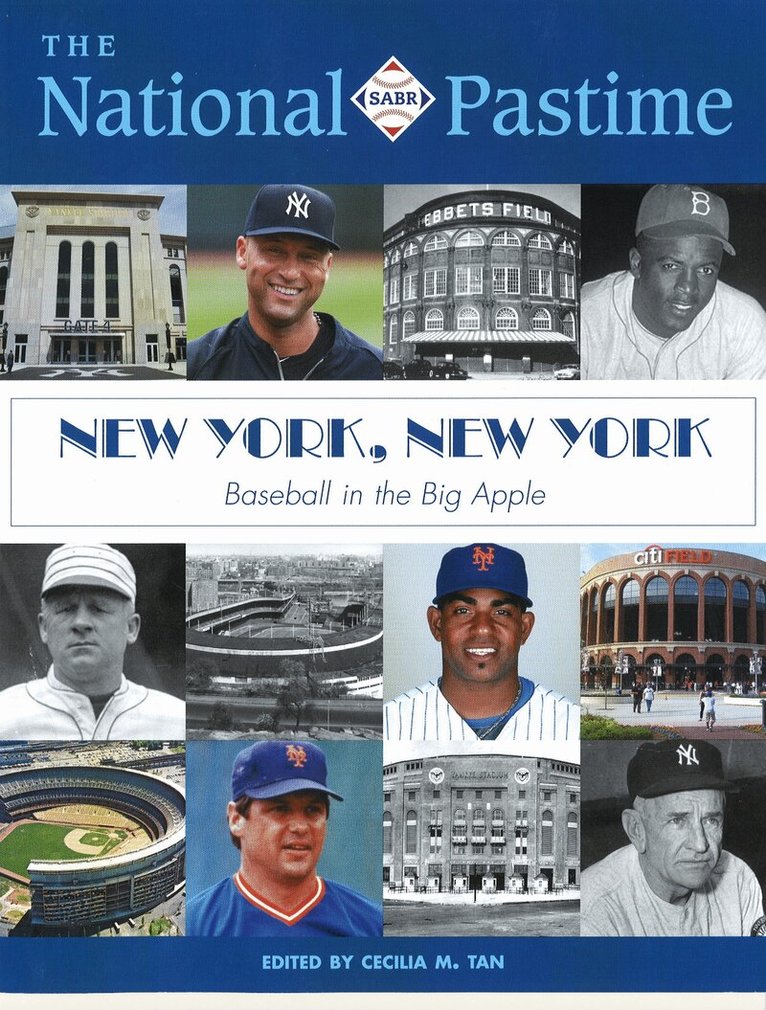
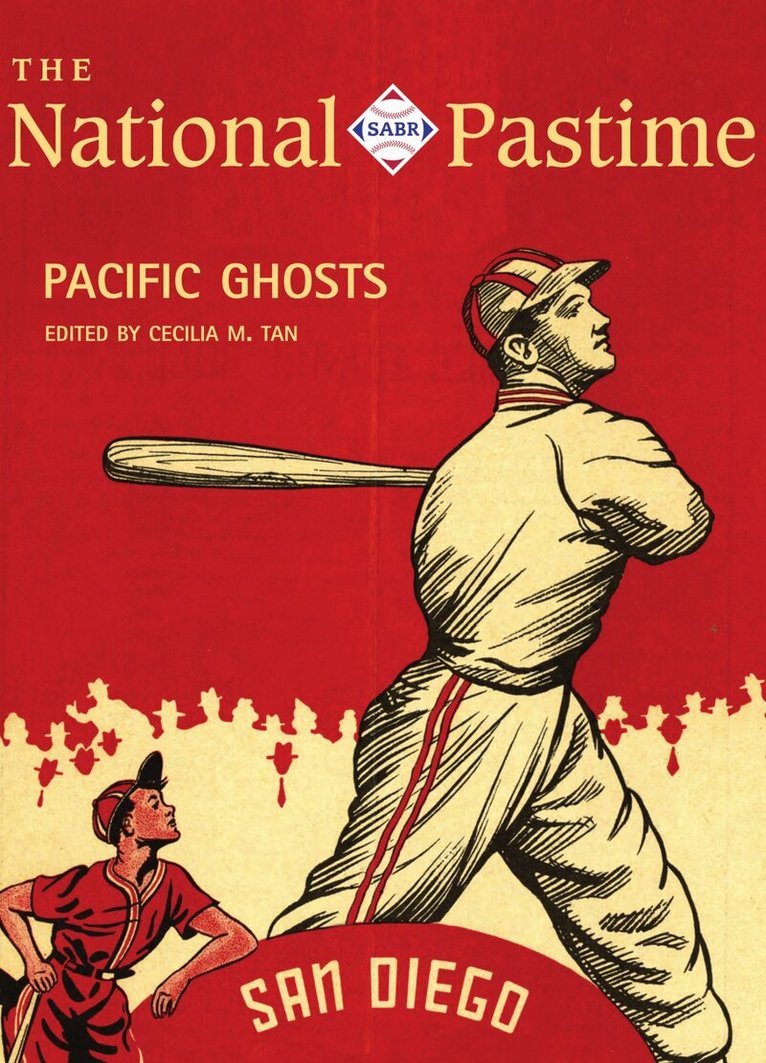
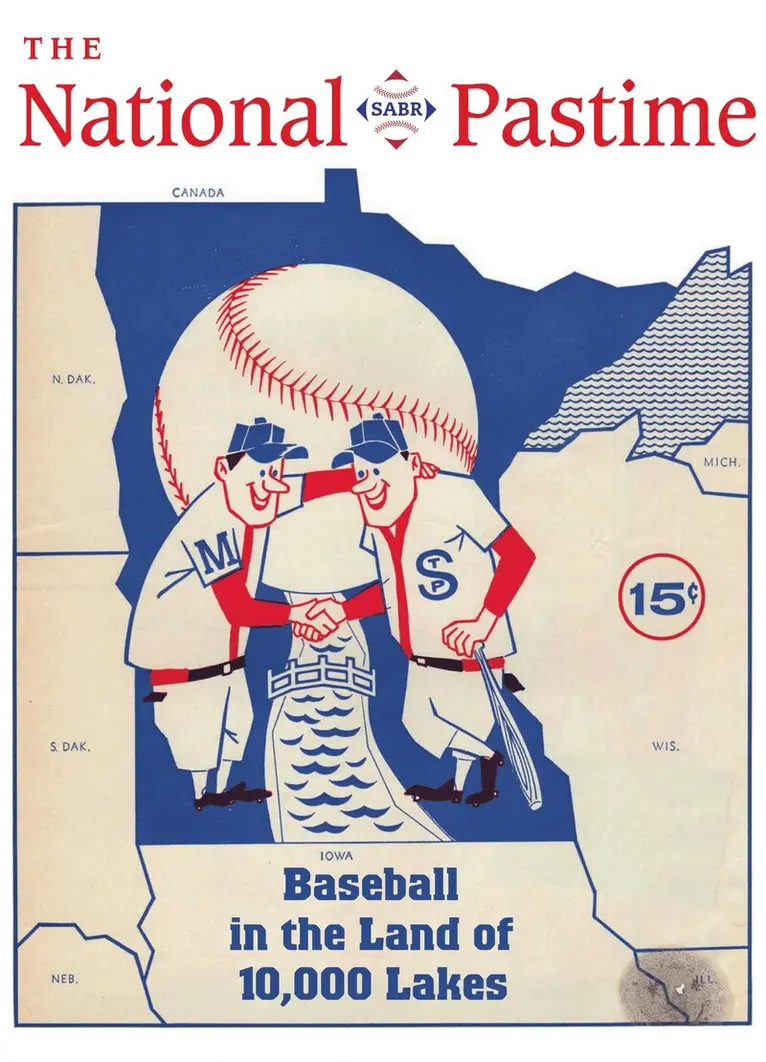
The 2024 issue of The National Pastime celebrates and explores baseball in and around Minnesota, the Land of 10,000 Lakes.
A “Peaceful War of Baseball” by Bill Staples, Jr.
When Waseda University arrived in Minneapolis on May 25, 1911, to play the University of Minnesota, the team boasted a respectable 8–6 record. The community was buzzing with anticipation for the arrival of the Waseda nine. The local Issei (first-generation Japanese Americans) were especially thrilled. More than two weeks before the games, the Morning Tribune reported that some Japanese workers at downtown hotels had “already filed notice with the clerks and their employers that their grandmothers will die or be buried on Friday and Saturday when the two big games come off.” A bellboy at the Nicollet Hotel added, “We go to the game any way possible. Not miss it for much-job, money, or life.”
"Joe Mauer: A First-Ballot Hall of Famer Without Question" by Sam Sundermeyer
Catchers are underrepresented in the Hall of Fame, as well as among first-ballot inductees, leading many to assume Joe Mauer would not be elected on this first ballot because his career longevity did not match that of players like Johnny Bench and Carlton Fisk. But Mauer’s prime, 2006–13, represents one of the greatest stretches of play from a catcher in baseball history. During those eight seasons, Mauer won three Gold Gloves and five Silver Sluggers, was named to six All-Star teams, and received MVP votes in five of the eight seasons, winning in a landslide in 2009 with 27 of a possible 28 first-place votes. In the twentieth century, most writers wouldn’t vote for a player in his first year of eligibility unless they thought he was on par with the original “first ballot” class of 1936: Babe Ruth, Ty Cobb, Honus Wagner, Christy Mathewson, and Walter Johnson. The next players who made it in on the first ballot didn't come until 1962-Jackie Robinson and Bob Feller. The mystique had since faded somewhat, but it hasn't disappeared. It still means something to go in on the first try.
"The Nights the Lights Went on in the Twin Cities" by Stew Thornley
By 1937, the Millers and Saints were the American Association’s only teams still playing exclusively day games at home. Finally, they joined the others and put in lights at Lexington Park in St. Paul and Nicollet Park in Minneapolis. As installation of the equipment began in May, both teams set their night debuts for games in which they would be playing each other on back-to-back evenings in mid-July, first in St. Paul and then in Minneapolis. The St. Paul Pioneer Press described the arrival of night baseball at Lexington Park as “more of an occasion than the annual opening day, coming for the first time in all the history of baseball in St. Paul.” The lights drew fans like moths. More than 9,000 packed the stands at Lexington Park July 15. Lake City and Mankato brought large delegations, the latter group arriving on a special train.
233 kr
Skickas inom 7-10 vardagar
233 kr
Skickas inom 7-10 vardagar
217 kr
Skickas
Edited by Steve West and Cecilia M. Tan
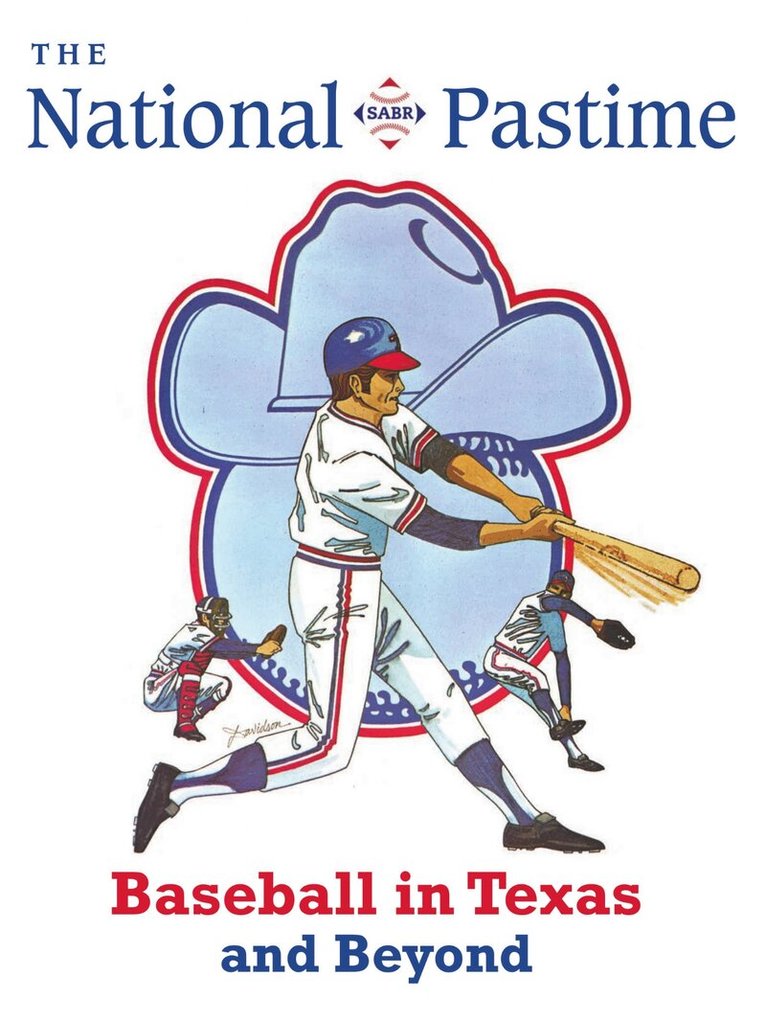
In this issue, to coincide with SABR’s annual convention being held in Dallas-Fort Worth, we explore baseball across northern Texas and Oklahoma. The region has a deep tradition of baseball from long before the arrival of the Rangers. Major league teams in the early twentieth century took advantage of the weather and railroad accessibility to hold spring training in Texas. The minors flourished, with teams in almost every town, while Black barnstorming teams and Negro League teams came and went. And of course, college ball thrives to this day in Texas and Oklahoma.
“Spring Training Ballparks at Marlin, Texas” by Monte Cely
John McGraw announced he would take the Giants to Marlin for the 1908 preseason. The Giants had trained in Los Angeles in 1907, and McGraw wanted a location with fewer distractions. Most of the Giants left New York City by steamship for New Orleans, then traveled by rail from there. John Murphy, groundskeeper at the Polo Grounds, was sent ahead to work on the East Side Fairgrounds fields. Murphy said “... it is lucky they sent me ahead, as the grounds had been given up for steers, pigs, and horses… but the field is now in shape, with the infield grassy and the outfield as smooth as a billiard table.” The first group of Giants, mostly “yannigans” trying to make the team, arrived in Marlin on February 19, 1908, led by veteran catcher Roger Bresnahan.
“Baseball in the Middle of Nowhere: The Unique Story of Herbert Kokernot and the Alpine Cowboys”
by C. Paul Rogers III
Herbert Kokernot, Jr. after buying the local team and building a stadium adjacent to Sul Ross State College, recruited many college stars including Adrian Burk and Larry Isbell of Baylor, and Yale Lary of Texas A&M. Under NCAA rules, college athletes were not allowed to be paid for playing their sport in the summer, so Kokernot hired the players for $400 a month to work on his ranch, while they played baseball for the Cowboys ostensibly for free. One of the typical jobs was killing jackrabbits, which were a plague on the ranch. The players used old Jeeps and drove through the prairie armed with .22s and even pistols, chasing the rabbits down until the critters tired and stopped.
“Dave Hoskins and the Uneven, Unheralded, and Unfinished Integration of the Texas League”
by Jason A. Schwartz
Dave Hoskins immediately established himself as the league’s best pitcher, one of its leading hitters, and by far its top box office draw, both at home and on the road. None of this suggests Hoskins himself had it easy. A Black man in the Jim Crow South, Hoskins could neither eat at the same restaurants nor stay in the same hotels as teammates. White fans at every ballpark greeted “the Savior of the Texas League” with name-calling and hostility. The roughest destination was always Shreveport, where just a week after proposed legislation sought to bar integrated athletic competition statewide, even death threats entered the mix. Regardless, Hoskins kept on pitching, kept on winning, and kept on spinning league turnstiles at breakneck pace.
233 kr
Skickas inom 7-10 vardagar
233 kr
Skickas inom 7-10 vardagar
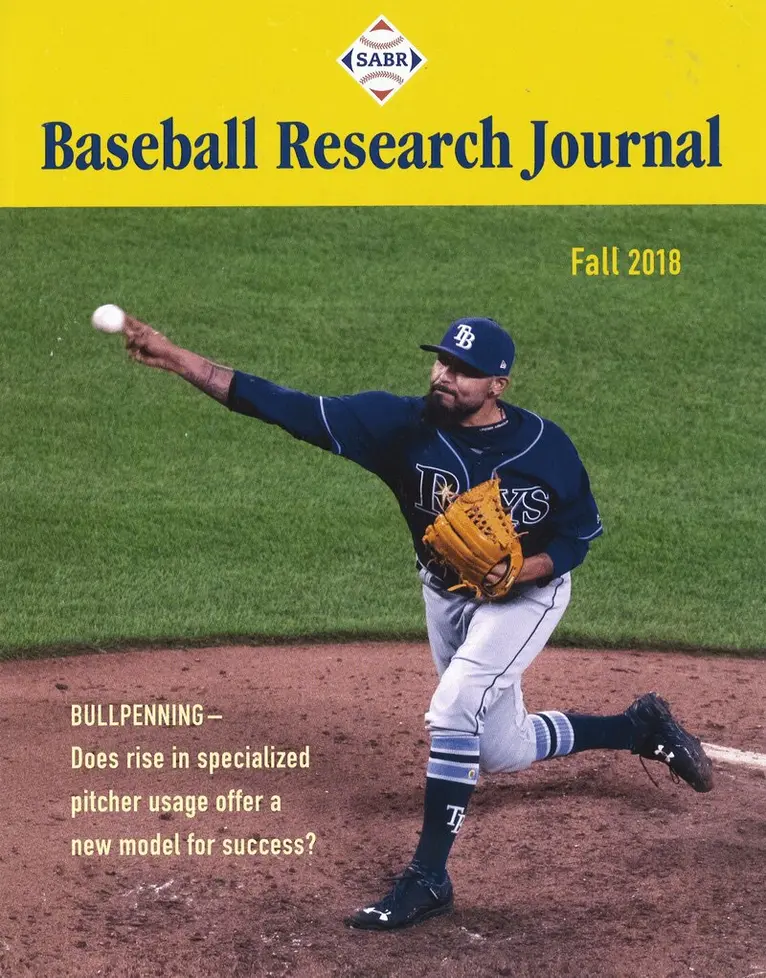
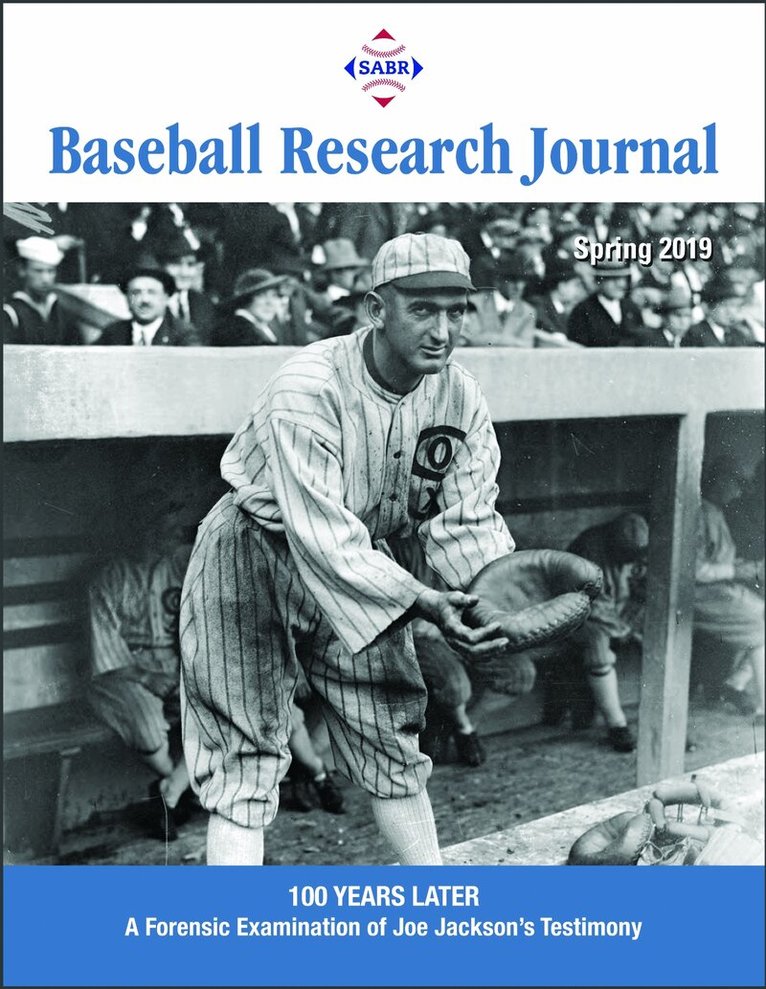
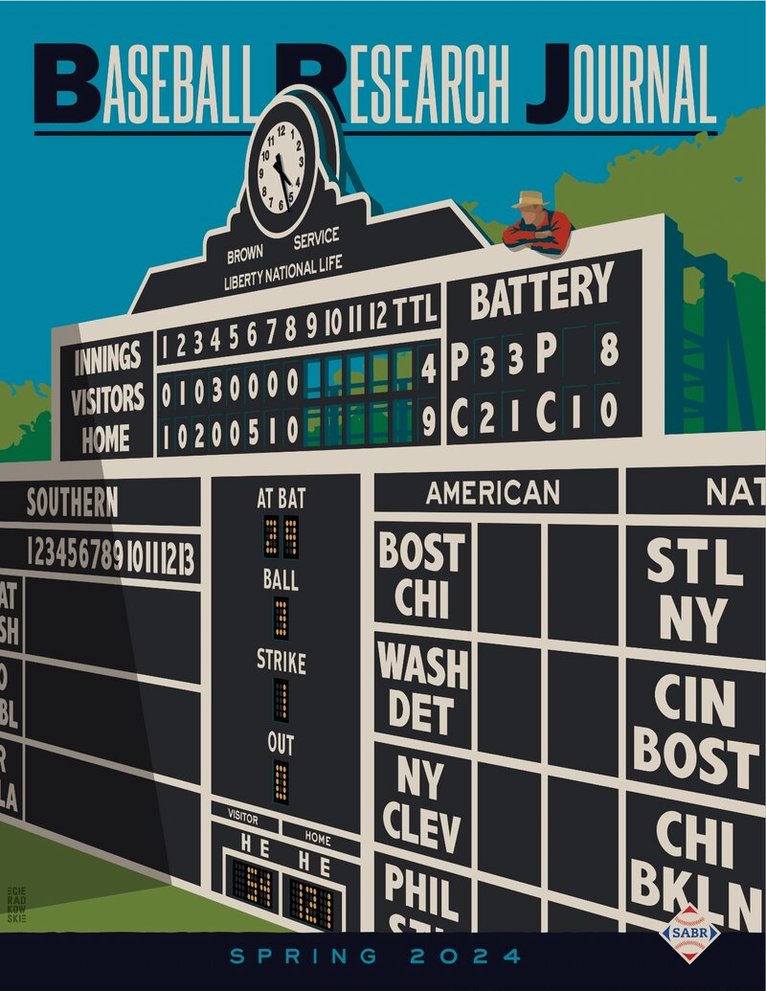
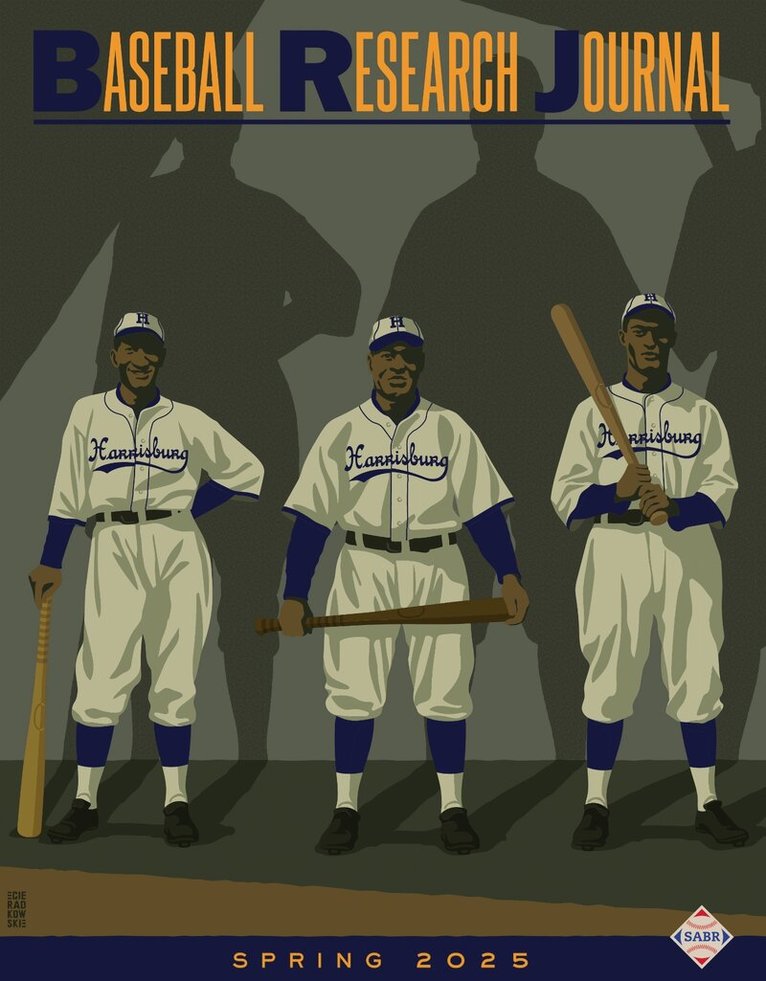
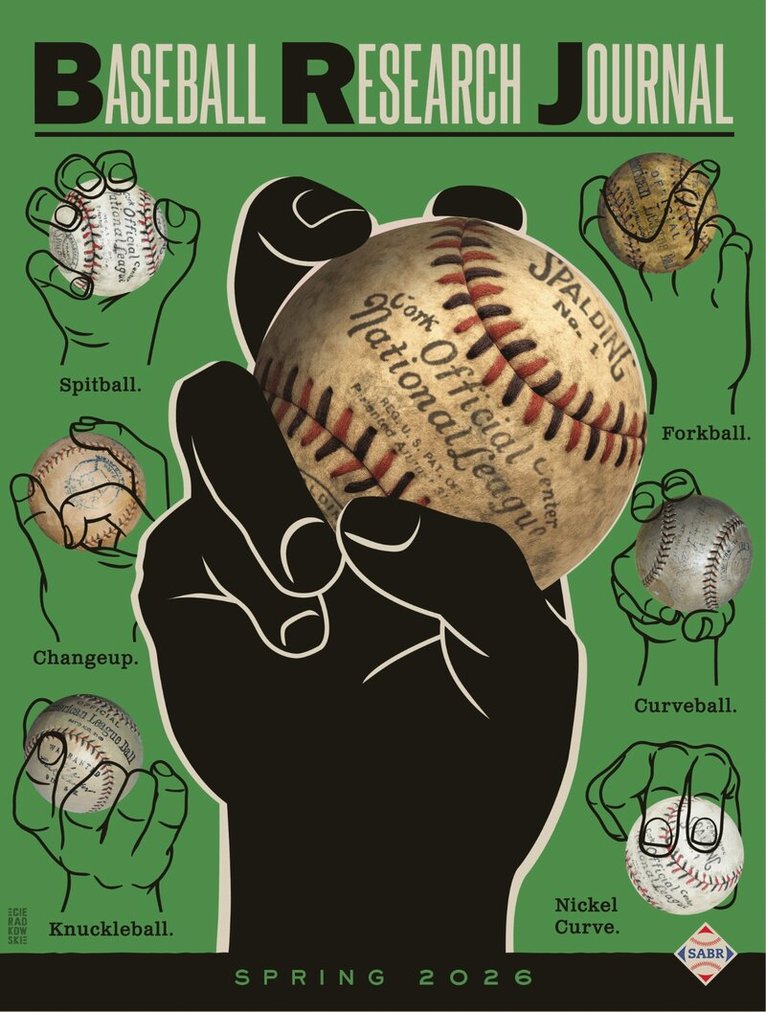
The Spring 2026 issue of SABR's Baseball Research Journal delves into topics ranging from interracial baseball in 1867 to left-handed double-play combinations, from translating the rules of baseball into Mi'kmaq (the indigenous language of Canada's Atlantic Provinces) to professional women players in Banana Ball.
"Did MLB's Clean Ball Policy Fuel the Hitting and Scoring Surge of the 1920s?"
by David J. Gordon
Some baseball analysts have pointed to baseball's adoption of its "Clean Ball Policy" following the August 1920 beaning death of Cleveland SS Ray Chapman as a major catalyst of the surge in hitting and scoring that marked the turning point demarcating the end of baseball's "Deadball Era" and the dawn of the modern game. If this hypothesis is true, this offensive surge should show up mainly in the later innings, when scuffed and dirty balls would have previously remained in play; the new policy would have had little or no impact in the early innings, when fresh baseballs were always in play. But was such a simple solution the real answer? Did replacing those dirty, scuffed-up balls with new ones really lead to the outbreak of offense in the 1920s?
"Babe Ruth's Anomalous 1929 Season: Why Did His Bases on Balls Plummet?"
by Herm Krabbenhoft and Mike Haupert
Babe Ruth was an extraordinary batter with respect to the "three true outcomes" in baseball. In the two positive outcomes – hitting home home runs and receiving bases on balls – the Sultan of Swat topped the American League twelve times and eleven times, respectively. In the negative true outcome – striking out – the Bambino led the AL just five times. From 1926 through 1931, Ruth put together "the finest sustained display of hitting that baseball has ever seen." During those six seasons he averaged 50 home runs, 155 runs batted in, 147 runs scored, and batted .354. Ruth led the AL in homers in each of those six seasons and also drew the most walks in each of those seasons – EXCEPT in 1929, in which he finished tenth with a total of only 72 free passes. For the three previous seasons (1926–28) Ruth had averaged 139 walks per season. And for the three subsequent seasons (1930–32) Ruth averaged 131 walks per season. What happened in 1929?
"A Toast to Sam Payne: The Diminutive Civil War Vet Who Became Phillies Groundskeeper, and One of Their Biggest Personalities"
by Kenny Ayers
Sam Payne, the wily, mustachioed groundskeeper for the Phillies from the early 1900s to 1932, was famous and popular in both baseball circles and with the Philadelphia populace. He was eccentric, pugnacious, entertaining, kind, more than a bit vain and possessed an unwavering devotion to his craft and ball club. Stan Baumgartner, who pitched for the Phillies during that time, recalled that the first time he ran onto the field to warm up with a new ball, Payne stopped him in his tracks. "Just a minute son, you aren't well enough acquainted around here to get a brand-new ball to play with. Wait until you're dry behind the ears," Payne told him, mentioning he had once said the same to Grover Cleveland Alexander and other veterans. "And see that little door back there. That is the way back to the clubhouse when you get knocked out. The hinges are well-greased, so you can sneak out quietly."
"On the Association of Umpire Performance with Age and Experience in MLB"
by Dale Zimmerman, Chenyang Li, and Riley Post
Perhaps no sport relies on the accuracy and consistency of its officials more than baseball, where the home plate umpire calls a ball or strike on every pitch not swung at by the batter. The relatively sedentary nature of the home plate umpire's duties compared to officials in other major sports allows individuals to perform this role to a more advanced age and to accrue relatively greater experience. Here, we investigate the associations of two metrics of home plate umpire performance with umpire age and experience using game-level data from 2015 to 2023 provided by the StatCast pitch-tracking system. Are older, more experienced umpires more desirable to have behind the plate than younger umpires with less experience?