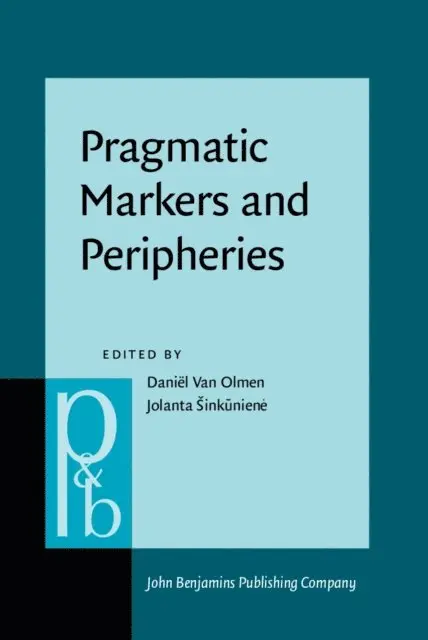
The relation between pragmatic markers and the peripheries of clauses, utterances and/or turns has been a topic of linguistic interest for the last few decades. Many issues continue to be debated, however, such as “how should the notion of periphery be defined?”, “to what extent do pragmatic markers in the left versus the right periphery fulfill different functions?” and “which factors determine the order of multiple pragmatic markers in a periphery?”. This volume brings together a number of studies addressing these and other questions. It presents new data from a diverse range of languages – including less researched ones in this context like Ainu, Latvian and Lithuanian – and on a variety of types of pragmatic marker – including emoji. The volume as a whole offers new insights into, among other things, the subjectivity intersubjectivity peripheries hypothesis, the idea of left-to-right movement and the matrix clauses hypothesis.
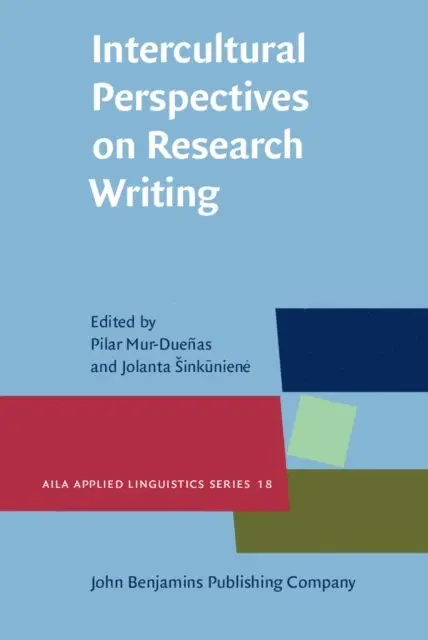
This volume offers a fresh intercultural perspective on the discursive and rhetorical challenges non-Anglophone scholars face while writing and publishing in English for an international readership. The volume presents a wide spectrum of text-based intercultural analyses of academic texts written in L2 English. Placed in the context of a rapidly increasing role of English as the universal language of scientific and scholarly communication, the contributions attempt to explore native language influence on L2 English academic texts or, conversely, the influence of rhetorical or discursive features of English on L2 texts. Covering texts from Chinese to Lithuanian authors, the chapters in this volume offer a rich selection of lexico-grammatical, discursive and rhetorical elements analysed and compared across genres, disciplines and languages both within synchronic and diachronic perspectives. This volume will be of interest to both experienced and novice researchers in such fields as English for Academic Purposes, Intercultural Rhetoric, Genre Theory, Corpus Linguistics, and English as a Lingua Franca.